Key Takeaways
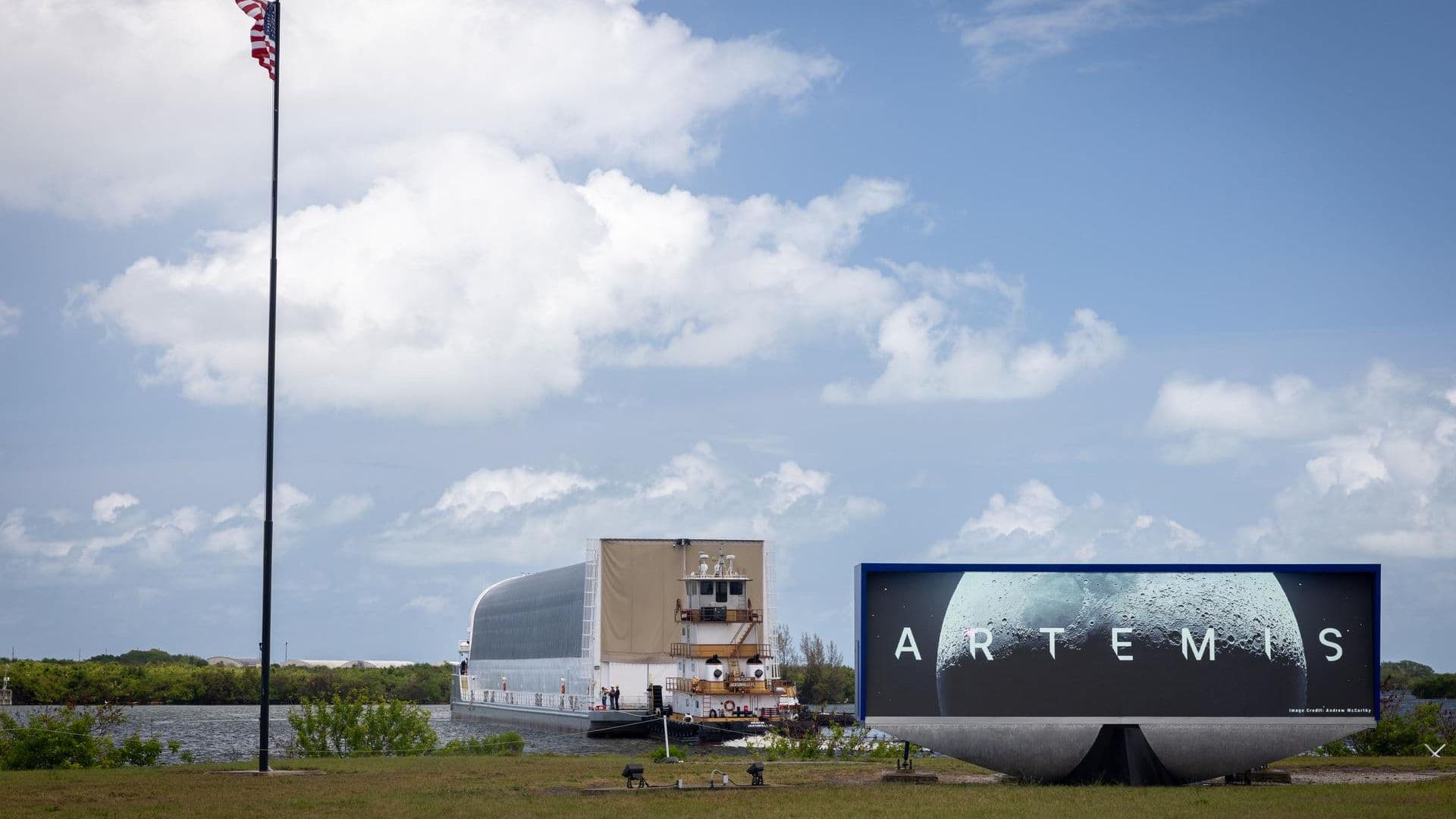
- The SLS core stage traveled 900 miles by barge from New Orleans to Kennedy Space Center
- Artemis 3 will stay in Earth orbit to test docking with Starship and Blue Moon landers
- Launch timeline has slipped from mid-2027 to late 2027 to give lander development more time
The central piece of NASA's next moon rocket has arrived at its launch site. The top 80% of the Space Launch System core stage for the Artemis 3 mission reached Kennedy Space Center in Florida on Monday, April 27, after a weeklong voyage aboard NASA's Pegasus barge.
The barge traveled 900 miles from NASA's Michoud Assembly Facility in New Orleans, carrying the massive rocket hardware along the Gulf Coast and around the Florida peninsula. Teams moved the newly arrived stage to KSC's Vehicle Assembly Building on April 28, where they will mate it with its engine section to complete the 212-foot-tall core stage.
An Orbital Test Mission, Not a Lunar Landing
Despite being part of NASA's moon program, this particular SLS vehicle will not go anywhere near the lunar surface. Artemis 3 will remain in Earth orbit, where it will test rendezvous and docking operations between the Orion capsule and one or both of the program's privately developed crewed lunar landers.
Those landers are SpaceX's Starship and Blue Origin's Blue Moon. Both companies hold NASA contracts to develop human-rated spacecraft capable of carrying astronauts to and from the lunar surface. The Artemis 3 mission will verify that Orion can successfully dock with these vehicles before NASA commits to a crewed landing.
Logicity's Take
Timeline Slips to Late 2027
NASA had targeted mid-2027 for the Artemis 3 launch, but that date has now slipped to late 2027. The agency needs more time for Starship and Blue Moon development to catch up with the SLS and Orion schedule.
If Artemis 3 succeeds, Artemis 4 could put astronauts on the moon using either Starship or Blue Moon as soon as 2028. That would be the first crewed lunar landing since Apollo 17 in December 1972.
Building on Artemis 2's Success
The Artemis 3 preparations come just weeks after the successful Artemis 2 mission. That flight launched four astronauts on April 1 and splashed down off the coast of San Diego on April 10. It was the first crewed mission beyond Earth orbit since Apollo 17.
Artemis 2 set a new distance record for humanity, sending its crew 252,760 miles from Earth. That flight validated the Orion capsule's life support systems and heat shield for deep space operations, clearing the path for subsequent missions.
What Comes Next
With the core stage now at Kennedy Space Center, NASA will complete final assembly in the Vehicle Assembly Building. The agency will then stack the SLS with its solid rocket boosters and the Orion spacecraft before rolling the complete vehicle to Launch Complex 39B for final preparations.
The late 2027 timeline gives SpaceX and Blue Origin roughly 18 months to ready their landers for the orbital rendezvous test. SpaceX has been conducting Starship test flights from its Boca Chica, Texas facility, while Blue Origin is developing Blue Moon at its facilities in Kent, Washington.
Frequently Asked Questions
When will Artemis 3 launch?
NASA now targets late 2027 for the Artemis 3 launch, slipping from an earlier mid-2027 target to allow more time for lander development.
Will Artemis 3 land on the moon?
No. Artemis 3 will remain in Earth orbit to test rendezvous and docking operations between Orion and the SpaceX Starship and Blue Origin Blue Moon landers.
How tall is the SLS core stage?
The complete SLS core stage stands 212 feet tall, or about 64.6 meters.
Which mission will land astronauts on the moon?
Artemis 4, planned for 2028, aims to put astronauts on the lunar surface using either Starship or Blue Moon.
How did the Artemis 3 rocket stage get to Florida?
NASA's Pegasus barge transported the core stage 900 miles from the Michoud Assembly Facility in New Orleans over a weeklong voyage.
Need Help Implementing This?
Source: Latest from Space.com
Huma Shazia
Senior AI & Tech Writer
Produced with AI assistance and reviewed by the Logicity editorial team. Learn more in our Editorial Policy.