Key Takeaways
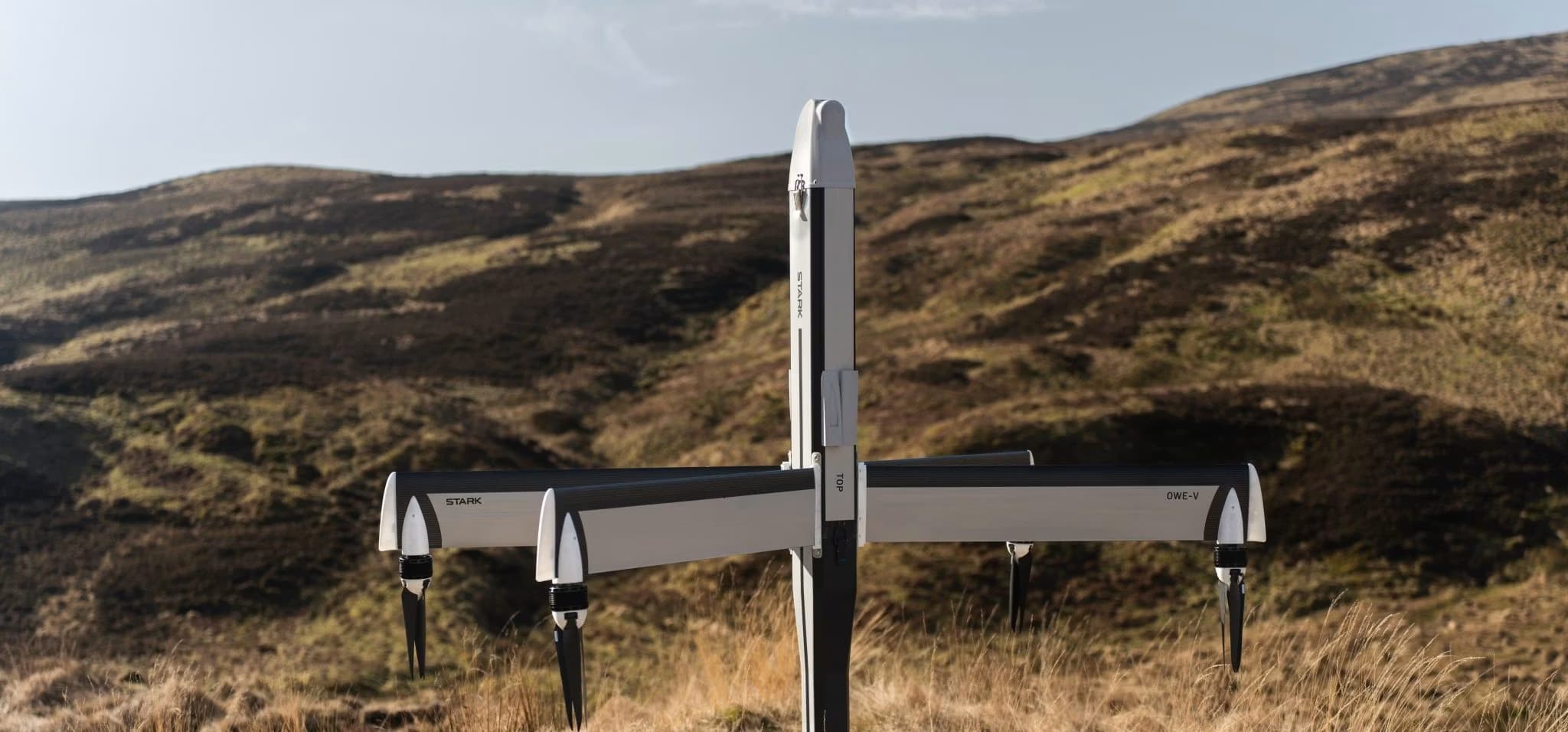
- Stark raised €500m from Sequoia, Founders Fund, and NATO Innovation Fund to scale drone manufacturing
- Over 80% of funding will go to R&D and production capacity, targeting thousands of systems per month
- The company already holds a €268m German military contract and recently expanded to UK and Sweden
Stark, the Berlin-based defence drone startup, has closed a €500m funding round backed by Sequoia Capital, Founders Fund, and the NATO Innovation Fund. The raise is one of Europe's largest-ever defence tech investments and signals that major US venture firms are betting heavily on the continent's military industrial buildout.
The company says more than 80% of the capital will flow directly into R&D and manufacturing. That means new electronic warfare research facilities and a production ramp targeting thousands of drone systems per month. The rest of the investor list includes Project A, Air Street Capital, 201 Ventures, Advent, and Döpfner Capital.
How did Stark grow this fast?
Founded in 2024, Stark hit unicorn status in January 2025 through an unannounced round that valued the company above $1bn. That followed a $62m Sequoia-led raise last August. The speed is unusual even by startup standards. Florian Seibel, who previously founded Quantum Systems, launched Stark but has since stepped back from daily operations. Project A cofounder Uwe Horstmann took over as CEO in October 2024.
Since then, Stark has stacked contracts and acquisitions. The German armed forces signed a €268m deal for kamikaze drones. The company expanded into the UK and Sweden, acquired Berlin-based autonomous navigation software startup Pleno, and launched new maritime drone systems. Each move positions Stark as a platform company rather than a single-product vendor.
Why are US funds pouring into European defence?
Russia's invasion of Ukraine rewired European defence spending. NATO members that spent decades underinvesting in military hardware are now scrambling to modernize. Traditional defence contractors move slowly. Startups like Stark promise faster iteration, cheaper unit economics, and technologies shaped by the drone warfare lessons of the Ukraine conflict.
Sequoia and Founders Fund, both headquartered in the US, rarely back European defence companies at this scale. Their participation here suggests they see a structural shift. European governments now have budgets and urgency. The question is whether startups can convert that into durable businesses before legacy contractors absorb the demand.
“The challenge facing Europe is no longer whether we can innovate, it's whether we can scale. This financing is a €500m commitment to Europe's defence industrial base.”
— Uwe Horstmann, Stark CEO
What will Stark build with €500m?
The company's statement emphasized manufacturing capacity above all else. Producing thousands of drone systems monthly would make Stark one of the highest-volume defence drone manufacturers in Europe. That production muscle matters because modern conflicts consume drones at rates that dwarf pre-war estimates. Ukraine has reportedly lost thousands of drones per month.
Electronic warfare research is the other priority. Drones face constant jamming and spoofing threats. A drone that cannot navigate or communicate under electronic attack is a paperweight. Stark's acquisition of Pleno, an autonomous navigation software company, fits this strategy. If a drone can navigate without GPS, it becomes far harder to disable.
Where does this leave European defence tech?
Stark's round arrives alongside a broader funding surge. European defence tech startups raised $3.4bn in 2024, according to Dealroom data. Combined recent investments in the sector exceed €4.5bn. The numbers are large by European standards but still modest compared to US defence budgets or the scale of incumbent contractors like Rheinmetall, BAE Systems, or Thales.
The test will be execution. Startups often struggle to navigate defence procurement, which involves long sales cycles, classified requirements, and governments that prefer established vendors. Stark's existing €268m German contract suggests it can clear those hurdles. Whether it can repeat that success across NATO countries remains to be seen.
Logicity's Take
Stark's round is less about a single company and more about a market thesis: European defence will be rebuilt partly by startups, not just incumbents. The investor lineup, with Sequoia and Founders Fund alongside the NATO Innovation Fund, suggests both profit motive and strategic alignment. But building defence hardware at scale is brutally hard. Stark has 12-18 months to prove it can ship thousands of systems and win contracts outside Germany before this valuation looks either prescient or premature.
Frequently Asked Questions
How much funding did Stark raise?
Stark confirmed a €500m funding round in May 2025, backed by Sequoia Capital, Founders Fund, NATO Innovation Fund, and several other investors.
What does Stark make?
Stark produces autonomous drone systems for defence applications, including kamikaze drones and maritime drone platforms. The company also invests in electronic warfare and autonomous navigation technology.
Is Stark a unicorn?
Yes. Stark reached unicorn status in January 2025 through an unannounced funding round that valued the company above $1bn.
Who founded Stark?
Florian Seibel, the founder of Quantum Systems, launched Stark in 2024. He has since stepped back from daily operations and remains a founding investor. Uwe Horstmann, cofounder of Project A, became CEO in October 2024.
Which governments have contracted with Stark?
The German armed forces signed a €268m contract for Stark's kamikaze drones. The company has also expanded operations into the UK and Sweden.
Need Help Implementing This?
Logicity tracks defence tech, deep tech, and enterprise funding across Europe and the US. Subscribe to our newsletter for weekly analysis, or contact our research team for custom briefings on emerging sectors.
Source: Sifted
Huma Shazia
Senior AI & Tech Writer
Produced with AI assistance and reviewed by the Logicity editorial team. Learn more in our Editorial Policy.