Key Takeaways
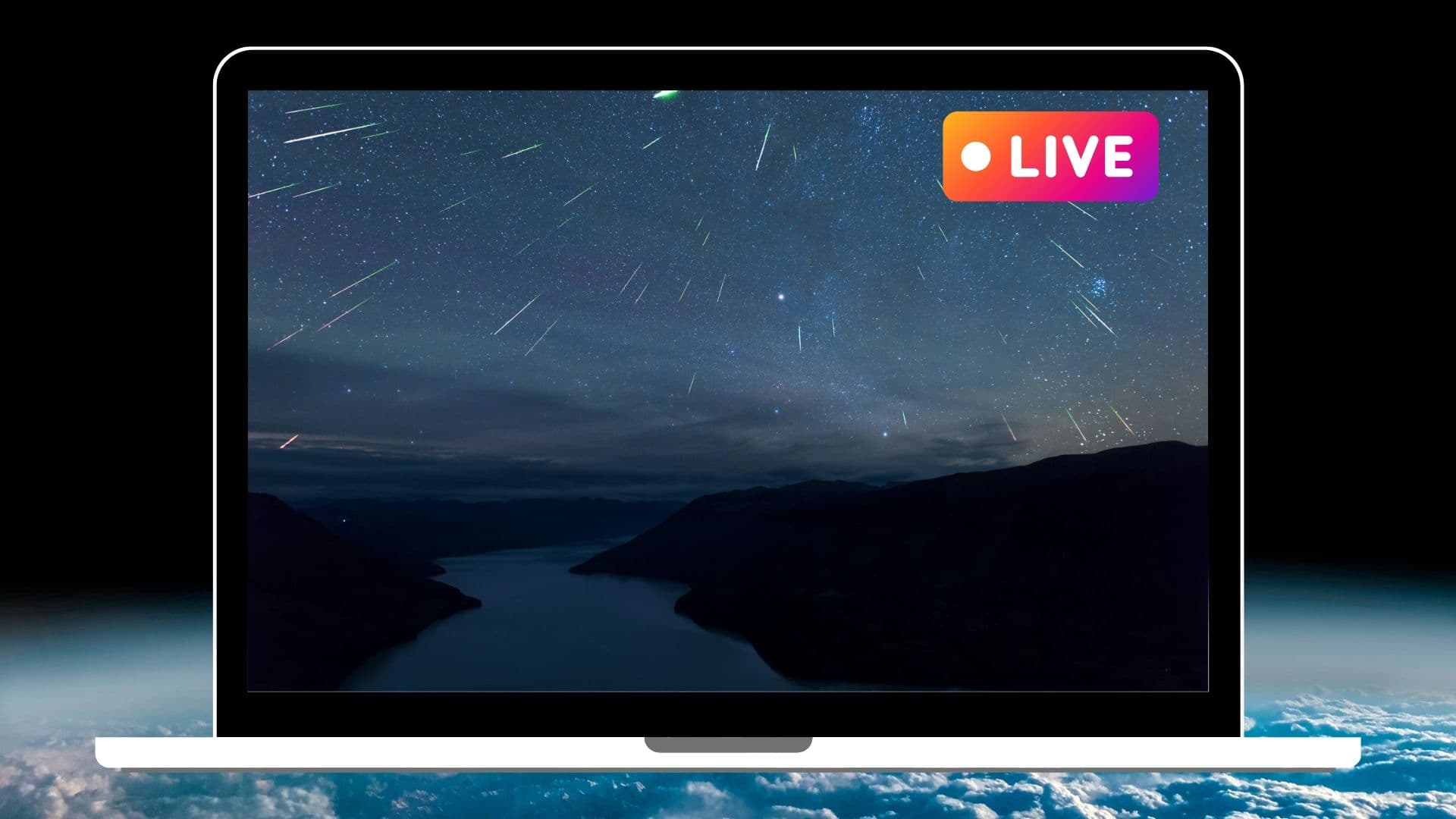
- Five observatory-quality livestreams available free, eliminating event venue costs
- Peak viewing April 22 predawn works across multiple time zones for global teams
- Live chat features enable real-time team engagement without custom platforms
Read in Short
The 2026 Lyrid meteor shower peaks April 22 with free livestreams from Hawaii, Maine, Chile, UK, and Japan. For business leaders: these streams offer zero-cost virtual team events, wellness programming, and creative marketing hooks. Best quality comes from Mauna Kea (Hawaii) and Atacama (Chile) observatories.
According to [Space.com](https://www.space.com/stargazing/meteor-showers/watch-the-lyrid-meteor-shower-2026-online-with-these-free-livestreams), the Lyrid meteor shower is currently active and will peak during predawn hours on April 22, with multiple high-quality livestreams available worldwide for viewers who can't observe in person. What the space publication frames as a stargazing opportunity, business leaders should see as something else entirely: a free, turnkey virtual event that requires zero budget and zero planning.
Why Should CEOs Care About Meteor Showers?
Here's the business case in one sentence: virtual team events cost $50-200 per employee when you factor in platforms, facilitators, and content. A meteor shower watch party costs nothing and creates genuine shared experiences across time zones.
Remote work isn't going anywhere. Gallup's 2025 data shows 52% of knowledge workers remain hybrid or fully remote. The challenge every HR leader and CEO faces: how do you build culture when your team is scattered across continents? Expensive offsites work but aren't sustainable quarterly. Virtual happy hours feel forced after the third one.
Astronomical events solve this problem elegantly. They're universal, they're awe-inspiring, and they happen on a predictable schedule. The Lyrids specifically peak during predawn hours on April 22, which means evening viewing in North America and morning viewing in Asia. One event, multiple time zones, zero logistics.
Best Free Lyrid Meteor Shower Livestreams for 2026
Not all livestreams are created equal. For business purposes, you want reliability, video quality, and ideally a live chat feature so your team can interact without setting up a separate channel. Here are the five streams worth bookmarking:
| Location | Best For | Video Quality | Live Chat | Time Zone Advantage |
|---|---|---|---|---|
| Mauna Kea, Hawaii | Highest visual quality | 4K observatory feed | Yes | Evening Americas |
| Sebec Lake, Maine | Relaxing background | HD with music | Yes | Evening Americas |
| Atacama Desert, Chile | Clearest skies on Earth | HD observatory feed | Very active | Late evening Americas |
| Embleton, UK | European teams | HD | Yes | Late night Europe |
| Mount Fuji, Japan | Asia-Pacific teams | HD | Yes | Early morning Asia |
Mauna Kea: The Premium Corporate Viewing Experience
If you're only sharing one stream with your team, make it Mauna Kea. The Subaru Telescope's feed offers observatory-grade visuals that make typical night sky footage look amateur. At 4,200 meters elevation with minimal light pollution, you'll see the Milky Way as a backdrop to meteor streaks.
For business context: this is the same quality that documentary crews pay thousands to capture. You're getting it free, live, and shareable across your entire organization.
How to Run a Zero-Budget Virtual Team Event
Here's the playbook for turning a meteor shower into a team building moment without hiring an event company:
- Pick your stream based on team geography (see table above)
- Create a shared Slack channel or Teams chat for live reactions
- Set a 30-minute window around peak activity (April 22, 2-4 AM local time for the stream location)
- Optional: pair with a 15-minute async video where team members share what they're hoping to see
- Screenshot standout moments for your internal newsletter
The key insight: you don't need everyone watching simultaneously. Async engagement works. Someone in Singapore watches the Japan feed, screenshots a meteor, drops it in Slack. Someone in London wakes up, sees it, shares their own capture from the UK feed. The conversation spans time zones without requiring a 3 AM alarm.
Corporate Wellness Programs: Astronomy as Mental Health
There's growing research on what psychologists call 'awe experiences' and their impact on workplace wellbeing. A 2024 study from UC Berkeley found that brief awe experiences (including nature videos) reduced workplace stress markers by 23% compared to neutral content.
Your wellness committee probably budgets for meditation apps, ergonomic assessments, and maybe yoga sessions. Consider adding 'astronomical events' to that calendar. The Lyrids are just the start. The Perseids in August and Geminids in December offer similar opportunities, creating a natural rhythm of shared wonder throughout the year.
This connects to broader conversations about how organizations approach innovation and exploration. NASA's Artemis program, for instance, demonstrates how ambitious goals create organizational alignment. The same psychology applies at smaller scales.
How space exploration principles apply to corporate strategy and team alignment
Marketing Angle: Celestial Events as Content Hooks
For marketing teams, meteor showers offer free, timely content hooks. 'Lyrid meteor shower' search volume spikes 400% in the week before peak, according to Google Trends data. If your brand can authentically connect to themes of wonder, exploration, or night sky visibility, this is earned media waiting to happen.
- B2B SaaS: 'While you watch the Lyrids, our platform watches your infrastructure'
- Travel/hospitality: Share curated viewing spots with your app
- Consumer electronics: Night mode camera comparisons during the shower
- Any brand: Behind-the-scenes of your team's watch party humanizes your company
The Atacama stream is particularly valuable here. The chat community actively shares timestamps and occasionally captures rare atmospheric phenomena like sprites. That's user-generated content gold if your social team is monitoring.
Technical Setup for Enterprise Streaming
If you're planning to stream this to a large team or incorporate it into an all-hands meeting, here are the technical considerations:
IT Checklist for Corporate Meteor Viewing
1. YouTube streams work natively in most enterprise browsers without plugins. 2. Bandwidth requirement: approximately 5-8 Mbps for HD quality. 3. For Zoom/Teams integration: share screen with 'optimize for video' enabled. 4. Backup streams: bookmark at least two locations in case one goes down. 5. Recording: YouTube's DVR feature lets you rewind live streams for highlights.
One consideration for global enterprises: if you're documenting the event for compliance or internal communications, you'll want efficient ways to capture what's happening. Screen recording tools and full-page capture utilities can help preserve the moment for those who miss the live event.
Efficient capture methods for documenting virtual events and team activities
The ROI Calculation Most Leaders Miss
Let's do the math on virtual team events:
| Event Type | Cost (100-person team) | Engagement Rate | Memorable at 30 Days |
|---|---|---|---|
| Professional virtual event platform | $5,000-15,000 | 60-70% | 25% |
| Virtual happy hour (gift cards + platform) | $2,000-5,000 | 40-50% | 10% |
| Meteor shower watch party | $0 | Variable | 65%+ |
| In-person offsite | $50,000-150,000 | 90%+ | 80%+ |
The meteor shower won't replace your annual retreat. But it fills a gap in your event calendar that most companies either ignore or overspend on. Four celestial events per year, zero cost, meaningful shared experiences. That's a culture investment with infinite ROI.
When to Watch: Optimal Business Timing
The Lyrids peak April 22, predawn hours. But 'predawn' depends on which stream you're watching:
For American companies, the Hawaii and Chile streams offer the best balance of quality and reasonable hours. European teams should focus on the UK feed. APAC teams have the Mount Fuji option, though the timing is challenging.
Beyond Lyrids: Building an Annual Celestial Calendar
Smart HR and culture teams are building astronomical events into their annual planning. Here's your 2026 calendar:
- April 22: Lyrids peak (this event)
- August 12-13: Perseids peak (summer, best of the year)
- October 21: Orionids peak
- December 13-14: Geminids peak (reliable, high volume)
- Total solar eclipse opportunities vary by location
Each event offers a free touchpoint with your distributed workforce. Compare that to the typical corporate calendar of mandatory training modules and all-hands meetings. Which would you rather attend?
Logicity's Take
As an AI and web development agency based in Hyderabad, we don't build telescopes or stream meteor showers. But we do think a lot about how remote teams stay connected across time zones. Our own team spans multiple Indian cities and occasionally collaborates with clients in the Middle East and Southeast Asia. What strikes us about this meteor shower story isn't the astronomy. It's the infrastructure. These observatory livestreams represent decades of investment in scientific communication, now freely available to any business with an internet connection. That's a pattern we see repeatedly: expensive capabilities becoming democratized through good engineering. For Indian tech businesses specifically, celestial events offer something rare: shared moments that work across the US-India time zone gap. When your Bangalore team and San Francisco client can both watch the same Hawaii stream at reasonable hours, you've got a relationship-building opportunity that doesn't require anyone to sacrifice sleep. We'd encourage founders and CTOs to think beyond the obvious use cases. These streams aren't just team events. They're examples of how quality content, delivered reliably, creates community without monetization pressure. There's a product lesson in there somewhere.
Frequently Asked Questions
How much does it cost to access these meteor shower livestreams?
All five observatory streams mentioned are completely free via YouTube. No subscriptions, no sign-ups, no hidden costs. The observatories provide these as public outreach, funded by their existing scientific budgets.
Can I use these streams for a company event without permission?
For internal viewing (team watch parties, Slack sharing), yes. These are public YouTube streams. For commercial use (advertisements, paid events), you'd need to contact each observatory directly for licensing terms.
What's the best stream quality for large meeting displays?
Mauna Kea offers the highest resolution. For conference room displays, ensure you're streaming at 1080p minimum and have stable bandwidth of 8+ Mbps. Test before your event.
How do I know when meteors appear if I can't watch continuously?
The Atacama and Maine streams have particularly active chat communities where viewers post timestamps when meteors appear. You can also set the stream to DVR mode and scrub back to highlighted moments.
Is April 22 the only night to see Lyrids?
No. The shower is active April 16-25, with April 22 being the peak. You'll see fewer meteors on other nights, but streams will still capture activity throughout the window.
Need Help With Remote Team Engagement?
Logicity builds custom internal tools, AI-powered workflows, and digital experiences for distributed teams. If you're looking to create more meaningful touchpoints for your remote workforce, whether that's automated celebration systems, async collaboration tools, or internal communication platforms, we'd love to talk. Based in Hyderabad, working globally.
Security considerations for any cloud-based team collaboration tools
Source: Latest from Space.com
Huma Shazia
Senior AI & Tech Writer
Produced with AI assistance and reviewed by the Logicity editorial team. Learn more in our Editorial Policy.