Key Takeaways
- The Tyndall Glacier has retreated 2.2 kilometers between November 2022 and May 2026
- The Southern Patagonian Icefield spans over 13,000 square kilometers and is the second-largest continuous ice field of its kind globally
- As the glacier retreats, it has exposed bedrock containing ichthyosaur fossils dating back millions of years
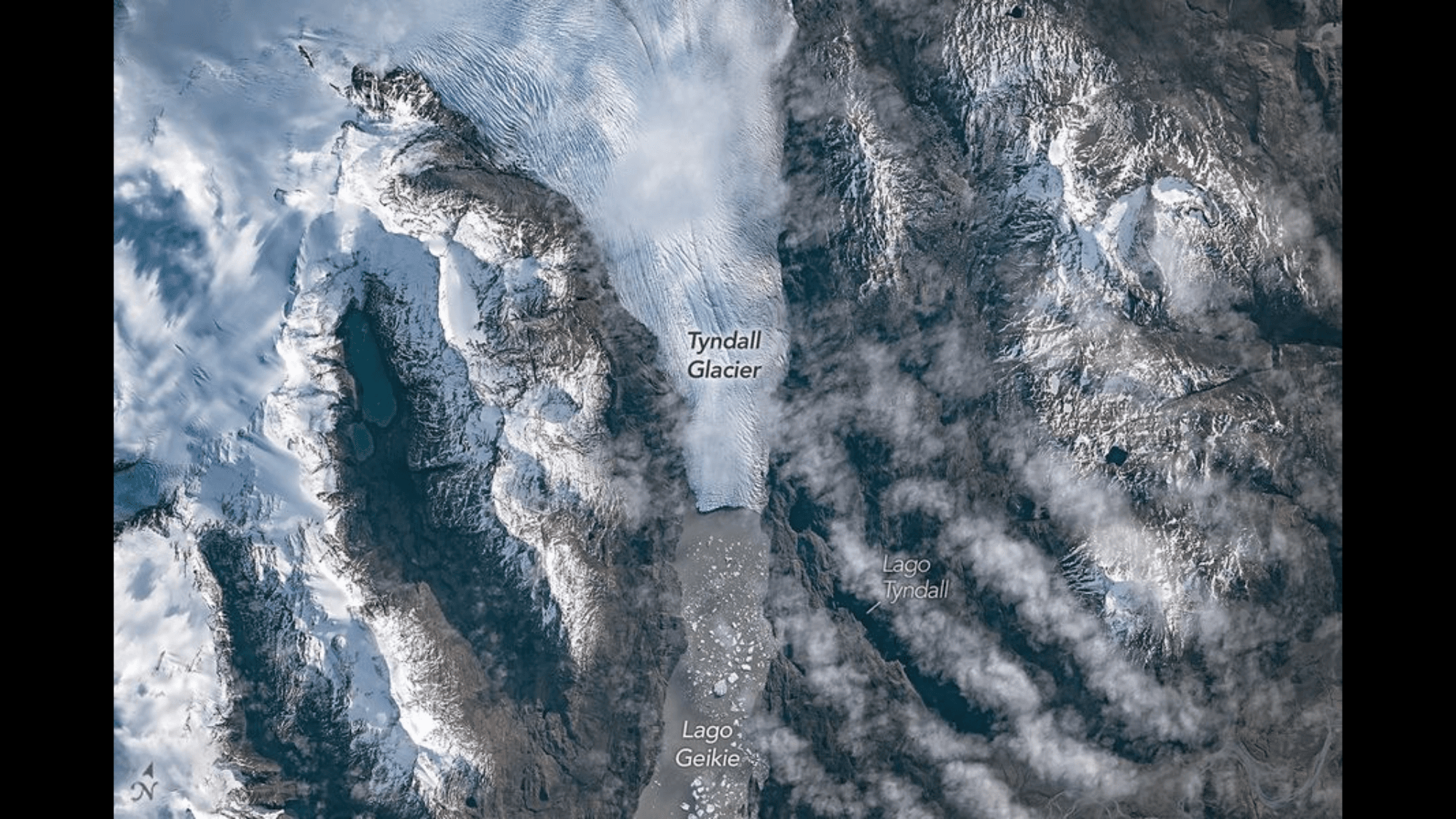
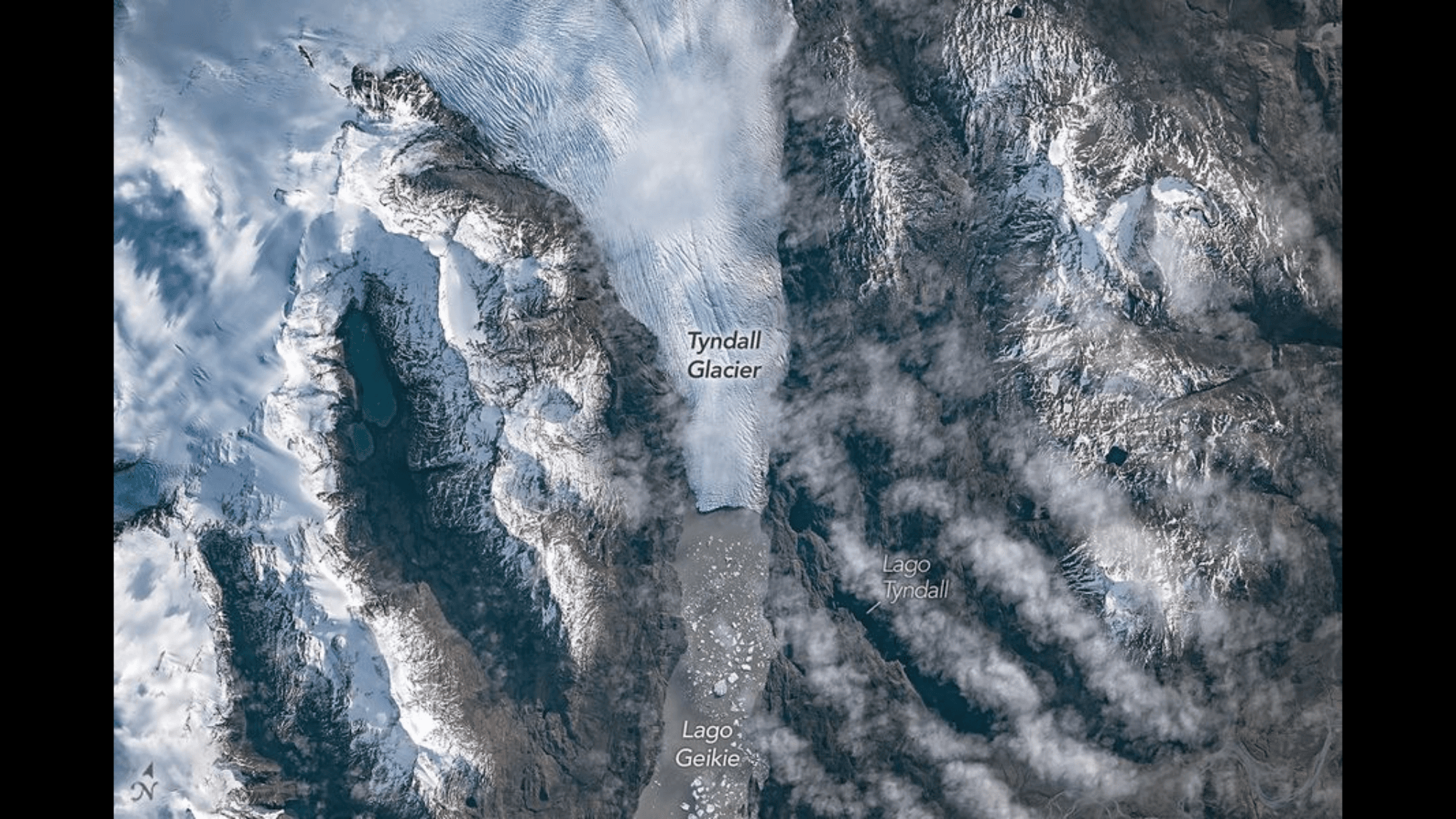
Astronauts aboard the International Space Station have captured a striking image of ice fragments breaking away from Chile's Tyndall Glacier and drifting into Lago Geikie below. The photograph, released by NASA, offers a rare orbital perspective on glacial calving. A process that's accelerating as global temperatures rise.
The chunks of ice are visible even from orbit. They appear as white specks floating across the lake's surface, evidence of a glacier that has been shrinking for roughly 150 years.
A Remnant of an Ancient Ice Sheet
The Tyndall Glacier sits in southern Chile's Torres del Paine National Park. It's part of the Southern Patagonian Icefield, which straddles the Chile-Argentina border. This ice field measures over 13,000 square kilometers, making it the second-largest continuous ice field of its type in the world.
What remains today is the larger half of the Patagonian Ice Sheet. This massive formation covered southern Chile during the last glacial period more than 20,000 years ago. The current ice field represents a fraction of what once existed.
Since the mid-1940s, the glacier has been actively shedding ice into Lago Geikie. The lake itself is proglacial, meaning the glacier's own retreat created it. As more ice breaks off or melts, the lake continues to grow.
The Speed of Retreat Is Increasing
The glacier has been in decline for a century and a half. But the pace is picking up. According to NASA's Earth Observatory, "The glacier has been retreating for roughly 150 years, but the speed of its retreat has been increasing recently."
Shadow analysis of the ISS photograph suggests the glacier's ice cliff stands 30 to 40 meters above Lago Geikie's surface. That's roughly the height of a ten-story building, calving into the water below.
The global picture is equally stark. As of 2025, the world's glaciers have lost over 273 metric tons of ice in just the past 20 years. This ice loss feeds directly into rising sea levels, putting coastal communities at risk worldwide.
Fossils Emerge as Ice Disappears
The retreating glacier has produced an unexpected scientific benefit. As ice falls away, it exposes bedrock that has been buried for millennia. Scientists have discovered ichthyosaur fossils in this newly revealed terrain.
Ichthyosaurs were marine reptiles that lived during the Mesozoic Era, between 250 and 90 million years ago. Finding their remains beneath a modern glacier underscores how dramatically the region's environment has changed over geological time.
The discovery doesn't diminish concerns about glacier loss. Sea level rise threatens coastal infrastructure and communities globally. But it does demonstrate how environmental change can reveal parts of Earth's history that would otherwise remain hidden.
Why Space Observation Matters
The ISS photograph illustrates why orbital observation has become essential for climate science. The Tyndall Glacier sits in remote, rugged terrain that's difficult to monitor from the ground. Satellites and space stations offer consistent, repeatable views of regions that would otherwise require expensive expeditions to study.
Online discussions in science communities have focused on this visual evidence. Users on forums like r/space have emphasized how ISS imagery helps visualize climate-driven landscape changes in ways that raw data cannot.
NASA's educational breakdown of the Southern Patagonian Icefield provides additional context on the glacial dynamics at play. The agency continues to monitor this and other ice fields as part of its Earth observation mission.

Logicity's Take
Frequently Asked Questions
Where is the Tyndall Glacier located?
The Tyndall Glacier is located in Torres del Paine National Park in southern Chile. It's part of the Southern Patagonian Icefield, which spans the Chile-Argentina border.
How much has the Tyndall Glacier retreated recently?
According to glaciologist Mauri Pelto of Nicholas College, the Tyndall Glacier has retreated 2.2 kilometers (1.4 miles) between November 2022 and May 2026.
What is glacial calving?
Glacial calving is the process where chunks of ice break off from the edge of a glacier, typically falling into water. The ISS photograph shows ice fragments from this process floating in Lago Geikie.
What fossils were found as the Tyndall Glacier retreated?
Scientists have discovered ichthyosaur fossils in the bedrock exposed by the glacier's retreat. Ichthyosaurs were marine reptiles that lived during the Mesozoic Era, between 250 and 90 million years ago.
How large is the Southern Patagonian Icefield?
The Southern Patagonian Icefield measures over 13,000 square kilometers (5,000 square miles), making it the second-largest continuous ice field of its kind in the world.
Need Help Implementing This?
Source: Latest from Space.com
Manaal Khan
Tech & Innovation Writer
Produced with AI assistance and reviewed by the Logicity editorial team. Learn more in our Editorial Policy.