Key Takeaways
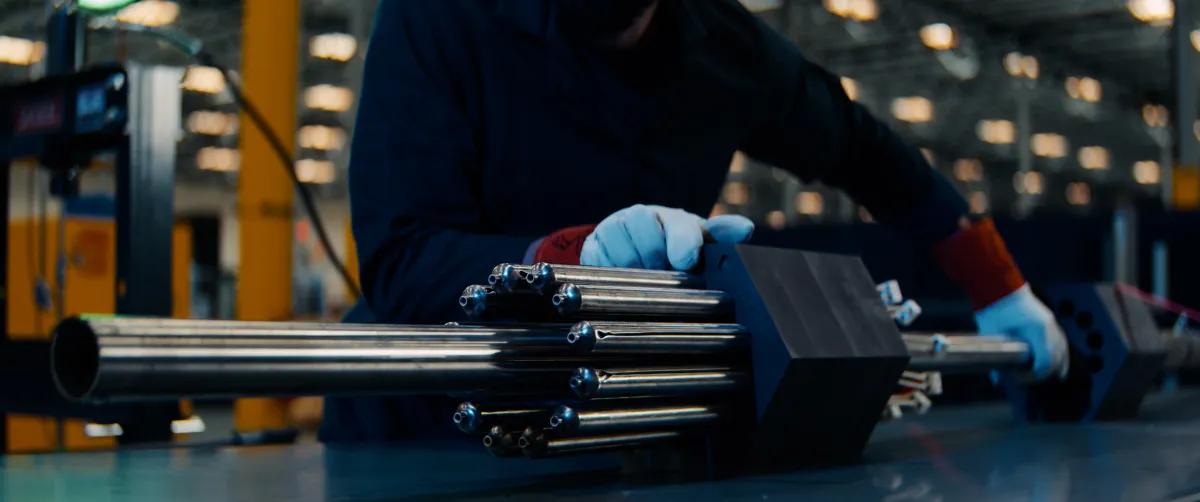
- Antares raised $470M ($370M equity, $100M debt) led by Paradigm and Caffeinated Capital to build SMRs for military bases
- The company's Mark-0 demonstration reactor reached criticality at Idaho National Laboratory on June 4, 2026
- First electricity-producing reactor planned for 2027, with military base deployments starting 2028
Antares Nuclear has closed a $470 million Series C round to build small modular reactors for U.S. military installations. The round, announced July 27, 2026, brings the startup's total funding to $604 million and positions it as a leading contender in the Pentagon's push to deploy nuclear power at remote bases.
Paradigm and Caffeinated Capital led the round, with Industrious Ventures, Point72 Ventures, and Shine Capital also participating. The financing breaks down into $370 million in equity and $100 million in debt. For context, this is nearly five times the $96 million Series B Antares closed in December 2025.
Why the military is betting on small reactors
The Pentagon has a problem. Military bases consume enormous amounts of electricity, often in locations where grid access is unreliable or nonexistent. Diesel generators work, but fuel logistics are expensive and create vulnerabilities. A compact nuclear reactor that runs for years without refueling changes the calculus entirely.
Antares is developing SMRs capable of producing between 100 kilowatts and 1 megawatt of electricity. That's enough to power up to 750 homes, or more importantly for military planners, a forward operating base with consistent, secure power. The company is one of three finalists in the Pentagon's Advanced Nuclear Power for Installations program, which will test SMRs at Air Force bases in Colorado and Montana.
The startup hit a major technical milestone on June 4, 2026, when its Mark-0 demonstration reactor achieved criticality at Idaho National Laboratory. Criticality means the reactor sustained a controlled nuclear chain reaction. It's the nuclear equivalent of a first flight for an aircraft startup.
The TRISO fuel advantage
Like several other advanced nuclear startups, Antares uses TRISO fuel. These billiard ball-sized spheres encapsulate uranium in multiple layers of carbon and ceramic shells. The coating is designed to prevent fuel from melting even in high-temperature scenarios, which proponents argue makes TRISO inherently safer than traditional nuclear fuel rods.
TRISO-fueled reactors can be cooled by gases like helium or by molten salts, rather than the water used in conventional nuclear plants. This opens up design possibilities for more compact reactors and eliminates some failure modes associated with water-cooled systems.
The fuel's safety profile matters for military applications. A reactor that can survive combat conditions, transport, and operate with minimal crew makes deployment practical in ways that conventional nuclear technology never could be.
Nuclear investment is surging
Antares isn't raising money in a vacuum. Investors have poured billions into nuclear startups over the past year, driven by two converging trends: AI data centers need massive amounts of reliable power, and the broader economy is electrifying everything from cars to heating.
X-energy raised $1 billion through an IPO in April 2026. Radiant Energy, Standard Nuclear, and Last Energy have each closed nine-figure rounds since December 2025. The logic is straightforward. Solar and wind are intermittent. Natural gas faces carbon constraints. Nuclear provides baseload power with no direct emissions.
Context on recent startup funding activity across sectors
The cost problem no one wants to talk about
Here's where investor enthusiasm collides with economic reality. Advanced nuclear startups face serious hurdles to commercialization, and cost sits at the top of the list.
Lazard, which publishes widely-cited analyses of energy costs, expects new SMRs to cost about $214 per megawatt hour when they enter service in the early 2030s. At that price, SMRs would be more expensive than nearly every other power source except the most expensive gas turbines.
SMR startups argue that mass manufacturing will drive costs down over time. Build enough reactors in a factory setting, and you get the same economies of scale that made solar panels cheap. But those benefits typically take at least a decade to materialize, and no startup has reached that stage yet.
The U.S. also lacks a mature supply chain for advanced nuclear components. Building that infrastructure requires capital, time, and regulatory navigation that add years to any deployment timeline.
| Energy Source | Estimated Cost ($/MWh) | Availability |
|---|---|---|
| New SMRs (projected) | $214 | Early 2030s |
| Utility-scale solar | $30-50 | Now |
| Onshore wind | $25-45 | Now |
| Combined-cycle gas | $40-70 | Now |
| Gas peaker plants | $150-200+ | Now |
Why military contracts make strategic sense
Antares has shrewdly targeted a customer that doesn't optimize purely for cost. The U.S. military is, to use an economist's term, price-insensitive when energy security is at stake. A base in a contested region that can operate independently of fuel convoys has real tactical value. That value doesn't show up in a levelized cost calculation.
The company aims to bring its first electricity-producing reactor online in 2027, with deployments at military installations starting in 2028. If Antares can prove its technology works reliably in military settings, it builds a track record that could open doors to commercial customers later, when costs have hopefully come down.
Antares hasn't disclosed its pricing, but military contracts often accept premium costs for proven technology and security of supply. The Pentagon effectively becomes a development partner, subsidizing the learning curve that will eventually benefit civilian applications.
How AI is reshaping venture capital allocation
Timeline: Antares milestones ahead
Logicity's Take
Antares is playing the long game. By targeting military customers first, the company sidesteps the cost competitiveness problem that will haunt SMR startups chasing utility contracts. The Pentagon pays for reliability and energy independence, not just megawatt hours. If Antares can execute on its 2028 deployment target, it builds operational credibility while competitors are still navigating regulatory approvals. The real question: can TRISO-based reactors actually scale to factory production, or will they remain boutique hardware for price-insensitive buyers? The answer probably won't come until the early 2030s.
What this means for the broader nuclear sector
The Antares round signals that investors remain bullish on advanced nuclear despite the cost challenges. With X-energy's $1 billion IPO and multiple nine-figure raises in the sector, nuclear startups collectively have access to more capital than at any point since the technology's early decades.
But capital alone won't solve the manufacturing, supply chain, and regulatory problems. The Nuclear Regulatory Commission's approval processes weren't designed for factory-built modular reactors. Utilities are unfamiliar with purchasing power from non-traditional sources. These institutional frictions take years to resolve.
For now, the most viable path for SMR startups runs through customers who value something other than pure cost: military bases that need energy independence, data centers that need round-the-clock reliability, or remote industrial sites where grid connection is impractical.
How cloud providers are expanding infrastructure to meet demand
Frequently Asked Questions
What is Antares Nuclear building?
Antares is developing small modular reactors (SMRs) capable of producing 100 kilowatts to 1 megawatt of electricity, designed for deployment at U.S. military bases.
How much has Antares raised in total?
Antares has raised $604 million across all funding rounds, including the $470 million Series C announced in July 2026.
What is TRISO fuel?
TRISO fuel encapsulates uranium in layers of carbon and ceramic, designed to prevent melting in high-temperature conditions. The fuel comes in billiard ball-sized spheres and can be cooled by gases or molten salts.
When will Antares deploy reactors at military bases?
Antares plans to bring its first electricity-producing reactor online in 2027, with deployments at U.S. military installations starting in 2028.
How do SMR costs compare to other energy sources?
Lazard projects new SMRs will cost about $214 per megawatt hour in the early 2030s, making them more expensive than solar, wind, and most natural gas plants.
Need Help Implementing This?
If your organization is tracking energy infrastructure investments or evaluating power options for data centers, reach out to Logicity for analysis and strategic guidance tailored to tech decision-makers.
Source: TechCrunch / Tim De Chant
Manaal Khan
Tech & Innovation Writer
Produced with AI assistance and reviewed by the Logicity editorial team. Learn more in our Editorial Policy.