Key Takeaways
- Samsung's close partnership with Google is pushing away users who bought Galaxy devices as a Google alternative
- Galaxy AI marketing has overshadowed genuine hardware innovation in Samsung's recent foldable releases
- Competitors like Honor, OnePlus, and Xiaomi now offer thinner foldables with better specs at lower prices
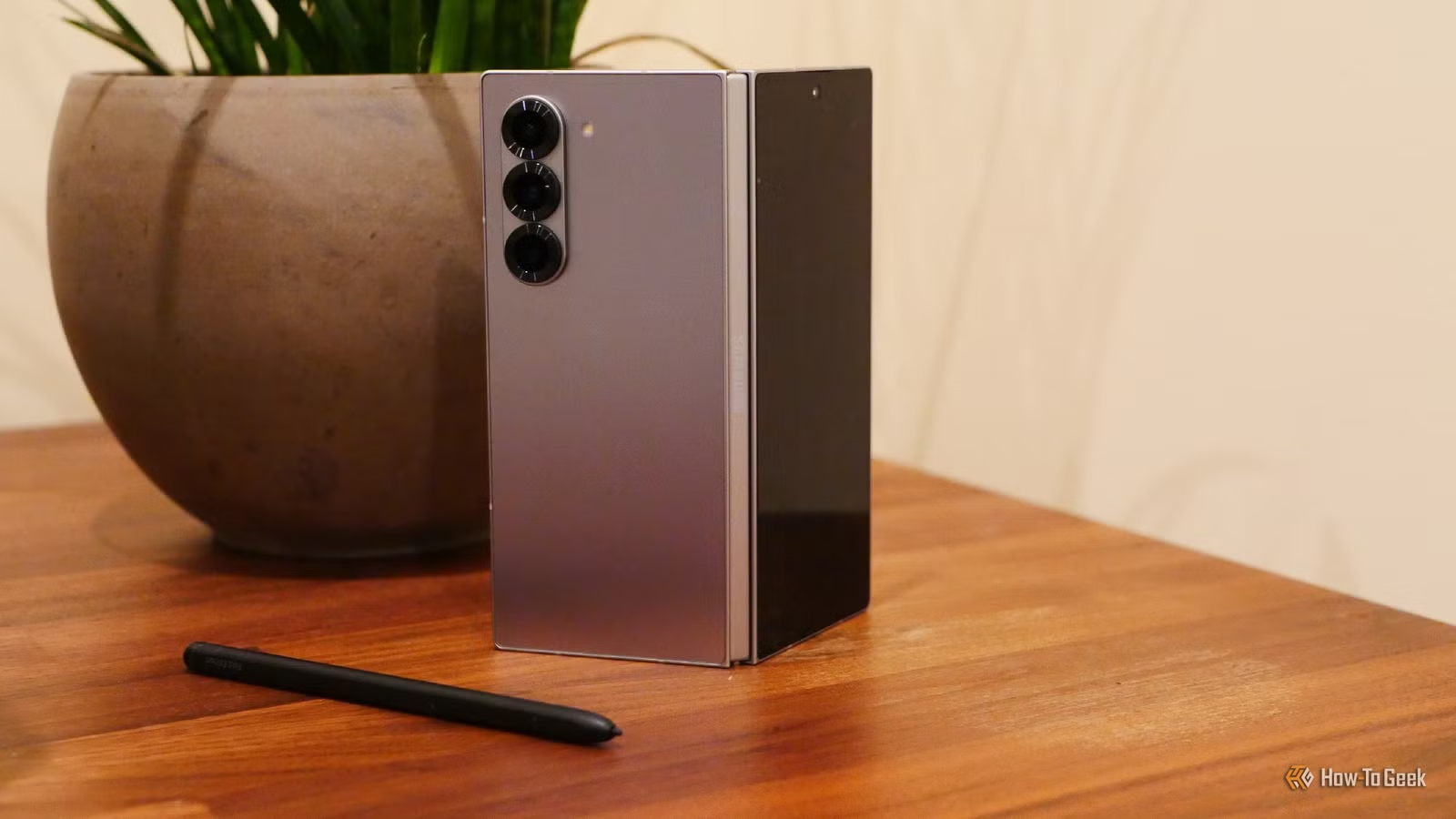
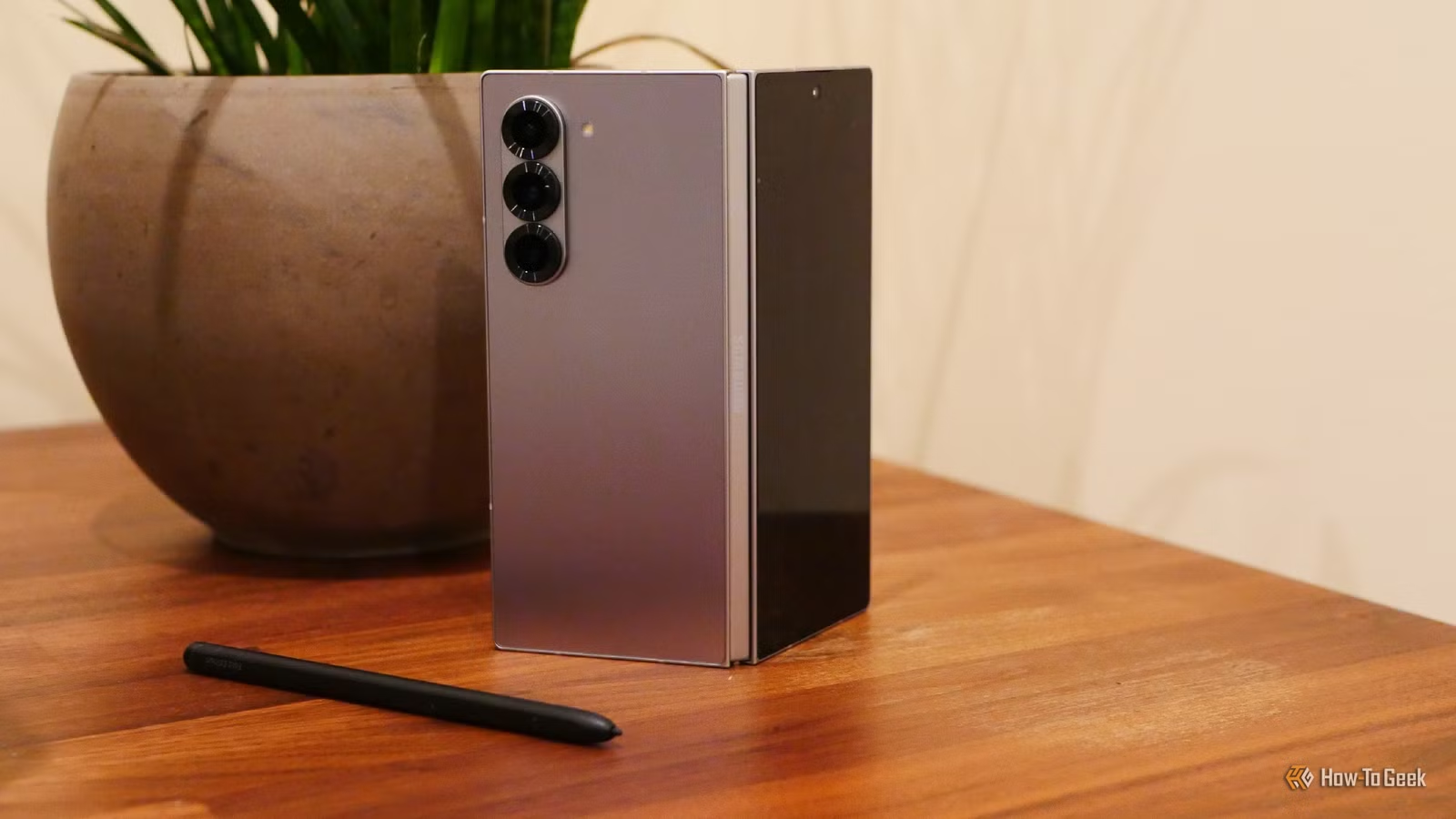
Bertel King, a tech writer at How-To Geek, just broke up with Samsung. His Galaxy Z Fold 6 was, by his own description, 'a fully capable PC that fit in my pocket, unfolded into a tablet, and became a desktop when connected to a monitor.' Yet he's walking away. The reason tells us something about where Samsung has gone wrong.
The Google Problem
King bought Samsung hardware specifically as an alternative to Google. He deleted his Google account and went years without one. He doesn't like most Google apps. Yet he loves Android. Samsung was his escape route.
That escape route is closing. When King unboxes a new Galaxy device, it now prioritizes Google apps over Samsung's own. Samsung Messages is dying in favor of Google Messages. Bixby is being upgraded, but Galaxy phones still default to Google Assistant. The two companies are so intertwined that King sees 'increasingly less daylight between' them.
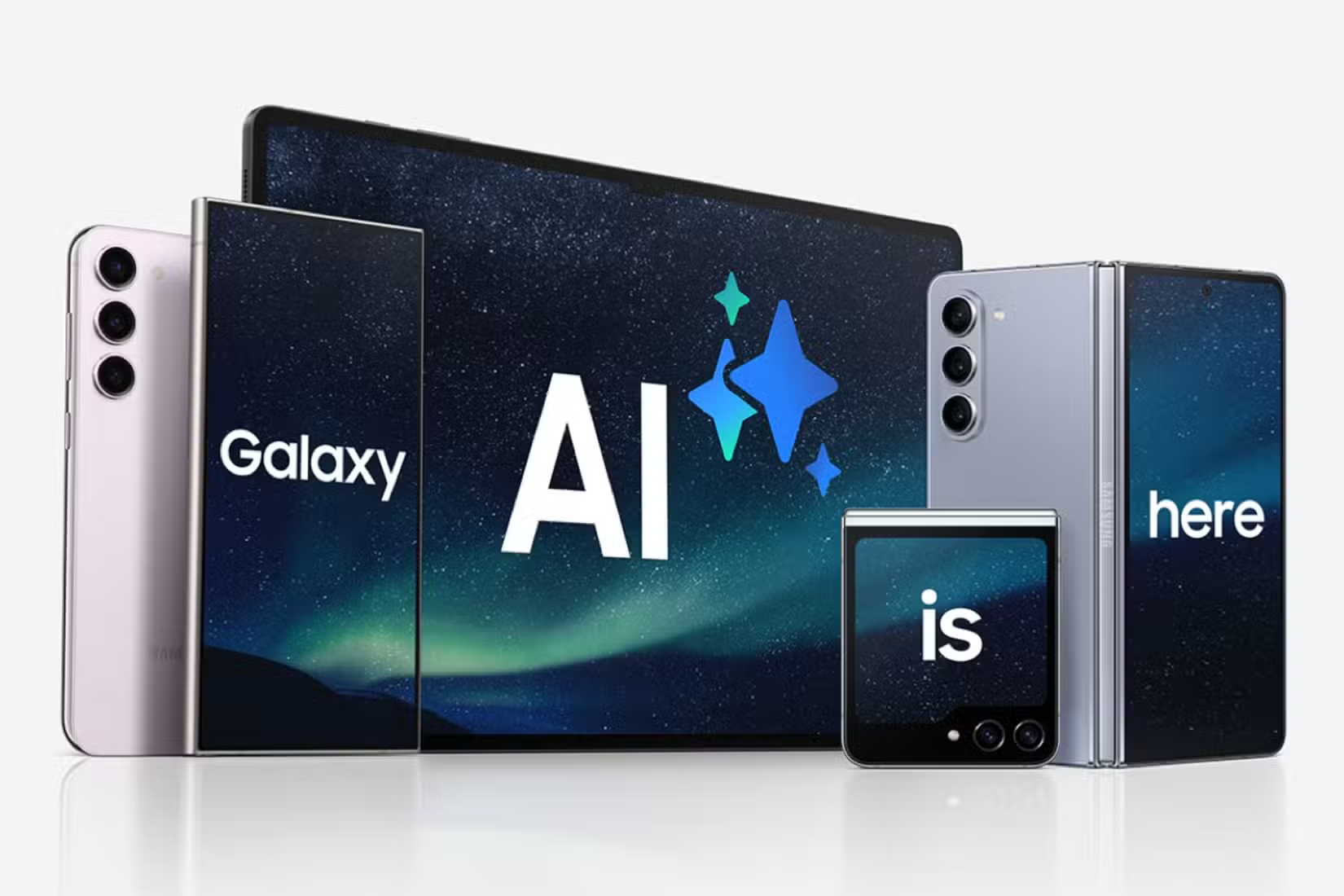
At this year's Galaxy Unpacked, Samsung did show genuine hardware innovation with the Galaxy S26 Ultra's privacy display. But most of the event was dedicated to showcasing Gemini-powered AI features. Samsung and Google proudly demonstrated the ability to generate fake images, inserting people and animals into places they never were. King's take: 'Google slop.'
Hardware Stagnation While Competitors Sprint
The Galaxy Z Fold 6 starts at $1,899. For that price, buyers get a 4,400 mAh battery, the same capacity Samsung has used since the Fold 4. Maximum wired charging speed is 25W, far behind competitors. The camera sensors haven't changed from the previous generation.
Meanwhile, Honor, OnePlus, and Xiaomi have released foldables that are thinner, have larger batteries, charge faster, and show less visible creases. Samsung was the undisputed leader of the foldable market. That's no longer true.
Tech reviewer MKBHD has been critical of Samsung's iterative hardware changes and pricing strategy. The consensus among reviewers: the Fold 6 is a great phone, but it's a boring update. Samsung is focusing on software gimmicks while the rest of the industry pulls ahead in actual hardware innovation.
The Z Fold 7: More of the Same?
Samsung's Galaxy Z Fold 7 is being marketed as the company's 'thinnest and lightest Fold yet.' It has a brighter 8-inch display and 12GB of RAM. The price: $2,000.
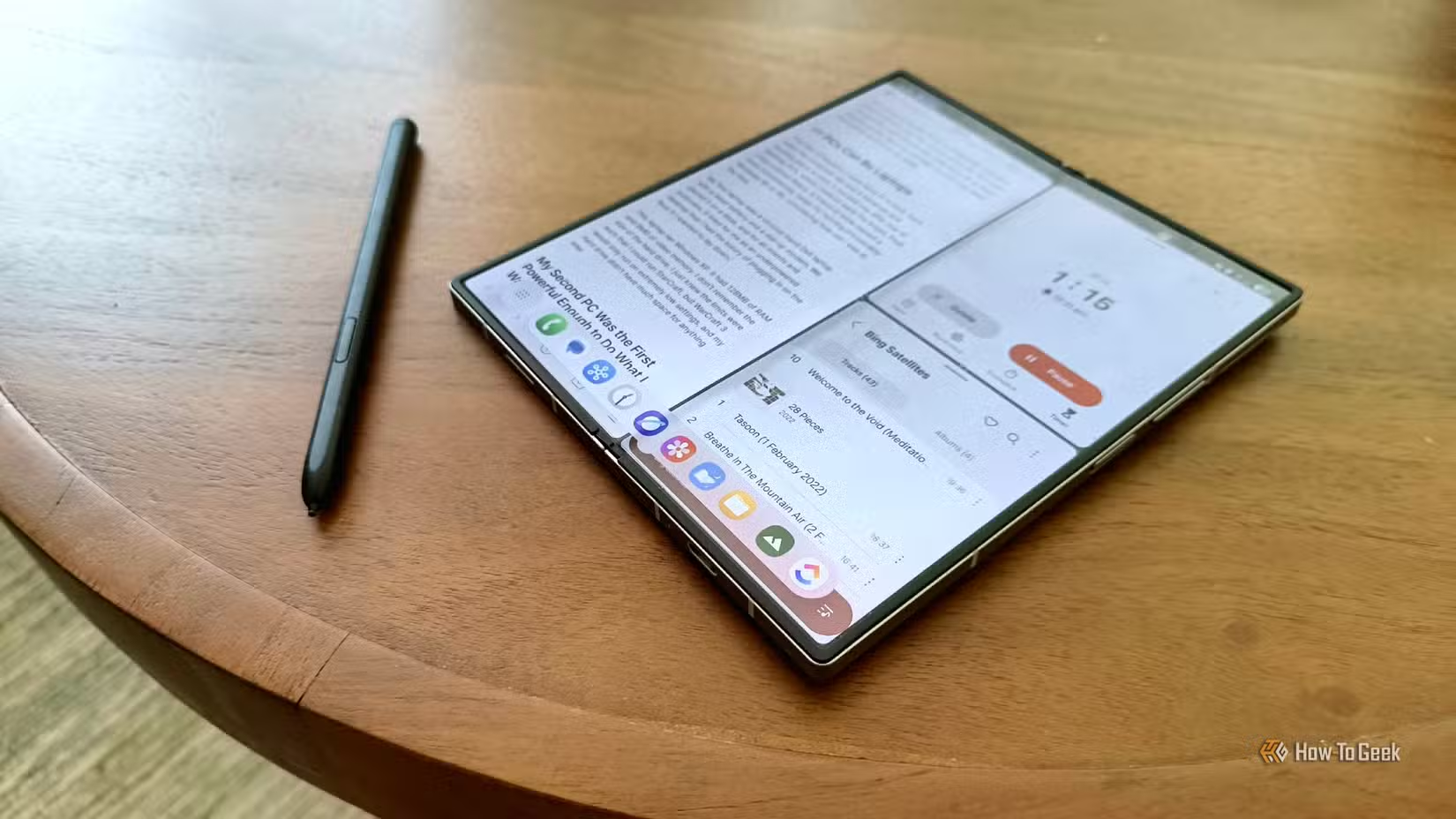
Samsung is positioning 'on-device Galaxy AI' as a primary selling point. For users like King, that's precisely the problem. He doesn't want AI features. He wants a phone that doesn't force Google apps on him and doesn't cost $2,000 to get the same battery capacity as last year.
Community Frustration
King isn't alone. Reddit communities like r/GalaxyFold and r/Android have been highly critical of the Fold 6. Users express frustration that Samsung kept the same camera sensors and battery capacity as the previous generation. The term 'foldable fatigue' has emerged to describe the feeling that minor iterative updates no longer justify the premium price.
Many longtime Samsung fans are switching to thinner or more hardware-aggressive competitors. Honor's global account has highlighted their thinner device design compared to the Galaxy Z Fold 6. When a Chinese manufacturer is dunking on you for hardware specs, something has shifted.
The Irony of Samsung's Strategy
Some of Samsung's Google integration has yielded good results. One UI looks better than TouchWiz ever did. QuickShare, the result of Samsung and Google collaborating on an AirDrop alternative, works well. But these wins are overshadowed by the loss of what made Samsung phones distinct.
King's frustration is specific: he chose Samsung because it wasn't Google. Now Samsung is becoming Google with different branding. If he wanted Google slop, he writes, he'd buy a Pixel.
His solution? He's looking at alternatives. The article mentions Murena, a privacy-focused phone maker, as one option. For a user who once saw Samsung as the premium Android experience, that's quite a fall.
Logicity's Take
For readers considering alternatives to Samsung's foldables
More on Samsung's upgrade value proposition
Frequently Asked Questions
Why are Samsung foldable users switching to other brands?
Many users cite Samsung's increasing Google integration, unchanged battery capacity, slow charging speeds, and high prices while competitors offer better specs at lower prices.
How much does the Samsung Galaxy Z Fold 7 cost?
The Galaxy Z Fold 7 starts at $2,000 for the base model with 12GB RAM.
What is Galaxy AI and why are users frustrated with it?
Galaxy AI is Samsung's suite of AI features powered by Google's Gemini. Users are frustrated because Samsung marketing focuses on AI while neglecting hardware improvements like battery capacity and charging speed.
Which foldable phone brands compete with Samsung?
Honor, OnePlus, and Xiaomi now offer foldables with thinner designs, larger batteries, faster charging, and less visible screen creases than Samsung's offerings.
What is the battery capacity of the Samsung Galaxy Z Fold 6?
The Galaxy Z Fold 6 has a 4,400 mAh battery, the same capacity Samsung has used since the Galaxy Z Fold 4.
Need Help Implementing This?
Source: How-To Geek
Manaal Khan
Tech & Innovation Writer
Produced with AI assistance and reviewed by the Logicity editorial team. Learn more in our Editorial Policy.