Key Takeaways
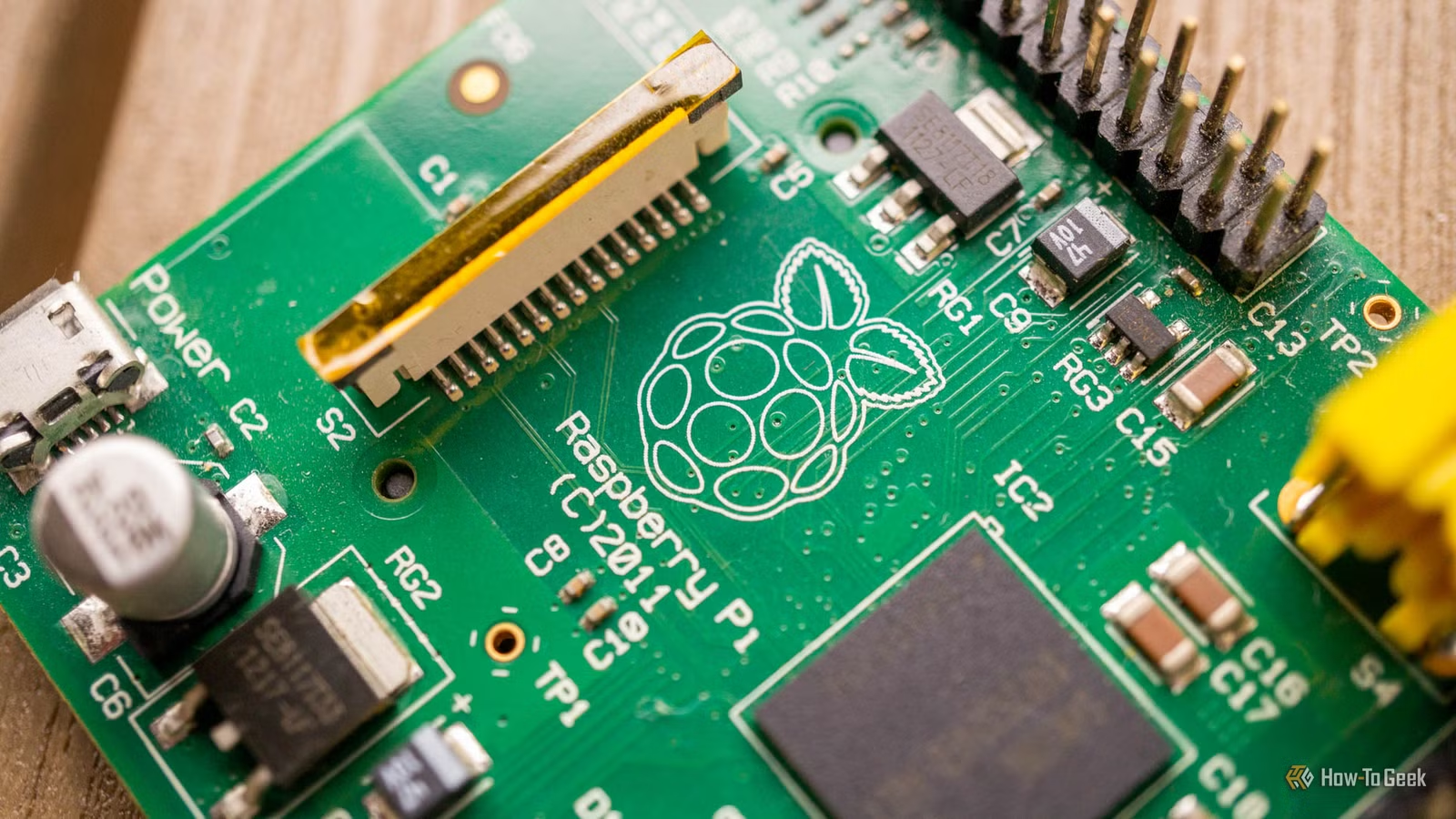
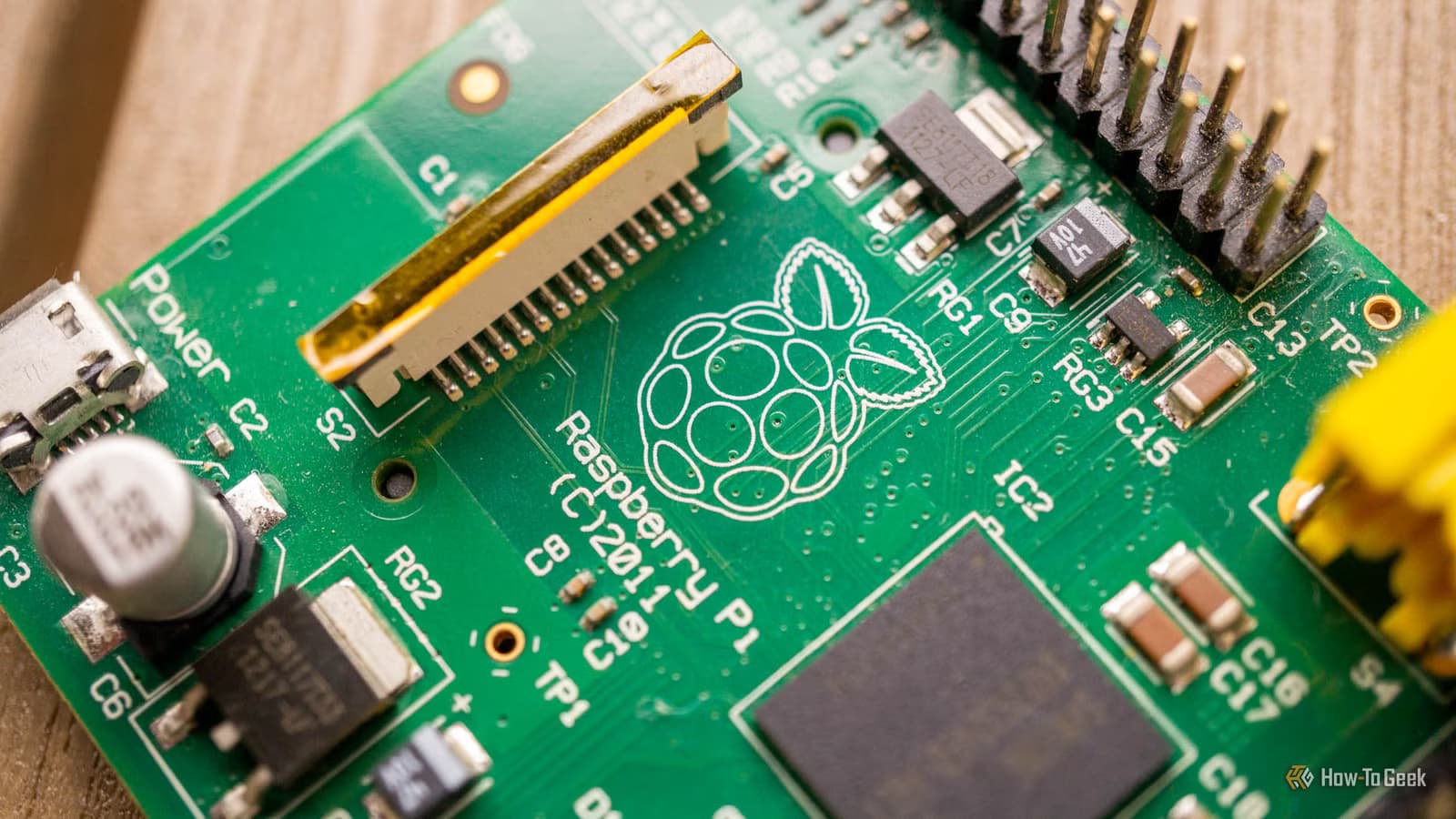
- The Raspberry Pi launched in 2012 as an educational tool but became the default choice for hobbyist projects
- Rising prices and supply chain issues have pushed many users toward alternatives
- Chinese competitors now offer similar specs at lower prices
- The Pi 5 starts at $80, a far cry from the original's budget-friendly positioning
- The ecosystem and community support still give Raspberry Pi an edge, but that gap is shrinking
Read in Short
The Raspberry Pi turned 15 this year, and its dominance in the single-board computer market is slipping. Rising prices, supply shortages, and aggressive competition from Chinese manufacturers have many hobbyists looking elsewhere. The Pi isn't dead, but it's definitely not the obvious choice it used to be.
Here's a statement that would've been unthinkable five years ago: nobody wants a Raspberry Pi anymore. Okay, that's a bit dramatic. But when a seasoned homelab builder with years of single-board computer experience says something like that, you've gotta pay attention.
The Raspberry Pi has been the undisputed champion of the hobbyist computing world since it launched back in 2012. It powered countless projects, from home servers to retro gaming consoles to smart mirrors. If you wanted to build something cool with a tiny computer, you bought a Pi. That was just how it worked.
But 15 years is a long time in tech. And the world the Pi was born into looks nothing like the one we're living in now.
How the Raspberry Pi Became a Legend
The original Raspberry Pi had a simple mission: get kids interested in programming. It was dirt cheap, small enough to fit in your pocket, and ran Linux. Teachers loved it. Tinkerers loved it even more.
What happened next caught everyone off guard. The Pi became THE platform for DIY computing projects. The community exploded. Third-party accessories flooded the market. The HAT standard (that's Hardware Added on Top, if you're curious) meant you could snap on sensors, displays, motor controllers, and pretty much anything else you could imagine.
By the time the Pi 4 rolled around, you could legitimately use one as a desktop computer. Not a great one, sure. But a functional one that cost less than a nice dinner out.
So What Went Wrong?
Wrong might be too strong a word. But things definitely changed.
Remember the chip shortage during the pandemic? The Pi got hit hard. Like, really hard. For months, you couldn't buy one at retail price. Scalpers were charging double, sometimes triple what these boards were supposed to cost. People who just wanted to build a little home automation setup found themselves competing with industrial buyers who needed thousands of units.
The Supply Chain Problem
During 2021-2022, Raspberry Pi boards became nearly impossible to find at MSRP. The foundation prioritized industrial customers over hobbyists, which left many longtime fans feeling abandoned.
That left a bad taste in people's mouths. And while supply has mostly stabilized now, the trust took a hit.
Then there's the price thing. The original Pi cost around $35. The current Pi 5? It starts at $60 for the 4GB model and runs $80 for the 8GB version. Add in a case, power supply, and storage, and you're looking at well over $100 for a basic setup.
Is that still cheap? Compared to a full desktop, absolutely. But it's not the "impulse buy" territory the Pi used to occupy.
The Competition Got Serious
Here's where things get interesting. While the Raspberry Pi Foundation was dealing with supply issues and gradually raising prices, a whole bunch of competitors showed up.
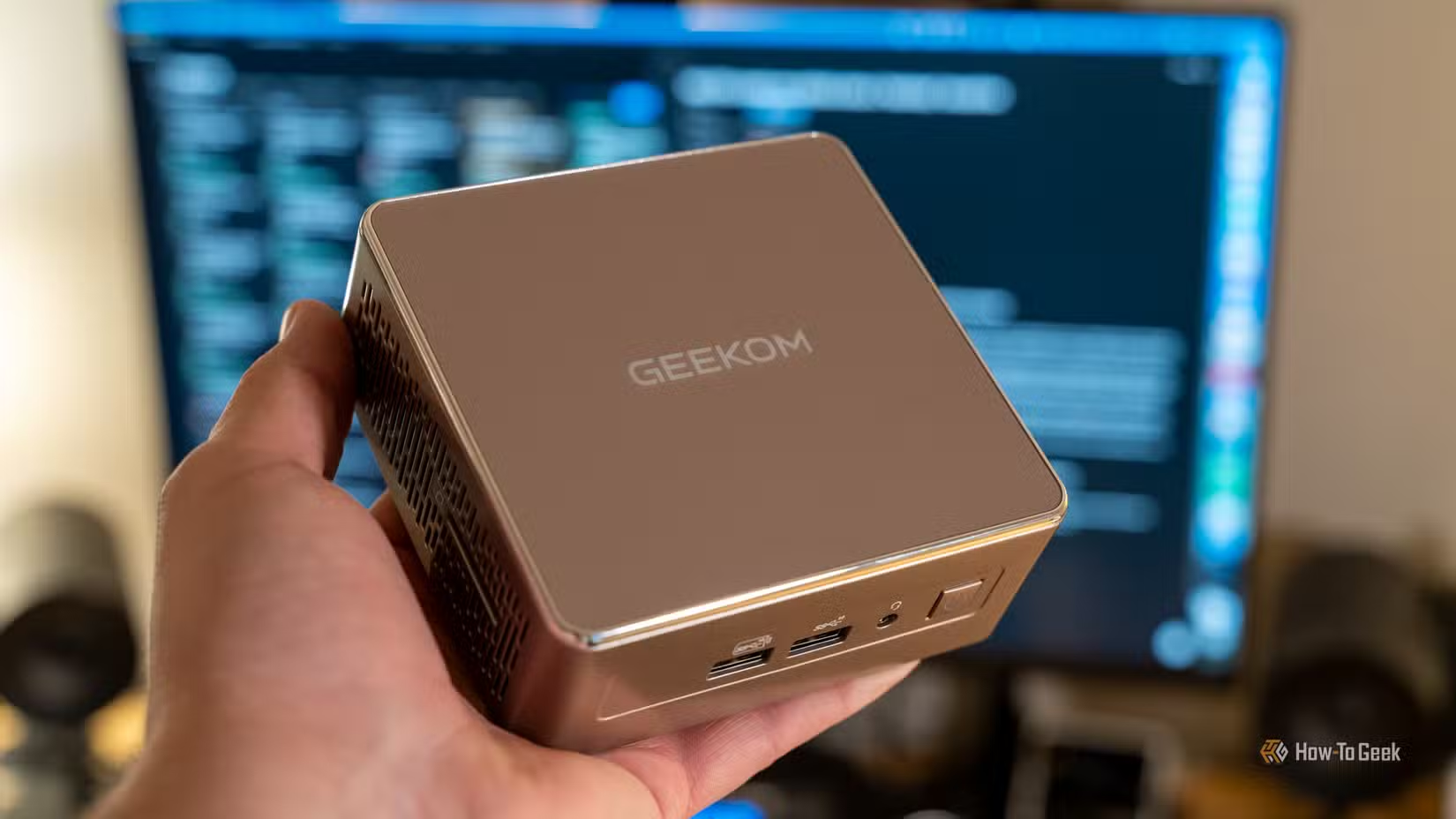
Orange Pi, Banana Pi, Rock Pi, ODROID. These names might sound like knockoffs, but some of them are genuinely impressive. Chinese manufacturers in particular have been pumping out boards with competitive specs at lower prices.
| Board | Price | RAM Options | Notable Feature |
|---|---|---|---|
| Raspberry Pi 5 | $60-80 | 4GB, 8GB | Best ecosystem support |
| Orange Pi 5 | $50-70 | 4GB, 8GB, 16GB | Better price-to-performance |
| Rock 5B | $75-150 | 4GB, 8GB, 16GB | Faster NPU for AI tasks |
| ODROID N2+ | $65-80 | 4GB | Excellent emulation performance |
Look, I'm not saying these alternatives are strictly better. The Pi still has the best documentation, the biggest community, and the widest accessory ecosystem. If something goes wrong, you can Google your problem and find fifty forum threads about it.
But that advantage is shrinking. The alternatives are building their own communities. Their documentation is getting better. And for certain use cases, they're just flat-out better choices.
Understanding China's massive chip investment helps explain why Chinese SBC alternatives can undercut Raspberry Pi pricing
The Pi 5: Too Little, Too Late?
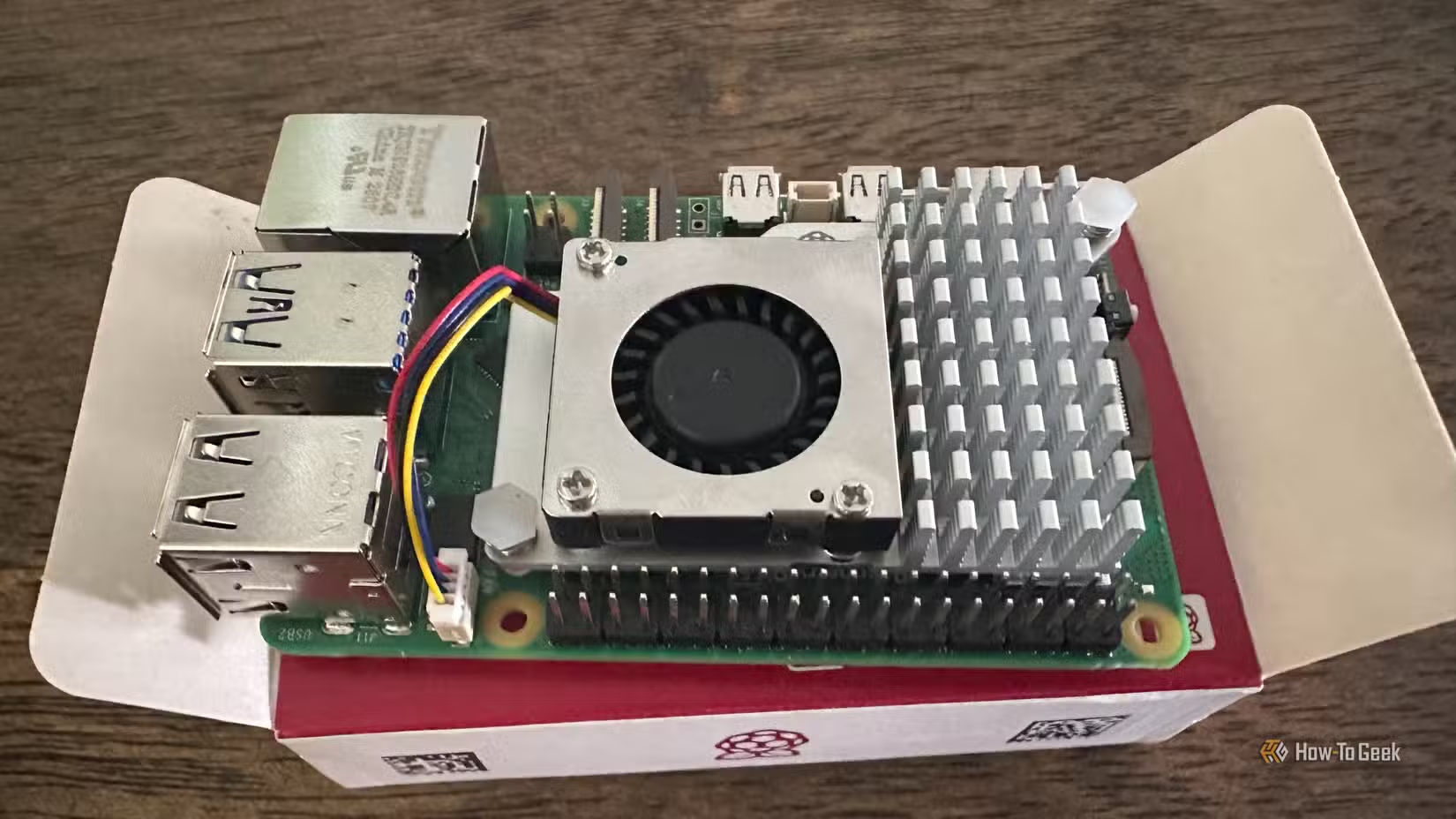
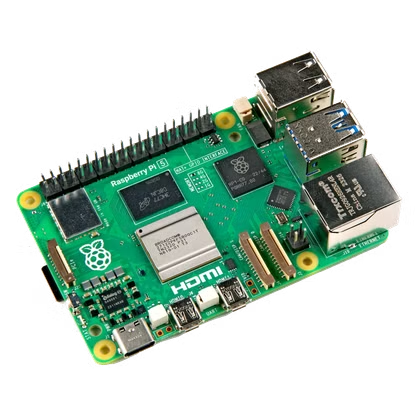
The Raspberry Pi 5 is genuinely impressive hardware. It's got a faster processor, PCI Express support (finally!), and better overall performance than anything the foundation has released before.
✅ Pros
- • Significant performance boost over Pi 4
- • PCIe support enables faster storage options
- • Strong backward compatibility with existing HATs
- • Massive existing accessory ecosystem
❌ Cons
- • Higher price point than previous generations
- • Runs hotter and needs active cooling
- • Some older software has compatibility issues
- • Competition offers similar specs for less
But here's the thing. By the time it launched, expectations had shifted. People weren't just comparing it to the Pi 4. They were comparing it to everything else on the market. And while the Pi 5 holds its own, it doesn't dominate the way earlier models did.
The kicker? You basically need active cooling for the Pi 5. That dinky little fan adds cost and complexity to what used to be a dead-simple platform.
What This Means for Your Next Project
So should you still buy a Raspberry Pi? Honestly, it depends.
If you're a beginner who wants tons of tutorials and community support, the Pi is still your best bet. The learning resources are unmatched. When you get stuck at 2 AM trying to figure out why your Python script won't talk to your sensor, you'll appreciate having millions of people who've solved that exact problem before.
But if you're an experienced tinkerer who knows what you're doing? Shopping around makes sense. Maybe an Orange Pi gives you more RAM for your media server. Maybe a Rock board's NPU makes your AI project actually usable.
- For learning and education: Raspberry Pi still wins on documentation and community
- For home servers: Consider alternatives with more RAM options
- For AI/ML projects: Look at boards with dedicated NPUs
- For retro gaming: ODROID often offers better emulation performance
- For industrial use: The Pi's proven reliability matters more than price
The Bigger Picture
The Raspberry Pi isn't dying. Let's be clear about that. It's still selling millions of units. It still has the most robust ecosystem in the single-board computer space. The Raspberry Pi Foundation is still doing good work.
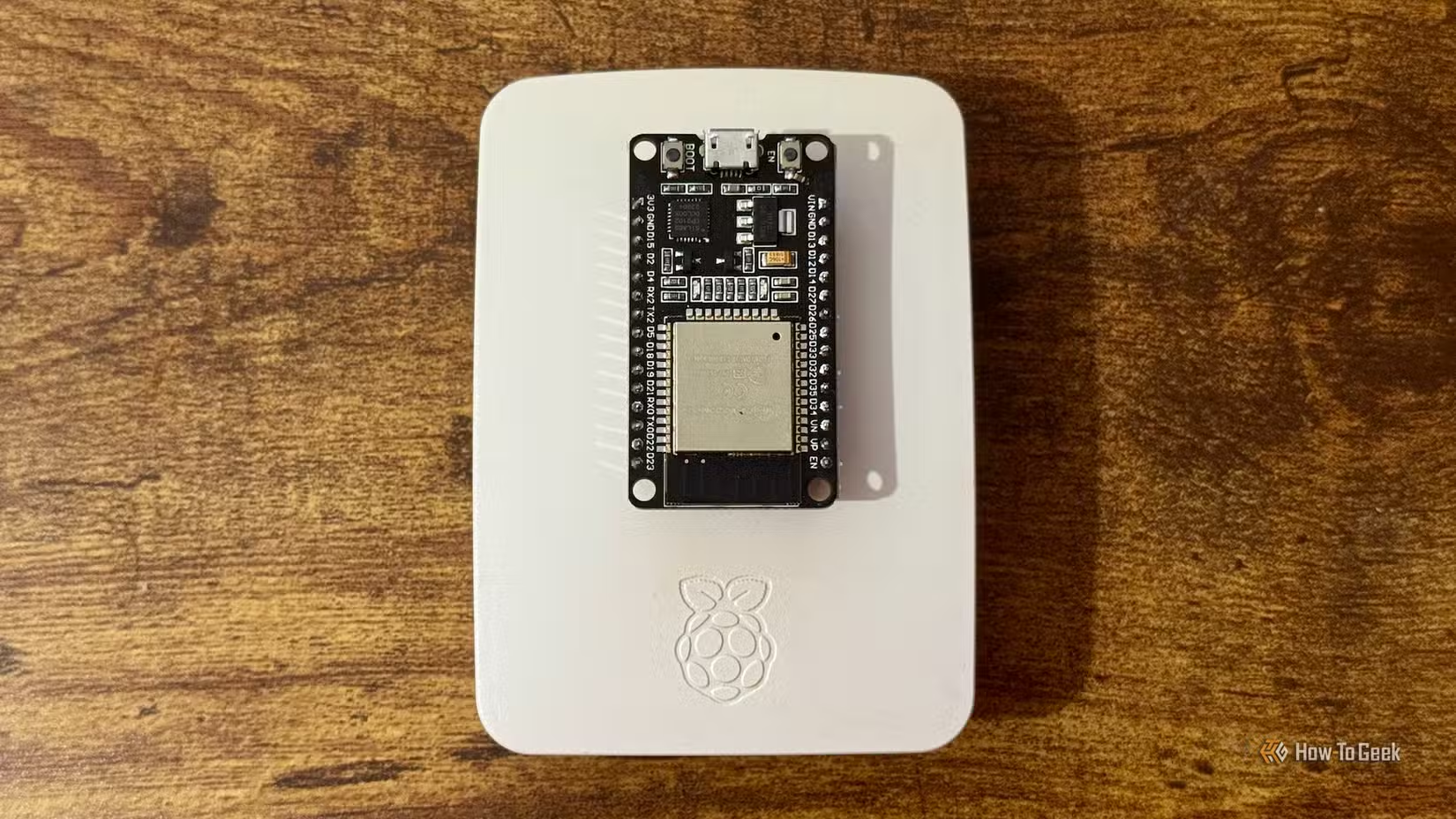
But the era of the Pi being the automatic default choice? That's ending. And honestly, that's probably healthy for the whole market. Competition pushes everyone to do better. Lower prices help more people get into the hobby. More options mean projects can be optimized for their specific needs.
For 15 years, the Raspberry Pi was basically synonymous with hobbyist computing. Going forward, it's going to be one choice among many. A good choice, often. The best choice, sometimes. But not the only choice.
And for those of us who love building weird little projects with tiny computers, that's actually pretty exciting.
Frequently Asked Questions
Is the Raspberry Pi still worth buying in 2026?
Yes, especially for beginners. The community support and documentation are still unmatched. Experienced users might want to compare alternatives.
What's the best Raspberry Pi alternative right now?
It depends on your use case. Orange Pi offers great value, Rock boards excel at AI tasks, and ODROID is popular for emulation projects.
Why did Raspberry Pi prices go up?
Component costs increased, and the foundation has been adding more powerful hardware with each generation. The days of sub-$35 boards are mostly over.
Can I still find Raspberry Pi boards in stock?
Supply has improved significantly since the pandemic shortage. Most models are available at or near MSRP from authorized retailers.
Source: How-To Geek
Huma Shazia
Senior AI & Tech Writer
Produced with AI assistance and reviewed by the Logicity editorial team. Learn more in our Editorial Policy.