China Chip Subsidies Reach $142 Billion: 3.6x More Than US Spent on Semiconductor Manufacturing

Key Takeaways
- China invested $142 billion in semiconductor subsidies from 2014-2023, compared to just $39 billion from the US
- Despite massive spending, Chinese firms only hold 4.5% of global semiconductor shipments vs 50%+ for US companies
- SMIC yields hover around 20-25% for advanced nodes while TSMC pushes forward with 2nm production
- South Korea ranks second globally with $55 billion in chip subsidies, followed by EU at $47 billion
- The data doesn't include the $47.5 billion Big Fund III China launched in May 2024
Read in Short
China has thrown $142 billion at its chip industry over the past decade, roughly 3.6 times what the US committed. But all that cash hasn't bought them a seat at the leading edge table. SMIC still sits 2-3 generations behind TSMC with yield rates that would make any fab engineer wince.
So here's the thing about throwing money at a problem: sometimes it works brilliantly, and sometimes you end up with a very expensive lesson in humility. China's semiconductor ambitions appear to be landing somewhere in between, according to a March report from the Center for Strategic and International Studies.
The numbers are staggering. Between 2014 and 2023, Beijing pumped approximately $142 billion into its semiconductor industry. The US? About $39 billion over the same period. That's not a gap. That's a canyon.
The Global Chip Subsidy Scoreboard
Let's put this into perspective with how other major players stack up. The data comes from Boston Consulting Group and the Semiconductor Industry Association, and it paints a pretty clear picture of who's betting biggest on chip independence.
| Country/Region | Total Subsidies (2014-2023) | Percentage of China's Spending |
|---|---|---|
| China | $142 billion | 100% |
| South Korea | $55 billion | 38.7% |
| European Union | $47 billion | 33.1% |
| United States | $39 billion | 27.5% |
| Japan | $17.5 billion | 12.3% |
| Taiwan | $16 billion | 11.3% |
South Korea comes in second at $55 billion, which makes sense given Samsung's position in the memory and foundry markets. The EU trails at $47 billion, while Japan and Taiwan bring up the rear with $17.5 billion and $16 billion respectively.
Important Context
These figures cover spending through 2023 and don't include most US CHIPS Act disbursements, which only started flowing after the law passed in August 2022. They also miss China's Big Fund III, a $47.5 billion war chest launched in May 2024.
Money Can't Buy Everything
Here's where it gets interesting. And honestly? A little embarrassing for China's chip ambitions.
Despite spending nearly four times what America did, Chinese semiconductor companies account for just 4.5% of global chip shipments. US-headquartered firms? They still control more than 50% of the market. That's a brutal return on investment no matter how you slice it.
SMIC, China's most advanced chipmaker, holds roughly 6% of global fab production as of mid-2025. That puts them third behind TSMC and Samsung. Not bad on the surface. But dig into the technical details and the picture gets ugly fast.
“Beijing's chip drive has still amounted to what he calls a 'disruptive failure' at the leading edge.”
— Scott Kennedy, Senior Adviser at CSIS
The Yield Problem Nobody's Talking About
Manufacturing chips isn't just about building fabs and hiring engineers. It's about yield, the percentage of usable chips you get from each silicon wafer. And SMIC's yields are, to put it diplomatically, concerning.
- SMIC's 5nm process reportedly yields around 20% usable chips
- Their 7nm process hovers between 25% and 46%
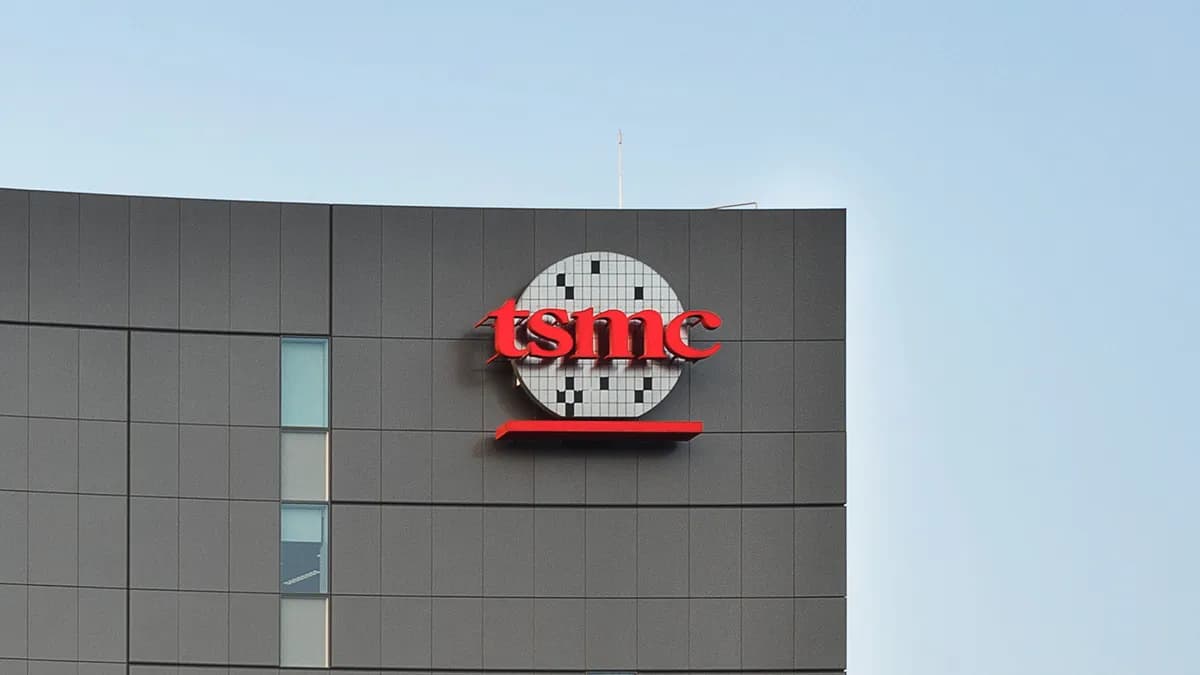
- TSMC, Samsung, and Intel are already pushing into 2nm production
- Industry analysts estimate SMIC sits 2-3 generations behind the leaders
A 20% yield means you're throwing away 80% of what you make. That's not sustainable manufacturing. That's an expensive science experiment. For comparison, leading fabs typically target yields above 80% for mature processes.
Why All That Cash Isn't Working
Look, building semiconductors at the bleeding edge is genuinely one of the hardest things humans do. It requires equipment that costs hundreds of millions per unit, expertise accumulated over decades, and supply chains that span continents.
China faces a specific challenge that money alone can't solve: the EUV blockade. Extreme ultraviolet lithography machines, made exclusively by Dutch company ASML, are essential for cutting edge chips. Export restrictions mean China can't buy them.
The semiconductor industry's complex supply chain politics affects everything from chip subsidies to potential hardware manufacturer consolidation
Reports suggest Chinese engineers have attempted to reverse-engineer EUV technology. But there's a reason ASML spent decades and billions developing these machines. You can't just throw money at physics and expect it to cooperate.
The CHIPS Act Response
The US clearly recognized it was being outspent. The CHIPS and Science Act, signed in August 2022, represents Washington's attempt to level the playing field. But timing matters here.
Most CHIPS Act money hadn't been distributed during the period this report covers. So the real comparison is between a decade of sustained Chinese investment versus American spending that's only recently kicked into high gear. The gap should narrow in future reports. Whether it narrows enough remains an open question.
What This Actually Means
The CSIS report suggests other governments need to respond pragmatically to reduce what it calls the downside costs of China's spending spree. But what does that look like in practice?
- Continued export restrictions on advanced manufacturing equipment
- Increased domestic investment in chip production capacity
- Strengthening alliances with Taiwan, South Korea, and Japan
- Developing alternative supply chains for critical components
The kicker? China isn't slowing down. Big Fund III adds another $47.5 billion to the pile, bringing their total above $190 billion since 2014. At some point, brute force investment might start producing results. Or it might just produce more expensive failures.
The Bottom Line
China's semiconductor spending tells two stories simultaneously. One is about raw financial commitment that dwarfs anything the West has mustered. The other is about the stubborn reality that chip manufacturing at advanced nodes requires more than money.
For now, TSMC remains untouchable. American firms still dominate global sales. And SMIC struggles with yields that would have been unacceptable at Intel a decade ago.
But technology gaps can close. Investment compounds. And $142 billion, plus another $47.5 billion, represents a bet that patience and persistence will eventually crack what equipment blockades cannot.
Frequently Asked Questions
How much has China spent on chip subsidies?
Approximately $142 billion between 2014 and 2023, with an additional $47.5 billion committed through Big Fund III in May 2024.
Why is China still behind in chip manufacturing despite massive spending?
Export restrictions prevent China from buying EUV lithography machines essential for advanced chips. SMIC also struggles with low manufacturing yields, around 20-25% for cutting edge processes.
What is the US CHIPS Act?
Legislation passed in August 2022 that commits significant federal funding to boost domestic semiconductor manufacturing and research.
Who leads global semiconductor manufacturing?
TSMC in Taiwan leads foundry production, while US-headquartered companies account for over 50% of global semiconductor shipments by revenue.
The semiconductor race isn't a sprint. It's a marathon where the finish line keeps moving. China has proven it can write checks. Now it needs to prove it can write code in silicon that actually works.
Source: Latest from Tom's Hardware
Huma Shazia
Senior AI & Tech Writer
Produced with AI assistance and reviewed by the Logicity editorial team. Learn more in our Editorial Policy.