Key Takeaways
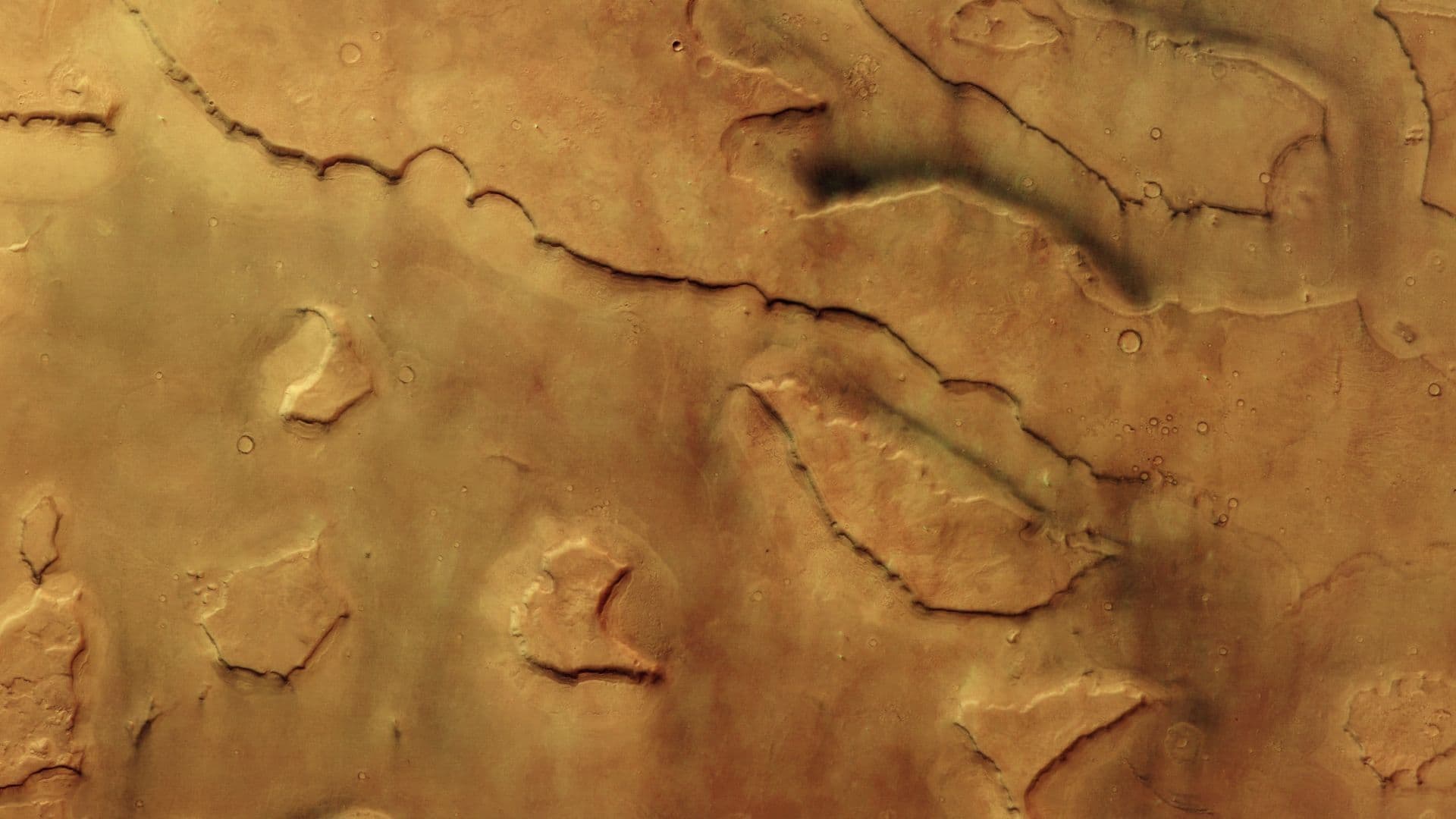
- ESA's Mars Express captured 30 dust devils in one image of Mamers Valles, a 1,000-kilometer valley system
- Mars dust devils can reach heights of 8 kilometers and speeds of 45 meters per second, far larger than Earth's
- The 3.8-billion-year-old Mamers Valles region may contain buried water ice beneath debris-covered glaciers
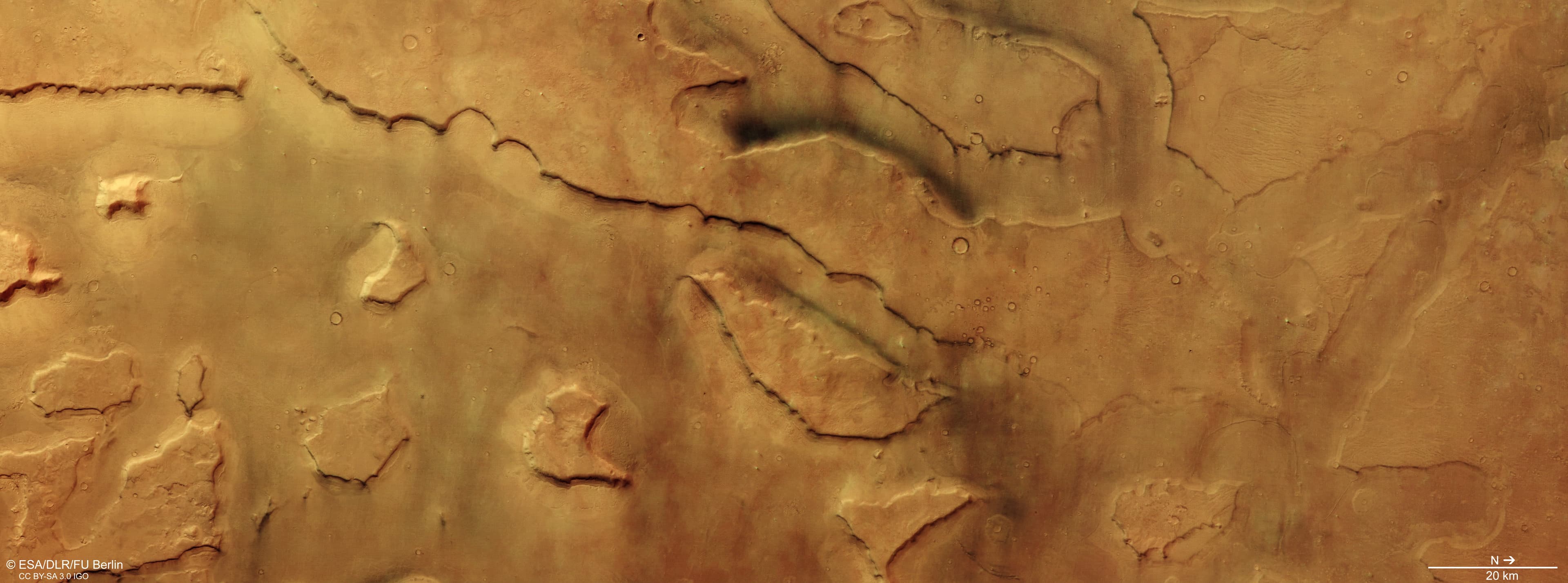
The European Space Agency's Mars Express orbiter has captured 30 dust devils swirling through a single frame of Mamers Valles, a valley system stretching nearly 1,000 kilometers across Mars' northern hemisphere. The image, released June 18, 2026, shows the tiny tornadoes as yellow dots with pinkish trailing shadows, scattered across the ancient terrain.
Mars Express has been orbiting the Red Planet since 2003, returning thousands of images. But this one stands out for what it caught in motion. Dust devils form when heated air near the surface rises rapidly and begins to rotate, picking up fine Martian dust as they spin. On Earth, these phenomena are curiosities. On Mars, they're monsters.
How large do Mars dust devils get?
Martian dust devils dwarf their Earth counterparts. They can reach heights of almost 8 kilometers and race across the surface at speeds of about 45 meters per second. NASA's Perseverance rover has recorded these phenomena multiple times, once even capturing two devils merging into a single larger vortex. Mission teams have tracked roughly 1,000 of them speeding across the planet in a single observation campaign.
Perseverance has also recorded the sound of dust devils passing by. They crackle. The thin Martian atmosphere, mostly carbon dioxide at less than 1% of Earth's surface pressure, allows these vortices to grow far larger than anything we see on our planet.
Why scientists study Martian dust devils
These whirling columns of dust are more than spectacle. They map winds that would otherwise remain invisible. Mars has no weather stations dotting its surface, no network of sensors tracking atmospheric conditions. Dust devils become proxies, their paths and sizes revealing wind patterns that matter for landing spacecraft and understanding Martian climate.
That information feeds into models of how Mars evolved. The planet once had liquid water on its surface. Understanding its current atmosphere helps researchers work backward to reconstruct what changed over billions of years.
What makes Mamers Valles significant?
The valley system itself is 3.8 billion years old. It connects Mars' ancient southern highlands with its younger northern lowlands, acting as a geological bridge between two distinct regions of the planet. Around the valleys, debris covers what scientists believe were once full glaciers.
Those buried glaciers likely still contain water ice beneath the surface debris. That makes Mamers Valles a potential target for future exploration. Water ice means resources for future missions, whether robotic or crewed.
ESA has published a guide marking exactly where each of the 30 dust devils appears in the image. Some are obvious once you know what to look for. Others hide in the terrain's shadows and require patience to spot.
When could humans explore this region?
The timeline for human Mars exploration remains uncertain. NASA's Artemis program, focused on returning humans to the Moon, serves as the proving ground for technologies needed on Mars. Success there will determine how quickly crewed missions to the Red Planet become feasible. SpaceX continues developing Starship with Mars as an explicit long-term goal, though no firm dates exist.
In the meantime, orbiters like Mars Express and rovers like Perseverance continue building the knowledge base. Every image of wind patterns, every measurement of subsurface ice, adds data that future mission planners will need.
Logicity's Take
This image does double duty. The dust devils provide atmospheric data that's hard to get any other way. The underlying terrain offers potential water ice deposits. For future Mars missions, whether NASA, ESA, or commercial, regions like Mamers Valles represent the intersection of scientific interest and practical resource availability. That combination will drive landing site selection for the next generation of Mars exploration.
Frequently Asked Questions
Why are Mars dust devils so much larger than Earth's?
Mars' thin atmosphere, less than 1% of Earth's surface pressure, allows heated air to rise more dramatically and vortices to grow much larger. Martian dust devils can reach 8 kilometers in height compared to a few hundred meters on Earth.
What is Mamers Valles on Mars?
Mamers Valles is a valley system stretching nearly 1,000 kilometers across Mars' northern hemisphere. It's about 3.8 billion years old and connects the ancient southern highlands with the younger northern lowlands.
Is there water ice in Mamers Valles?
Scientists believe debris-covered glaciers around Mamers Valles still contain water ice beneath the surface. This makes the region a potential target for future Mars missions seeking in-situ resources.
How long has Mars Express been operating?
Mars Express has been orbiting Mars since 2003, making it one of the longest-running Mars missions. The ESA spacecraft continues returning images and scientific data from the Red Planet.
Need Help Implementing This?
Logicity provides technology news and analysis for professionals tracking developments in space exploration, AI, and emerging tech. Subscribe to our newsletter for daily updates on the stories shaping tomorrow's technology landscape.
Source: Latest from Space.com
Huma Shazia
Senior AI & Tech Writer
Produced with AI assistance and reviewed by the Logicity editorial team. Learn more in our Editorial Policy.