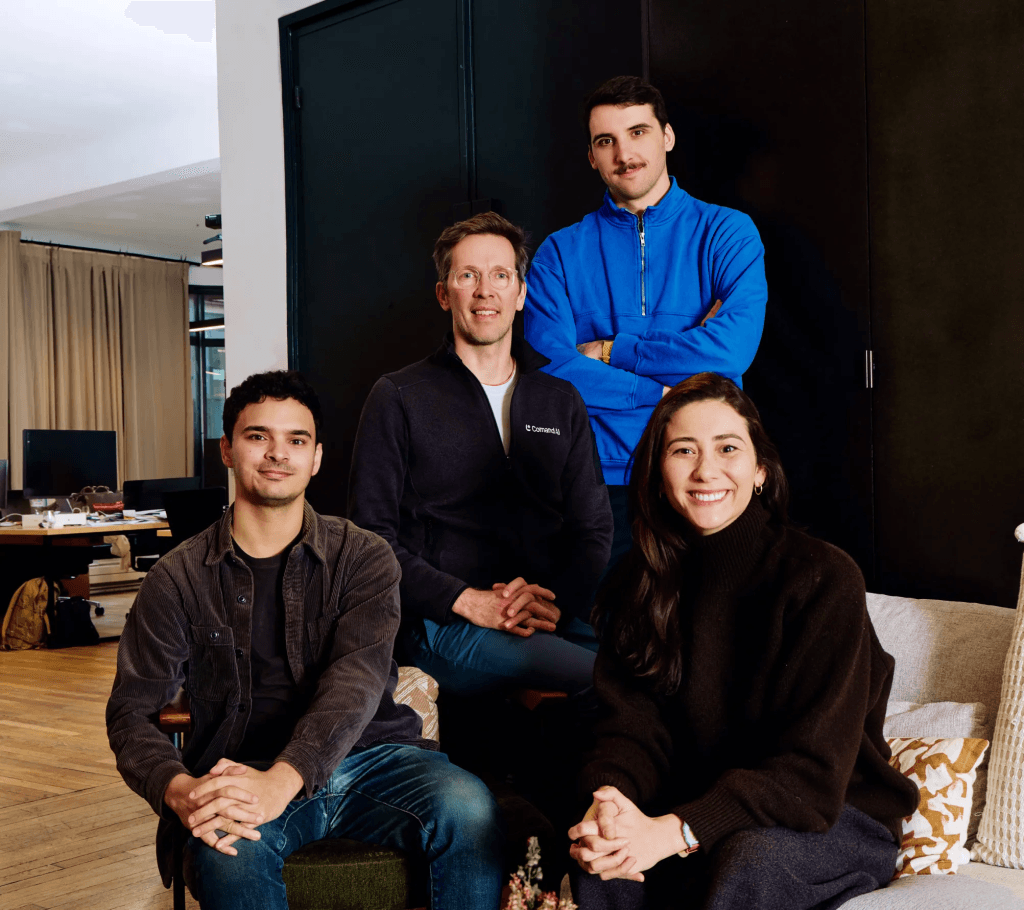
Dwelly, a UK proptech startup, raised $170 million to buy more letting agencies and automate their operations with AI. The round was led by EQT Growth and existing investor General Catalyst, with $95 million in equity and a $75 million debt facility from Trinity Capital.

The company did not disclose its valuation. Angel investors joining the round include Max Junestrand (CEO of AI legal startup Legora), Victor Riparbelli (CEO of Synthesia), and Mati Staniszewski (cofounder of ElevenLabs).
What is Dwelly's AI rollup model?
Founded in 2023 by former Uber and Gett executives Ilia Drozdov, Dan Lifshits, and Dmitry Khanukov, Dwelly acquires established letting agencies rather than replacing them. The company then layers proprietary AI software over existing operations to automate tenant communications, maintenance requests, contracts, and rent collection.
This approach differs from building a property management business from scratch. Local agencies keep their market presence and relationships. Dwelly provides the technology backbone.
The model fits a broader pattern in European venture capital: buy fragmented, low-margin traditional businesses, then use software to increase efficiency and growth rates. Rather than relying purely on cost cuts, these startups invest heavily in automation after each acquisition.
Where the $170M goes
The fresh capital will finance more acquisitions. Dwelly raised £69 million just months ago, so this round signals aggressive expansion plans rather than a need to shore up operations.
CEO Drozdov has been open about his intensity. "The company is probably the most important thing in my head pretty much any time, seven days a week, 24 hours a day," he told Sifted. "This is the last thing I'm thinking before going to sleep. This is the first thing I'm checking when I wake up."
Why investors are backing AI rollups
The angel roster tells a story. Junestrand, Riparbelli, and Staniszewski all run AI-native companies. Their participation suggests they see Dwelly's approach as a template: take industries where labor costs dominate, apply automation, capture the margin.
Property management fits the profile. Tenant queries, maintenance coordination, and rent collection are repetitive, high-volume tasks. Automating them doesn't require general intelligence. It requires good workflow software and reliable integrations.
EQT and General Catalyst are betting the model scales. If Dwelly can standardize its tech stack across acquisitions, each new agency becomes cheaper to integrate than the last.
Logicity's Take
Dwelly's real test isn't raising capital. It's proving the AI layer actually increases margins at acquired agencies, not just automates busywork. The debt facility from Trinity Capital suggests the company expects predictable cash flows from rent collection. But property management margins are thin. If automation doesn't move those margins meaningfully, the rollup math gets harder with each acquisition.
Context on current venture funding activity
What this means for proptech founders
Dwelly's raise confirms that rollup-plus-AI is a fundable thesis in 2026, at least in fragmented service industries. Founders building vertical software for property management, home services, or similar sectors should note the competitive dynamics: well-capitalized rollup players can acquire distribution and then build (or buy) the tech.
For startups selling to letting agencies, Dwelly is both a potential customer and a consolidator that could shrink the addressable market. The smart play may be positioning as infrastructure Dwelly would want to license rather than rebuild.
Need Help Implementing This?
Logicity covers funding rounds, startup strategy, and proptech trends weekly. Subscribe to get stories like this in your inbox.
Source: Sifted
Huma Shazia
Senior AI & Tech Writer
Produced with AI assistance and reviewed by the Logicity editorial team. Learn more in our Editorial Policy.