Key Takeaways
- Samsung and Ikea required extensive custom work to make Matter devices reliable, raising questions about enterprise IoT readiness
- Ikea's 24+ device lineup now works natively in SmartThings, offering budget-friendly smart office options
- The partnership reveals that Matter's promise of universal compatibility still requires platform-specific engineering
According to [The Verge](https://www.theverge.com/tech/915560/ikea-and-samsung-promise-glitch-free-smartthings-integration), Samsung and Ikea have partnered to deliver "glitch-free" integration for Ikea's Matter-over-Thread devices within the SmartThings platform, addressing persistent connectivity issues that have plagued users since launch.
Here's why this matters if you're running a business: the same smart sensors and automation tools consumers use at home are increasingly showing up in small offices, retail spaces, and coworking environments. When the two largest players in budget smart home hardware need extensive custom engineering just to make things work, it tells you something important about the state of enterprise IoT in 2026.

Why Did Ikea SmartThings Integration Need a Fix?
Matter was supposed to be the universal standard that made smart devices "just work" across platforms. Buy any Matter-certified device, connect it to any Matter-compatible hub, and you're done. That was the promise from the Connectivity Standards Alliance when they launched Matter in late 2022.
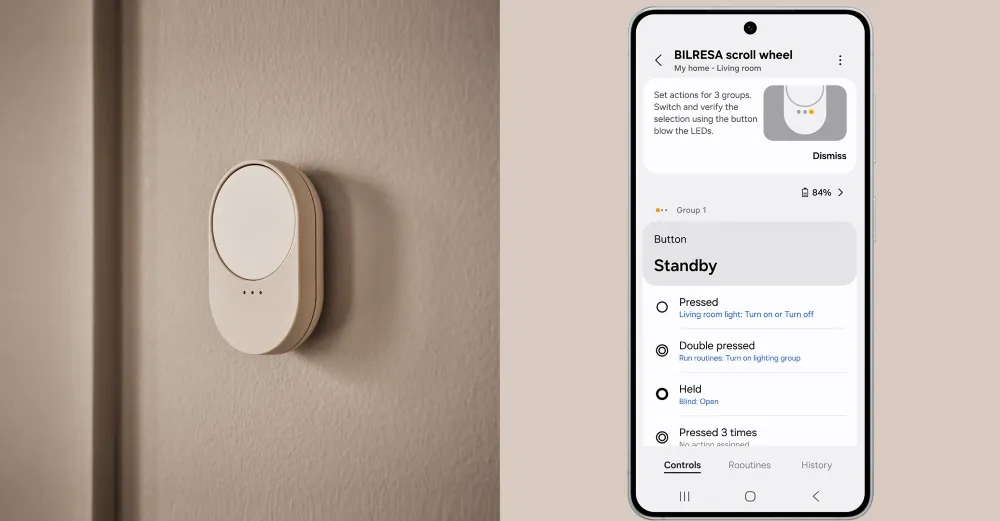
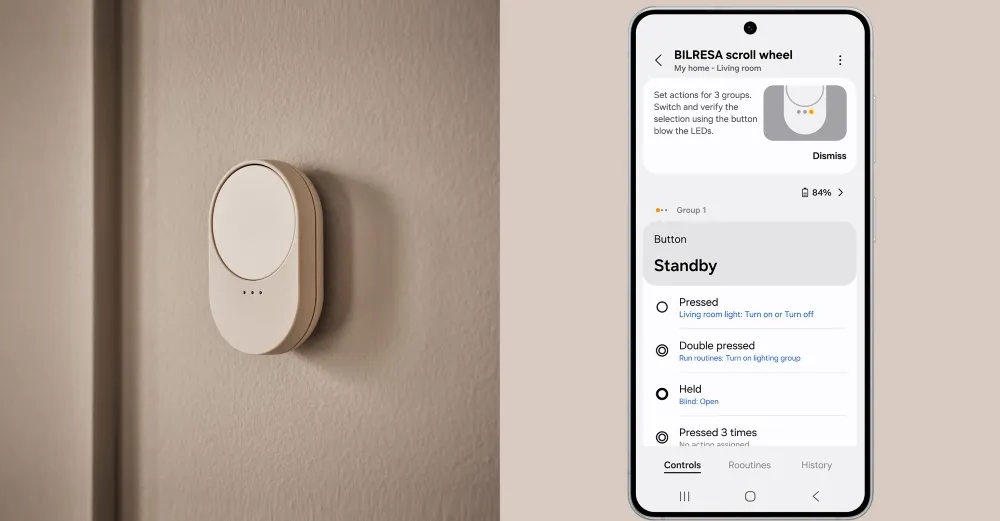
Reality proved messier. Ikea's devices, which include sensors for temperature, humidity, air quality, motion, water leaks, and door/window status, have experienced what users call "ghosting" problems. Devices disappear from networks randomly. Some refuse to pair at all. Complex accessories like Ikea's scroll wheel remote wouldn't display correctly or access advanced automation features.
Samsung's fix required building "enhanced integrations" specifically for Ikea's product lineup. The two companies ran multiple rounds of validation testing and created dedicated user experiences within the SmartThings app. This isn't a software patch. It's substantial platform engineering work between two major corporations.
Executive Summary
The Ikea-Samsung partnership fixes real reliability problems but reveals that Matter's plug-and-play promise hasn't materialized. For businesses evaluating smart office investments, this means: (1) stick with single-ecosystem solutions for now, (2) budget for integration complexity, and (3) test extensively before deploying at scale.
What Does This Mean for Smart Office Deployments?
If you're a facilities manager or CTO considering smart building technology, the Ikea-Samsung situation offers both opportunity and warning signs.
The opportunity: Ikea's sensor lineup is remarkably affordable. A temperature and humidity sensor runs around $15. Motion sensors cost roughly $12. For small offices, retail locations, or distributed teams managing multiple spaces, that's potentially 60-70% cheaper than enterprise-grade alternatives from vendors like Honeywell or Johnson Controls.
The warning: even with Matter certification, you can't assume devices will work seamlessly across platforms. Samsung and Ikea, two of the most resourced companies in consumer electronics, needed dedicated engineering teams to make this work. Your IT department probably doesn't have that luxury.
| Factor | Consumer Smart Home | Enterprise Smart Building |
|---|---|---|
| Typical Device Count | 10-30 devices | 100-1000+ devices |
| Failure Tolerance | Annoying but manageable | Operational risk |
| Support Expectations | Community forums | SLA-backed vendor support |
| Integration Complexity | Single hub, one app | Multiple systems, IT oversight |
| Budget per Sensor | $10-25 | $50-200 |
Is Ikea Smart Home Worth It for Business Use?
The honest answer depends on your scale and risk tolerance. Here's how to think about it.
For a startup with a single office space and 20-30 employees, Ikea sensors paired with Samsung SmartThings could save you thousands compared to traditional building management systems. You can monitor temperature across zones, detect water leaks before they cause damage, and automate lighting based on occupancy. Total hardware cost might be $500-800 versus $5,000+ for commercial alternatives.
For a mid-size company with multiple locations, the calculus changes. Managing dozens of SmartThings hubs across different sites, dealing with consumer-grade reliability, and lacking enterprise support agreements creates hidden operational costs. When a sensor fails at your Chicago office and nobody notices for two weeks, the cheap hardware suddenly isn't cheap anymore.
✅ Pros
- • 60-70% cost savings on hardware versus enterprise alternatives
- • Easy setup requiring no specialized installation
- • Broad sensor variety covering most monitoring needs
- • Samsung SmartThings offers solid automation capabilities
- • Matter standard provides some future-proofing
❌ Cons
- • Consumer-grade reliability not designed for mission-critical use
- • No enterprise support or SLA guarantees
- • Platform-specific work still needed despite Matter certification
- • Limited scalability beyond small deployments
- • Security certifications may not meet compliance requirements
The Matter Standard: Promise vs Reality for Enterprise
Matter was supposed to eliminate exactly the problem Samsung and Ikea just spent months fixing. The standard launched with backing from Apple, Google, Amazon, and Samsung. The pitch: buy any Matter device, connect to any Matter hub, and everything works.
Three years later, we're seeing that certification guarantees basic connectivity but not quality of experience. A Matter device will technically communicate with a Matter hub. Whether it displays correctly, exposes all features, and remains stable over time is another question entirely.
For business buyers, this means treating Matter as a baseline requirement, not a guarantee. You still need to test specific device-platform combinations. You still need vendor relationships for troubleshooting. The dream of commodity IoT hardware that works everywhere remains a dream.
“Samsung and Ikea conducted multiple rounds of validation to enhance connectivity stability and implemented a dedicated user experience within the SmartThings app for full compatibility.”
— Samsung Press Release
When major corporations need "multiple rounds of validation" to make certified devices work properly, smaller organizations should take note. The technology isn't as mature as marketing suggests.
Samsung's broader ecosystem strategy and how it affects enterprise device decisions
How to Evaluate Smart Office Technology in 2026
The Ikea-Samsung partnership highlights a broader truth about enterprise technology adoption: the consumer-to-business pipeline requires careful evaluation. Products that work fine in homes may not survive the demands of commercial environments.
- Test Before Committing: Run a pilot with 10-15 devices for 60-90 days before scaling. Look specifically for dropout rates and reconnection issues.
- Calculate True TCO: Hardware costs are often 20-30% of total ownership. Factor in IT support time, potential downtime, and replacement cycles.
- Evaluate Vendor Support: Consumer products rarely come with enterprise support agreements. Determine if community forums and email support meet your needs.
- Check Compliance Requirements: If your industry has specific security or data handling requirements (HIPAA, SOC 2, GDPR), verify that consumer IoT platforms qualify.
- Plan for Integration: How will sensor data flow into your existing systems? Custom development may be needed, which adds significant cost.
The companies that get smart building technology right typically aren't the ones chasing the cheapest hardware. They're the ones who invest in proper evaluation upfront and avoid costly mistakes at scale.
How platform reliability failures cascade into business impact
What This Partnership Signals for the IoT Market
The Samsung-Ikea announcement is part of a larger trend: platform consolidation in smart home and building technology. Companies are realizing that universal standards alone don't create great user experiences. Deep integrations between specific vendors do.
Expect to see more partnerships like this. Amazon and Ring. Google and Nest. Apple and HomeKit-certified partners. The notion of buying any device for any platform is giving way to curated ecosystems where everything is tested together.
For CTOs and IT leaders, this suggests a strategic shift. Rather than evaluating individual devices, evaluate ecosystems. Choose a platform first, then select devices that your platform vendor has explicitly validated. The interoperability tax you pay by going cross-platform may exceed the savings from shopping around.
Frequently Asked Questions
Frequently Asked Questions
How much does an Ikea smart office setup cost?
A basic deployment with 15-20 sensors (temperature, motion, door/window) plus a SmartThings hub runs approximately $400-600. This compares to $3,000-8,000 for equivalent commercial building management systems. However, factor in IT support time and potential reliability issues when calculating true cost.
Is SmartThings reliable enough for business use?
For small offices with non-critical monitoring needs, SmartThings offers reasonable reliability, especially with the new Ikea integrations. For mission-critical applications like server room temperature monitoring or security systems, enterprise-grade alternatives with SLA guarantees are recommended.
Should I wait for Matter to mature before investing in smart building tech?
Matter certification provides useful baseline compatibility but hasn't eliminated the need for platform-specific testing. If you have immediate needs, select a single ecosystem (SmartThings, HomeKit, Google Home) and buy validated devices within that system. Waiting for perfect interoperability could mean waiting indefinitely.
What's the ROI timeline for smart office sensors?
Most organizations see ROI within 12-18 months through energy savings (automated HVAC, lighting), reduced maintenance costs (leak detection), and improved space utilization (occupancy monitoring). Actual payback depends heavily on your current baseline and energy costs.
Can Ikea sensors meet enterprise security requirements?
Ikea and SmartThings devices use standard encryption protocols but lack the security certifications (SOC 2, ISO 27001) that regulated industries often require. For healthcare, financial services, or government applications, consult your compliance team before deploying consumer IoT.
How platform expansion strategies affect enterprise technology decisions
Logicity's Take
We've built enough automation systems to know that 'it just works' is the most dangerous phrase in technology procurement. At Logicity, we've integrated various IoT sensors into client dashboards using n8n workflows and custom APIs. The reality matches what Samsung and Ikea discovered: Matter certification gets you 70% of the way there, but the last 30% requires hands-on engineering. For Indian businesses specifically, there's an additional consideration. Ikea's smart home lineup has limited availability in India, and Samsung's SmartThings ecosystem here doesn't match US or European feature sets. If you're a Hyderabad startup excited about cheap smart office sensors, check local availability first. What we recommend to clients: start with your use case, not the hardware. Do you need temperature monitoring for a server room? Water leak detection for an office basement? Occupancy tracking for hybrid work optimization? Define the problem precisely, then evaluate solutions. Sometimes the answer is consumer IoT with proper testing. Sometimes it's industrial sensors with proper support contracts. The Ikea-SmartThings announcement is good news for the former category, but it doesn't change the fundamental calculus of matching solution maturity to business criticality.
Need Help Implementing This?
Logicity helps businesses evaluate and integrate smart building technology with existing systems. Whether you need custom dashboards for IoT data, n8n automation workflows, or guidance on enterprise versus consumer solutions, our team can help you avoid costly mistakes and build systems that actually work. Get in touch to discuss your smart office project.
Manaal Khan
Tech & Innovation Writer
Produced with AI assistance and reviewed by the Logicity editorial team. Learn more in our Editorial Policy.