Key Takeaways
- HBO Max's rebrand from 'Max' back to 'HBO Max' shows when premium positioning beats mass-market appeal
- The Harry Potter franchise restart demonstrates how to extract decades of value from legacy IP
- Documentary content serves as low-cost, high-engagement customer retention between major releases
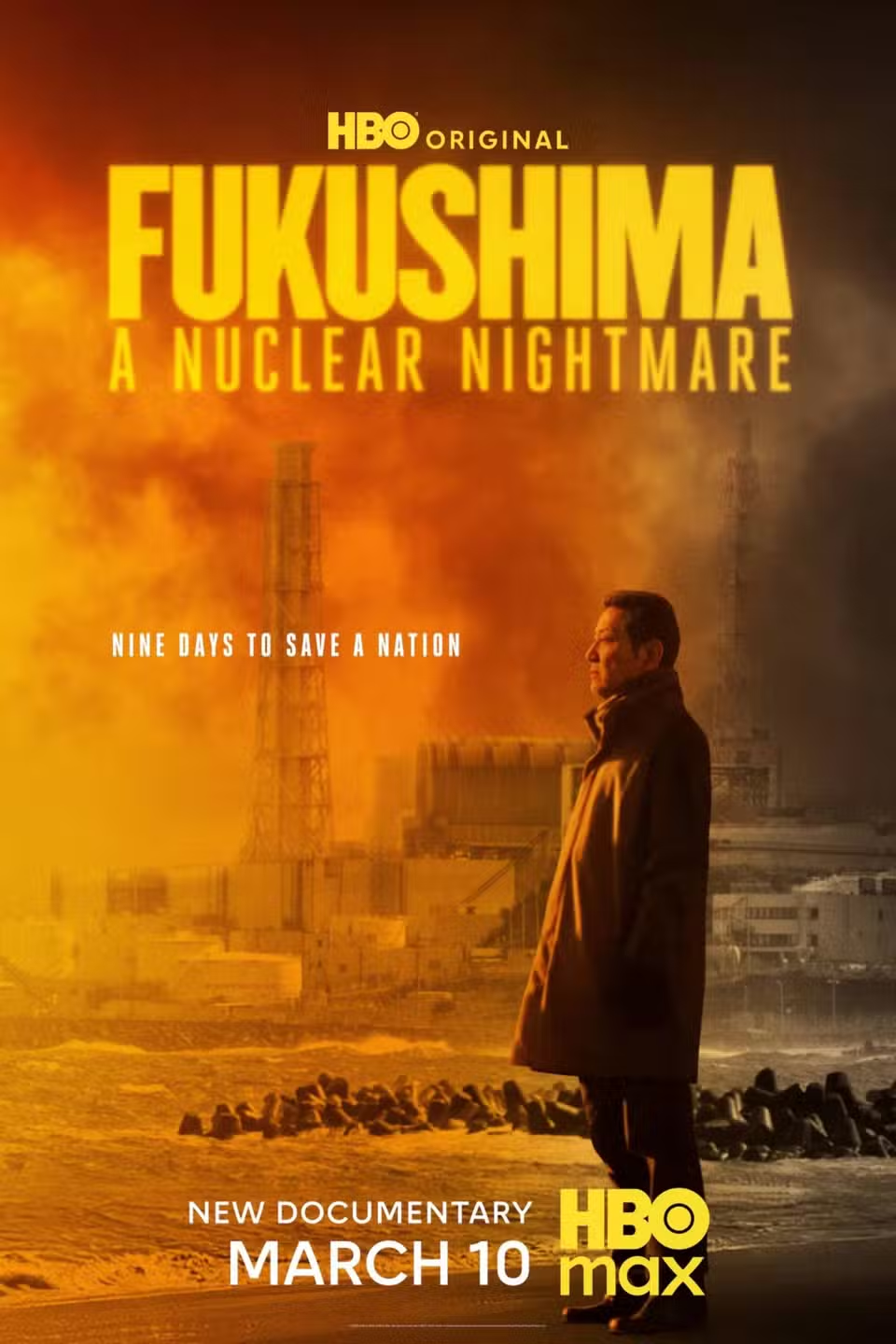
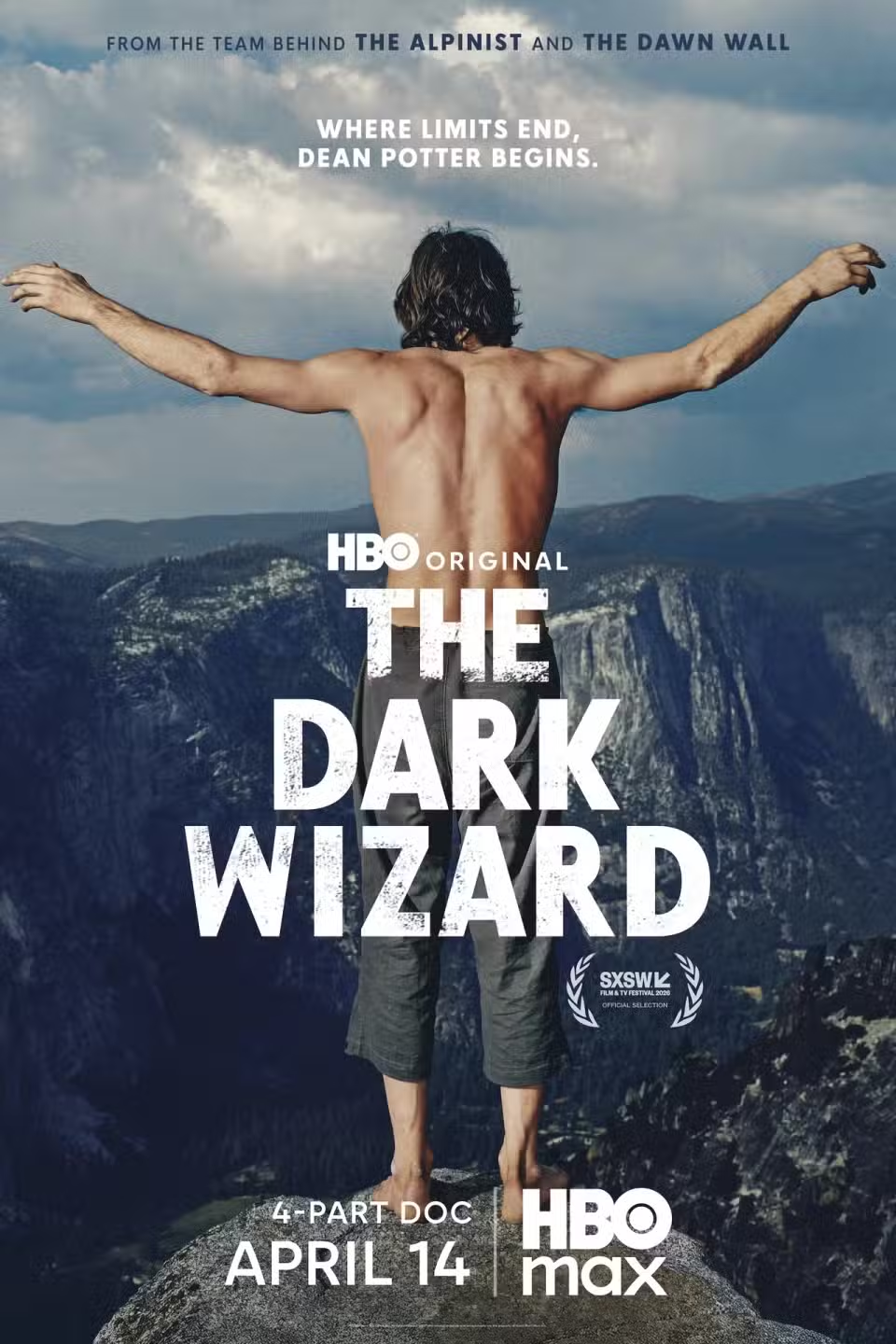
According to [How-To Geek](https://www.howtogeek.com/hbo-max-documentaries-to-watch-april-17/), HBO Max's April 2026 documentary slate includes three strategic releases: a Harry Potter behind-the-scenes feature, a Fukushima disaster documentary, and a profile of controversial climber Dean Potter. What looks like weekend viewing recommendations is actually a window into one of the smartest content strategies in streaming today.
For business leaders watching the streaming wars, HBO Max's moves in 2026 offer something more valuable than entertainment picks. They reveal a playbook for brand positioning, IP monetization, and customer retention that applies far beyond Hollywood.
Why Did HBO Max Rebrand Back to Its Original Name?
In late 2025, Warner Bros. Discovery made a surprising decision: they reversed the rebrand from "Max" back to "HBO Max." This wasn't a retreat. It was a strategic acknowledgment that premium positioning beats mass-market confusion.
The lesson for business leaders? Brand equity compounds over decades. HBO spent 50 years building associations with prestige content. Diluting that with a generic name cost them differentiation in a crowded market. Sometimes the best brand strategy is protecting what you already have.
“The mission has always been, 'Is this TV worth paying for?' With projects like 'Finding Harry' and 'The Dark Wizard,' we aren't just filling a grid; we are aiming for that very small bull's-eye of cultural gravity.”
— Casey Bloys, Chairman and CEO of HBO and HBO Max
Bloys's framing matters here. He's not talking about content volume. He's talking about cultural impact per dollar spent. That's a metric every CEO should consider when evaluating marketing and content investments.
How HBO Max Uses Documentary Content for Customer Retention
Here's the business case for documentaries that most streaming observers miss: they're cheap to produce, quick to release, and they keep subscribers engaged between expensive flagship shows.
The three April 2026 releases serve specific strategic purposes:
- "Finding Harry: The Craft Behind the Magic" builds anticipation for the Christmas 2026 Harry Potter series premiere, essentially a 25-minute advertisement disguised as content
- "Fukushima: A Nuclear Nightmare" establishes HBO Max as a serious documentary destination, competing with Netflix's prestige positioning
- "The Dark Wizard" (Dean Potter docuseries) targets adventure sports demographics that overlap with HBO's core audience
None of these required the $15-20 million per episode budget of a Game of Thrones successor. Yet they generate subscriber engagement, social media conversation, and press coverage. That's efficient capital allocation.
What Business Leaders Can Learn From Harry Potter IP Strategy
The Harry Potter franchise restart represents one of the most ambitious IP bets in entertainment history. And it's a masterclass in extracting long-term value from intellectual property.
Consider the numbers: over 40,000 submissions for the role of Harry alone. That's not just casting. That's a global marketing campaign disguised as a talent search. Every submission represents a family invested in the outcome, a potential subscriber locked in for the seven-season run.
“The first season of the Harry Potter series will debut on Christmas Day 2026... the scale is so immense that we will not be releasing seasons on an annual basis.”
— Casey Bloys, on the production timeline for the Potter franchise
That last point deserves attention. HBO is deliberately slowing release schedules. They're choosing subscriber retention over content velocity. In an era where competitors chase weekly drops and algorithm engagement, HBO is betting that scarcity creates value.
The Strategic Patience Play
HBO Max could release seasons faster. They're choosing not to. This mirrors the Apple approach: constrained supply increases perceived value. For business leaders, the question is whether your product benefits from abundance or scarcity positioning.
HBO Max Global Expansion: Partnership Strategy Over Direct Entry
HBO Max's international strategy offers another lesson: they're prioritizing partnerships over direct market entry. With 60+ global distribution partnerships, they're building what industry analysts call a "bundling footprint."
Rather than spending billions to acquire customers directly in every market, HBO Max embeds itself within existing telecom and media bundles. The customer acquisition cost drops dramatically. The trade-off is margin and direct customer relationships.
| Strategy | Netflix Approach | HBO Max Approach |
|---|---|---|
| Market Entry | Direct subscription globally | Partnership bundles + selective direct |
| Customer Acquisition | High CAC, own the relationship | Lower CAC, shared relationship |
| Content Volume | Quantity-focused releases | Quality-focused, deliberate scarcity |
| Pricing Power | Variable by market | Premium positioning globally |
| Churn Risk | High, monthly decisions | Lower, bundled into existing services |
For business leaders considering international expansion, this framework applies beyond streaming. Do you invest heavily to own customer relationships directly, or do you partner with established players who already have distribution? The answer depends on your margin structure and long-term strategic goals.
Another case study in how companies manage valuable IP and fan relationships
How Much Does Content Strategy Cost at HBO Max Scale?
Let's talk numbers that matter to budget conversations. HBO Max's content spend in 2026 sits around $8-10 billion annually. But the allocation tells the strategic story.
- Flagship series like Harry Potter command $150-200 million per season budgets
- Documentary specials like "Finding Harry" cost under $5 million total
- Acquired documentaries and licensed content fill catalog gaps at minimal cost
- Behind-the-scenes content generates marketing value while counting as programming
The insight here: not every piece of content needs to be a tentpole. The documentaries serve as connective tissue, keeping subscribers engaged and justifying their monthly spend between major releases. It's the same principle that makes SaaS companies invest in customer education content. Engagement reduces churn.
What Does HBO Max Strategy Mean for Your Business?
Strip away the Hollywood glamour, and HBO Max's 2026 playbook translates to any subscription or recurring-revenue business:
- Protect premium positioning. HBO learned that diluting brand equity costs more than any short-term rebrand gains.
- Create engagement content between major releases. Documentaries for HBO, educational content for SaaS, behind-the-scenes for product companies.
- Extract maximum value from IP over decades, not quarters. The Harry Potter seven-season strategy prioritizes lifetime franchise value over quick returns.
- Choose partnerships strategically. Direct customer relationships matter, but sometimes distribution partners get you to scale faster.
- Practice strategic patience. Scarcity can increase perceived value. Not everything needs to ship fast.
For tech leaders specifically, the documentary strategy has a direct parallel. Every company sitting on interesting technical challenges, product development stories, or founder journeys is sitting on potential content. That content can drive customer engagement, recruit talent, and build brand authority at a fraction of traditional marketing costs.
Another example of strategic positioning creating outsized market value
Frequently Asked Questions
Frequently Asked Questions
Is HBO Max's premium pricing strategy sustainable against cheaper competitors?
So far, yes. HBO Max maintains lower churn rates than volume-focused competitors because subscribers perceive higher per-title value. The Harry Potter franchise alone justifies annual subscriptions for millions of households. Premium positioning works when content quality consistently delivers.
How can B2B companies apply HBO Max's documentary strategy?
Create behind-the-scenes content about your product development, customer success stories, or technical challenges. This builds trust, demonstrates expertise, and keeps customers engaged between product updates. Cost is minimal compared to traditional marketing, and the content has long shelf life.
What's the ROI on content that builds anticipation versus content that directly sells?
HBO's "Finding Harry" documentary is essentially a 25-minute advertisement that subscribers watch willingly. The ROI isn't measurable in direct conversions but in reduced churn and increased word-of-mouth before the main product launches. For SaaS companies, product preview content serves the same function.
Should small businesses prioritize partnerships or direct customer acquisition?
It depends on your margin structure. If you have high margins, owning customer relationships directly makes sense. If margins are tight or customer acquisition costs are high, partnerships with established players can get you to scale faster. HBO Max uses both depending on market maturity.
How long should companies wait before measuring content strategy success?
HBO's Harry Potter bet won't fully pay off for seven years. Most businesses can't wait that long, but the principle holds: measure content by engagement and retention metrics monthly, but evaluate strategic impact annually. Quick pivots based on immediate metrics often destroy long-term value.
Logicity's Take
We build AI agents and content systems for startups, so we watch content strategy closely. What strikes us about HBO Max's approach is how they've essentially productized anticipation. The "Finding Harry" documentary isn't content. It's a retention mechanism disguised as content. For our clients in India building subscription products, this is directly applicable. We've helped companies create automated content pipelines using n8n and Claude API that generate engagement content between major product releases. The cost is a fraction of traditional marketing, and the engagement metrics are consistently stronger. The streaming wars might seem far from a Hyderabad startup's concerns, but the underlying strategy translates directly: use low-cost content to reduce churn, protect your brand positioning even when growth pressure mounts, and think in years not quarters when evaluating IP investments. HBO's patience with the Harry Potter franchise mirrors how we advise clients to think about their technical content and thought leadership. Build assets that compound.
Need Help Implementing This?
Logicity builds AI-powered content systems and customer engagement tools for startups and growing businesses. If you're looking to create scalable content strategies that reduce churn and build brand authority, we can help you design and implement systems that work. Based in Hyderabad, we specialize in Claude API integrations, n8n automation, and Next.js applications that turn content strategy into operational reality.
Essential reading if you're implementing AI-powered content systems
Source: How-To Geek
Manaal Khan
Tech & Innovation Writer
Produced with AI assistance and reviewed by the Logicity editorial team. Learn more in our Editorial Policy.