Key Takeaways
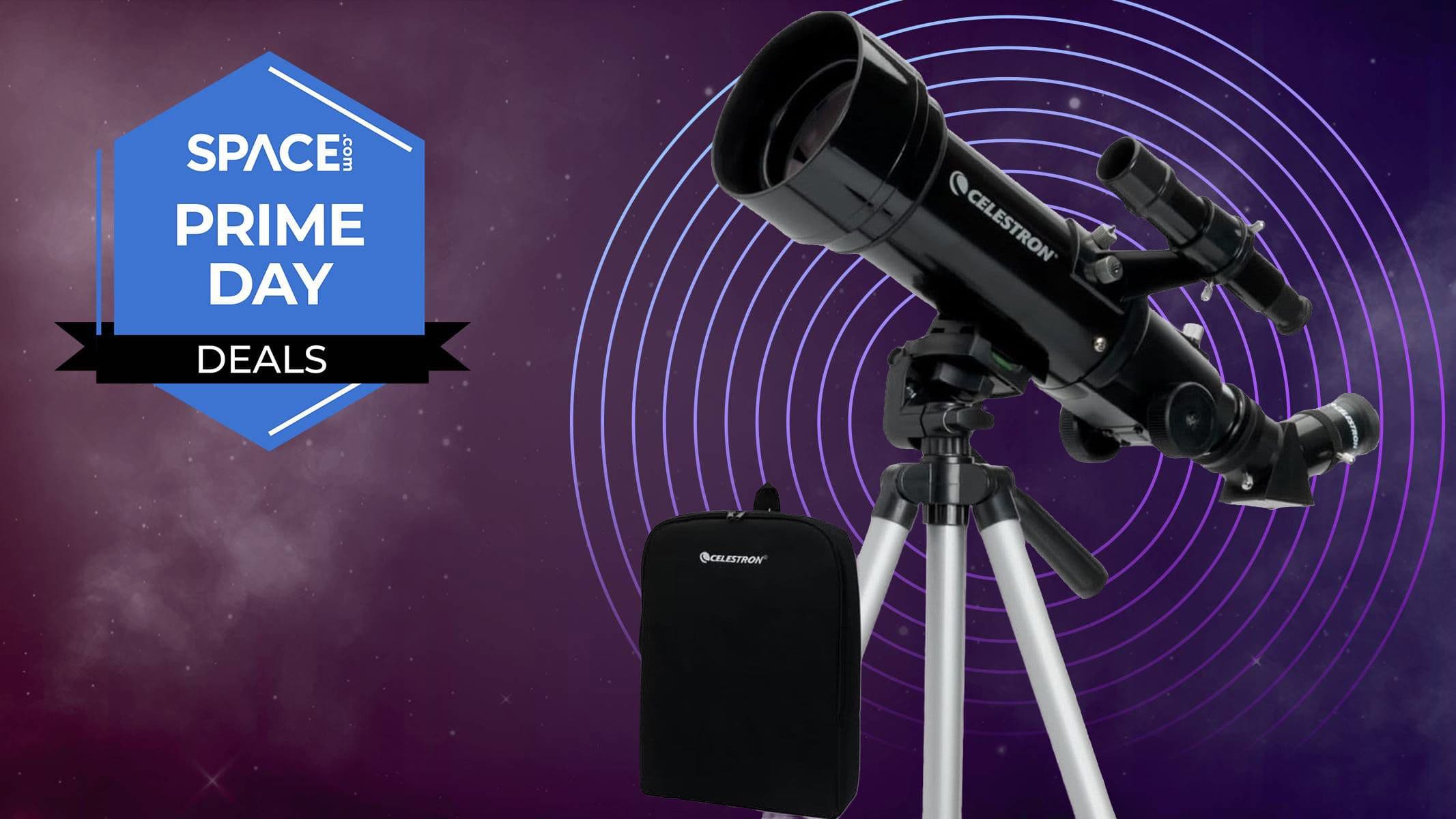
- The Celestron Travel Scope 70 is $40 off during Prime Day, dropping to $81 from $121
- The telescope packs into an included backpack, making it ideal for apartment dwellers or travelers
- Two included eyepieces (10mm and 20mm) provide 20x and 40x magnification for lunar and planetary viewing
The Celestron Travel Scope 70 is $81 on Amazon during Prime Day 2026, down $40 from its usual $121. This 70mm refractor telescope fits into an included backpack and ships with two eyepieces, making it one of the cheapest complete stargazing kits from a reputable manufacturer.
Space.com contributing writer Chris McMullen credits this exact telescope for turning him into a stargazer. He bought it because he wanted something affordable that he could stow away on cloudy nights. Several years later, he owns three telescopes, including a Skywatcher 200P Classic that now dominates his front room.
That progression from casual curiosity to serious hobby is exactly what Celestron designed this scope to enable. The 70mm aperture gathers enough light to show lunar craters in sharp detail, Jupiter's four largest moons, and Saturn's rings. You won't resolve distant galaxies or faint nebulae, but for a first telescope, the views are good enough to hook you.
What do you actually get for $81?
The Travel Scope 70 is a refractor, meaning it uses glass lenses rather than mirrors. Refractors require no alignment or maintenance, so beginners can set up and start observing in minutes. The fully coated optics reduce glare and improve contrast.
- 70mm aperture with 400mm focal length (f/5.7)
- 10mm eyepiece for 40x magnification
- 20mm eyepiece for 20x magnification
- 5x24 finderscope for locating objects
- Collapsible full-height aluminum tripod
- Backpack carrying case
- Celestron Starry Night Software Basic Edition
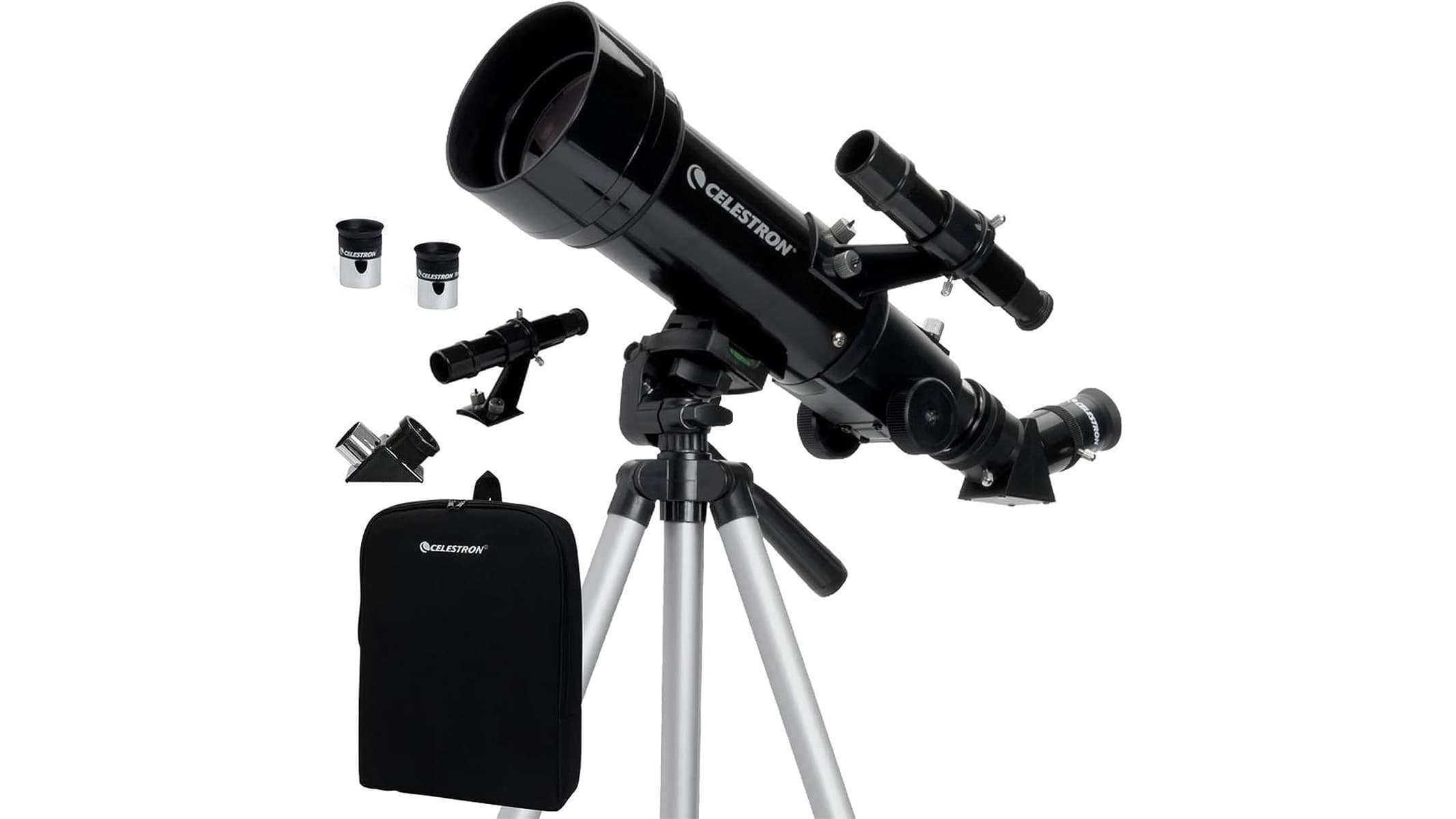
The backpack is the real selling point for anyone living in an apartment or without a dedicated observatory space. You can grab the bag, walk to a park or dark-sky location, and set up in under five minutes. When clouds roll in, everything packs away. No telescope dominating your living room.
Where the Travel Scope 70 falls short
McMullen flags the tripod as the weak point. It works, but it's not particularly sturdy. At high magnification, vibrations take a few seconds to settle after you adjust the scope. Some Amazon reviewers echo this complaint.
The included eyepieces are basic. They'll get you started, but serious observers eventually upgrade to wider-field or higher-magnification options. And the 70mm aperture simply cannot compete with larger scopes for deep-sky objects. Light pollution will wash out most galaxies and nebulae.
None of this matters much at this price point. The Travel Scope 70 exists to answer a question: do I actually enjoy stargazing enough to invest more? If the answer is no, you're out $81. If the answer is yes, you have a portable backup scope for travel or quick sessions.
Is $81 the best price this telescope has hit?
According to Space.com's price tracking, the Travel Scope 70 has dipped to around $90 previously, but $81 is the lowest price all year. Prime Day telescope deals tend to be the best outside of Black Friday. If you've been waiting for a discount, this is the window.
Celestron has been manufacturing telescopes since 1960. The company is headquartered in Torrance, California, and its products consistently appear in best-of lists from astronomy publications. The brand recognition matters here: you're not buying a no-name scope that might ship with misaligned optics or missing parts.
Who should buy this telescope?
The Travel Scope 70 makes sense for three groups. First: complete beginners who want to test whether stargazing is actually enjoyable before spending $300 or more. Second: parents looking for a telescope that kids can use without adult supervision. Third: experienced observers who want a grab-and-go option for travel or impromptu sessions.
If you already know you want to pursue deep-sky astrophotography or have a dedicated observation spot, skip this and buy a larger Dobsonian or computerized mount. The Travel Scope 70 is about convenience, not capability.
✅ Pros
- • Packs into included backpack for easy storage and transport
- • No setup complexity or maintenance required
- • Sharp lunar views that hook beginners immediately
- • Lowest price of the year during Prime Day
❌ Cons
- • Tripod vibrates at high magnification
- • Included eyepieces are basic quality
- • 70mm aperture limits deep-sky viewing
Frequently Asked Questions
Can you see planets with the Celestron Travel Scope 70?
Yes. The 70mm aperture and 40x magnification show Jupiter's four Galilean moons and Saturn's rings. You won't see planetary surface detail, but these objects are clear and impressive.
Is the Celestron Travel Scope 70 good for astrophotography?
No. The telescope lacks tracking capability and the mount is too unstable for long exposures. Use it for visual observation only.
What eyepieces work with the Travel Scope 70?
Any 1.25-inch eyepiece fits the focuser. Upgrading to a wider-field or higher-quality eyepiece improves the viewing experience significantly.
How long does it take to set up the Celestron Travel Scope 70?
Under five minutes. Extend the tripod legs, attach the optical tube, insert an eyepiece, and you're ready to observe.
Logicity's Take
The real value here isn't optical quality. It's the removal of friction. Most beginner telescopes fail because setup is annoying and storage is inconvenient. A backpack that lives in a closet solves both problems. If you've been telescope-curious but dreading the commitment, $81 is a low-stakes experiment. The telescope either sits unused or becomes the gateway drug to a Dobsonian. Either outcome gives you a clear answer.
More Prime Day deals for budget-conscious shoppers
Need Help Implementing This?
Looking to cover Prime Day deals or technology product reviews for your publication? Logicity.in tracks pricing trends and technical specifications across consumer electronics. Contact our editorial team for partnership inquiries.
Source: Latest from Space.com
Manaal Khan
Tech & Innovation Writer
Produced with AI assistance and reviewed by the Logicity editorial team. Learn more in our Editorial Policy.