Key Takeaways
6 Steps To Increase Lead Generation GUARANTEED (Free Framework Included)
- Define your target customer before building any funnel assets
- Create a lead magnet worth trading an email address for
- Automate the handoff between marketing and sales to prevent lead decay
A lead generation funnel guides prospects through five stages, from awareness to conversion, with content and automation at each step. The process is straightforward. The execution is where most teams fail, usually at the handoff between marketing and sales.
Disclosure
Some links in this post are affiliate links — Logicity earns a commission if you sign up, at no extra cost to you. We only link products we have used or actively recommend.
Most funnel guides focus on the pretty parts: the landing page, the email sequence, the lead magnet. But funnels break at the seams. If your marketing team counts every webinar attendee as "qualified" because they stayed awake through forty-three minutes of slides, while sales only wants C-suite executives, leads pile up in the gap between the two funnels. Nobody owns them.
What separates a lead gen funnel from a sales funnel?
The lead generation funnel belongs to Marketing. Its job is to capture strangers, collect their contact information, and determine which of them deserve a conversation with Sales. Once that handoff occurs, the sales funnel takes over: demos, follow-ups, proposals, objections, more follow-ups, and either a signed deal or another "just circling back" email sent into the void.
The distinction matters because vague ownership punishes you. Build these two funnels in isolation and hope they connect, and you end up with marketing metrics that look great and a sales team that complains about lead quality.
| Lead Generation Funnel | Sales Funnel | |
|---|---|---|
| Owner | Marketing | Sales |
| Goal | Capture contact info, qualify interest | Convert qualified leads into customers |
| Stages | Awareness through conversion | Discovery, demo, proposal, negotiation, close |
| Key metrics | Lead volume, cost per lead, conversion rate by stage | Win rate, deal size, sales cycle length |
Agree on what "qualified" means before you build either funnel. That single conversation prevents most handoff failures.
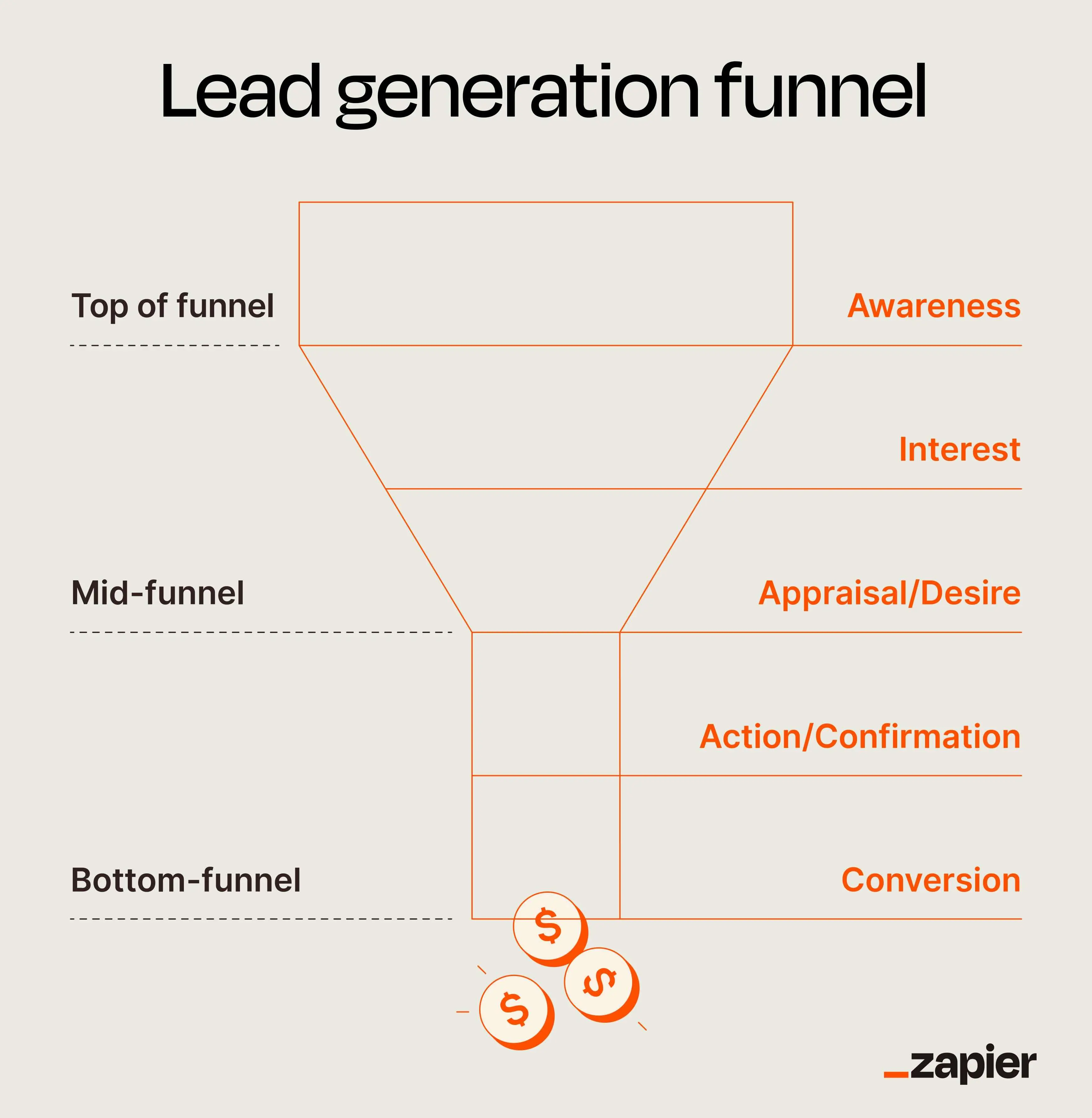
The five stages of a lead generation funnel
Each stage maps to a section of the funnel: top-of-funnel (TOFU), mid-funnel (MOFU), or bottom-funnel (BOFU).
- Awareness: Use a lead magnet to capture attention. This is where prospects first encounter your brand.
- Interest: Demonstrate value and build interest in what your company offers.
- Desire: Focus the prospect's interest on a specific product or service that solves their problem.
- Action: Convince the prospect to commit. This is the decision point.
- Conversion: Close the deal and make the sale.
The funnel narrows at each stage because not every prospect qualifies. That narrowing is the point. You want fewer, better leads reaching sales, not more leads clogging the pipeline.
Step 1: Define your target customer
Before you build any assets, you need a clear picture of who you're targeting. This isn't the moment for vague personas. You need specifics: job titles, company sizes, the problems they search for, and where they spend time online.
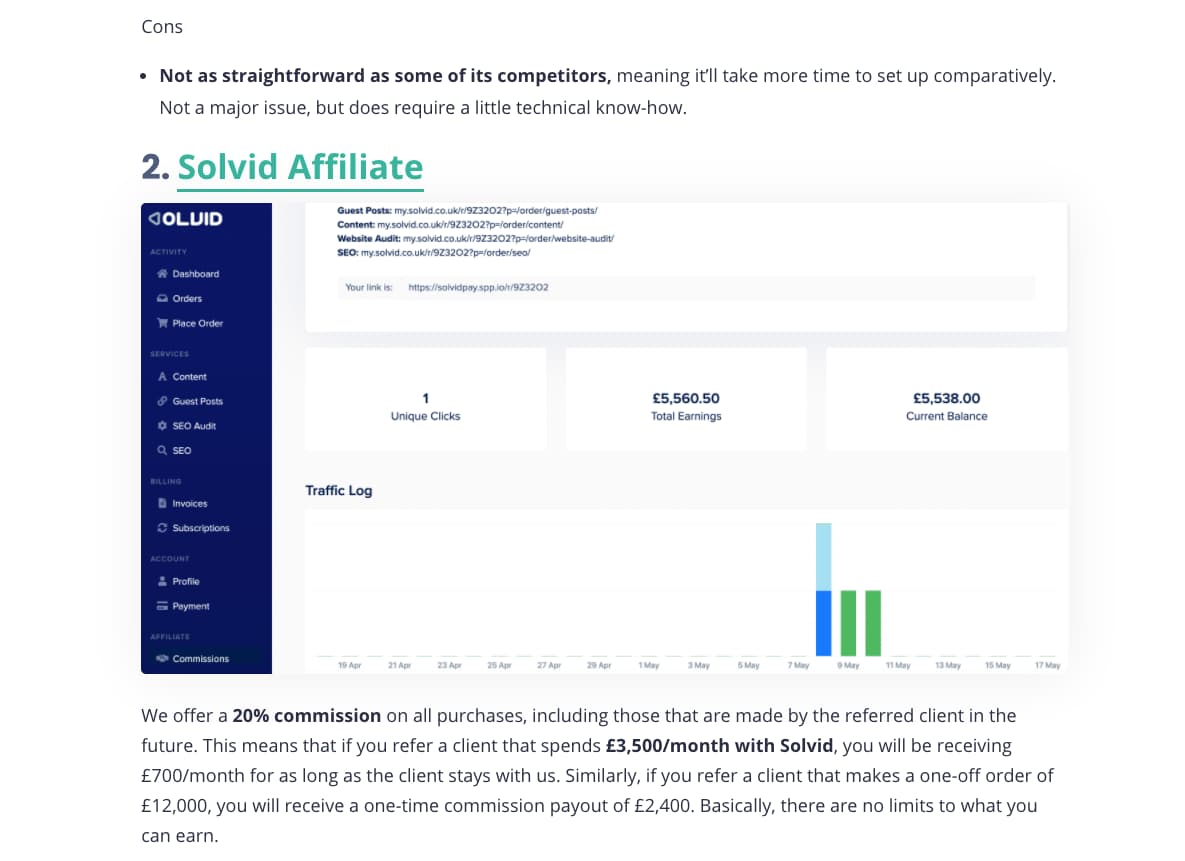
A content agency targeting affiliates, for example, isn't just looking for "people who want passive income." They want marketers with existing audiences, comfort promoting third-party services, and traffic sources that convert. That specificity shapes everything downstream: the lead magnet, the messaging, the qualification criteria.
Store these profiles somewhere your team can access and update them. HubSpot and Salesforce both include contact property fields for this. For smaller teams, Pipedrive or even a shared Airtable base works.
Details the process for creating and maintaining accurate customer profiles
Step 2: Create a lead magnet worth trading an email for
Your lead magnet is the thing you offer in exchange for contact information. It needs to be good enough that someone will actually give you their real email address, not the spam trap they keep for newsletters they'll never read.
What works depends on your audience. For B2B operations teams, calculators and templates outperform ebooks. A "time savings calculator" that estimates hours saved per week converts better than a 30-page PDF on productivity theory.
- Templates and checklists: immediately usable, low commitment
- Calculators and assessments: personalized output, high perceived value
- Webinars and workshops: higher commitment, but stronger qualification signal
- Free tools or trials: best for product-led growth
Build your capture forms in Typeform or Tally for better completion rates than native CRM forms. Then connect them to your CRM so leads flow straight into your system.
Step 3: Build the nurture sequence
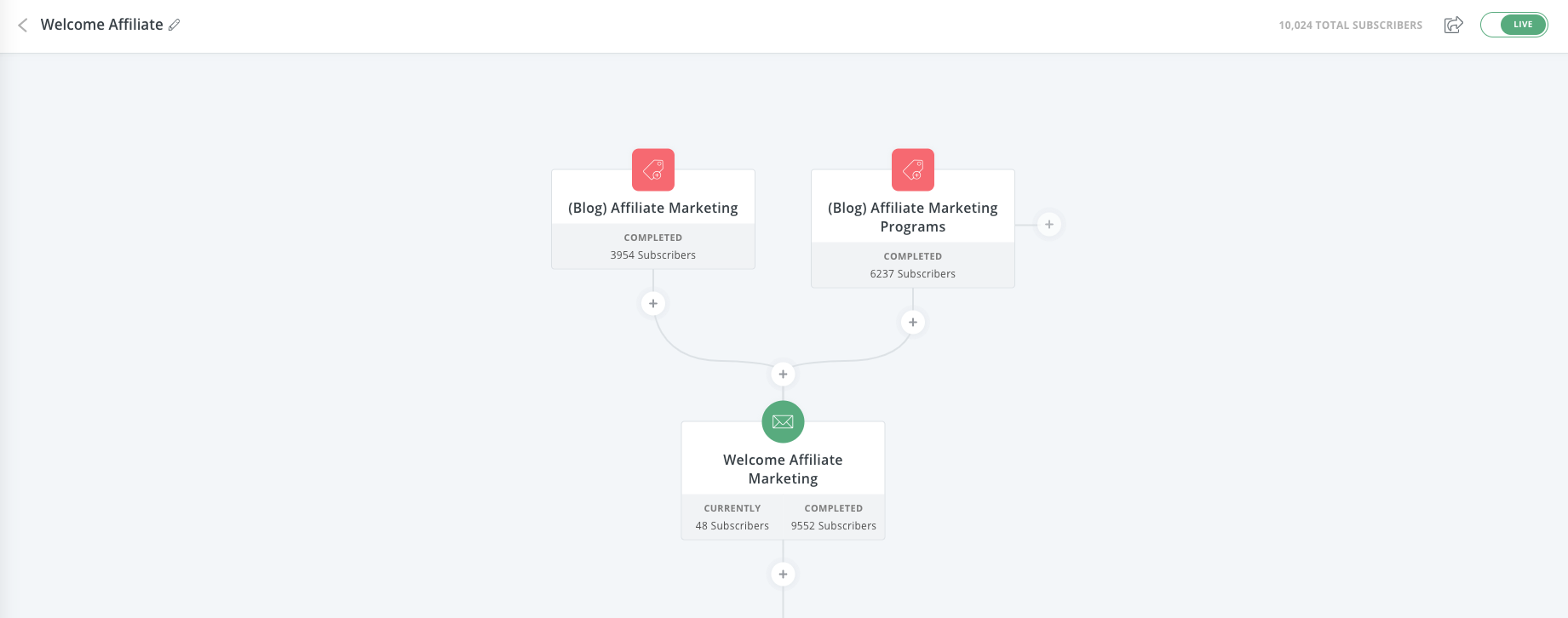
Once someone downloads your lead magnet, they're in your funnel. Now you need to move them from awareness to interest to desire. Email does most of this work.
A basic nurture sequence runs 5-7 emails over 2-3 weeks. The first email delivers the lead magnet. The next few provide related value, building trust. The final emails introduce your product or service and make an offer.
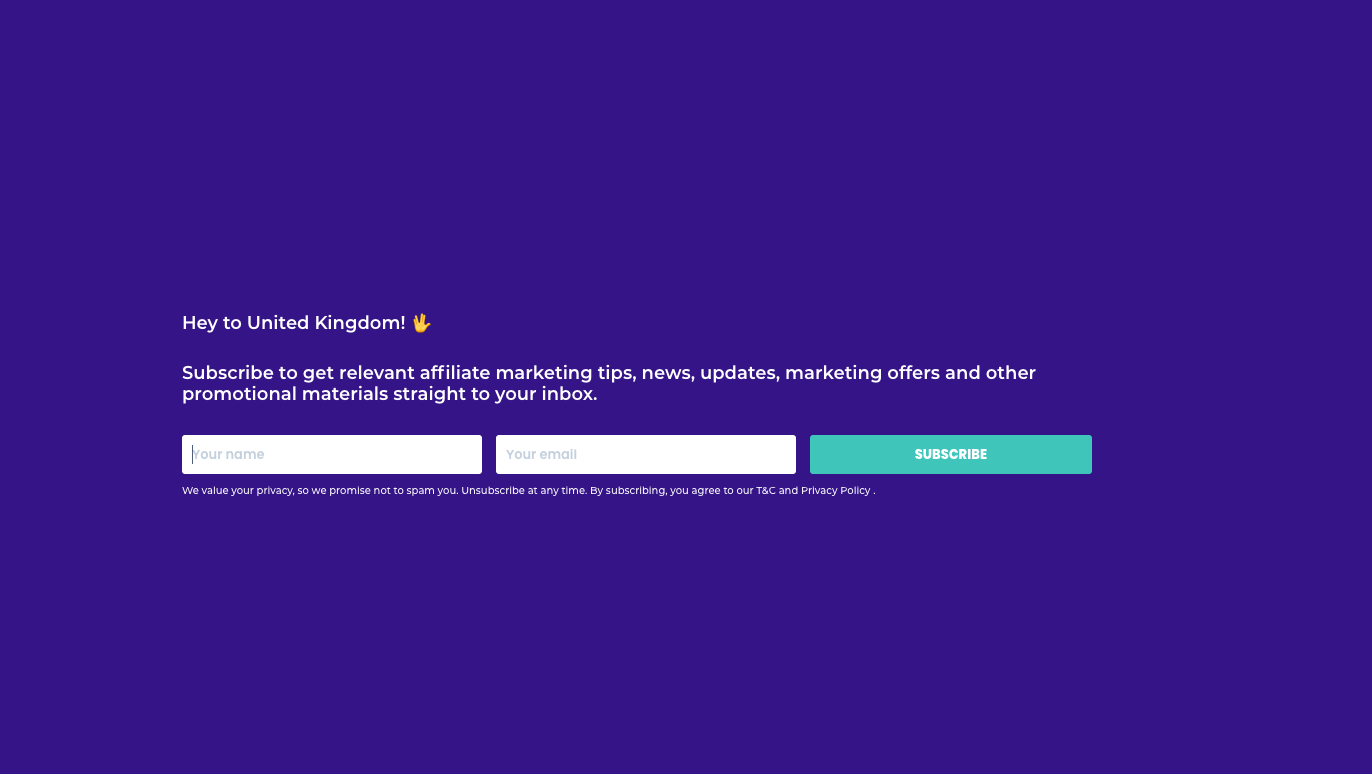
ActiveCampaign handles this well for teams that want visual automation builders. Mailchimp works for simpler sequences. Customer.io gives you more control if you're comfortable with code.
The key is matching email content to funnel stage. Early emails should educate. Middle emails should demonstrate expertise. Late emails should present your solution.
Step 4: Automate the handoff and scoring
This is where most funnels fail. Marketing builds a beautiful lead machine, then dumps contacts into a CRM with no scoring, no routing, and no clear trigger for when sales should reach out.
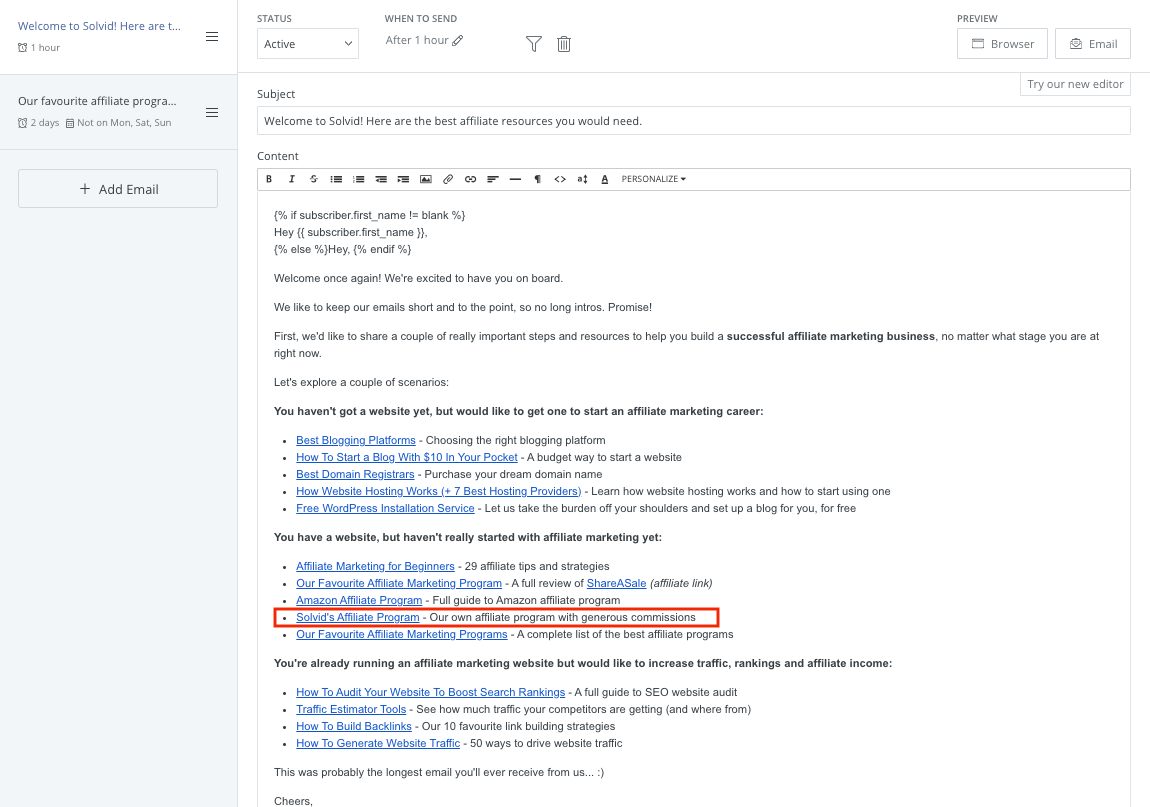
Zapier connects most of the tools in your stack without custom code. When a lead completes your nurture sequence and hits a score threshold, a Zap can create a task in your CRM, notify the assigned rep in Slack, and update the lead status, all automatically.
For more complex routing, Make and n8n offer branching logic that Zapier struggles with. The tradeoff is a steeper learning curve.
Define the handoff criteria explicitly. A lead scoring model might award points for email opens, link clicks, page visits, and form completions. When someone crosses 50 points, they're sales-ready. When they cross 100, they're hot. Whatever your thresholds, document them and make sure both teams agree.
Compares automation approaches for connecting tools in your lead pipeline
Measuring funnel performance
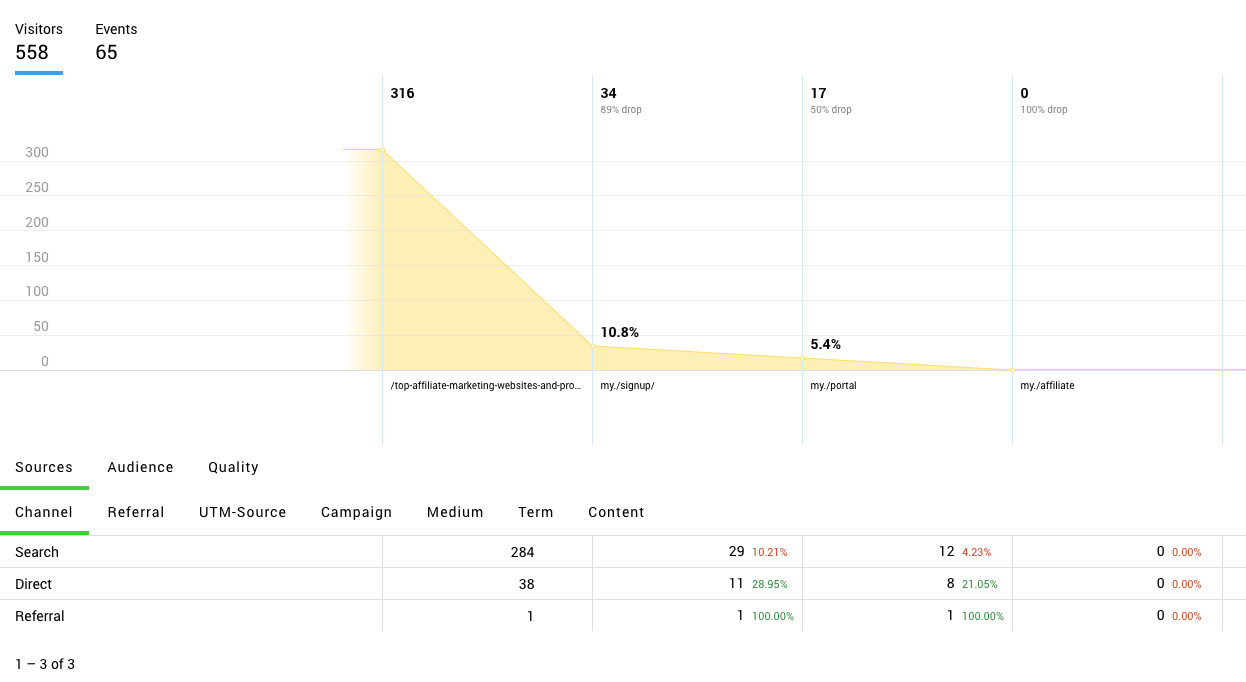
Track conversion rates at each stage. If 1,000 people see your lead magnet landing page, how many download? Of those, how many open your emails? How many click through? How many book a call?
The numbers reveal where your funnel leaks. A high landing page conversion but low email open rate means your subject lines need work. High email engagement but low sales conversions means your qualification criteria are wrong.
- Lead volume: total contacts captured
- Cost per lead: ad spend plus tool costs divided by leads
- Stage conversion rates: percentage moving from one stage to the next
- Time to conversion: days from first touch to closed deal
- Lead quality score: percentage of leads that sales accepts
Logicity's Take
The most underrated funnel metric is the sales acceptance rate. If sales rejects 70% of the leads marketing sends over, your funnel isn't generating leads, it's generating work. RevOps teams should own this number and meet monthly to review it. Tools like HubSpot include sales feedback loops; smaller teams can track it manually in a shared sheet.
Where funnels break
Three failure modes cover most funnel problems.
First, the lead magnet attracts the wrong people. You offered something broad, like "10 Tips for Business Growth," and now your CRM is full of students and hobbyists. The fix is a more specific lead magnet that only appeals to your actual buyers.
Second, the nurture sequence is too short or too long. Too short, and leads aren't ready to buy when sales calls them. Too long, and they've forgotten who you are. Test different sequence lengths and track when leads convert.
Third, the handoff happens too late or too early. Too late, and hot leads go cold waiting. Too early, and sales wastes time on people who were just browsing. Lead scoring fixes this, but only if you calibrate it against actual conversion data.
Frequently Asked Questions
How long should a lead nurture sequence be?
Most B2B sequences run 5-7 emails over 2-3 weeks. Longer sales cycles may need 10-12 emails over 4-6 weeks. Test and adjust based on when leads convert.
What's a good conversion rate for a lead magnet landing page?
20-30% is solid for targeted traffic. If you're below 15%, test your headline and form length. Above 40% often means you're attracting unqualified leads.
Should marketing or sales own the lead scoring model?
Both. Marketing sets the initial model based on engagement data. Sales provides feedback on lead quality. RevOps reviews the model quarterly and adjusts thresholds.
When should a lead be handed off to sales?
When they've shown intent beyond curiosity: multiple page visits, pricing page views, demo requests, or high engagement scores. Define this threshold explicitly before building the funnel.
How do I know if my funnel is working?
Track the sales acceptance rate. If sales accepts and works more than 50% of leads you send over, your funnel is working. Below that, your qualification criteria need adjustment.
Need Help Implementing This?
If your team needs help building or optimizing your lead generation funnel, Logicity can connect you with vetted RevOps consultants. Reach out via our contact page.
Source: The Zapier Blog
Huma Shazia
Senior AI & Tech Writer
Produced with AI assistance and reviewed by the Logicity editorial team. Learn more in our Editorial Policy.