Key Takeaways
- Build profiles from your top 10-15 customers by LTV and NPS, not from workshops or guesswork
- Separate customer profiles (who to target) from buyer personas (how to message individuals)
- Automate profile updates with CRM-to-workflow integrations so data stays current
Your customer profile is probably wrong. Most B2B teams build one during a kickoff workshop, drop it into a slide deck, and let it fossilize while their actual customers change jobs, switch budgets, and stop caring about the things the profile says they care about. The fix isn't a better template. It's treating customer profiles as living documents, reviewed quarterly, updated with real CRM data, and tied to the workflows that depend on them.
Disclosure
Some links in this post are affiliate links — Logicity earns a commission if you sign up, at no extra cost to you. We only link products we have used or actively recommend.
A customer profile is a data-backed description of a customer segment most likely to buy from your business. It pulls together shared traits: needs, behaviors, goals, buying habits. The goal is targeting, not daydreaming. Without one, you're spending marketing budget like a drunk person at Target. Everything looks good, nothing fits, and you're crying in the parking lot.
What goes into a customer profile?
A useful profile leans on three pillars. Demographics (or firmographics for B2B) tell you who your target is: job titles, industry, company size, region. Buying motivations explain why that segment buys: the pressures, priorities, and trigger events that move an account from "we're fine" to "we need this now." Behavioral data shows how they engage: purchase history, channel preferences, login frequency, features touched, support tickets opened.
Demographics alone are basically astrology for marketers. "She's a weekend hiker with a penchant for morning journaling" tells you nothing about buying behavior. Pattern-match on what customers actually do, not what they look like on paper.
Customer profile vs. buyer persona
These terms get used interchangeably, but they serve different purposes. Confusing them is like confusing a weather forecast with a specific person who owns an umbrella.
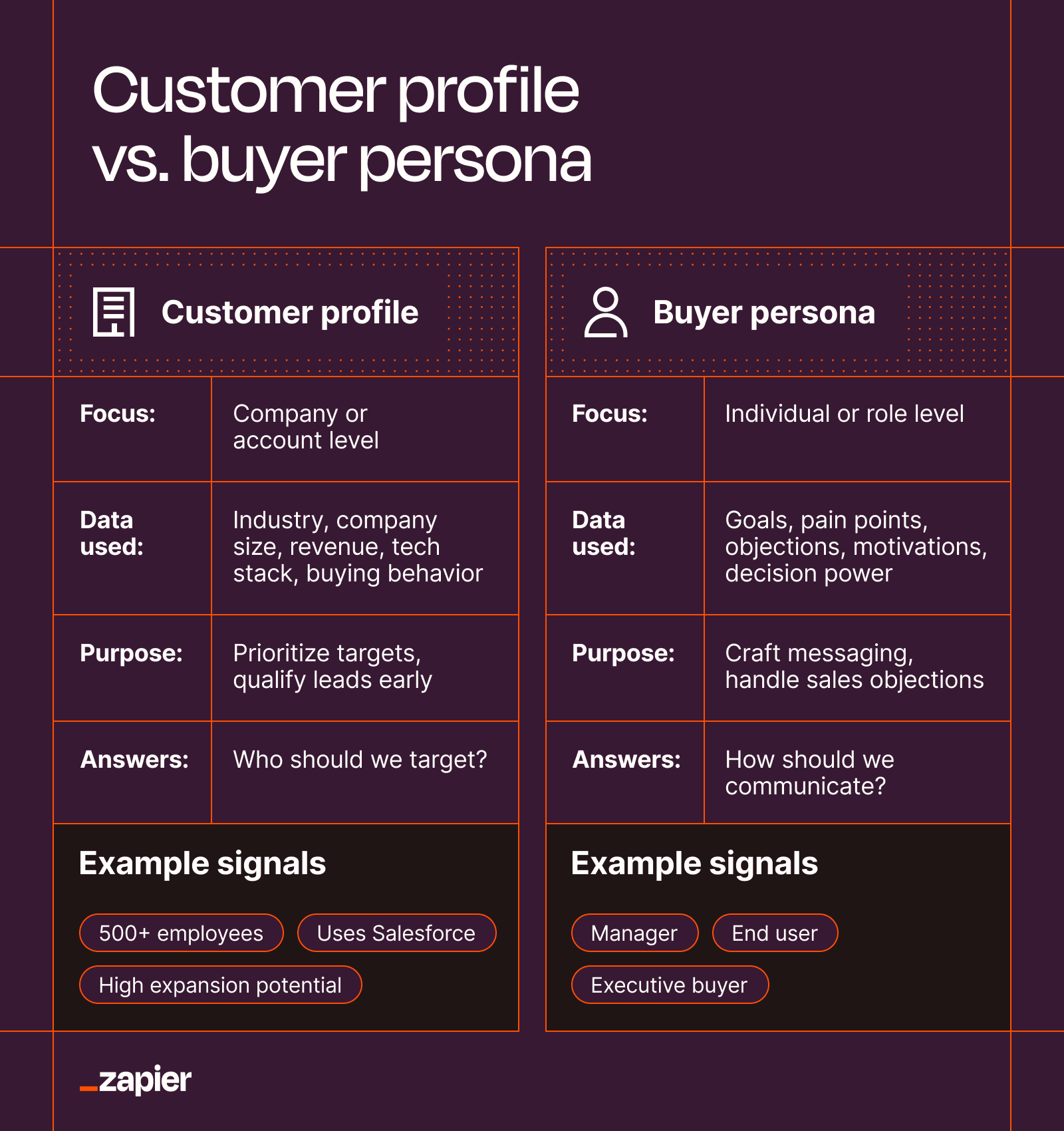
A customer profile, sometimes called an ideal customer profile or ICP, represents an optimal buying segment or account. It's built on quantitative parameters: headcount, industry vertical, revenue bands, location, purchase frequency. The profile typically lives in your CDP or CRM, like HubSpot or Salesforce, as a single source of truth. It identifies where your team should focus.
A buyer persona shifts focus to individual stakeholders within that profile. These semi-fictional archetypes map out psychographics, motivations, and pain points of specific people: the end user, the technical evaluator, the executive signer. Because B2B buying committees can reach 10+ stakeholders, a single customer profile will require several distinct buyer personas. The profile tells you who to target. The persona tells you how to communicate once you're in the door.
Step 1: Identify your Goldilocks customers
Start with customers who sit at the intersection of high lifetime value and high Net Promoter Score. These are the ones who pay more, stay longer, and use the product naturally in their daily workflow with minimal support.
Pull the top 10 to 15 customers based on LTV and NPS, then look for patterns. Industry. Team size at the time of purchase. How they found you. What they did in their first 30 days. The point is to pattern-match on customers who already see your product as essential, not chase leads that look big on paper and churn six months in.
If your CRM doesn't surface this data easily, you're already behind. Pipedrive handles this well for smaller teams; Zoho CRM offers comparable reporting at a lower price point. The tool matters less than whether you're actually running the query.
Step 2: Interview customers to understand why they buy
Spreadsheets tell you what's happening. They're useless at telling you why. Customer interviews fill the gap between behavioral data and actual motivation.
Interview 8 to 12 of your best-fit customers. Ask about the trigger event that started their search. Ask what alternatives they considered and why they ruled them out. Ask what would have to break for them to cancel. The answers will surface language you can steal for positioning and objections you didn't know existed.
Record the calls. Transcribe them. Tag recurring themes. This is qualitative research, not a sales call, so resist the urge to pitch.
Step 3: Build firmographic and behavioral dimensions
Now you combine interview insights with hard data. Define the firmographic dimensions that matter for your business: industry, company size, revenue band, geographic region, tech stack. Then layer in behavioral dimensions: average deal size, sales cycle length, feature adoption, support ticket volume, renewal rate.
Each dimension should have a range, not a single value. "Mid-market SaaS companies with 50-200 employees" is useful. "A SaaS company with 127 employees" is not. Ranges let you score leads and accounts without excluding good fits on technicalities.
Step 4: Create buyer personas for each stakeholder
With your profile defined, build personas for the stakeholders you need to convince. For a typical B2B sale, this means the end user, the technical evaluator, and the economic buyer. Each persona gets its own goals, objections, and preferred channels.
Keep personas short. One page max. If a persona can describe half your industry, it's too generic to guide messaging. The test: could your sales team use this to write a cold email that sounds like it was written for that specific person? If not, cut the fluff and add specifics.
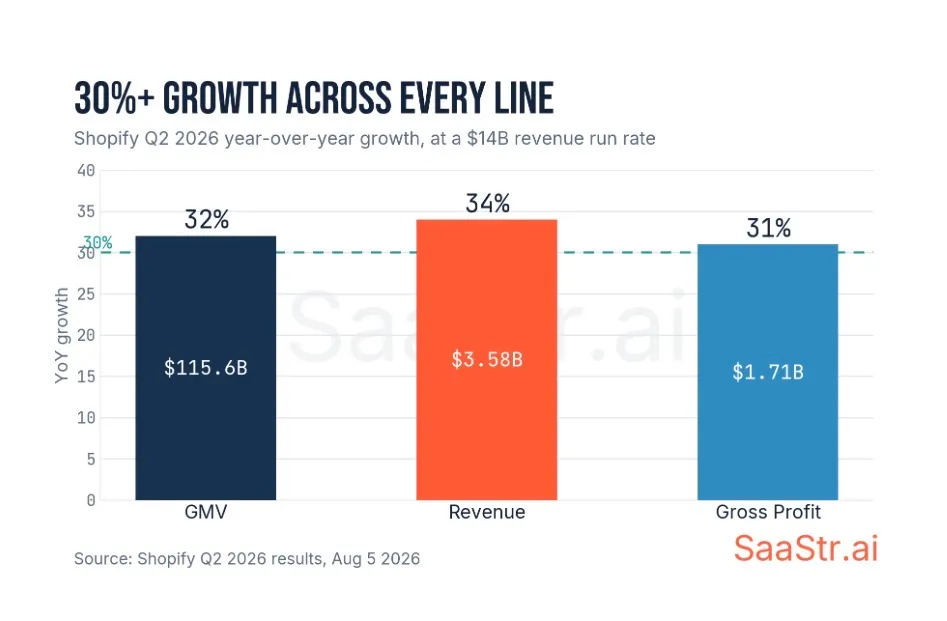
Shows how customer segmentation drove Shopify's enterprise growth
Step 5: Automate profile updates so they don't rot
The profile you build today will be wrong in six months. Markets shift, customers churn, new segments emerge. The teams that win automate updates so profiles stay current without manual quarterly audits.
Zapier can sync CRM data with your profile documentation automatically. When a high-LTV customer churns, trigger a Slack notification to your ops team. When a new deal closes above a certain threshold, log the firmographic data to a Google Sheet for pattern analysis. Make offers similar workflows with more complex branching logic; n8n does the same self-hosted.
The goal is a closed loop: profile informs targeting, targeting generates data, data updates profile. Without automation, you're back to fossils.
Logicity's Take
Most profile guides skip the hard part: keeping profiles accurate after launch. The automation angle is where ops teams earn their keep. Connect your CRM to a lightweight scoring system, set alerts for when your best-fit pattern shifts, and review quarterly instead of annually. Zapier's free tier handles simple triggers; paid plans ($19.99/month and up) unlock multi-step Zaps. Make and n8n cost less but require more setup. The tool choice matters less than building the habit.
Covers automation options for syncing profile data across tools
Common mistakes that kill customer profiles
Building a profile in a workshop without data. Workshop profiles are wish lists, not maps. Start with your actual best customers, not the ones you want.
Conflating profile and persona. You'll spend marketing budget targeting the right accounts with the wrong message, or the wrong accounts with a message that could have worked elsewhere.
Setting it and forgetting it. A two-year-old profile reflects a two-year-old market. If your profile hasn't changed in 12 months, you're not paying attention.
Optimizing for fantasy buyers. The customer with unlimited budget and no questions who definitely won't churn after three months does not exist. Profile customers who buy, not customers you wish bought.
Frequently Asked Questions
How often should I update my customer profile?
Review quarterly at minimum. Set automated alerts for when key metrics (churn rate, average deal size, top industries) shift more than 15% from baseline.
How many buyer personas do I need per profile?
For B2B, typically three to five: end user, technical evaluator, economic buyer, and any recurring influencers in your deals. More than five usually means you're over-segmenting.
What's the difference between ICP and customer profile?
They're the same thing. ICP (ideal customer profile) is the B2B term; customer profile is broader. Both describe the account or segment you're targeting.
Can I build a useful profile without customer interviews?
You can build a partial one from CRM and behavioral data. But you'll miss the 'why' behind purchases, which means your messaging will stay generic.
Need Help Implementing This?
If you're building customer profiles for the first time or automating updates across your stack, reach out to Logicity's ops consulting team. We help RevOps teams connect CRM data to targeting workflows without the six-month implementation cycle.
Source: The Zapier Blog
Huma Shazia
Senior AI & Tech Writer
Produced with AI assistance and reviewed by the Logicity editorial team. Learn more in our Editorial Policy.