Key Takeaways
- B2B buyers make decisions over months with 6-8 touchpoints, so single-post conversions are a myth
- LinkedIn drives 80% of B2B social leads, making platform choice straightforward for most teams
- Matching content to funnel stages (awareness, evaluation, decision) outperforms random posting
A LinkedIn post from a B2B software company opened with "We're not just a platform. We're a family." It got 847 likes. That sentence captures everything broken about B2B social media marketing. It's aggressively vague, offers zero information, and sounds like it was generated by a committee. Yet 847 people clicked the button anyway. For operations and RevOps teams trying to build pipeline through social channels, the lesson isn't that platitudes work. It's that engagement metrics lie constantly about what actually drives revenue.
Disclosure
Some links in this post are affiliate links — Logicity earns a commission if you sign up, at no extra cost to you. We only link products we have used or actively recommend.
The source material here comes from Zapier's breakdown of B2B social strategy, and it makes one point worth repeating: nobody impulse-buys a six-figure enterprise contract because they saw a fun Reel. B2B social media operates on a different timeline. Your buyer is simultaneously a professional evaluating vendors and budgets, and a person procrastinating between meetings, scrolling for distraction. You need to reach both versions at once.
What makes B2B social media different from consumer marketing?
Consumer social media is built for impulse. Scroll, see, want, buy. B2B decisions involve a six-person buying committee, a procurement review, a security questionnaire, and a contract that legal needs to approve. Posts chasing quick impulses don't move that needle. Posts that build authority and stay visible over months do.
The data supports this: Salesforce research indicates B2B buyers need 6-8 touchpoints before engaging with sales. A single viral post won't close a deal. Consistent presence across the buyer's research phase will. That's why Zapier frames the process like a CVS pharmacy line. People mill around, drift away, come back, leave to look at greeting cards, return, leave again, and eventually reach the front.
For RevOps teams tracking attribution, this concentration simplifies channel allocation. LinkedIn isn't optional for B2B. It's where your buyers already are. The platform generated $7.7 billion in advertising revenue in 2023, almost entirely from B2B spend.
How should B2B content map to the buyer's funnel?
Strong B2B social strategies match content to where buyers actually sit in their decision process. Zapier breaks this into three stages:
- Top of funnel: Content that earns a follow. Industry takes, contrarian opinions, the kind of post that makes someone think "this person knows what they're talking about."
- Middle of funnel: Case studies, guides, and breakdowns that help buyers evaluate options. This is where you prove competence, not just claim it.
- Bottom of funnel: Demos, testimonials, and direct calls to action that convert interest into pipeline.
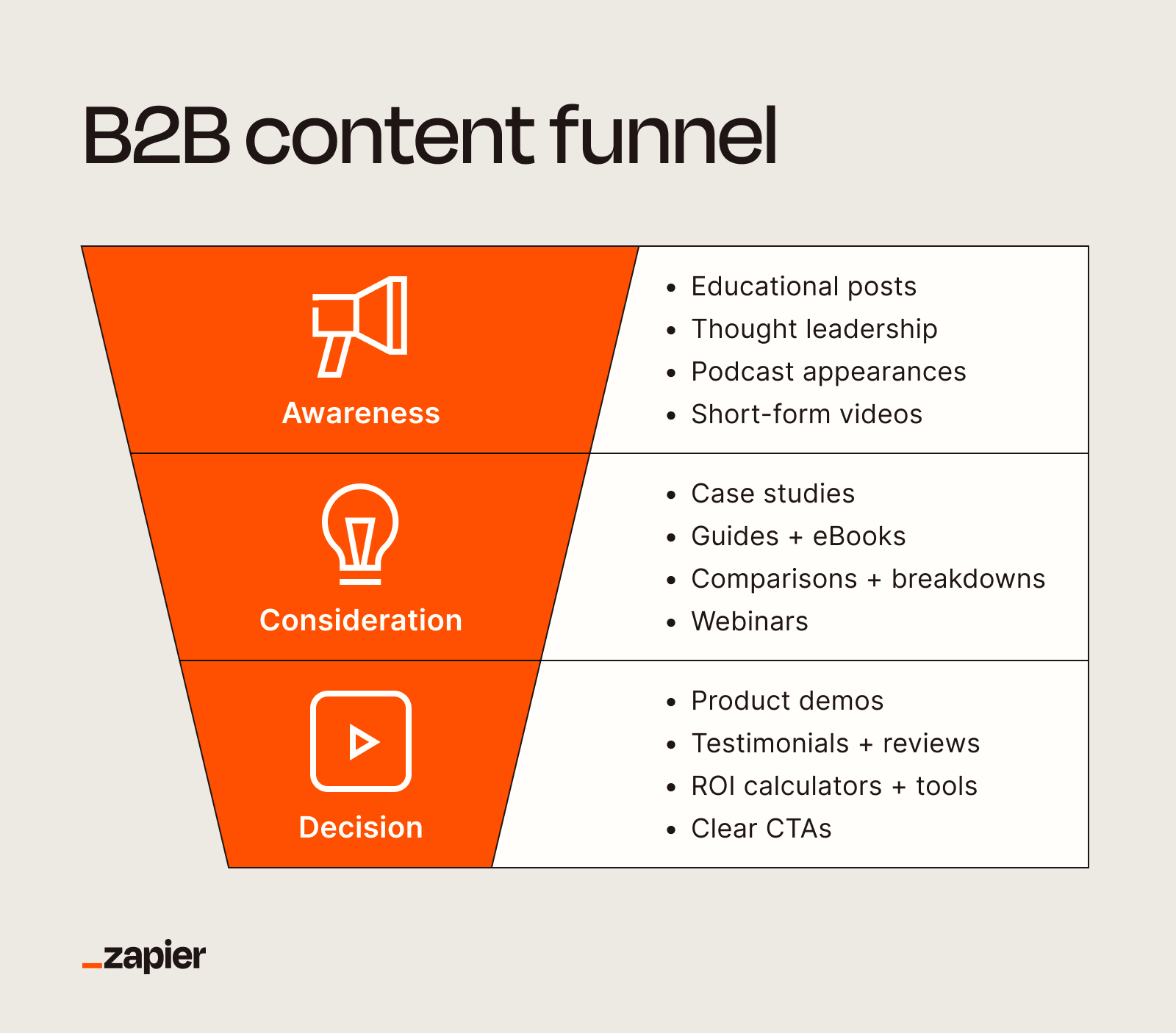
Most B2B social accounts post only top-of-funnel content, then wonder why engagement doesn't translate to revenue. The connection requires middle and bottom-funnel content that moves people through the buying process. Tools like Zapier can automate posting schedules across funnel stages, while HubSpot or Salesforce track how social touchpoints contribute to pipeline.
Why organic posting still matters when ads exist
Paid social gets eyeballs. Organic social builds the trust that makes those eyeballs convert. Hinge Research Institute data shows B2B companies using employee advocacy see 3x higher conversion rates than brand-only channels. The reason is simple: people trust people more than logos.
This is where most corporate social accounts fail. They sound like press releases. They hedge every statement. They use words like "synergy" without irony. The fix isn't complicated: let actual humans post actual opinions. Founders saying something their comms team asked them not to say generates more engagement than a month of branded carousels.
Social listening is cheaper than focus groups
Zapier makes a point that deserves more attention: social media is an unfiltered focus group you didn't pay for. Buyers tell you what they care about, what's broken, and what they want next. Sometimes loudly. When you engage those conversations, prospects show up in your CRM already warmed up.
For RevOps teams, this changes lead scoring. A prospect who's interacted with three LinkedIn posts and commented on an industry thread is warmer than one who filled out a form from a cold Google search. Tools like n8n or Make can pull social engagement data into your CRM for scoring automation.
Click-through rates on traditional channels keep declining. AI-powered search means buyers find answers before reaching your website. The old strategy of ranking blog posts for "best CRM" isn't the reliable pipeline source it was three years ago. B2B social is where you meet buyers before they know they're buyers. When they're still learning about your category.
What actually works: specifics over platitudes
The "we're a family" post got 847 likes and probably zero deals. Posts that drive pipeline share specific, useful information. Numbers. Case study details. Opinions that risk disagreement. A breakdown of exactly how you solved a problem.
Demand Gen Report found that 54% of B2B buyers use social media to research vendors before purchasing. They're looking for evidence you can solve their problem. Vague warmth doesn't provide that evidence. A post showing you reduced a client's sales cycle from 47 days to 23 does.
Logicity's Take
RevOps teams should stop measuring social by engagement and start measuring by pipeline contribution. That requires connecting your social management tool to your CRM. Zapier's free tier handles basic automations. HubSpot's Marketing Hub Pro ($800/month) includes social attribution natively. Salesforce's Social Studio requires Enterprise pricing. For smaller teams, the combination of Zapier plus a mid-tier CRM like Pipedrive (starting at $14/user/month) offers better ROI than enterprise stacks. The key metric isn't likes. It's how many qualified opportunities touched social content before converting.
Frequently asked questions
Frequently Asked Questions
Which social platform works best for B2B marketing?
LinkedIn dominates B2B social, driving roughly 80% of B2B social leads. For most companies, it should absorb most of your effort. Twitter/X works for specific industries like tech and developer tools. Instagram and TikTok remain primarily B2C channels.
How long does B2B social media take to generate leads?
Expect 3-6 months before social efforts contribute meaningfully to pipeline. B2B buyers need 6-8 touchpoints on average before engaging sales, and building the content library to support that takes time.
Should B2B companies focus on paid or organic social?
Both serve different functions. Organic builds trust and thought leadership over time. Paid amplifies reach and targets specific accounts. Most successful B2B programs use organic as the foundation and paid to accelerate.
How do you measure B2B social media ROI?
Track pipeline attribution, not engagement. Connect your social tools to your CRM to see which opportunities interacted with social content before converting. Likes and impressions matter less than influenced revenue.
What content types perform best for B2B social?
Case studies, contrarian takes, and specific how-to breakdowns outperform generic branded content. Employee posts typically get 3x more engagement than company page posts.
Comparison frameworks apply whether you're evaluating development tools or social strategy approaches
Need Help Implementing This?
Building a B2B social strategy that connects to your revenue operations? Logicity covers the tools, workflows, and integrations that make it work. Subscribe to our newsletter for weekly breakdowns.
Source: The Zapier Blog
Huma Shazia
Senior AI & Tech Writer
Produced with AI assistance and reviewed by the Logicity editorial team. Learn more in our Editorial Policy.