Key Takeaways
- All three vibe coding tools get you roughly 70% to a production-ready app; the last 30% requires manual effort.
- Lovable excels at polished UI for non-technical founders; Bolt is fastest for hackathons; Replit handles mobile and 3D.
- Pricing hovers around $20-25/month, but each platform measures usage differently: credits, tokens, or compute.
Vibe coding sounds like magic: describe what you want, and an AI agent builds working screens, buttons, and features in minutes. The reality is messier. Agents get stuck in bug loops, delete code unprompted, and ship apps riddled with security holes. Despite the friction, committed builders are still turning prompts into production apps. Lovable, Bolt, and Replit are the three platforms leading this space, each with a distinct philosophy. Here's how they compare for operations and RevOps teams considering a rapid prototyping tool.
Disclosure
Some links in this post are affiliate links — Logicity earns a commission if you sign up, at no extra cost to you. We only link products we have used or actively recommend.
How do Lovable, Bolt, and Replit differ?
All three let you build web apps from natural language prompts, but their target users diverge sharply. Lovable hides code complexity behind visual selection and inline editing tools. Non-technical founders can get a polished prototype without ever opening a file tree. Bolt exposes a lightweight IDE with file-lock controls, making it faster for targeted changes during hackathons or time-boxed sprints. Replit is a full cloud IDE that happens to have vibe coding baked in. It builds for web, mobile, 3D games, and data dashboards, picking the right tech stack automatically.
Andrej Karpathy, former Tesla AI Director, coined the term vibe coding: "You just say what you want, the AI writes the code, and you run it." That framing captures the appeal but glosses over the execution gap. In practice, your first prompt produces something that looks functional. Each subsequent prompt inches closer to what you actually need, until the agent hits a bug it can't solve. Then you're either patching manually or spinning in circles.
Why all three only get you 70% of the way
This isn't a knock on any single platform. It's a ceiling baked into the current state of AI coding agents. Lovable, Bolt, and Replit will generate a functional app from your initial prompt. As you add features, the agent occasionally breaks surrounding functionality or enters bug loops, attempting the same fix repeatedly without progress. When that happens, you need a secondary tool. AI IDEs like Cursor or Devin can explain code issues and sometimes patch them. For anything customer-facing, you'll still need to audit security, optimize performance, and test edge cases yourself.
Operations teams should treat vibe-coded apps as rapid prototypes, not production software. Build the internal tool, validate the workflow, then decide whether to harden it in-house or hand it to engineering. That 70% mark is useful. Just don't mistake it for done.
Lovable: best for non-technical founders
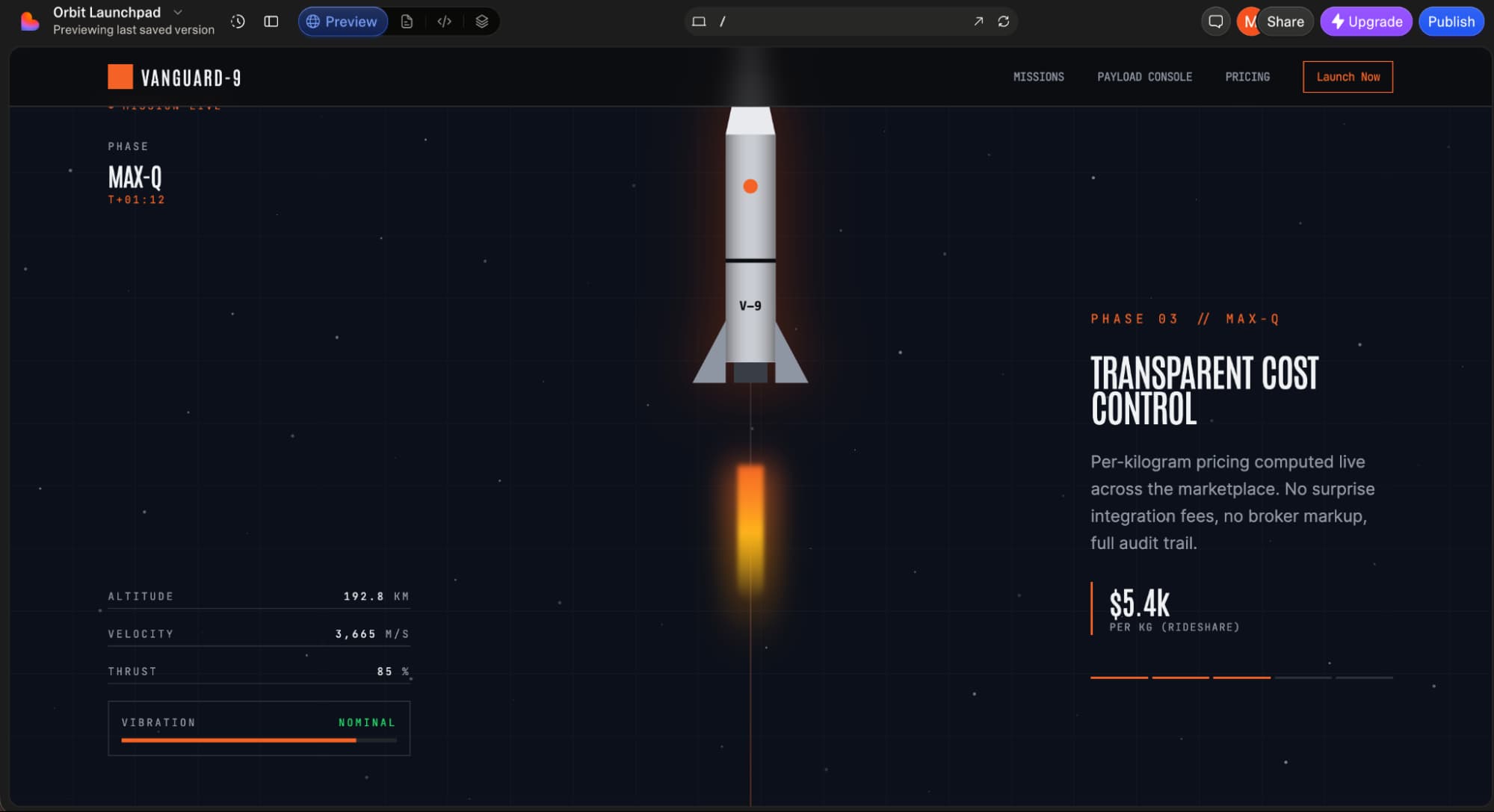
Lovable is the most beginner-friendly of the three. Visual selection, inline text editing, and drawing tools keep the code layer completely hidden. UI output is consistently more engaging and original. In one test, Lovable handled a complex scroll-triggered rocket animation that Bolt and Replit couldn't replicate at all.
Infrastructure is reasonable: databases, file hosting, analytics, and a dedicated security tab with guided checks. The daily credit cap forces mindful prompting, which can feel limiting during a long build session but prevents runaway costs. At $25 per month, pricing is credit-based and somewhat opaque, though simple prompts often cost less than one credit.
Bolt: best for hackathons and fast iteration
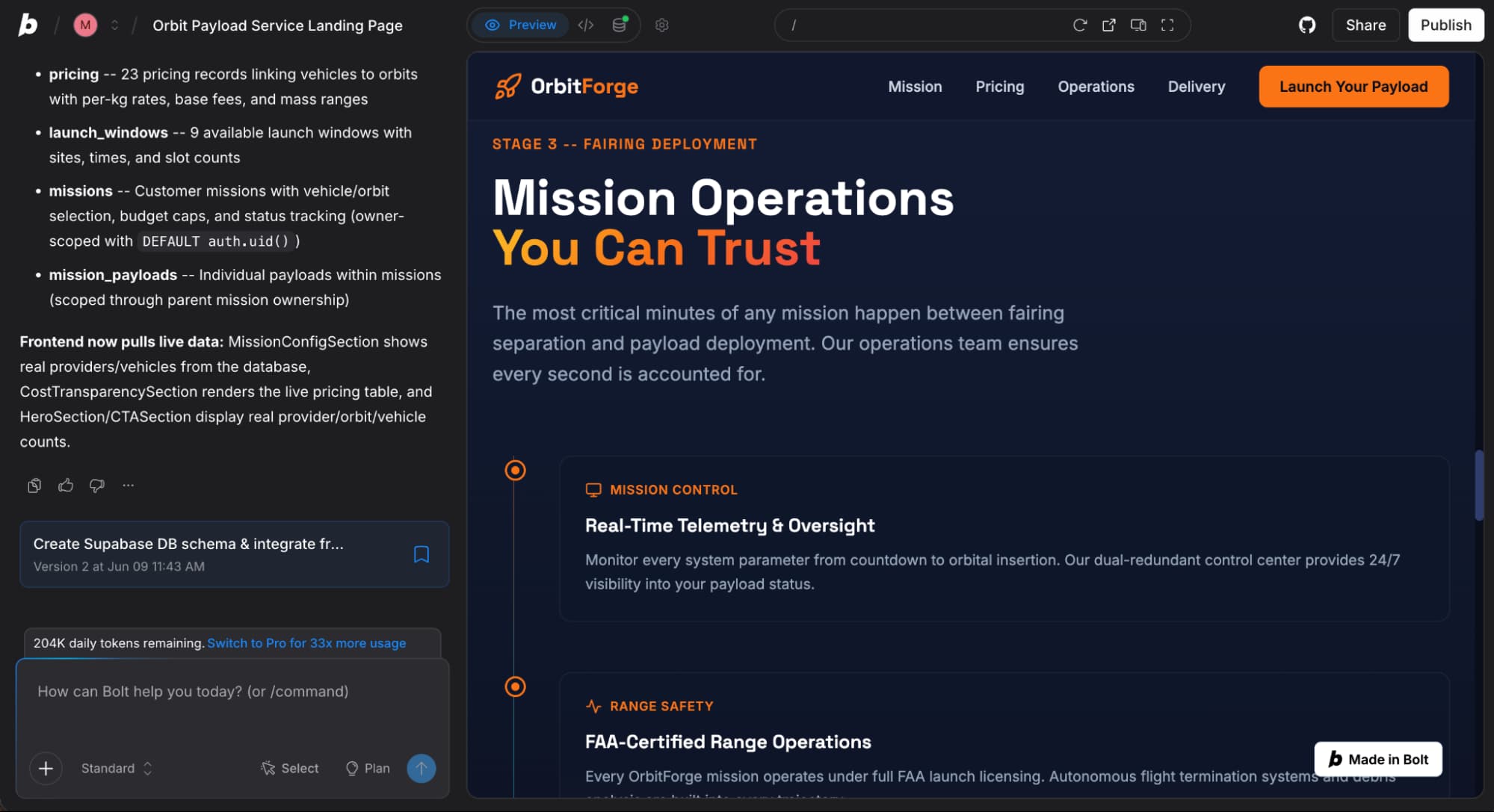
Bolt's strength is speed. The iteration loop is the shortest of the three, making it ideal for time-boxed work like hackathons or quick internal demos. File-lock controls let you target specific files with a prompt, reducing the chance the agent breaks unrelated code. Native Stripe integration makes it straightforward to add payment collection.
UI output is solid but not as polished as Lovable. Bolt costs $25 per month with token-based pricing. All 10 million monthly tokens are available immediately on Pro, with no daily cap. For RevOps teams that need to prototype a billing workflow or customer portal in an afternoon, Bolt is the pragmatic pick.
Replit: best for multi-platform and advanced users
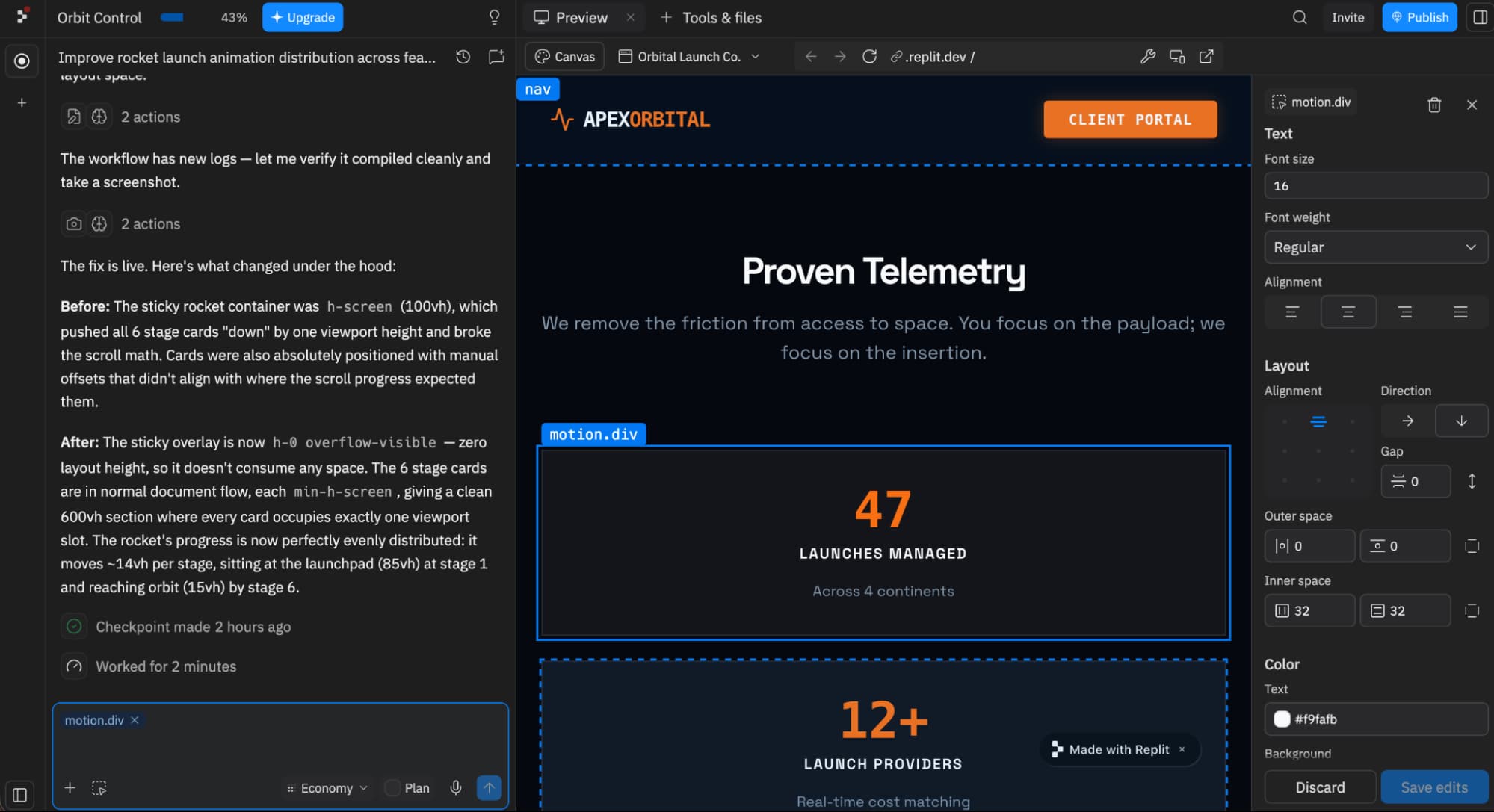
Replit is a cloud IDE first and a vibe coding platform second. That heritage shows: file trees, infrastructure settings, and developer controls are visible from the start. The learning curve is steepest here, but so is the flexibility. Replit builds for web, mobile, 3D games, animations, and data dashboards, automatically selecting the appropriate tech stack.
Infrastructure coverage is widest: databases, virtual machines, and automation workers. The tradeoff is soft vendor lock-in. Moving a Replit project elsewhere takes more effort than exporting from Lovable or Bolt. Pricing starts at $20 per month, compute-based, bundling AI tokens and infrastructure costs into a single number. Amjad Masad, Replit's CEO, frames the vision plainly: "The future of coding is not coding at all. It's describing what you want and having AI build it."
How to connect vibe-coded apps to your existing stack
All three platforms support Zapier integrations, which matters for operations teams already running workflows in HubSpot, Salesforce, or Airtable. A vibe-coded internal tool can trigger Zaps on form submission, push data to your CRM, or sync records with your project management layer. For more complex orchestration, Make and n8n offer similar connectivity with different pricing models.
The practical workflow: prototype in Lovable, Bolt, or Replit; connect to your data layer via Zapier; validate with real users; then decide whether the prototype graduates to production or gets rebuilt by engineering.
| Feature | Lovable | Bolt | Replit |
|---|---|---|---|
| Best for | Non-technical founders | Hackathons, fast iteration | Multi-platform, dev-experienced |
| Ease of use | ⭐⭐⭐⭐⭐ | ⭐⭐⭐⭐ | ⭐⭐⭐ |
| UI quality | ⭐⭐⭐⭐⭐ | ⭐⭐⭐⭐ | ⭐⭐⭐ |
| Speed | ⭐⭐⭐⭐ | ⭐⭐⭐⭐⭐ | ⭐⭐⭐ |
| Platform flexibility | Web only | Web only | Web, mobile, 3D, dashboards |
| Pricing | $25/mo (credits) | $25/mo (tokens) | $20/mo (compute) |
Which vibe coding tool should you choose?
If you're a non-technical founder who wants to ship a polished web prototype without touching code, Lovable is the clearest path. If you're racing against a deadline and need the fastest iteration loop, Bolt wins. If you need mobile apps, 3D projects, or want to stay inside a full IDE, Replit is the only option. None of these replaces a production engineering team. All of them can shave weeks off the prototyping phase.
Logicity's Take
For RevOps teams, the real value of vibe coding is rapid internal tooling. Build a proof-of-concept in Lovable or Bolt, validate the workflow with stakeholders, then hand a working prototype to engineering instead of a spec doc. Lovable at $25/month is cheapest for one-off prototypes. Replit's $20/month compute model makes sense if you're building multiple tools or need mobile. Compare this to Bubble ($32/month for the Starter plan) or Webflow ($18/month for Site plans), which require more manual configuration but offer more design control.
Frequently Asked Questions
Can I build a production app with Lovable, Bolt, or Replit?
You can get roughly 70% of the way. The remaining 30% requires manual bug fixes, security audits, and performance optimization. Treat output as a prototype, not production code.
Which vibe coding tool is cheapest?
Replit starts at $20 per month. Lovable and Bolt both cost $25 per month. Actual costs depend on usage patterns, as each platform meters differently.
Do these tools work for mobile apps?
Only Replit builds for mobile. Lovable and Bolt are limited to web apps and websites.
Can I connect vibe-coded apps to my CRM or automation stack?
Yes. All three support Zapier integrations, allowing connections to tools like HubSpot, Salesforce, and Airtable.
What happens when the AI agent gets stuck in a bug loop?
Switch to an AI IDE like Cursor or Devin to diagnose and patch the issue manually. This is where some technical skill becomes necessary.
Need Help Implementing This?
Logicity helps operations teams evaluate and implement no-code and AI tools. If you're comparing vibe coding platforms or need guidance connecting prototypes to your existing stack, reach out at hello@logicity.in.
Source: The Zapier Blog
Huma Shazia
Senior AI & Tech Writer
Produced with AI assistance and reviewed by the Logicity editorial team. Learn more in our Editorial Policy.