Key Takeaways
- Demand generation warms buyers before sales outreach; lead generation captures contacts from those already showing intent
- Gating every asset inflates lead volume but tanks pipeline quality with casual browsers and unqualified contacts
- 67% of the B2B buyer journey now happens digitally before a prospect ever talks to sales
Demand generation is a B2B marketing strategy that creates awareness and trust long before a prospect fills out a form. It sits at the top of the funnel, warming buyers through ungated content, original research, and educational campaigns so that by the time sales reaches out, the conversation is already half won.
Disclosure
Some links in this post are affiliate links — Logicity earns a commission if you sign up, at no extra cost to you. We only link products we have used or actively recommend.
The distinction matters for RevOps teams because it changes which metrics you optimize and which tools you wire together. Lead generation counts form fills. Demand generation counts whether those form fills turn into revenue.
Why demand generation exists in the first place
Modern B2B buyers complete roughly 67% of their purchase journey digitally before they ever contact a vendor. They read comparison posts, watch explainer videos, lurk in Slack communities, and ask their network. By the time they appear on your radar, they've already formed opinions.
Demand generation meets them in that discovery phase. It does three things: creates awareness among people who don't yet know they have a problem you solve, builds interest through useful ungated content, and feeds qualified pipeline by warming buyers before sales ever reaches out.
Demand creation vs. demand capture
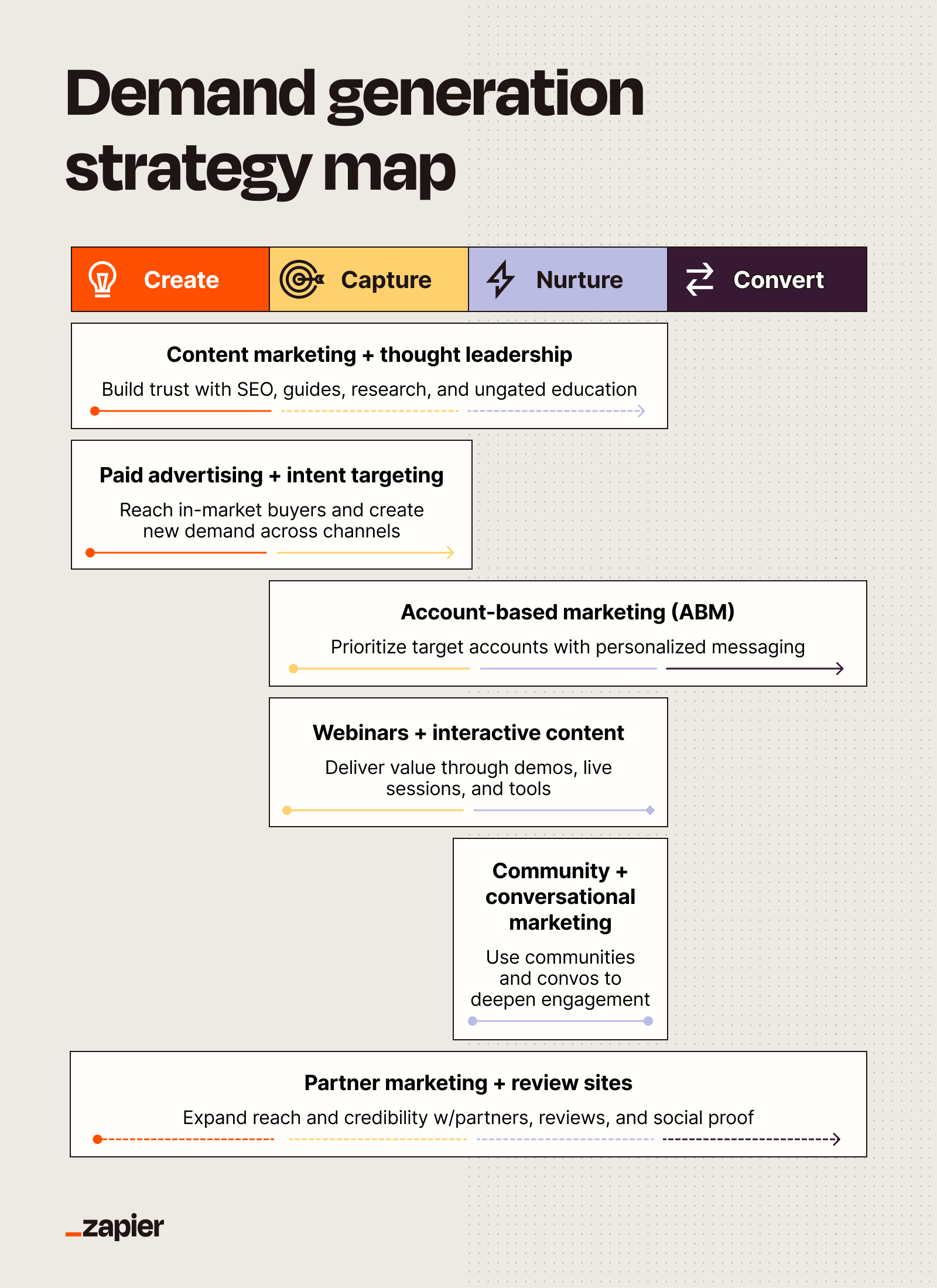
These two terms describe different stages of the buyer journey. Demand creation generates fresh awareness among people who aren't actively looking yet. Think thought leadership, original research, and social content. Demand capture targets users already showing intent, converting existing interest into pipeline through high-intent ads, branded search, and bottom-of-funnel content.
You can't run one without the other. Demand creation fills the top of the funnel. Demand capture turns that interest into revenue when buyers are ready. A RevOps team that only measures demand capture will starve the pipeline in 6-12 months.
Demand generation vs. lead generation: the core difference
Lead generation focuses on capturing contact information from prospects already showing intent, typically through gated content like whitepapers, ebooks, or demo request forms. The risk is that gating everything inflates lead volume while tanking pipeline quality. The gate doesn't know who is serious. It collects everyone: casual browsers, students researching for class, recruiters trolling for contacts, and people who misread the title.
All of them land in your CRM and get fed your nurture sequence, overwhelming sales with low-quality leads. Platforms like HubSpot and Salesforce can score leads to filter out noise, but the upstream problem remains: gated content attracts form-fillers, not buyers.
Demand generation solves this by pre-qualifying prospects through the content itself. By the time someone fills out a form, they've already absorbed enough of your worldview to know whether you're for them. They're warmer, there are fewer of them, they convert at higher rates, and sales likes them.
| Demand Generation | Lead Generation | |
|---|---|---|
| Primary goal | Build awareness, intent, and trust | Capture contact info |
| Funnel stage | Top and mid-funnel | Mid and bottom-funnel |
| Timeframe | Long-term; compounds over months | Short-term; results in days |
| Content type | Ungated: guides, videos, webinars | Gated: whitepapers, demos, trials |
| Key metric | Qualified opportunities, engagement | Number of leads, CPL |
How the demand generation process works
The process breaks into five stages. First, define your ideal customer profile and the problems they're trying to solve. Second, create ungated educational content that addresses those problems without a hard sell. Third, distribute that content where your buyers actually spend time. Fourth, retarget engaged audiences with demand capture tactics. Fifth, measure pipeline impact, not just impressions.
Automation tools like Zapier or Make can connect your content engagement data to your CRM, so sales sees which accounts are consuming content before they fill out a form. That context changes the conversation.
Measuring demand generation ROI
Lead generation metrics, like cost per lead and form conversion rate, don't capture demand generation's value. A prospect who reads five blog posts, watches a webinar, and then converts on a demo request is worth more than someone who downloaded one ebook and went cold. The first metric tells you volume; the second tells you nothing about pipeline.
RevOps teams should track qualified opportunities generated, engagement rate on ungated content, content consumption by account, and influenced pipeline. Attribution is harder here because the touchpoints are often anonymous until someone self-identifies. But harder doesn't mean impossible. Tools like Dreamdata, HockeyStack, or native CRM reporting in Salesforce can stitch together the journey.
The third-party cookie problem
Third-party cookies are effectively dead, and AI-powered search is eating the SEO that used to feed the top of the funnel. Both changes hurt demand generation teams that relied on retargeting anonymous visitors or ranking for informational queries.
The workaround is first-party data. Encourage email signups with genuinely useful newsletters. Build communities where buyers self-identify. Run events. Create original research that earns links and citations. These tactics are slower and more expensive than running retargeting ads, but they're also more durable.
Logicity's Take
For RevOps teams, the real question isn't 'demand gen or lead gen?' but 'how do we wire them together?' Most CRMs treat gated content as the start of the customer journey, ignoring all the ungated touchpoints that preceded it. The fix is instrumenting your content layer. Track which accounts visit your pricing page, which ones binge your blog, and which ones engage on LinkedIn. Then route that data into your CRM so sales has context. HubSpot's free tier includes basic tracking. Salesforce requires a third-party tool like Clearbit or 6sense. Pipedrive and Freshsales are lighter but lack native account-level tracking. The tooling choice depends on your budget and how much anonymous-to-known stitching you need.
Frequently Asked Questions
Is demand generation the same as brand awareness?
Brand awareness is a component of demand generation, but demand gen also includes trust-building and pipeline qualification. Awareness alone doesn't move deals.
How long does demand generation take to show results?
Typically 3-6 months for compounding effects. Unlike lead gen campaigns that produce immediate form fills, demand gen builds an audience that converts over time.
Should I gate all my content?
No. Gating everything inflates lead volume but reduces quality. Reserve gates for high-value assets like original research or tools, and leave educational content ungated.
What's the biggest mistake companies make with demand generation?
Measuring it with lead gen metrics. Counting form fills misses the point. Track qualified opportunities and influenced pipeline instead.
Demand generation often relies on social content that looks successful by vanity metrics but fails to drive pipeline.
RevOps teams connecting demand gen data to CRMs often evaluate integration platforms for complex workflows.
Need Help Implementing This?
If you're wiring demand generation data into your CRM or building attribution models for ungated content, reach out to our team at Logicity. We help RevOps teams connect marketing engagement to pipeline outcomes.
Source: The Zapier Blog
Manaal Khan
Tech & Innovation Writer
Produced with AI assistance and reviewed by the Logicity editorial team. Learn more in our Editorial Policy.