Key Takeaways
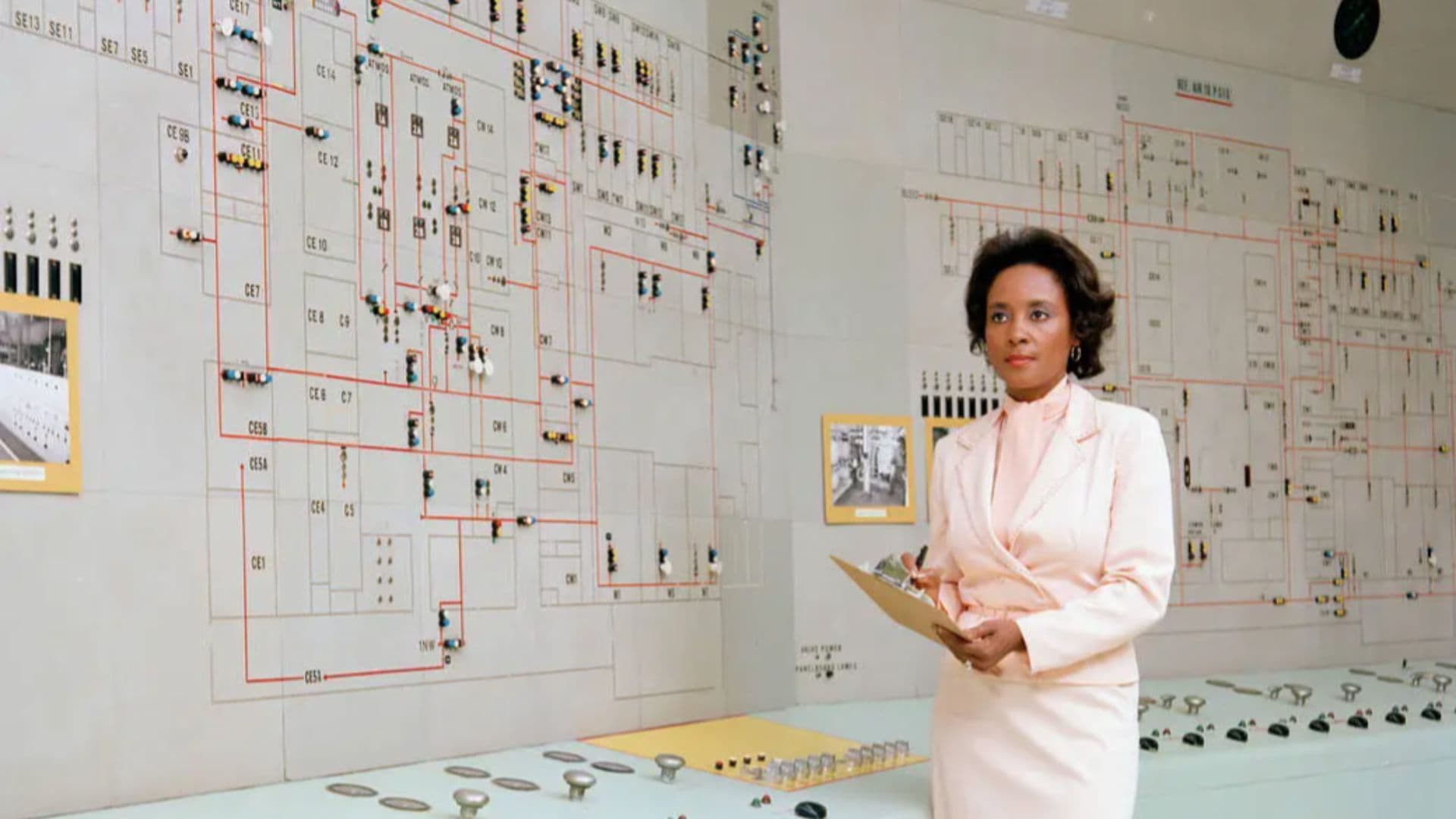
- Annie Easley worked at NASA for 34 years, starting as a human computer in 1955 and becoming a full computer programmer
- Her code for energy-conversion systems contributed to the Centaur rocket and the 1997 Cassini mission to Saturn
- When hired, she was one of only four African Americans among 2,500 employees at NASA's Lewis Research Center
Space.com's photo of the day for Juneteenth 2026 features Annie Easley, a mathematician and computer scientist who spent 34 years at NASA developing code that helped launch spacecraft to Saturn. Easley began her career in 1955 as a human computer, performing complex calculations by hand, and later transitioned into programming as machines replaced mental arithmetic.
The choice of Easley is deliberate. Juneteenth marks the day in 1865 when Union soldiers enforced emancipation in Texas, more than two months after the Civil War ended. Space.com notes that while slavery ended, systemic discrimination persisted for decades, and NASA was no exception. When Easley joined the National Advisory Committee for Aeronautics (NACA), the predecessor to NASA, she was one of just four African Americans among 2,500 employees.
What did Annie Easley actually do at NASA?
Easley started as a human computer, a role that required performing reliable mathematical calculations to support space missions. These women, as NASA called them, were effectively biological predecessors to electronic computers. When NASA shifted to machine computing in the late 1950s and 1960s, Easley made the transition with the agency and became a full programmer.
Her most significant technical contribution was code for energy-conversion systems. This work informed the development of the Centaur upper-stage rocket, a vehicle still in use today for launching payloads into orbit and beyond. The Centaur directly enabled the 1997 launch of the Cassini spacecraft, which spent 13 years studying Saturn and its moons before plunging into the planet's atmosphere in 2017.
Later in her career, Easley shifted roles again, becoming an Equal Employment Opportunity counselor at NASA. She retired in 1989 and died in 2011.
The barriers Black women faced at NASA
The story of NASA's human computers is often told as a triumph. It was. But the institution itself was discriminatory. NACA began hiring white women as computers in 1935 but did not hire Black women until 1943, and only then because World War II created a labor shortage. Human computers were classified as "subprofessionals," not professionals, and were routinely dismissed by male colleagues.
Black women faced compounded obstacles. Easley later recalled that NASA offered tuition reimbursement to employees pursuing degrees, but she had to pay for her own education. She earned her bachelor's degree in mathematics from Cleveland State University in 1977 while working full-time. That she persisted for 34 years, became a programmer, and contributed to flagship missions says something about her tenacity. It also says something about how much talent the agency nearly squandered.
“You can be anything you want to. It doesn't matter what you look like, what your size is, what your color is. You can be anything you want to, but you do have to work at it.”
— Annie Easley, recalling her mother's advice in a 2001 interview
"I still believe that," Easley said.
Why Juneteenth prompts this recognition
Space.com's choice to feature Easley on Juneteenth is a reminder that technical achievement and institutional bias coexisted at NASA for decades. The agency has since worked to acknowledge figures like Easley, Katherine Johnson, Dorothy Vaughan, and Mary Jackson, the latter three made famous by the book and film Hidden Figures. NASA Glenn Research Center, where Easley spent her career, has named facilities and scholarships in her honor.
Still, these tributes often arrive posthumously. Easley received far less public recognition during her lifetime than her contributions warranted. The Juneteenth feature is one small correction.
Frequently Asked Questions
What was a human computer at NASA?
A human computer was a person, typically a woman, who performed complex mathematical calculations by hand to support space missions before electronic computers became standard. They were effectively biological predecessors to modern computers.
What missions did Annie Easley contribute to?
Easley developed code for energy-conversion systems that informed the Centaur upper-stage rocket. The Centaur was used to launch the Cassini spacecraft to Saturn in 1997, among other missions.
How long did Annie Easley work at NASA?
Easley worked at NACA and NASA for 34 years, from 1955 to 1989, starting as a human computer and retiring as a computer scientist and EEO counselor.
Why is Annie Easley featured on Juneteenth?
Juneteenth commemorates the end of slavery in the United States. Space.com chose to honor Easley to highlight the contributions of Black women to the space program, contributions made despite systemic discrimination.
Logicity's Take
Annie Easley's story is often folded into the broader narrative of Hidden Figures, but her technical work deserves its own spotlight. The Centaur rocket she helped develop remains operational 70 years after she joined NASA. That is rare longevity in aerospace engineering. Easley did not just endure discrimination; she shipped code that outlasted her career by decades.
Need Help Implementing This?
If you're building technical teams and want to learn from history's examples of diverse talent pipelines, reach out to Logicity's editorial team for resources on STEM workforce development and inclusive hiring practices.
Source: Latest from Space.com
Huma Shazia
Senior AI & Tech Writer
Produced with AI assistance and reviewed by the Logicity editorial team. Learn more in our Editorial Policy.