Key Takeaways
- Claude's Model Context Protocol (MCP) enables local server connections that ChatGPT cannot match
- ChatGPT maintains advantages in web research and accessing certain online resources
- The combined $40/month cost may be justified for users who rely heavily on AI productivity tools
The Case for Two AI Subscriptions
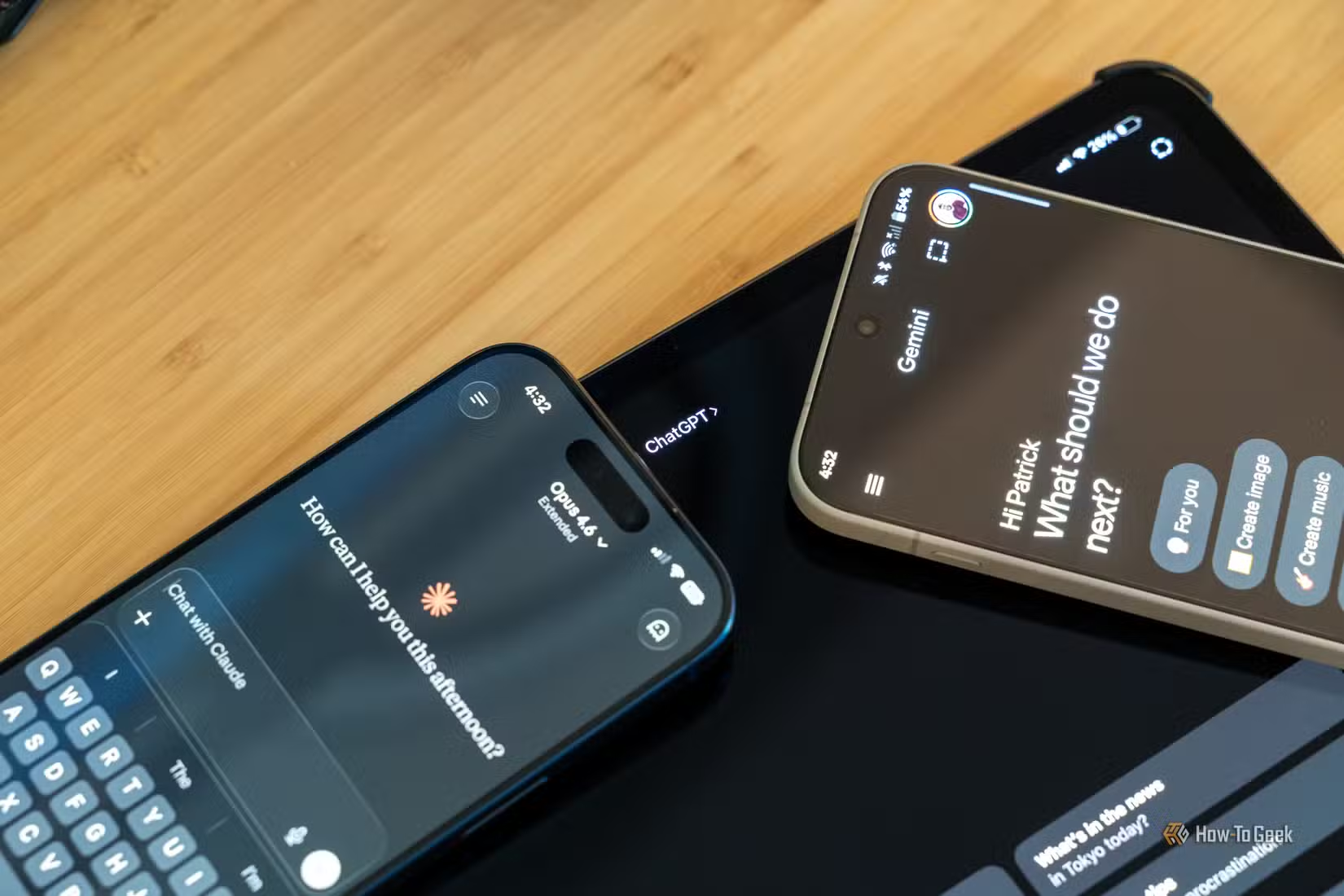
Adam Davidson, a tech writer at How-To Geek, recently shared a confession that will resonate with many AI power users: he switched to Claude as his primary AI assistant but couldn't bring himself to cancel ChatGPT. The reason isn't indecision or laziness. It's that both tools genuinely excel at different things.
At $20 each per month, running both subscriptions costs $40. For casual users, that's hard to justify. For people who use AI tools as core productivity infrastructure, the math changes.
Where Claude Wins: Local Integrations and Planning
Claude's killer feature is its connector system built on Model Context Protocol (MCP), an open standard Anthropic developed for connecting AI chatbots to external services. The native connectors support GitHub, Gmail, Google Calendar, Slack, Spotify, Todoist, Notion, and more.
Davidson uses Notion to organize his work and personal life. With Claude, he can read from his Notion pages and create new ones just by describing what he wants. He tried ChatGPT's equivalent feature (called "apps") but couldn't get the Notion integration to work properly. Claude's version works flawlessly.
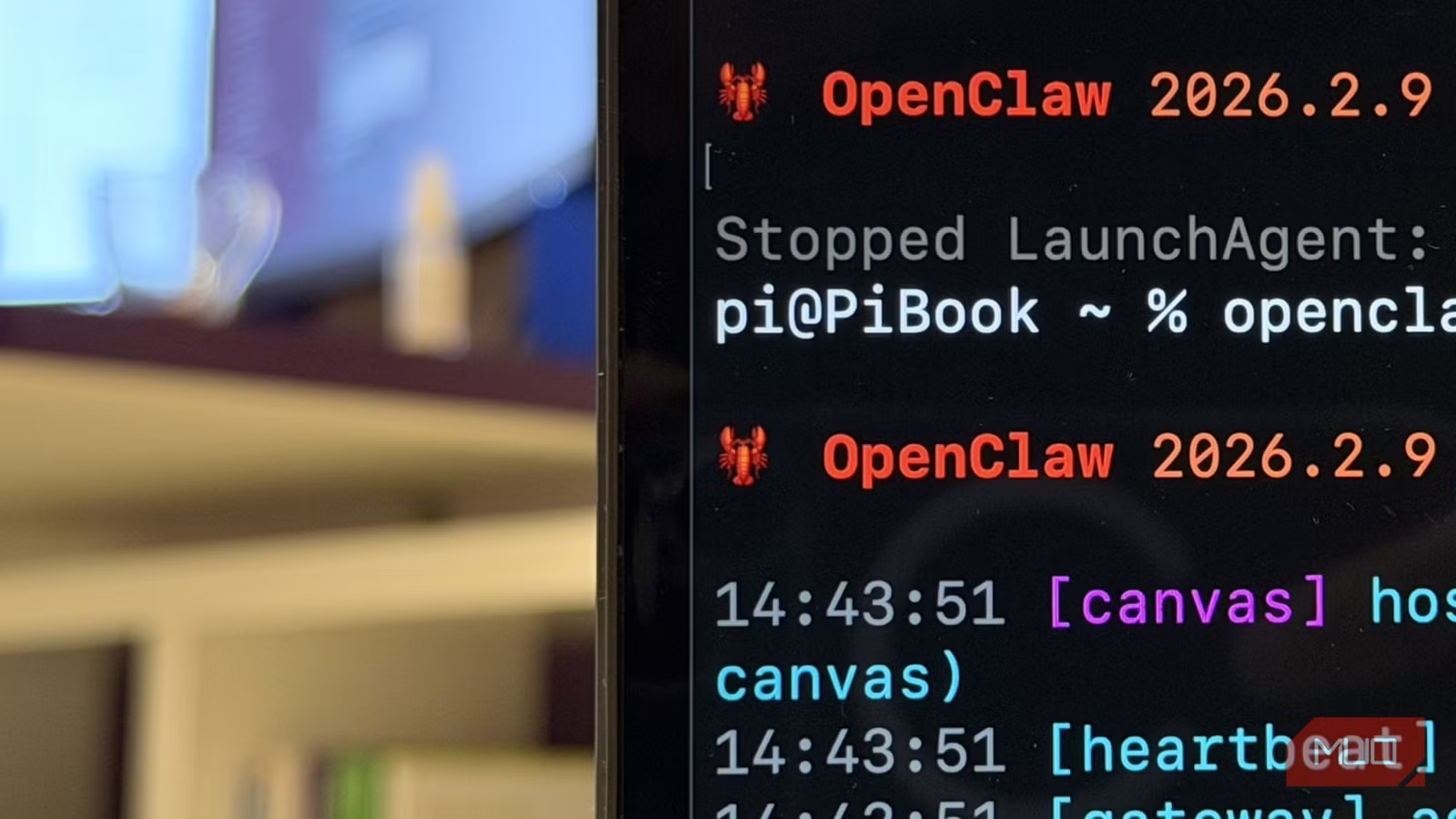
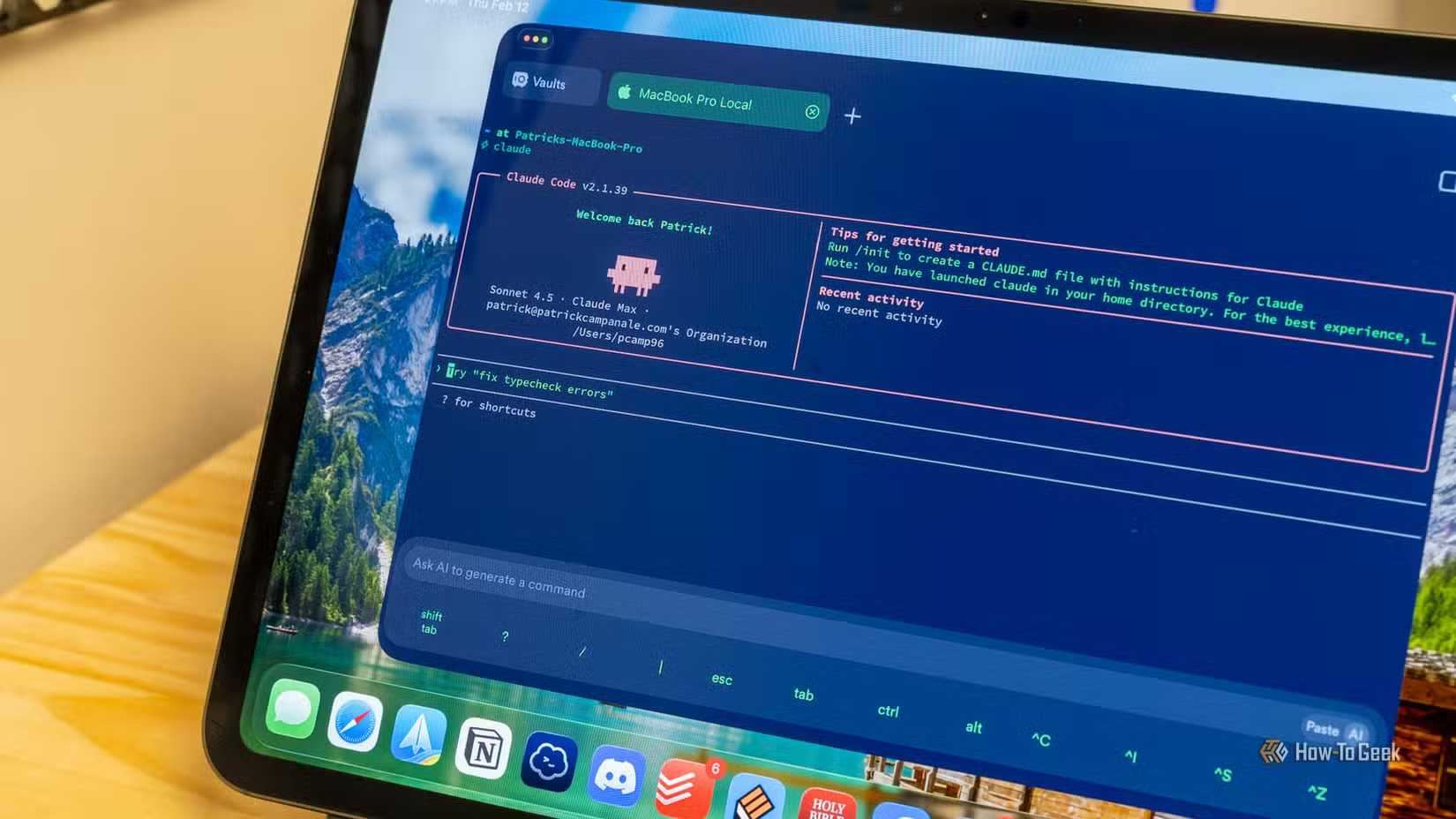
The bigger difference is local server support. Claude Desktop can connect to MCP servers running on your own hardware. Davidson runs n8n, an automation platform, on his local network. Claude talks to that server directly. ChatGPT's apps rely on hosted endpoints and generally can't access localhost services.
This matters for anyone running home servers, self-hosted automation tools, or development environments. Claude can interact with your local infrastructure. ChatGPT cannot.
Where ChatGPT Wins: Web Research
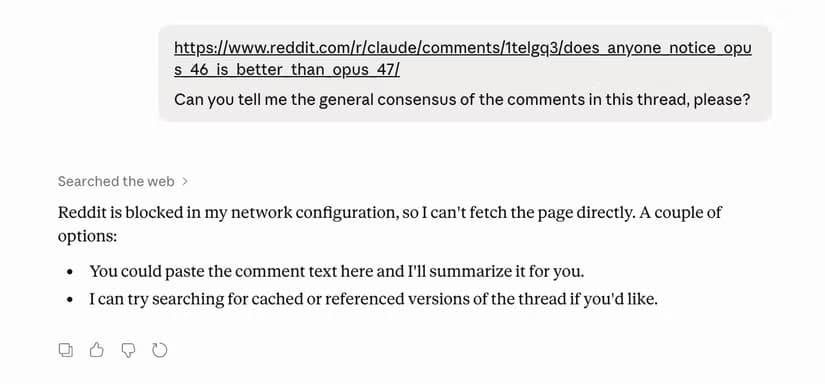
So why keep ChatGPT? Claude has gaps in its web access. Some online resources that ChatGPT can reach are blocked in Claude's network configuration. This creates practical problems for research tasks.

Reddit is one example. When Davidson asked Claude about Reddit content, it stated that Reddit is blocked in its network configuration. For research involving forums, community discussions, or crowdsourced knowledge, ChatGPT maintains an advantage.
ChatGPT's web browsing and proofreading capabilities also remain strong points. For tasks that require pulling information from across the web, it's still the better choice.
The Hybrid Workflow
Davidson's solution is task-based tool selection. Claude handles anything involving his connected services: project planning in Notion, automation workflows through n8n, and tasks that benefit from local server access. ChatGPT handles research, proofreading, and anything requiring broad web access.
Every Claude project he works on gets written up in Notion. Claude can then access that information later for similar projects or when making changes. The persistent context through connected services creates genuine workflow value.
✅ Pros
- • Claude's MCP connectors enable deep integration with productivity tools like Notion
- • Claude Desktop connects to local servers that ChatGPT cannot access
- • ChatGPT maintains broader web access for research tasks
- • Each tool's strengths complement the other's weaknesses
❌ Cons
- • Combined cost of $40/month is steep for occasional users
- • Requires learning two different interfaces and mental models
- • Claude's web access limitations can block useful resources like Reddit
- • ChatGPT's app integrations are less reliable than Claude's connectors
Who Should Consider This Approach
Running dual subscriptions makes sense for a specific user profile: people who use AI assistants daily, have meaningful data in services like Notion or Google Calendar, and need both local integrations and web research capabilities.
For most people, one subscription is enough. Pick based on your primary use case. If you live in Notion and run local servers, Claude is the clear choice. If web research and broad information access matter more, stick with ChatGPT.
But if you find yourself hitting the limitations of either tool regularly, the hybrid approach isn't extravagance. It's practical specialization.
Logicity's Take
Explores AI's next frontier beyond chatbots
Another tool comparison for productivity-focused readers
Frequently Asked Questions
What is Model Context Protocol (MCP)?
MCP is an open standard developed by Anthropic that allows AI chatbots to connect to external services like Notion, GitHub, Gmail, and local servers. It enables Claude to read from and write to connected applications.
Can ChatGPT connect to local servers like Claude can?
No. ChatGPT's app integrations rely on hosted endpoints rather than direct localhost access. Claude Desktop can connect to MCP servers running on your own hardware.
Why can't Claude access Reddit?
Claude's network configuration blocks certain websites including Reddit. This is a deliberate restriction by Anthropic, though the specific reasons aren't publicly detailed.
Is it worth paying for both ChatGPT and Claude?
For power users who rely on AI tools daily and need both local integrations and broad web research, the $40/month combined cost may be justified. Casual users should pick one based on their primary use case.
Need Help Implementing This?
Source: How-To Geek
New Competitor: Deepseek Code and the 'Harness' Initiative
Deepseek is forming a specialized 'Harness' team to develop 'Deepseek Code,' a new AI agent designed to compete directly with Claude Code and OpenAI's Codex. The project focuses on 'harnessing' models through advanced tool use, planning, and memory to create a more integrated coding assistant.
Huma Shazia
Senior AI & Tech Writer
Produced with AI assistance and reviewed by the Logicity editorial team. Learn more in our Editorial Policy.