Key Takeaways
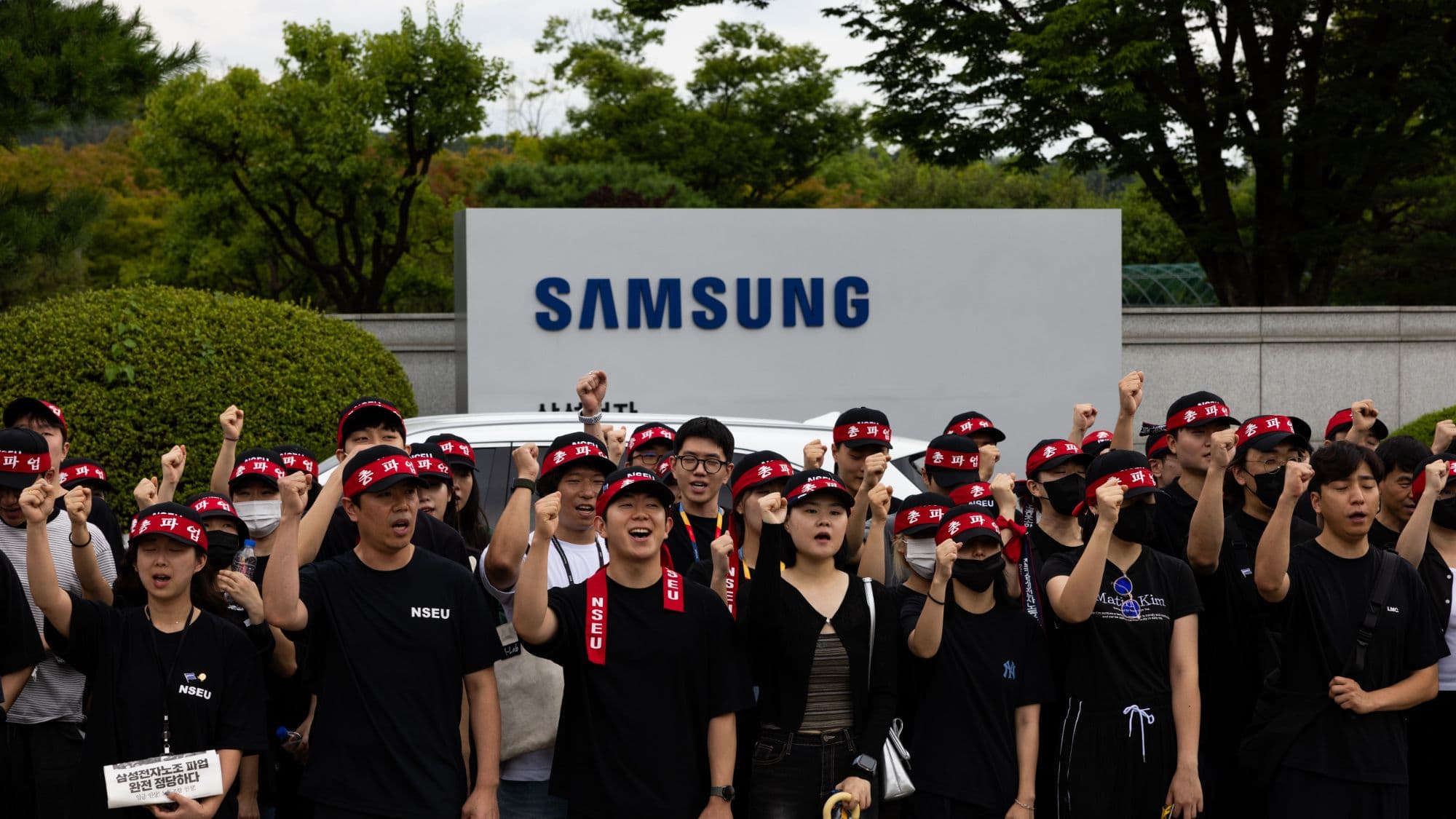
- Samsung avoided an 18-day strike planned for May 21 to June 7 by reaching a tentative wage agreement with its labor union
- The deal goes to a worker vote from May 22-28. Rejection could revive the strike threat
- The dispute centered on performance bonuses, with workers comparing their payouts unfavorably to rival SK Hynix
Samsung Electronics narrowly avoided an 18-day strike at its South Korean chip operations after reaching a last-minute wage agreement with its labor union on Wednesday. The deal came just hours before workers were set to walk out.
The union, representing nearly 48,000 members, has suspended the general strike planned for May 21 to June 7. Workers will now vote on the deal. Voting runs from May 22 to May 27, though some notices indicate May 23 to May 28. If members approve, the agreement becomes formal. If they reject it, the strike threat returns.
What the dispute was about
The core issue was performance bonuses. The union pushed for Samsung to allocate 15% of annual operating profit to employee bonuses. It also wanted Samsung to scrap a 50% annual salary cap on performance payouts.
Samsung resisted both demands. The company argued that profit-sharing across its businesses was complicated because its memory division and logic/foundry operations were performing very differently. Memory chips are booming thanks to AI demand. The foundry business is weaker.
Leaked transcripts from earlier talks showed how wide the gap was. Samsung allegedly offered memory workers a 607% bonus worth $477,000. Logic chip staff were to get as little as 50%. The union rejected that proposal, citing a potential retention crisis from the imbalance.
How the deal came together
The breakthrough followed last-minute talks involving Samsung management, union leaders, and South Korea's labor ministry. Labor Minister Kim Young-hoon helped restart negotiations after earlier discussions broke down.
Samsung's Device Solutions negotiator, Yeo Myeong-gu, and union leader Choi Seung-ho signed the tentative agreement in Suwon. Exact terms have not been fully disclosed.
The union had already shown it could disrupt
This tentative deal caps months of escalating labor unrest. Dissatisfaction grew among workers as Samsung's semiconductor profits surged on AI-driven memory demand. Workers compared their payouts to those at rival SK Hynix, which has offered more generous bonus structures.
The union had already demonstrated its ability to disrupt operations. A one-day strike reportedly saw over 40,000 workers participate. Night-shift output at Samsung's foundry operations fell sharply. Memory output was also hit.
What happens next
Everything now depends on the worker vote. If members approve the deal, Samsung avoids billions of dollars in potential losses from disrupted chip production. If they reject it, the company faces renewed strike threats at a critical time for global chip supply.
Samsung is the world's largest memory chip maker and a major contract chip manufacturer. Any extended production disruption would ripple through the tech supply chain, affecting everything from smartphones to AI servers.
Logicity's Take
Frequently Asked Questions
Why were Samsung chip workers planning to strike?
The union wanted Samsung to allocate 15% of annual operating profit to employee bonuses and remove a 50% cap on performance payouts. Workers also felt their compensation lagged behind rival SK Hynix despite Samsung's strong memory chip profits.
How long would the Samsung chip strike have lasted?
The union planned an 18-day general strike from May 21 to June 7, 2024, involving nearly 48,000 workers at Samsung's South Korean chip operations.
Is the Samsung wage deal final?
No. The tentative agreement must be approved by union members in a vote running from approximately May 22-28. If workers reject it, the strike threat could return.
How would a Samsung chip strike affect the tech industry?
Samsung is the world's largest memory chip maker. An extended production disruption would affect global supply chains for smartphones, computers, AI servers, and other electronics that rely on Samsung memory chips.
Need Help Implementing This?
Source: Latest from Tom's Hardware
Manaal Khan
Tech & Innovation Writer
Produced with AI assistance and reviewed by the Logicity editorial team. Learn more in our Editorial Policy.