Key Takeaways
- Vietnam maintains 1-3% EV consumption tax vs 150% for ICE vehicles through 2030
- Annual EV sales grew 25x in three years, from 7,000 to 175,000 units
- Zero registration fees for first-time EV buyers extended to 2027, likely 2030
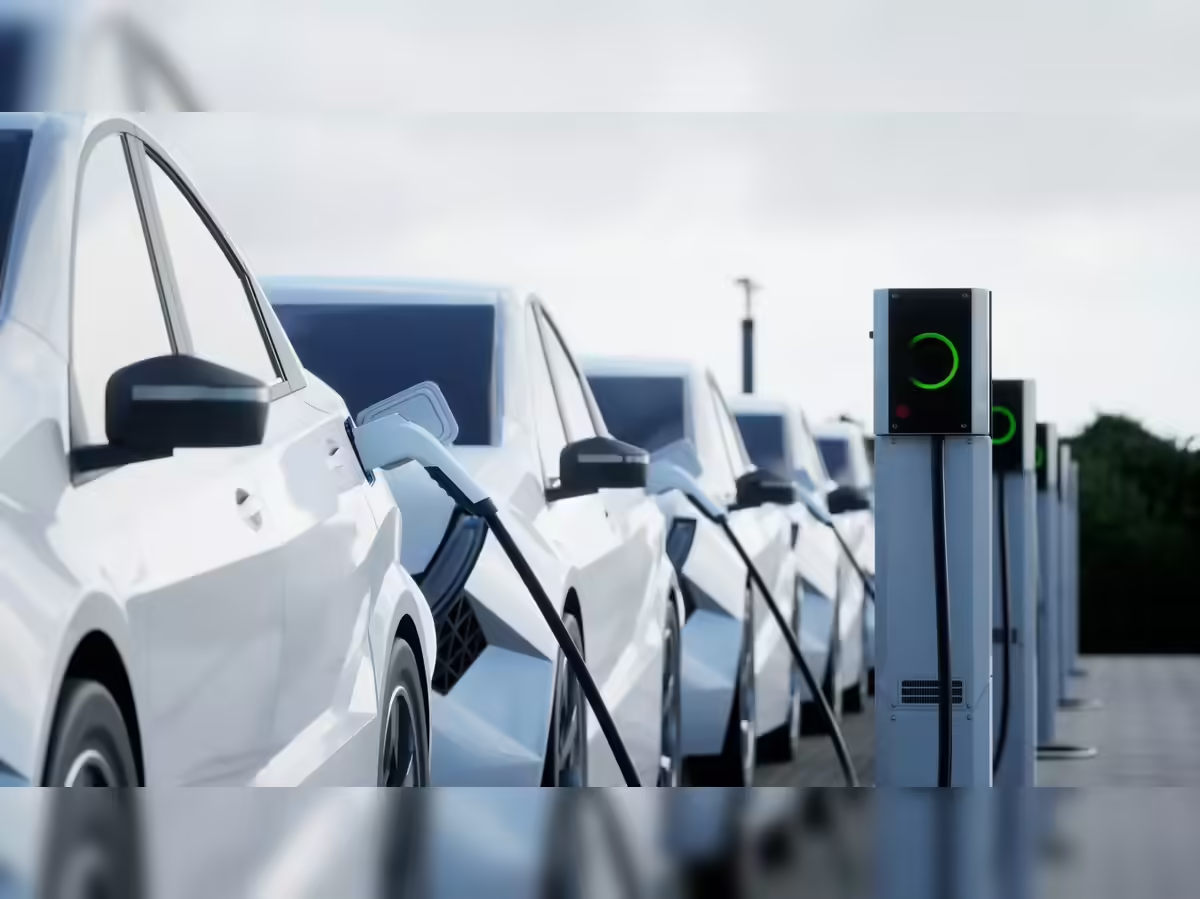
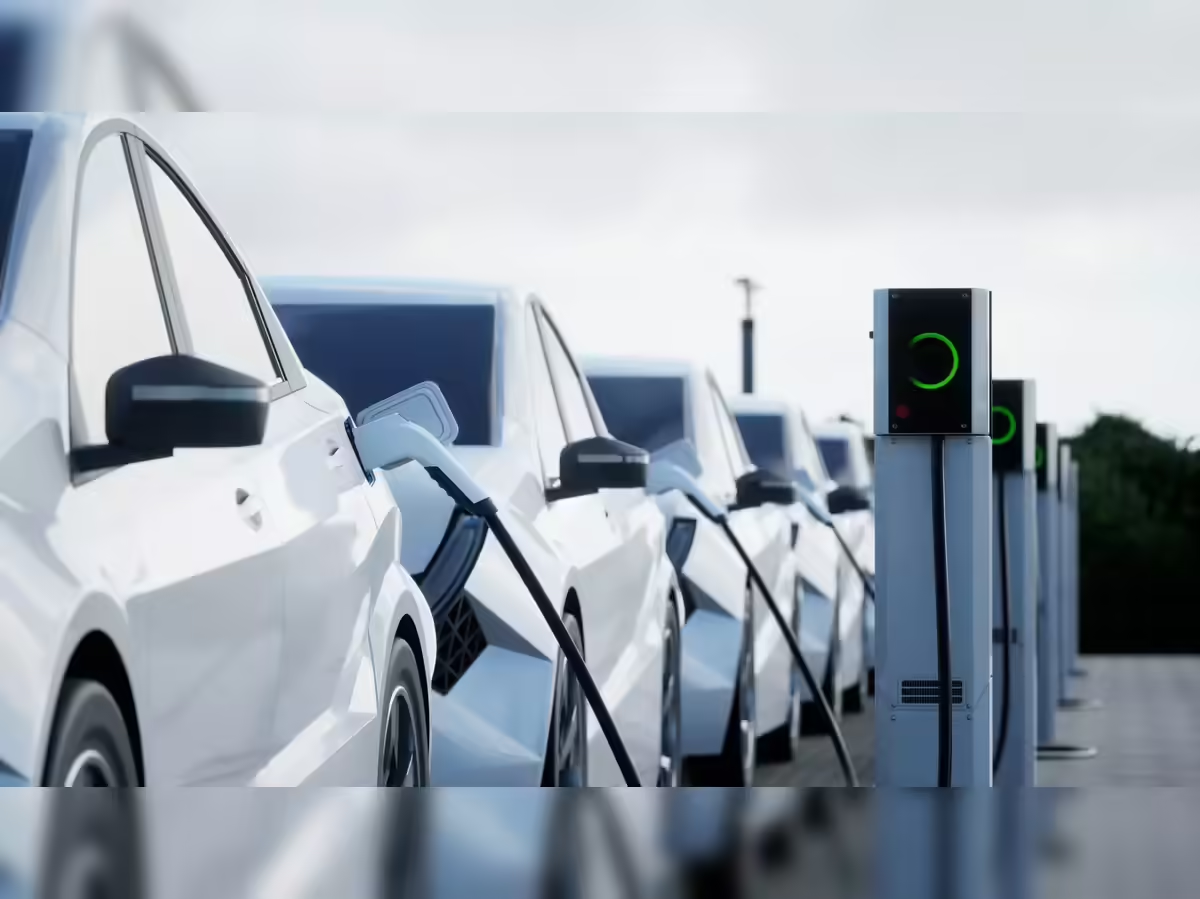
According to [The Economic Times](https://economictimes.indiatimes.com/tech/technology/vietnam-plans-to-extend-tax-incentives-for-evs-until-2030/articleshow/130387566.cms), Vietnam's parliament is reviewing a proposal to extend special consumption tax cuts on electric vehicles until the end of 2030, nearly four years beyond the current February 2027 deadline.
For business leaders watching Southeast Asian markets, this isn't just environmental policy. It's a signal that Vietnam is betting big on becoming the region's EV manufacturing hub. And the numbers suggest that bet is paying off.
What Are Vietnam's EV Tax Incentives?
Vietnam slashed its special consumption tax on battery electric vehicles in March 2022. The rate dropped from 4-11% down to just 1-3%. For context, internal combustion engine vehicles face taxes as high as 150% in Vietnam. That pricing gap makes EVs dramatically more attractive to Vietnamese consumers.
| Vehicle Type | Consumption Tax Rate | Registration Fee |
|---|---|---|
| Battery Electric Vehicle | 1-3% | 0% (through 2027+) |
| Hybrid Vehicle | 5-15% | Standard rate |
| ICE Vehicle (under 2000cc) | 35-70% | Standard rate |
| ICE Vehicle (over 2000cc) | 100-150% | Standard rate |
The government also waived first-time registration fees for EVs, a benefit now extended to February 2027 with strong indications it will align with the 2030 timeline.
Why Should Business Leaders Care About Vietnam EV Policy?
Three reasons this matters beyond Vietnamese borders.
First, supply chain decisions. If you're sourcing components, building products, or establishing manufacturing in Southeast Asia, Vietnam's EV commitment signals infrastructure investment. Charging networks, battery recycling facilities, and skilled EV technicians will follow government incentives. Companies planning five-year regional strategies should factor this into site selection.
Second, the VinFast effect. Vietnam's homegrown EV maker has become a regional force, now expanding across Southeast Asia. VinFast benefits enormously from these tax policies, and their success creates an ecosystem of suppliers, service providers, and technical talent.
“Vietnam has reached a 35% EV penetration rate, the highest in the region, driven by consistent policy support.”
— Antonio Zara, CEO of VinFast Southeast Asia
Third, regional competition. Thailand and Indonesia are also chasing EV manufacturing. Vietnam's policy extension through 2030 gives companies a stable regulatory environment, something that matters when making capital-intensive decisions. The recent Samsung SDI-Mercedes battery supply deal shows how these regional dynamics are reshaping automotive supply chains.
Understand how EV battery partnerships are restructuring Asian supply chains
How Vietnam's EV Market Grew 25x in Three Years
The growth trajectory is striking. In 2022, Vietnam sold roughly 7,000 electric vehicles. By 2025, that number reached 175,000. That's not incremental growth. It's market transformation.
The Ministry of Finance report directly connects these tax policies to Vietnam's 2050 net-zero target. Each EV on Vietnamese roads reduces carbon dioxide emissions by 0.85 metric tons annually compared to combustion vehicles. At current adoption rates, that's meaningful progress toward climate commitments.
What Vietnam's 2030 Extension Means for Regional Strategy
For companies already operating in or considering Vietnam, the 2030 extension provides planning certainty. Four additional years of stable tax policy lets you amortize investments over a longer horizon. That matters for manufacturing equipment, training programs, and supplier relationships.
“This is a necessary policy in the context of Vietnam promoting green transition and restructuring the transportation sector towards sustainability.”
— Vietnam Chamber of Commerce and Industry (VCCI)
The proposal still requires parliamentary approval, but the Ministry of Finance's backing and VCCI support suggest smooth passage. Smart companies are already planning as if the extension is confirmed.
✅ Pros
- • Policy stability through 2030 enables long-term planning
- • Proven demand growth reduces market entry risk
- • Domestic EV ecosystem (VinFast) creates supplier opportunities
- • Net-zero commitment signals continued government support
❌ Cons
- • Parliamentary approval still pending
- • Charging infrastructure outside major cities remains limited
- • Competition from Thailand and Indonesia for EV manufacturing
- • Currency and import regulation risks remain
How Does Vietnam Compare to Other Southeast Asian EV Markets?
Thailand has the region's largest automotive manufacturing base and offers its own EV incentives. Indonesia, with the world's largest nickel reserves, is betting on battery manufacturing. But Vietnam's combination of aggressive tax policy and domestic champion (VinFast) creates a unique position.
The 35% EV penetration rate cited by VinFast's Southeast Asia CEO makes Vietnam the regional leader. That's not just about tax breaks. It reflects consumer adoption, dealer networks, and charging infrastructure that took years to build.
For companies evaluating regional headquarters or manufacturing sites, Vietnam's head start matters. You're entering a market with established EV expertise rather than building from scratch.
Air Quality and Urban Planning: The Business Case
The Ministry of Finance report emphasizes air quality improvements in major cities. This isn't just environmental messaging. Vietnamese cities like Hanoi and Ho Chi Minh City face serious pollution, which affects talent recruitment and quality of life for expatriate employees.
“Continuing to apply tax incentives for electric vehicles will accelerate the shift toward cleaner-energy transport and improve air quality in major cities.”
— Vietnam Ministry of Finance Report
Companies establishing regional offices increasingly factor livability into location decisions. Vietnam's EV push directly addresses one of the country's competitive weaknesses in attracting international talent.
What Should CTOs and Operations Leaders Watch?
If your company operates vehicle fleets in Vietnam or plans Southeast Asian logistics, the cost dynamics are shifting. Converting to EV fleets becomes financially attractive when you factor in lower purchase taxes, zero registration fees, and reduced fuel costs.
- Fleet conversion ROI improves with extended incentive timeline
- Charging infrastructure investments by government likely to accelerate
- Local EV maintenance and service talent becoming available
- Used EV market will develop as early adopters upgrade
The technology implications extend beyond vehicles. EV adoption drives demand for smart grid solutions, fleet management software, and battery monitoring systems. Tech companies serving these markets should watch Vietnam closely.
Relevant for understanding technology dependency risks in emerging market expansion
Frequently Asked Questions
Frequently Asked Questions
When will Vietnam's EV tax extension be approved?
The Ministry of Finance submitted the proposal to parliament in April 2026. Given strong government backing and VCCI support, approval is expected within the current legislative session. The extension would run through December 31, 2030.
How much can companies save on EV purchases in Vietnam?
The special consumption tax difference is substantial. EVs pay 1-3% versus 35-150% for internal combustion vehicles. Combined with zero registration fees, a company purchasing fleet vehicles could see 30-50% cost reductions compared to traditional vehicles of similar class.
Is Vietnam's EV infrastructure ready for business fleets?
In major cities like Hanoi and Ho Chi Minh City, charging infrastructure is adequate for business operations. Rural and inter-city routes remain challenging. VinFast is actively expanding its network, but companies with nationwide logistics should plan for hybrid fleet transitions.
How does Vietnam's EV policy affect foreign investment decisions?
The 2030 extension provides seven years of policy stability, which matters for capital-intensive manufacturing decisions. Combined with existing foreign investment incentives in special economic zones, Vietnam's EV commitment strengthens its position for automotive and clean energy supply chain investments.
What happens to existing EVs after 2030?
The tax incentives apply to new purchases. Existing EVs benefit from lower operating costs throughout their lifespan. The government hasn't announced post-2030 policy, but the net-zero 2050 target suggests continued support for EV adoption in some form.
Logicity's Take
From our perspective as a Hyderabad-based technology agency, Vietnam's EV policy extension is worth watching for Indian tech companies considering Southeast Asian expansion. We don't build EVs, but we do help companies navigate technology decisions for emerging markets. The pattern here is familiar: government incentives create demand spikes, which attract ecosystem players, which create opportunities for supporting services. The same dynamics played out with India's UPI adoption and digital payment infrastructure. For Indian startups and mid-sized tech companies, Vietnam's EV push creates specific opportunities: fleet management software, charging station payment systems, battery analytics platforms, and smart grid integration tools. These are software problems that Indian companies have solved domestically. The regulatory stability matters most. When we advise clients on market entry, unpredictable policy changes are the biggest risk factor. Vietnam committing to 2030 gives technology vendors a runway to build, test, and scale solutions. If you're building anything adjacent to mobility, energy, or smart city infrastructure, Vietnam deserves serious evaluation alongside Indonesia and Thailand.
Need Help With Market Entry Technology?
Logicity helps companies build technology solutions for emerging market expansion. From localized applications to integration with regional payment and logistics systems, we bring practical experience to complex technical decisions. Contact us to discuss your Southeast Asian technology requirements.
Understand how Asian technology markets are evolving for business planning
Source: Tech-Economic Times / ET
Huma Shazia
Senior AI & Tech Writer
Produced with AI assistance and reviewed by the Logicity editorial team. Learn more in our Editorial Policy.