Key Takeaways
- 73,000 tech jobs eliminated across 95 companies in just five months of 2026
- AI restructuring is the primary driver, not traditional cost-cutting
- Companies are reallocating headcount budgets toward AI infrastructure and specialized talent
Read in Short
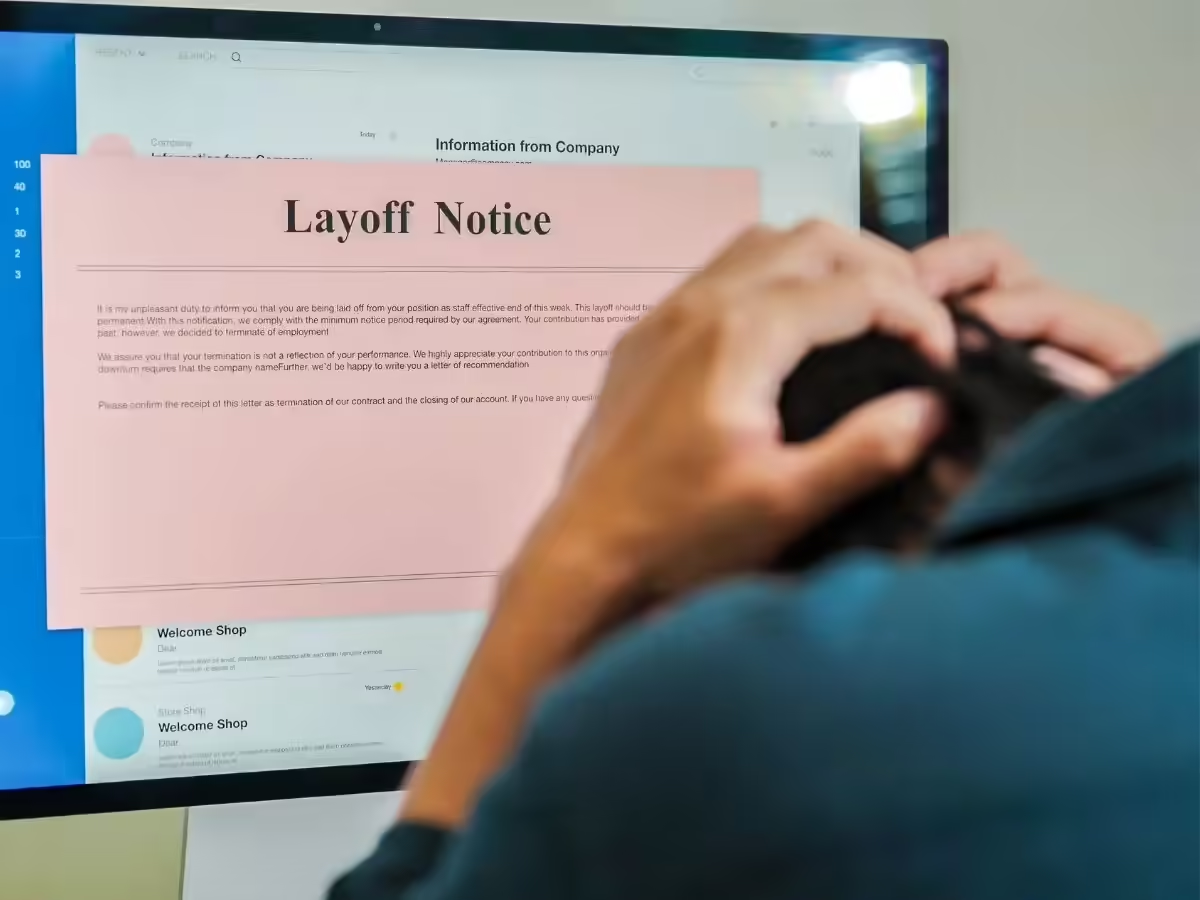
The 2026 tech layoff wave isn't about recession fears. It's about AI restructuring. With 73,000 jobs already cut across 95 companies, business leaders need to rethink workforce planning now. Winners will reallocate savings to AI infrastructure and specialized talent. Losers will simply cut costs and fall behind.
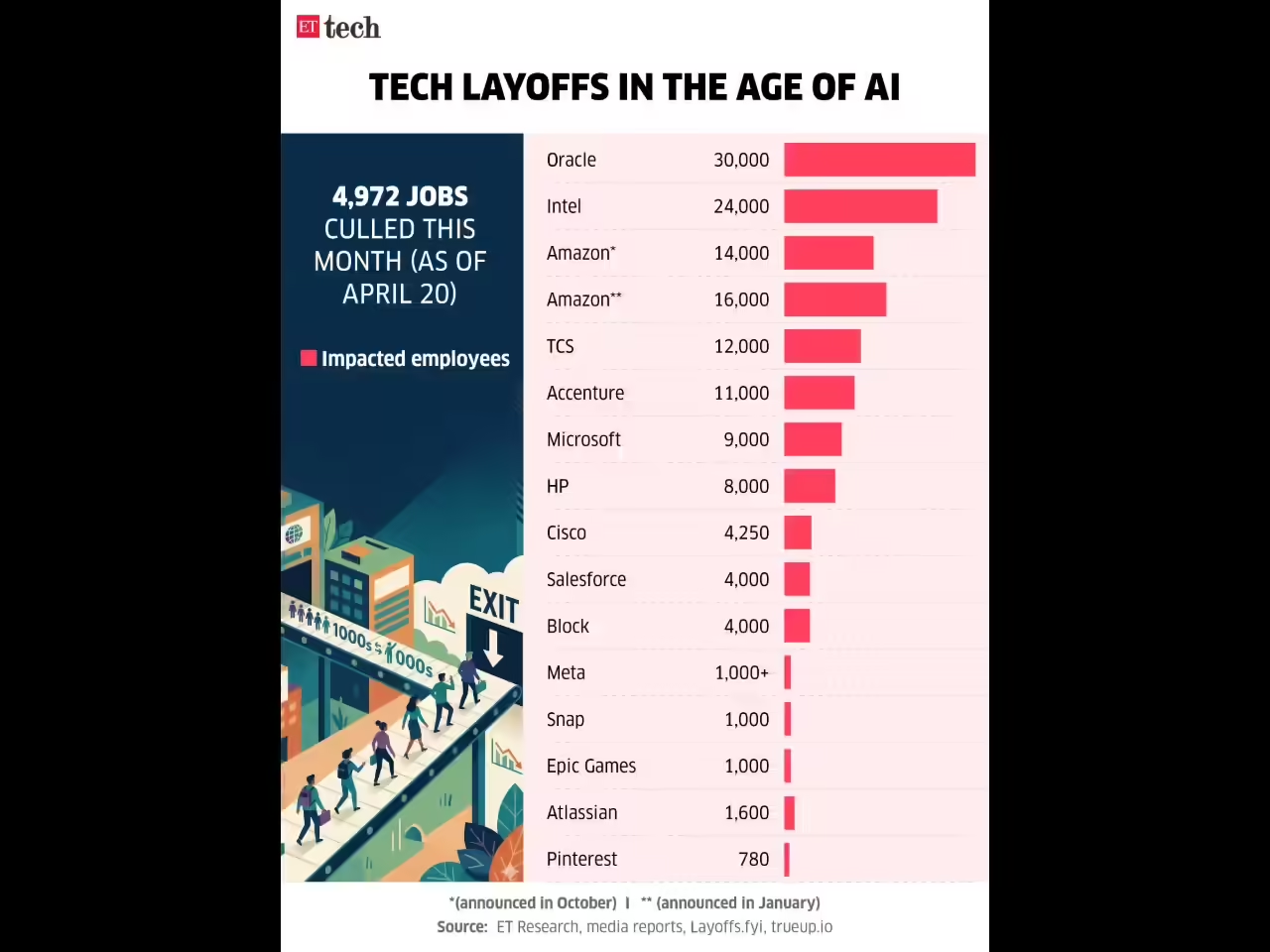
According to [Tech-Economic Times](https://economictimes.indiatimes.com/tech/startups/tech-layoffs-top-73000-in-2026-as-ai-drives-cuts-at-meta-oracle-others/articleshow/130390265.cms), tech layoffs have already topped 73,000 in 2026, with AI and automation cited as the primary drivers behind cuts at Meta, Oracle, Snap, and Atlassian. This isn't a cyclical downturn. It's a structural transformation that every business leader needs to understand.
Five months into 2026, we've already seen 59% of last year's total layoffs. The pace is accelerating, not slowing. And the companies making these cuts aren't struggling startups. They're profitable giants with strong balance sheets. That tells you everything about what's really happening.
Why Are Tech Companies Cutting Jobs in 2026?
Let's be clear about what's driving this wave. These aren't pandemic correction layoffs. They're not interest-rate-driven cuts. The 2026 layoffs are strategic repositioning around AI capabilities.
Snap's CEO Evan Spiegel put it plainly in his internal memo: AI tools "help reduce repetitive tasks, increase speed, and better serve users, partners, and advertisers." Translation: AI is doing work that humans used to do, and it's doing it faster and cheaper.
Oracle's situation is even more revealing. A source told the Economic Times that the company is "essentially cutting roles on the tech side, since they are not seeing enough returns on their AI-led investments." This is the other side of the coin. Companies are cutting traditional tech roles to fund AI bets that haven't paid off yet.
The Real Math Behind AI Layoffs
When a company like Meta cuts 8,000 jobs at an average total compensation of $200,000, that's $1.6 billion in annual savings. That money goes directly into AI infrastructure, GPU clusters, and the smaller teams of specialized AI engineers who cost 2-3x more but produce 10x the output with AI tools.
Which Companies Are Cutting Jobs and How Many?
The scale varies, but the pattern is consistent. Here's what the major players are doing:
| Company | Jobs Cut | Percentage of Workforce | Primary Driver |
|---|---|---|---|
| Meta | 8,000 | 10% | AI restructuring, efficiency push |
| Oracle | 30,000 globally | ~18% | AI investment reallocation |
| Snap | 1,000 + 300 vacant | 16% | AI automation of tasks |
| Atlassian | 1,600 | 10% | AI and enterprise pivot |
The Oracle cuts are particularly significant for Indian tech leaders. About 10,000 of those 30,000 cuts happened in India, representing 20% of Oracle's local workforce. Oracle Financial Services Software alone let go of 1,000 people, roughly 10% of that unit.
What Does This Mean for Your Workforce Planning?
If you're running a tech team or business, you have two options. You can wait for this wave to hit your competitors and then react. Or you can get ahead of it now.
The companies making cuts aren't eliminating all hiring. They're shifting what they hire for. Atlassian's CTO stepped down as part of their restructuring. That's not a coincidence. Leadership roles are changing too.
- Roles being eliminated: Traditional software maintenance, manual QA, repetitive support tasks, routine data processing
- Roles being created: AI/ML engineers, prompt engineers, AI operations specialists, AI ethics and governance
- Roles being transformed: Product managers now need AI fluency, engineers need to work alongside AI tools, support teams become AI supervisors
The teams that understand how to use AI tools effectively are becoming force multipliers. A five-person team with strong AI capabilities can now match the output of a twenty-person team from three years ago. That's not hype. That's what's driving these workforce numbers.
Understanding prompt engineering is becoming a core skill for teams navigating AI transformation
How Should Business Leaders Respond to AI-Driven Layoffs?
The worst response is to simply cut headcount and pocket the savings. Companies that do this will find themselves with neither the human expertise nor the AI capabilities to compete.
The smart response involves three moves:
- Audit your current roles for AI automation potential. Be honest about which tasks can be handled by AI tools now, not in some hypothetical future.
- Invest the savings in AI infrastructure and training. Every dollar saved on eliminated roles should fund AI tools, cloud compute, and upskilling for remaining staff.
- Restructure teams around AI-augmented workflows. Don't just hand people AI tools. Redesign how work gets done from the ground up.
The Atlassian layoffs are instructive here. They cut 10% of staff but simultaneously announced a pivot toward AI and enterprise customers. The headcount reduction funds the strategic shift. That's the playbook.
What Skills Will Survive the AI Restructuring Wave?
Not all tech skills are equally vulnerable. Here's where the market is heading:
✅ Pros
- • AI/ML engineering and operations
- • System architecture for AI workloads
- • Product management with AI integration expertise
- • Security and compliance for AI systems
- • Human-AI collaboration design
❌ Cons
- • Routine code maintenance without AI tools
- • Manual testing that can be automated
- • Basic data entry and processing
- • Traditional IT support for standard issues
- • Documentation that AI can generate
The pattern is clear. Skills that involve working with AI, directing AI, and building AI systems are growing. Skills that compete with AI for repetitive tasks are shrinking.
Understanding AI productivity tools is essential for teams adapting to AI-augmented workflows
The Cost of Inaction Is Higher Than You Think
Some business leaders will read this and think they have time. After all, their industry might be different. Their company might be insulated.
That's what traditional retailers thought about e-commerce in 2005. That's what taxi companies thought about ride-sharing in 2012. The companies that waited to see how things played out are mostly gone now.
“The company is essentially cutting roles on the tech side, since they are not seeing enough returns on their AI-led investments.”
— Oracle source to Economic Times
This Oracle quote reveals the pressure. Companies that invested in AI but couldn't make it work are now cutting the wrong costs. They're eliminating the tech talent that could help them figure it out. That's a death spiral.
The winners will be companies that cut strategically, reinvest intelligently, and build AI-augmented teams that can compete with organizations ten times their size. The losers will cut across the board and wonder why they can't keep up.
What the 2026 Tech Layoffs Signal for the Rest of the Economy
Tech has always been the leading indicator. What happens in tech this year will spread to finance, healthcare, manufacturing, and services over the next 24-36 months.
If you're outside tech, you have a window to prepare. Study what's happening at Meta, Oracle, and Atlassian. Understand the skills gap that's emerging. Start building AI capabilities before you're forced to.
The acceleration tells the story. Companies that were cautious about AI in 2024 and 2025 are now moving fast. The early adopters proved the model works. Now everyone is restructuring at once.
IT infrastructure decisions are becoming critical as teams shrink and AI tools increase attack surfaces
Frequently Asked Questions
Frequently Asked Questions
How many tech jobs have been cut in 2026 so far?
According to Layoffs.fyi, more than 73,000 tech jobs have been eliminated across 95 companies in 2026. This is already 59% of the 124,201 total layoffs in all of 2025, and we're only five months into the year.
Is AI the main reason for tech layoffs in 2026?
Yes. Unlike previous layoff waves driven by economic downturns or pandemic corrections, the 2026 cuts are primarily linked to AI restructuring. Companies are eliminating roles that AI can automate while redirecting resources toward AI infrastructure and specialized AI talent.
Which tech companies have announced the largest layoffs?
Oracle leads with approximately 30,000 global cuts (10,000 in India). Meta is cutting about 8,000 jobs (10% of workforce). Atlassian cut 1,600 (10%), and Snap eliminated 1,000 full-time roles plus 300 vacant positions (16% of workforce).
Should my company start AI restructuring now?
If you haven't started, you're already behind. The smart approach is to audit current roles for AI automation potential, invest savings in AI tools and training, and redesign workflows around AI-augmented teams. Waiting to see how competitors handle this will leave you playing catch-up.
What tech skills are safe from AI-driven layoffs?
Skills that involve building, managing, and directing AI systems are growing. This includes AI/ML engineering, AI operations, system architecture for AI workloads, and product management with AI expertise. Roles involving repetitive tasks that AI can handle are being eliminated across the industry.
Logicity's Take
As an AI and web development agency based in Hyderabad, we're watching these layoff numbers with a practitioner's eye. Here's what the headlines miss: the companies cutting headcount are simultaneously scrambling to find teams who can actually build AI solutions that work. We've seen this firsthand. Organizations that laid off traditional dev teams are now struggling to ship AI features because they lost the institutional knowledge needed to integrate AI with existing systems. The smart play isn't to cut and hope. It's to upskill existing teams while bringing in specialized AI expertise. For Indian tech businesses specifically, the Oracle cuts are a warning sign. 10,000 jobs in India means significant talent is suddenly available, but it also signals that global companies see India operations as expendable when AI can do the work remotely. The counter-strategy is to become irreplaceable by specializing in AI integration, custom AI agents, and the complex implementation work that can't be automated. If your team is navigating this transition, the gap between companies that figure out AI and those that don't will only widen from here.
Need Help Navigating AI Transformation?
Logicity helps businesses build AI-augmented teams and implement practical AI solutions. From Claude API integrations to custom AI agents and workflow automation with n8n, we focus on AI that ships, not AI that demos. If your organization is restructuring around AI capabilities, let's talk about what that looks like in practice.
Source: Tech-Economic Times / ET
Manaal Khan
Tech & Innovation Writer
Produced with AI assistance and reviewed by the Logicity editorial team. Learn more in our Editorial Policy.