Key Takeaways
- Both free and premium Spotify users can ask Claude to create playlists and find podcasts
- Premium subscribers can describe their mood and get a matching playlist generated
- Spotify Connect support lets users switch playback devices directly from Claude
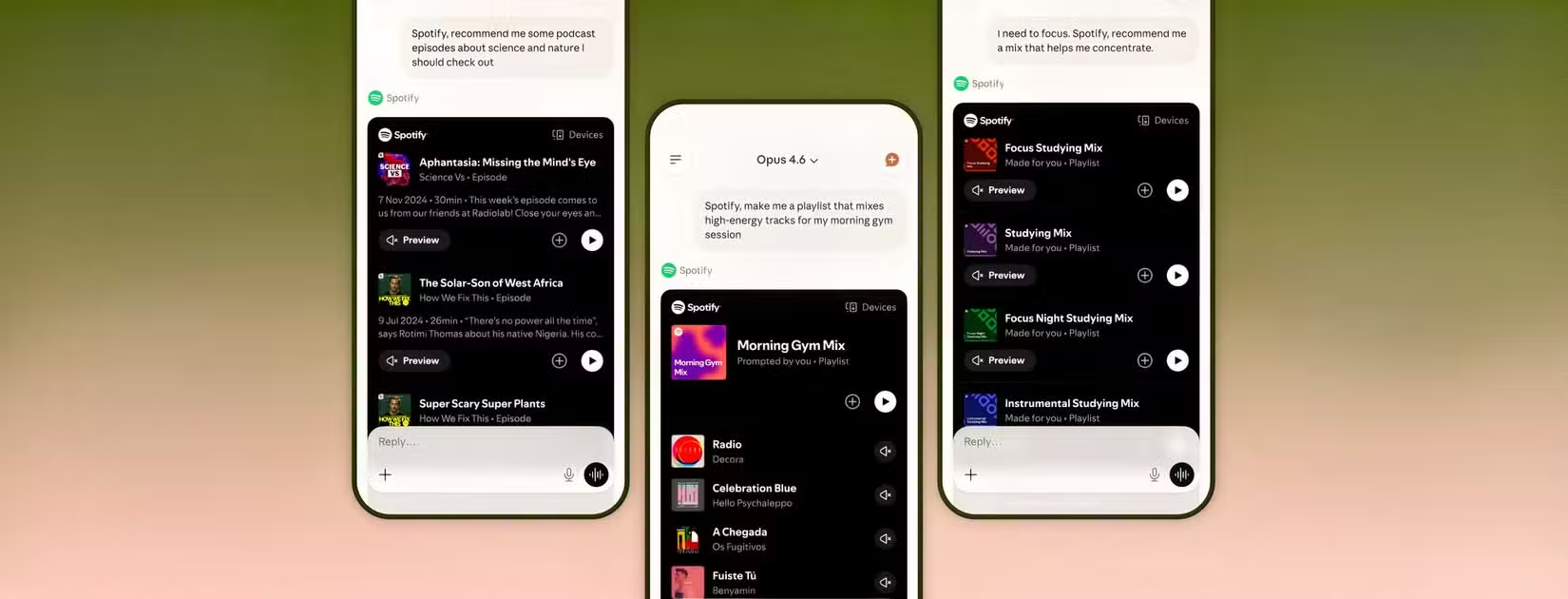
Spotify has launched an integration with Anthropic's Claude AI that brings music and podcast discovery into the chatbot's conversation threads. Instead of opening the Spotify app and digging through algorithmically generated playlists, users can now describe what they want to hear and let Claude handle the rest.
The integration works for both free and premium Spotify accounts. Ask Claude to build a playlist based on a prompt, and it will pull together tracks you can play right inside the chat. No app switching required.
Premium Users Get Mood-Based Generation
Spotify Premium subscribers get an extra feature: mood-based playlist creation. Tell Claude you're feeling mellow after a long workday, or that you need high-energy music for a workout, and it will generate a playlist to match. Since Claude pulls from Spotify's recommendation algorithm, the results should reflect your listening history and preferences.
Spotify's algorithm learns quickly from user behavior. If you've been listening to a lot of jazz lately, a request for "something relaxing" will likely lean in that direction. The AI effectively becomes a shortcut to Spotify's discovery engine without requiring you to browse the app's Discover Weekly or Daily Mix playlists.
How the Integration Works
The practical appeal here is straightforward. Instead of manually adding songs to a playlist one by one, you can list tracks in a Claude conversation and have them compiled automatically. For anyone who's spent 20 minutes hunting for the perfect running playlist, this removes a lot of friction.
Beyond music, the integration supports podcasts. Tell Claude what topic or format you're interested in, and it will surface recommendations. This works for both entertainment and educational content.
Spotify Connect support rounds out the feature set. From within a Claude conversation, you can see which device is currently playing your music and switch playback to a different speaker, phone, or computer. Playback controls work directly from the chat thread.
Why This Matters for Spotify
The integration represents a smart distribution play for Spotify. Music discovery on streaming platforms has become increasingly passive. Users rely on algorithmic playlists rather than actively exploring. By meeting users where they already are, in conversations with an AI assistant, Spotify gets another touchpoint for its recommendation engine.
It also sidesteps a problem with AI music assistants: most chatbots can suggest songs but can't actually play them. Claude now can, at least for Spotify subscribers. That's a meaningful improvement over getting a list of recommendations you then have to manually search for.
Logicity's Take
Getting Started
The feature is available now. Users need an active Spotify account, either free or premium, linked to their Claude account. Once connected, you can start asking for playlists, podcasts, or playback controls in any conversation.
Results from Claude can be followed back to the Spotify app if you prefer to continue listening there. The integration is designed to be a bridge, not a replacement for Spotify's native interface.
More on Anthropic's recent Claude developments
Frequently Asked Questions
Does the Spotify Claude integration work with free accounts?
Yes. Both Spotify Free and Premium users can ask Claude to create playlists and find podcasts. However, mood-based playlist generation is a Premium-only feature.
Can I control Spotify playback from Claude?
Yes. The integration supports Spotify Connect, so you can see which device is playing and switch playback or control it directly from the chat thread.
How does Claude create Spotify playlists?
Claude uses Spotify's recommendation algorithm to generate playlists based on your prompts. It draws from your listening history and stated preferences to select tracks.
Does the integration work for podcasts?
Yes. You can tell Claude what kind of podcast you want to listen to, and it will surface recommendations from Spotify's catalog.
Need Help Implementing This?
Source: How-To Geek
Anthropic Expands Claude Connectors to Uber Eats, TurboTax, and Personal Apps
The new article reveals that the Spotify integration is part of a broader rollout of 'personal app connectors' including Uber Eats, TurboTax, and AllTrails. It also provides specific details about a mobile beta, privacy policies preventing data from being used for model training, and a requirement for user verification before making purchases.
Manaal Khan
Tech & Innovation Writer
Produced with AI assistance and reviewed by the Logicity editorial team. Learn more in our Editorial Policy.