Key Takeaways
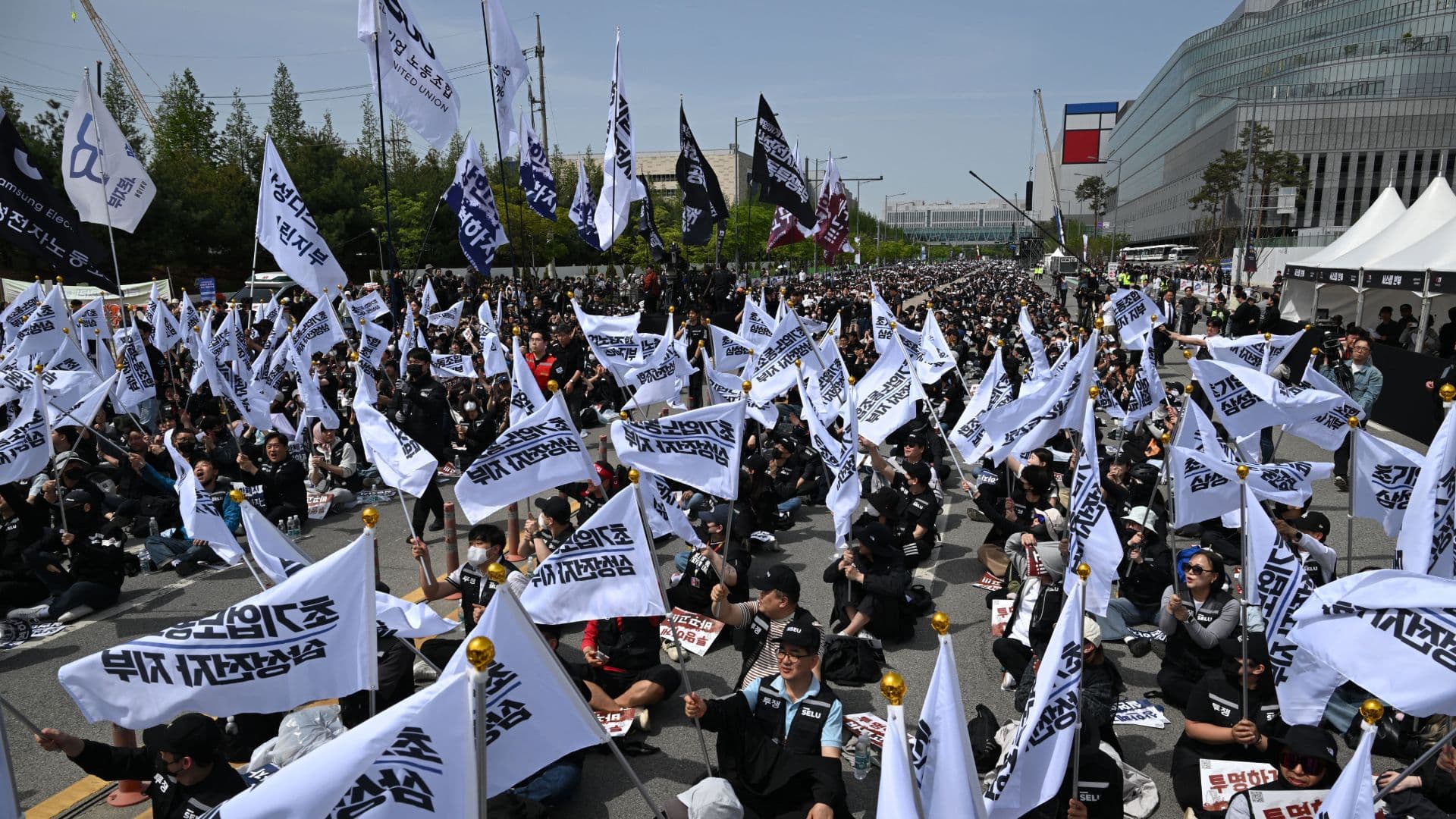
- Samsung's union talks collapsed after 17 hours of mediation, with the strike set for May 21
- Daily losses could reach $700 million to $1 trillion won, with total damages estimated up to $20 billion
- The union demands 15% of operating profit for bonuses and removal of the 50% salary cap on bonus pay
Samsung Electronics faces its biggest labor crisis in years. Government-mediated negotiations with the National Samsung Electronics Union collapsed Wednesday after 17 hours of talks went nowhere. The strike is set to begin May 21 and last 18 days.
The stakes are enormous. Samsung operates the world's largest memory chip facilities. A prolonged shutdown would ripple through global electronics supply chains at a moment when AI-driven chip demand shows no signs of slowing.
What the Union Wants
The union's demands center on compensation structure. Workers want Samsung to scrap a cap on bonus pay currently set at 50% of base salary. They also want 15% of annual operating profit allocated to performance payouts.
Samsung offered a one-time payment for 2026 but refused to commit to permanent changes in how bonuses are calculated. That fell short for the union, which represents roughly 50,000 workers.
“We spent 16 out of the 17 hours of mediation simply waiting around. We declared the negotiations over because management kept extending the mediation without making any meaningful changes to its proposal, which appeared to be an attempt to weaken momentum for a general strike.”
— Choi Seung-ho, union representative
The Cost Estimates Vary Wildly
Different analysts project different damage figures, but all of them are large. JPMorgan estimates an 18-day work stoppage would cost Samsung over 4 trillion won in direct revenue. That's roughly 1% of the semiconductor division's annual sales.
Professor Song Heon-jae of the University of Seoul projects higher losses. He estimates approximately 1 trillion won ($700 million) per day from factory shutdowns, according to Seoul Economic Daily. The union's own estimate goes further still: up to 30 trillion won ($20.3 billion) in total damages.
Government Scrambles to Respond
South Korean Prime Minister Kim Min-seok convened an emergency ministerial meeting after talks collapsed. His office cited "the potential gravity of the impact on the national economy" as justification for the unusual step.
The government has one tool it hasn't used yet: an emergency arbitration order. This legal mechanism would freeze industrial action for 30 days while the labor commission mediates. Labor Minister Kim Young-hoon stopped short of invoking it Wednesday, saying the dispute should be resolved through dialogue.
The union warned that such an order would damage labor relations further. It's a tricky balance. Forcing workers back might stop immediate losses but could poison negotiations for years.
What Happens Next
The union says it is "no longer considering additional negotiations" until after the proposed general strike. But union representative Choi Seung-ho left one door open: workers would consider a new offer if Samsung puts one forward before May 21.
Samsung said it regretted the outcome and would continue seeking dialogue. The company hasn't announced any contingency plans for maintaining chip production during a walkout.
Why This Strike Matters Beyond Korea
Samsung produces roughly 40% of the world's DRAM and about a third of NAND flash memory. Any significant disruption to its fabs would tighten global chip supply at a moment when AI companies are scrambling for capacity.
Memory prices have been recovering after a brutal downturn in 2023. A supply shock could accelerate that recovery, benefiting Samsung's competitors like SK Hynix and Micron. But it would also hurt Samsung's customers, including major smartphone and server manufacturers who depend on steady chip supply.
Logicity's Take
Frequently Asked Questions
When does the Samsung strike start?
The 18-day general strike is scheduled to begin May 21, 2024, unless Samsung and the union reach a last-minute agreement.
How much could the Samsung strike cost?
Estimates vary widely. JPMorgan projects 4 trillion won ($3 billion) in direct revenue loss. Professor Song Heon-jae estimates $700 million per day. The union projects up to $20.3 billion in total damages.
What does the Samsung union want?
The union demands removal of the 50% salary cap on bonus pay and allocation of 15% of annual operating profit to performance payouts. Samsung offered a one-time 2026 payment but refused permanent compensation changes.
Could the South Korean government stop the strike?
Yes, through an emergency arbitration order that would freeze industrial action for 30 days. Labor Minister Kim Young-hoon has declined to use this power so far, preferring dialogue-based resolution.
How would the strike affect global chip supply?
Samsung produces about 40% of global DRAM and a third of NAND flash. An 18-day shutdown could tighten memory supply, potentially raising prices and affecting smartphone and server manufacturers worldwide.
Another major hardware announcement from Asia's electronics giants
For readers tracking startup funding and tech investment trends
Need Help Implementing This?
Source: Latest from Tom's Hardware
Huma Shazia
Senior AI & Tech Writer
Produced with AI assistance and reviewed by the Logicity editorial team. Learn more in our Editorial Policy.