Key Takeaways
- RISC-V is a completely open CPU architecture that anyone can use without paying licensing fees
- Unlike x86 (Intel/AMD) and ARM, RISC-V lets companies design custom chips without reinventing core architecture
- The VisionFive2 single-board computer demonstrates RISC-V is ready for real-world development
Right now, two CPU architectures run the world. x86 powers most PCs and servers. ARM powers phones, tablets, and increasingly laptops like MacBooks. Intel and AMD control x86. ARM Holdings controls ARM. Neither is eager to share.
RISC-V is the third option. It's an open-source instruction set architecture that anyone can use to design chips. No licensing fees. No permission required. No royalties.
What Makes RISC-V Different
RISC-V isn't a chip you can buy off the shelf. It's a blueprint. Think of it like Linux for hardware. Linux gave developers an open foundation to build operating systems without paying Microsoft or Apple. RISC-V does the same for silicon.
The architecture uses a RISC (Reduced Instruction Set Computer) approach, similar to ARM. But here's the key difference: ARM charges licensing fees. RISC-V charges nothing. Companies can extend the architecture, modify it, and build exactly what they need.
“RISC-V is the Linux of hardware. Just as Linux broke the monopoly of proprietary operating systems, RISC-V is breaking the duopoly of x86 and ARM.”
— David Patterson, Turing Award Winner and RISC Pioneer
Why This Matters Now
The semiconductor industry has a concentration problem. Intel and AMD hold the patents for modern PC chips. ARM decides who gets to license its technology. For companies building products, this means paying fees, following rules, and hoping the patent holders stay friendly.
RISC-V changes that equation. A startup in India, a university in Germany, or a factory in Vietnam can design RISC-V chips without asking permission. This is what the industry calls "architectural sovereignty." You control your own silicon.
Real Hardware You Can Buy Today
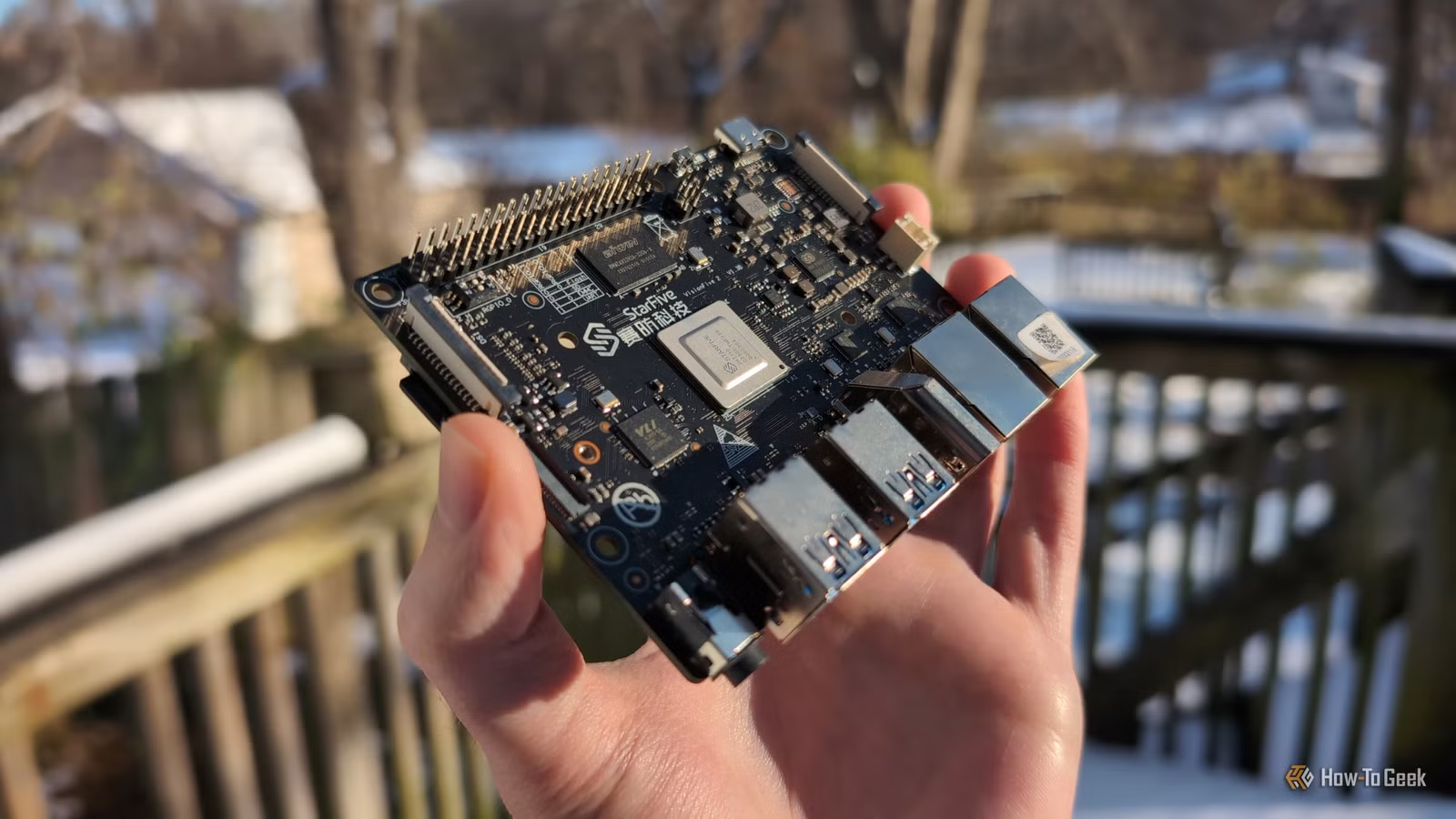
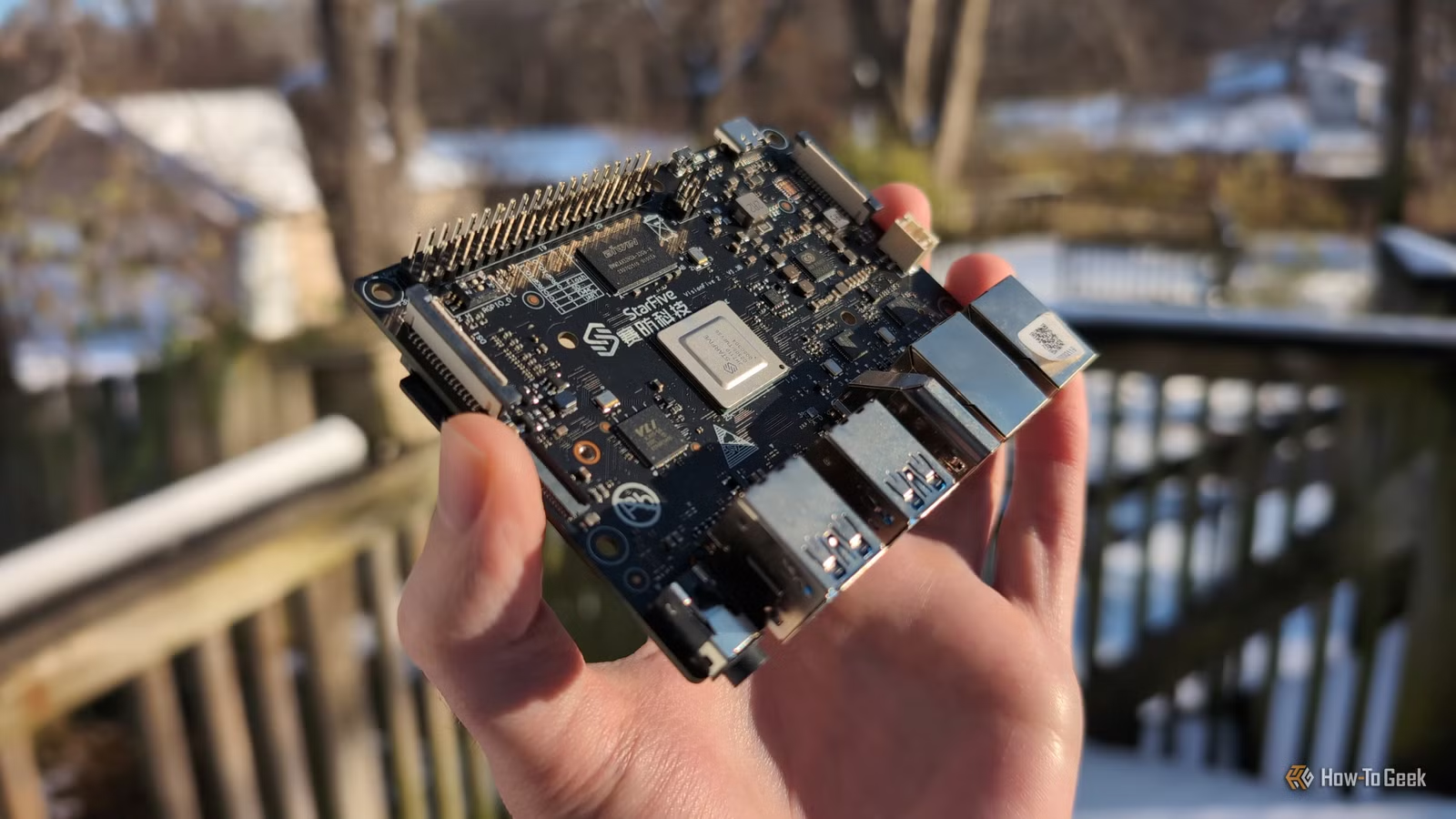
RISC-V isn't just theoretical. The VisionFive2 is a single-board computer, similar to a Raspberry Pi, that runs on a RISC-V processor. It uses the StarFive JH7110, an open-source quad-core chip with a GPU that hits 600MHz.
The starter kit includes an SD card slot, multiple ports, and GPIO pins for hardware projects. It's not going to replace your gaming PC. But it proves RISC-V can run real software on real hardware.
The Challenges Ahead
Open doesn't mean easy. RISC-V faces the same problem Linux faced in the 1990s: ecosystem maturity. x86 and ARM have decades of optimized compilers, debugged drivers, and battle-tested software. RISC-V is catching up, but it's not there yet.
Performance is another question. The best RISC-V chips today compete with mid-tier ARM processors. They're nowhere near Apple's M-series or Intel's latest. That gap will narrow, but it will take time and investment.

Logicity's Take
Who's Betting on RISC-V
The list of companies investing in RISC-V keeps growing. Google, Qualcomm, and NVIDIA have joined RISC-V International. China has invested heavily, partly to reduce dependence on Western chip architectures amid trade tensions.
For hobbyists and developers, boards like the VisionFive2 offer a way to experiment with the architecture without major investment. The software ecosystem is still maturing, but Linux support is solid.
Another story of open technology breathing new life into hardware
Frequently Asked Questions
Is RISC-V better than ARM?
Not necessarily better, but different. RISC-V is royalty-free and open, which reduces costs and increases design freedom. ARM has a more mature ecosystem with higher-performance chips available today.
Can RISC-V run Windows or macOS?
Not currently. Windows and macOS don't support RISC-V. Linux is the primary operating system for RISC-V development, with Android support in progress.
Who owns RISC-V?
Nobody owns it. RISC-V is maintained by RISC-V International, a nonprofit foundation. The instruction set architecture is open and free for anyone to use.
Can I buy a RISC-V laptop?
Consumer RISC-V laptops aren't widely available yet. Single-board computers like the VisionFive2 are the most accessible RISC-V hardware for developers and hobbyists.
Need Help Implementing This?
Source: How-To Geek
Huma Shazia
Senior AI & Tech Writer
Produced with AI assistance and reviewed by the Logicity editorial team. Learn more in our Editorial Policy.