Key Takeaways
- REST remains the safest default choice for public APIs and simple CRUD operations
- gRPC is your go-to for microservices where performance and low latency matter most
- GraphQL excels when your frontend needs precise control over fetched data
- All three protocols can coexist in the same architecture depending on requirements
Read in Short
Stick with REST if you're building a public API or need broad compatibility. Switch to gRPC for microservices where speed is everything. Pick GraphQL when your frontend team is tired of over-fetching data or making multiple requests. There's no single winner here.
Here's a question I've seen pop up in every backend Slack channel I'm part of: should we use REST, GraphQL, or gRPC? And honestly, the answer is almost always "it depends." I know that sounds like a cop-out, but hear me out. These three protocols each solve different problems, and picking the wrong one can make your life miserable six months down the road.
Web APIs have come a long way. Remember SOAP? Yeah, most of us have tried to forget that particular adventure in XML hell. REST came along and made things way simpler. Then GraphQL and gRPC showed up and suddenly we had actual choices. Good choices, even. But more choices means more decisions, and that's where things get tricky.
REST: The Default That Just Works
Let's start with REST because, let's be real, it's probably what you should use if you're reading an article like this. REST has been around since 2000 and it's not going anywhere. The tooling is mature, every developer knows it, and debugging is straightforward since everything is just HTTP and JSON.
When to Default to REST
Building a public API? Go REST. Simple CRUD operations? REST. Need something that works with literally any client? REST. When in doubt, REST is your safe bet.
The beauty of REST is its simplicity. You've got your HTTP verbs (GET, POST, PUT, DELETE), your URLs map to resources, and your responses come back as JSON. There's nothing magical about it, and that's exactly the point.
POST /api/customers
Content-Type: application/json

{
  "email": "john@domain.com",
  "name": "John Doe"
}
That's it. Anyone who's built anything on the web can look at that and understand what's happening. You're creating a customer with an email and name. Try explaining a protobuf schema to a junior dev and watch their eyes glaze over. REST keeps things accessible.
gRPC: When Milliseconds Actually Matter
Okay, so here's the thing about gRPC. It's fast. Like, really fast. But that speed comes with complexity you might not need.
gRPC sends data in a binary format called Protocol Buffers instead of JSON. This makes payloads smaller and parsing faster. It also uses HTTP/2, which means you get features like multiplexing and bidirectional streaming out of the box. Sounds great, right?
But wait. Before you go rewriting everything in gRPC, ask yourself: do you actually need that performance boost? If you're building a blog backend or a standard web app, the answer is probably no. But if you're running a microservices architecture where services are constantly chattering with each other? That's when gRPC starts making serious sense.
- Binary format means smaller payloads and faster serialization
- Strict contracts through .proto files catch breaking changes early
- Built-in code generation for multiple languages
- Streaming support for real-time communication
- Not browser-friendly without additional tooling like gRPC-Web
service CustomerService {
  rpc CreateCustomer(CustomerRequest) returns (CustomerResponse);
}

message CustomerRequest {
  string email = 1;
  string name = 2;
}
See that strict typing? That's actually a feature, not a bug. When Service A talks to Service B and they both compile against the same .proto file, you get compile-time guarantees that your API contract is valid. No more discovering at 2 AM that someone changed a field name without telling anyone.
If you're evaluating competing technologies, this piece on comparing AI coding tools uses a similar framework for making nuanced tech decisions.
GraphQL: Let the Frontend Decide
GraphQL is the rebel of the bunch. It throws out the whole idea of fixed endpoints and says "hey, what if clients could just ask for exactly what they want?"
And honestly? For certain use cases, this is brilliant. Say you're building a mobile app that shows a user's profile. With REST, you might hit /users/123, get back 47 fields, and only use 5 of them. That's wasted bandwidth, wasted parsing, wasted everything. With GraphQL, you ask for exactly those 5 fields and that's all you get.
query {
  product {
    name
    price
  }
}
The kicker? You can also grab related data in a single request. Need a product with its reviews, seller info, and shipping options? That's one query, not four separate API calls. For frontends dealing with complex, interconnected data, this is a game-changer.
The N+1 Problem Warning
GraphQL doesn't magically solve database performance. Without proper data loaders and batching, you can easily create N+1 query nightmares on your backend. Plan your resolvers carefully.
But GraphQL isn't free. You need to build and maintain a schema. Caching becomes trickier since every query can be different. And error handling? Let's just say it's... different. You can get a 200 OK response that still contains errors. That takes some getting used to.
The Comparison You Actually Wanted
| Feature | REST | GraphQL | gRPC |
|---|---|---|---|
| Data Format | JSON | JSON | Protocol Buffers (binary) |
| Performance | Good | Good | Excellent |
| Learning Curve | Low | Medium | High |
| Browser Support | Native | Native | Requires gRPC-Web |
| Caching | Built-in HTTP caching | Complex, needs tools | Limited |
| Best For | Public APIs, CRUD | Complex data graphs | Microservices |
| Typing | OpenAPI (optional) | Schema required | Strict .proto contracts |
So Which One Should You Actually Pick?
Let me give you the straightforward answer that took me years to figure out: you probably need more than one.
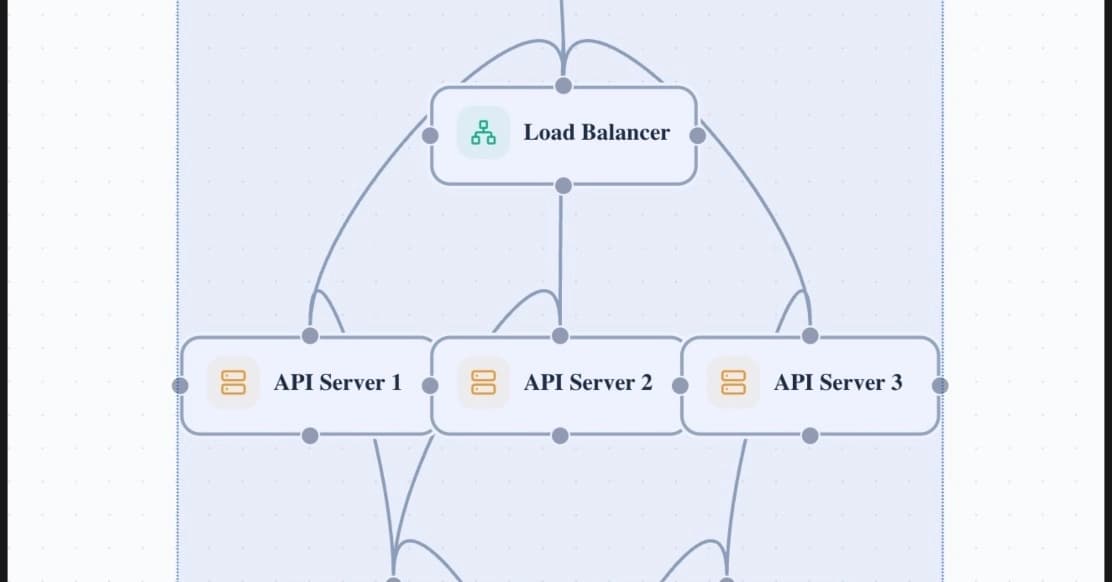
Seriously. Most production systems I've worked on use REST for their public-facing API, gRPC for internal microservice communication, and sometimes GraphQL as a unified gateway for frontend apps. These aren't competing standards. They're tools in a toolbox.
- Start with REST unless you have a specific reason not to. It's boring and that's a feature.
- Add gRPC for internal services when you've got performance requirements or want strict contracts between teams.
- Consider GraphQL when your frontend developers are spending too much time aggregating data from multiple endpoints.
- Don't rewrite working systems just because a new protocol sounds cool. Migration has real costs.
The worst decision you can make is picking a technology because it's trendy. I've seen teams adopt GraphQL for simple CRUD apps and spend months fighting with caching and error handling when REST would've been done in a week.
Building complex frontend features often requires careful API design. This tutorial shows how frontend requirements shape your backend decisions.
Quick Decision Framework
Still not sure? Answer these questions:
- Is this a public API that external developers will use? → REST
- Do I need sub-millisecond latency between services? → gRPC
- Is my frontend constantly stitching together data from multiple endpoints? → GraphQL
- Am I building a straightforward web app with basic CRUD? → REST
- Do I need real-time bidirectional streaming? → gRPC
- Is my data highly interconnected with lots of relationships? → GraphQL
Frequently Asked Questions
Can I use GraphQL and REST together?
Absolutely. Many teams use GraphQL as a backend-for-frontend (BFF) layer that aggregates multiple REST services. Best of both worlds.
Is gRPC overkill for small projects?
Usually, yes. The setup overhead and learning curve aren't worth it unless you have clear performance requirements or a microservices architecture.
Will REST become obsolete?
Not anytime soon. REST is simple, well-understood, and works everywhere. New protocols add options, they don't replace fundamentals.
Final Thoughts
Look, there's no universal "best" API protocol. REST, GraphQL, and gRPC each exist because they solve real problems that the others handle poorly. The smart move is understanding what each one does well and matching that to your actual requirements.
Don't overthink it. If you're starting fresh and don't have strong opinions yet, go with REST. You can always add GraphQL or gRPC later when you hit the specific pain points they address. Building software is iterative. Your API architecture can be too.
Source: DEV Community
Manaal Khan
Tech & Innovation Writer
Produced with AI assistance and reviewed by the Logicity editorial team. Learn more in our Editorial Policy.