Key Takeaways
- OpenAI is partnering with MediaTek, Qualcomm, and Luxshare to develop smartphone processors
- Mass production is expected in 2028
- Sam Altman's same-day post about rethinking OS design suggests hardware ambitions are real
OpenAI is building smartphone processors. That's the claim from supply chain analyst Ming-Chi Kuo, who reports the company is working with MediaTek, Qualcomm, and manufacturing partner Luxshare to develop phone chips. Mass production is targeted for 2028.
The news marks a significant shift for a company that has repeatedly downplayed smartphone ambitions. CEO Sam Altman has dismissed the idea in the past, even while OpenAI pursued other hardware projects. But Kuo's report, combined with a suspiciously timed post from Altman himself, suggests the company is serious about controlling the device you use to access AI.
What Ming-Chi Kuo Reported
Kuo, a respected Apple supply chain analyst, posted on X that OpenAI is actively developing smartphone processors. The partnerships are notable: MediaTek and Qualcomm are two of the largest mobile chip designers in the world, and Luxshare is a major manufacturing partner for Apple's AirPods and other devices.
According to Kuo, Luxshare will serve as the "exclusive system co-design and manufacturing partner" for the project. That language suggests OpenAI isn't just licensing chips. It's building a complete device.
Kuo also shared his theory on why OpenAI would enter the smartphone market: "Only by fully controlling both the operating system and hardware can OpenAI deliver a comprehensive AI agent service." Phones provide real-time data that AI agents need, including location, camera input, and usage patterns.
Altman's Cryptic Post
On the same day Kuo published his report, Altman posted on X that it "feels like a good time to seriously rethink how operating systems and user interfaces are designed." That's not a confirmation of phone plans. But the timing is hard to ignore.
Altman has been public about OpenAI's interest in hardware. The company is working with former Apple designer Jony Ive on a screenless AI device. OpenAI even acquired Ive's company to accelerate that project. A smartphone, though, represents a much bigger bet. It means competing directly with Apple, Samsung, and Google.
Why Hardware Matters for AI
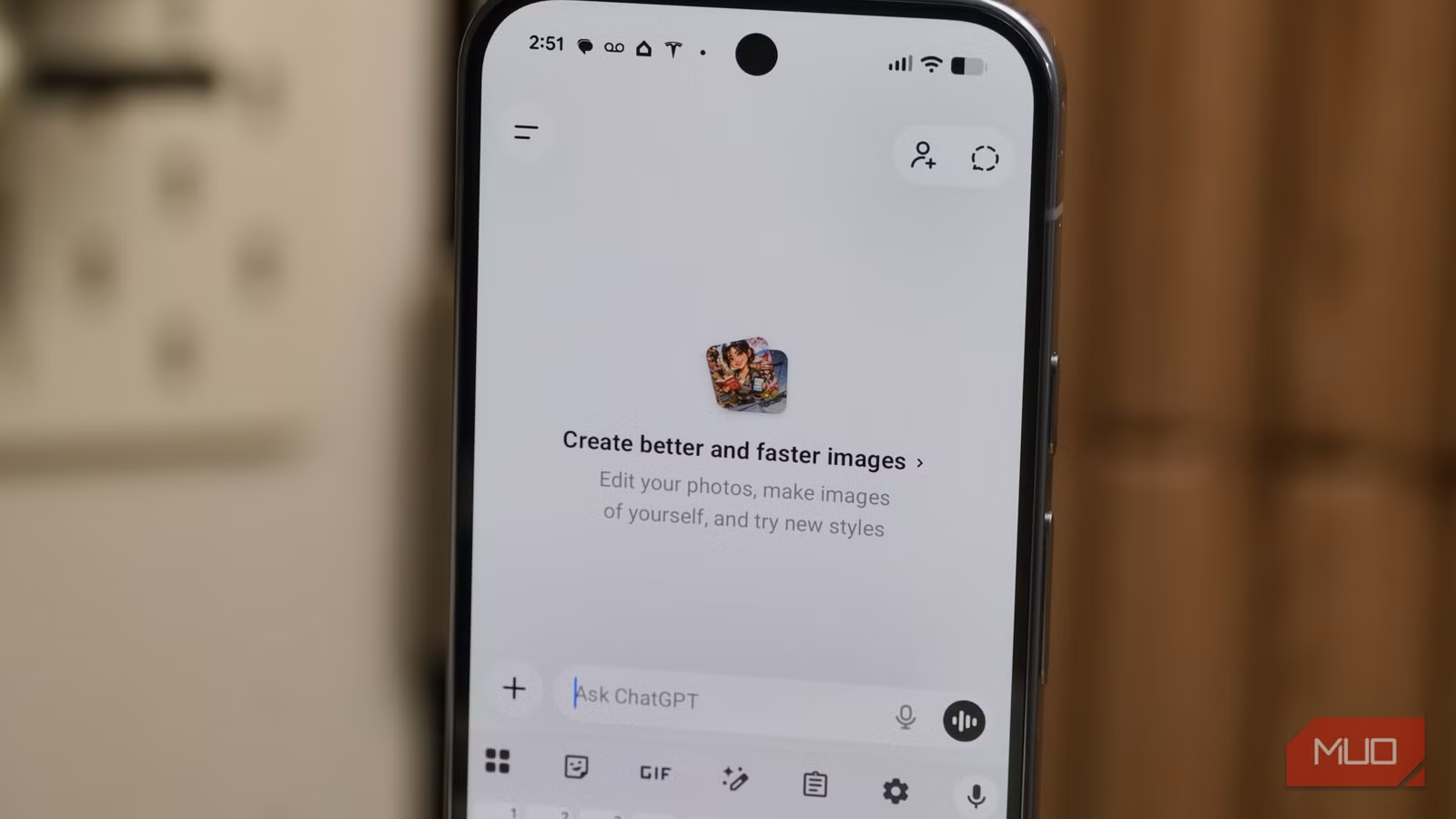
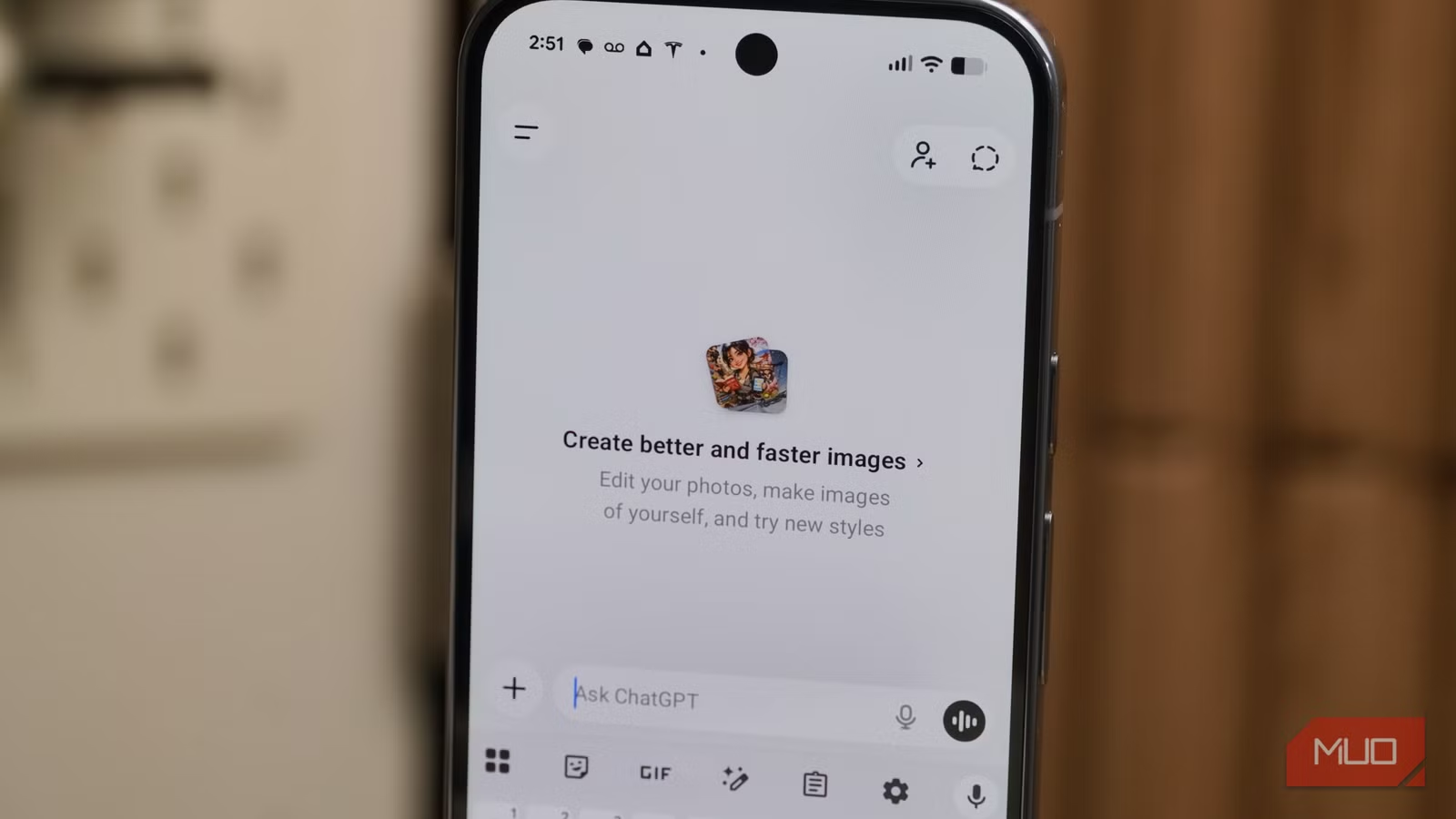
Today's AI assistants run into a fundamental problem: they don't control the device. ChatGPT can answer questions, but it can't see your screen, manage your apps, or take actions on your behalf without jumping through hoops. Apple's Siri has device access but limited AI capabilities. Google's Gemini has both but is constrained by Android's permission system.
An OpenAI phone could solve this. With control over the OS and hardware, an AI agent could book your flights, respond to messages, manage your calendar, and navigate apps without asking for permission every step of the way. That's the vision Kuo describes, and it explains why a software company would spend billions entering a hardware market with single-digit margins.
The 2028 Timeline
Mass production in 2028 gives OpenAI roughly three years to design chips, build an operating system, and establish manufacturing partnerships. That's aggressive but not impossible. Nothing Phone went from concept to launch in about two years. Huawei built its own chip ecosystem after being cut off from Qualcomm.
The bigger question is distribution. Apple and Samsung dominate smartphone sales through retail partnerships, carrier deals, and brand recognition built over decades. OpenAI has none of that. The company will need to convince consumers that an AI-first phone is worth abandoning their iPhone or Galaxy.
Logicity's Take
What This Means for the Industry
OpenAI entering the smartphone market would reshape how we think about AI integration. Today, AI is an app you open. On an OpenAI phone, AI would be the operating system. Every interaction would flow through an intelligent layer that learns your preferences and acts on your behalf.
Apple and Google are already moving in this direction. Apple Intelligence is baked into iOS 18. Google's Gemini is becoming the default assistant on Android. But neither company is willing to make AI the primary interface. They have too much invested in app ecosystems and developer relationships.
OpenAI has no such baggage. A clean-slate OS designed around AI agents could offer an experience that traditional smartphones can't match. Whether consumers want that experience is another question entirely.
Another approach to AI-first phone interfaces
Frequently Asked Questions
Is OpenAI making a smartphone?
According to supply chain analyst Ming-Chi Kuo, OpenAI is developing smartphone processors with MediaTek and Qualcomm, targeting mass production in 2028. The company has not officially confirmed these plans.
Who is manufacturing OpenAI's phone chips?
Kuo reports that Luxshare will be the exclusive system co-design and manufacturing partner. MediaTek and Qualcomm are involved in processor development.
When will OpenAI's phone be available?
Mass production is expected in 2028, which suggests a consumer launch sometime that year or in 2029.
Why would OpenAI make a phone?
According to Kuo, OpenAI needs to control both hardware and software to deliver a comprehensive AI agent service. Phones provide real-time data like location that AI agents need to be useful.
Need Help Implementing This?
Source: MakeUseOf
Legal Conflict with Elon Musk Over Non-Profit Mission
The new article details the start of the legal trial between Elon Musk and OpenAI, featuring allegations that the company betrayed its non-profit mission. It includes new details about jury selection, Musk's social media reactions, and the expected timeline for a judicial decision by late May.
Legal Battle Over OpenAI's Founding Mission Begins
A legal battle between Elon Musk and OpenAI has officially commenced in a California federal court, focused on allegations that the company abandoned its non-profit mission. The trial has begun with jury selection and centers on claims of broken promises regarding open-source development.
Manaal Khan
Tech & Innovation Writer
Produced with AI assistance and reviewed by the Logicity editorial team. Learn more in our Editorial Policy.