Key Takeaways
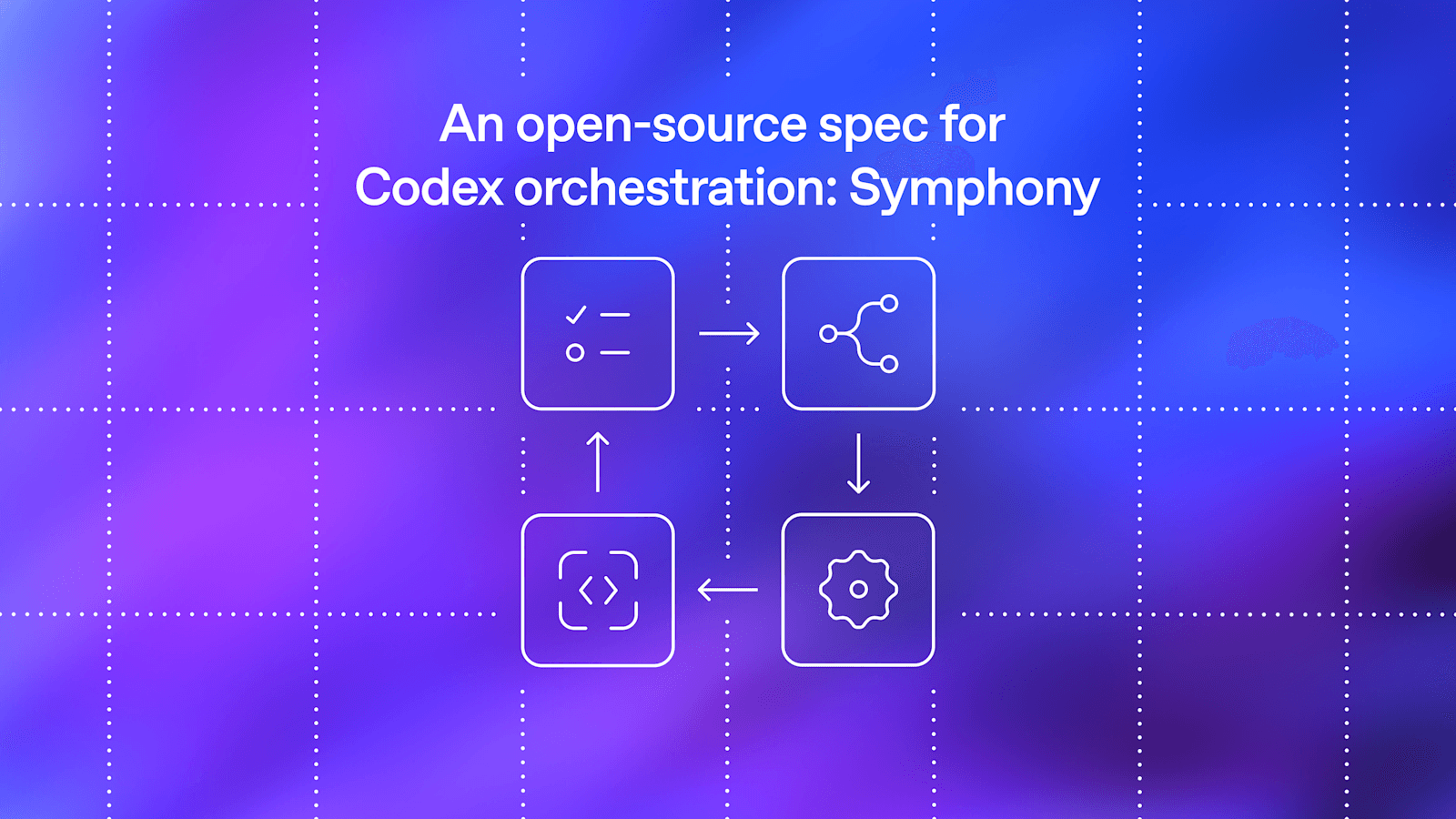
- Symphony maps each open task in Linear to a dedicated agent workspace, running continuously without human supervision
- Teams using Symphony reported a 500% increase in landed pull requests
- The system emerged from OpenAI's experiment building an entire repo with zero human-written code
OpenAI has open-sourced Symphony, a specification that transforms project management boards into orchestration layers for coding agents. Instead of engineers juggling multiple Codex sessions in browser tabs, Symphony assigns one agent per open task and lets them run continuously.
The tool emerged from an internal experiment at OpenAI where a team committed to building an entire repository with zero human-written code. Every line had to come from Codex. That constraint forced the team to redesign their engineering workflow, and Symphony is the result of hitting their next wall: context switching.
The Problem: Human Attention as the Bottleneck
Coding agents are still interactive tools. Engineers open sessions, assign tasks, review output, steer the agent, and repeat. The OpenAI team found that most engineers could comfortably manage three to five sessions at once before productivity dropped.
Beyond that threshold, things fell apart. Engineers forgot which session was doing what. They jumped between terminals to nudge stalled agents. They debugged long-running tasks that had gone sideways halfway through.
“We had effectively built a team of extremely capable junior engineers, then assigned our human engineers to micromanaging them. That wasn't going to scale.”
— Alex Kotliarskyi, Victor Zhu, and Zach Brock, OpenAI Engineering
Symphony's Approach: Tasks, Not Sessions
The fix required a change in perspective. The team realized they were organizing work around coding sessions and merged PRs. But those are means to an end. Software workflows are organized around deliverables: issues, tasks, tickets, milestones.
Symphony flips the model. Instead of engineers supervising agents directly, agents pull work from the task tracker. Any open task gets picked up and completed by an agent. The issue tracker becomes the control plane.
In this setup, each open Linear issue maps to a dedicated agent workspace. Agents run continuously. Humans review the results rather than manage the process.
Prerequisites: Agent-Friendly Repos
Symphony didn't appear in isolation. It builds on work the team documented in a previous post on 'harness engineering.' That earlier phase involved making repositories agent-friendly through heavy investment in automated tests and guardrails.
Without those foundations, handing agents continuous access to a codebase would be risky. The tests and guardrails act as safety nets that let agents operate without constant human oversight.
How to Use Symphony
OpenAI has released Symphony as an open-source spec. Teams can use it to turn their own issue trackers into agent orchestrators. The basic concept: map your project management tool to become the single source of truth for what agents should work on.
- Each open task triggers an agent workspace
- Agents pull work automatically rather than waiting for assignment
- Humans shift from managing sessions to reviewing outputs
- The issue tracker serves as both the backlog and the control plane
Logicity's Take
Limitations and Open Questions
The 500% increase in landed PRs came from 'some teams.' OpenAI hasn't published data on how widely those results replicate across different codebases, team sizes, or types of work.
The approach also assumes a repository that's already agent-friendly. Teams without comprehensive test coverage or clear task definitions may need significant upfront work before Symphony delivers results.
Frequently Asked Questions
What is Symphony from OpenAI?
Symphony is an open-source specification that turns project management tools like Linear into control planes for coding agents. Each open task gets assigned to an agent that runs continuously until the work is complete.
How does Symphony improve developer productivity?
It eliminates context switching. Instead of engineers managing three to five agent sessions manually, Symphony automates task assignment. Engineers review completed work rather than supervising active sessions.
What results has Symphony achieved?
OpenAI reports a 500% increase in landed pull requests on some teams using Symphony. Results may vary depending on codebase structure and test coverage.
What tools does Symphony integrate with?
Symphony was built to work with Linear as the project management tool and Codex as the coding agent. The open-source spec can be adapted for other issue trackers.
What do teams need before using Symphony?
Teams need agent-friendly repositories with comprehensive automated tests and guardrails. Without these foundations, continuous agent access to codebases carries more risk.
Need Help Implementing This?
Source: OpenAI News
Manaal Khan
Tech & Innovation Writer
Produced with AI assistance and reviewed by the Logicity editorial team. Learn more in our Editorial Policy.