Key Takeaways

- Nintendo confirms employee survey data was stolen via TinyPulse, a third-party HR platform owned by WebMD Health Services
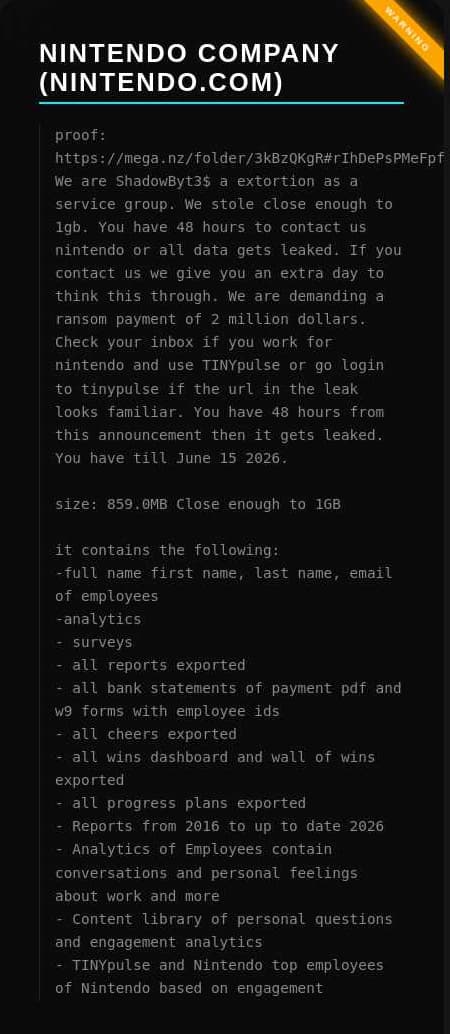
- The Shadowbyt3$ extortion group claims to have nearly 1GB of data including W-9 forms and bank statements, demanding $2 million
- Nintendo says its own systems were not compromised and no customer or financial data was accessed
Nintendo of America has confirmed that threat actors stole internal employee survey data through TinyPulse, a third-party HR platform the company uses for workplace feedback. The breach did not compromise Nintendo's own systems, and no customer data was affected.
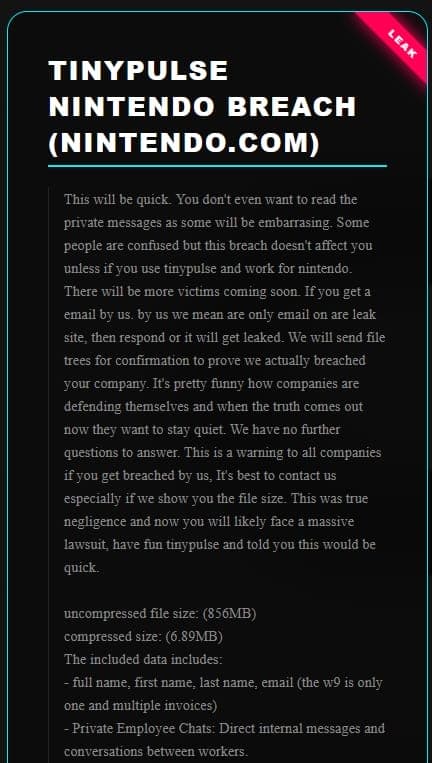
The confirmation came after Shadowbyt3$, a group calling itself an "extortion-as-a-service" operation, claimed responsibility for the attack and demanded $2 million in ransom. Nintendo appears to have refused payment. The group has since posted what it claims is leaked data, including employee conversations.
What did Shadowbyt3$ actually steal?
The two sides tell different stories about the scope. Nintendo says the breach was limited to "internal survey content comprising a small subset of our employees," with most data dating back several years. The company's statement to BleepingComputer emphasized that its own systems remained secure.
Shadowbyt3$ claims the haul is more significant: nearly 1GB of data allegedly containing full names, email addresses, bank statements, W-9 tax forms with employee IDs, progress plans, and internal reports spanning 2016 to 2026. If accurate, W-9 forms would include Social Security numbers, a serious exposure for affected employees.
BleepingComputer, which broke the story, did not download the leaked files and could not verify whether the threat actor's claims are accurate. The group gave Nintendo a 48-hour deadline to negotiate before leaking data, then posted files it says include direct messages between employees.
Who is Shadowbyt3$?
Shadowbyt3$ describes itself as an "extortion as a service group" that has operated since October 2025. The model is straightforward: breach companies, steal data, demand payment, leak what isn't ransomed. The group promises that paying victims will have their data "deleted permanently" and will "not hear from us again."
Law enforcement agencies strongly discourage ransom payments. There's no guarantee criminals honor deletion promises, and payment funds future attacks. Stolen data can still be sold privately regardless of any deal.
The TinyPulse and WebMD connection
TinyPulse is an employee engagement platform used for anonymous workplace surveys, feedback collection, and culture assessments. WebMD Health Services owns the platform. BleepingComputer contacted WebMD for comment but received no response before publication.
This breach fits a pattern. According to Ponemon Institute research, 62% of data breaches involve third-party vendors or supply chain attacks. Companies often lock down their own infrastructure while trusting sensitive data to external services with weaker controls.
Employee survey platforms are particularly attractive targets. They hold organizational sentiment data, compensation feedback, leadership assessments, and in some cases personal identifiers. That information is valuable for social engineering attacks, even if it doesn't include payment card numbers or customer records.
What Nintendo customers should do
Nothing. Nintendo explicitly stated that no customer or financial data was accessed. Account holders don't need to change passwords or take any protective action based on this incident.
Nintendo of America employees, past and present, face a different situation. If Shadowbyt3$'s claims about W-9 forms and bank statements are accurate, affected workers should monitor their credit reports and consider fraud alerts. Nintendo hasn't announced whether it will offer identity protection services to impacted staff.
The third-party vendor problem isn't going away
Nintendo can truthfully say its own systems weren't compromised. But its employees' data was still stolen because a vendor the company trusted got breached. This distinction matters legally and for PR. It matters less to the people whose Social Security numbers may now be circulating.
Companies increasingly outsource HR functions, surveys, benefits administration, and payroll to specialized platforms. Each integration creates another attack surface. The average time to identify and contain a breach involving third-party compromise is 277 days, according to IBM research. By then, damage is done.
Nintendo says it's "working with the service provider to address the issue." What that means for TinyPulse's other enterprise clients, which reportedly number over 1,000 including Fortune 500 companies, remains unclear.
Logicity's Take
Nintendo's PR team nailed the messaging: own systems secure, no customer impact, limited scope. But the underlying problem is structural. Every enterprise runs on dozens of third-party services, and security is only as strong as the weakest vendor. Shadowbyt3$'s extortion-as-a-service model suggests we'll see more attacks targeting these soft spots. Companies need to audit not just their own defenses, but every partner that touches employee or customer data.
Frequently Asked Questions
Was Nintendo's gaming network or customer data affected?
No. Nintendo confirmed that its own systems were not compromised and no customer, financial, or gaming data was accessed. The breach only affected internal employee survey data stored on the third-party TinyPulse platform.
What is TinyPulse and who owns it?
TinyPulse is an employee engagement and feedback platform used for anonymous workplace surveys and culture assessments. It's owned by WebMD Health Services and serves over 1,000 enterprise clients.
Should Nintendo customers change their passwords?
No action is required. Nintendo explicitly stated that no customer data was involved in this breach. Account holders can continue using their existing credentials.
Who is Shadowbyt3$ and what do they want?
Shadowbyt3$ is an extortion-as-a-service group operating since October 2025. They demanded $2 million from Nintendo and have since leaked data after the company apparently refused to pay.
What data does Shadowbyt3$ claim to have stolen?
The group claims to have nearly 1GB of data including employee names, emails, bank statements, W-9 tax forms, and internal reports from 2016 to 2026. Nintendo says only survey content was exposed. BleepingComputer could not verify the attacker's claims.
Basic security configurations that many overlook
Need Help Implementing This?
If your organization uses third-party HR or survey platforms, now is a good time to review what employee data those vendors hold and what security certifications they maintain. Contact your IT security team or a qualified consultant to conduct a vendor risk assessment.
Source: BleepingComputer
Manaal Khan
Tech & Innovation Writer
Produced with AI assistance and reviewed by the Logicity editorial team. Learn more in our Editorial Policy.