Key Takeaways

- Lora Jovanović nearly doubled the Optical Constants Database from 297 to 533 datasets
- Frances Donovan created new approaches to simplify mission support task management
- Jaden Ta led deployment planning for the FarmFlux Earth science investigation
NASA's Ames Research Center named four researchers as Science Stars for May 2026. The monthly recognition highlights work that spans astrophysics data infrastructure, space biology administration, mission support systems, and agricultural Earth observation.
The honorees are Lora Jovanović, Tammy Moore, Frances Donovan, and Jaden Ta. Each works in a different branch of the Ames Science Directorate, and their contributions reflect the range of technical and managerial work that keeps NASA missions running.
Jovanović Expands Optical Constants Database
Lora Jovanović, a research scientist in the Astrophysics Branch working through the Bay Area Environmental Research Institute, received the Space Science Star recognition. Her work focused on the Optical Constants Database, a resource that provides input parameters for models interpreting data from space missions.
These optical constants feed into models used by missions including SPHEREx, Cassini, New Horizons, and Juno. Without accurate optical constants, researchers cannot properly interpret the light and radiation data these spacecraft collect. Jovanović increased the available datasets by 236 entries, a 79% expansion.
Moore and Donovan Recognized for Space Biosciences Work
The Space Biosciences Division earned two Stars this month. Tammy Moore serves as the division's Resource Analyst and was recognized for guiding the team through major budget guideline changes. NASA cited her expert knowledge and determination to support scientists and engineers during the transition.

Frances Donovan, a scientist and project manager in the same division, received recognition for her role as the Science Directorate's Contracting Officer's Representative for the FILMSS-2 task. FILMSS-2 stands for Fully Integrated Lifecycle Mission Support Services. Donovan created new approaches to simplify task management and spent considerable time educating and supporting task requestors.
Ta Leads FarmFlux Deployment Planning
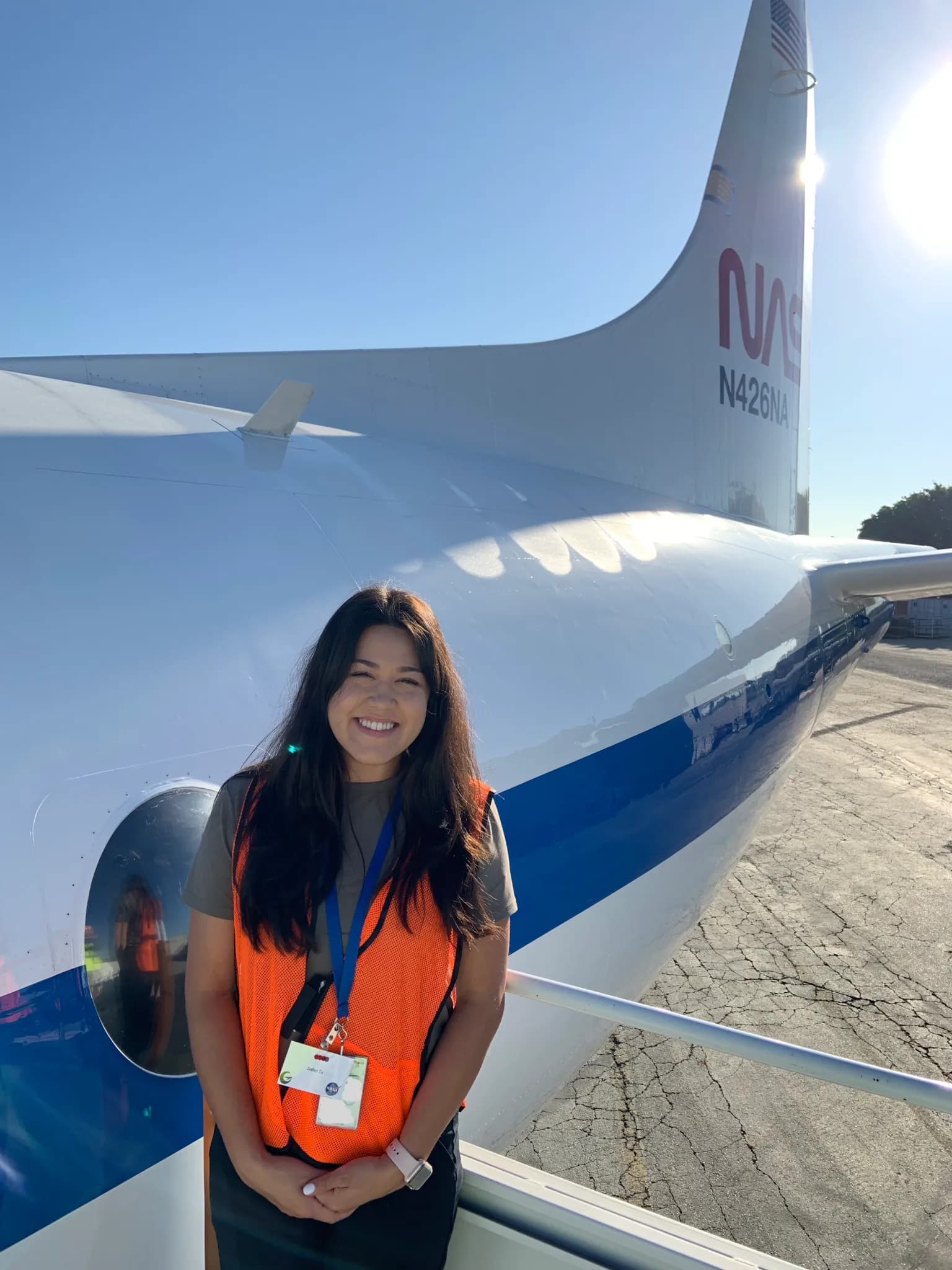
Jaden Ta, a deputy project manager in the Earth Science Project Office, earned the Earth Science Star designation. Her work centered on the FarmFlux investigation, an Earth Venture Suborbital mission focused on agricultural research.

Ta developed the Investigation Implementation Plan for FarmFlux and played a strategic role in selecting deployment locations for the research aircraft. Earth Venture Suborbital missions use aircraft rather than satellites, which means site selection directly affects what data the mission can collect.
Why These Roles Matter
NASA's Science Stars program highlights work that often goes unnoticed. Database expansion, budget management, contract oversight, and deployment logistics are not the flashy parts of space exploration. But they determine whether missions succeed.
A researcher analyzing Juno data needs Jovanović's optical constants. A space biology experiment needs Moore's budget navigation. A new mission needs Donovan's simplified task management. FarmFlux needs Ta's aircraft deployment plan. The Science Stars recognition puts administrative and technical support work on the same stage as headline-grabbing discoveries.

Logicity's Take
Frequently Asked Questions
What is the NASA Ames Science Stars program?
A monthly recognition program at NASA's Ames Research Center that honors scientists, engineers, and staff for outstanding contributions to the NASA mission.
What is the Optical Constants Database used for?
It provides critical input parameters for models that interpret observational data from space missions like SPHEREx, Cassini, New Horizons, and Juno.
What is the FarmFlux investigation?
An Earth Venture Suborbital mission that uses research aircraft to collect data for agricultural science research.
What does FILMSS-2 stand for?
Fully Integrated Lifecycle Mission Support Services, a NASA task that supports various mission operations.
More on astrophysics research and space science modeling
Need Help Implementing This?
Source: NASA
Manaal Khan
Tech & Innovation Writer
Produced with AI assistance and reviewed by the Logicity editorial team. Learn more in our Editorial Policy.