Key Takeaways
- The May 31 Blue Moon was 252,506 miles from Earth, making it 7% smaller and 10% dimmer than an average full moon
- Photographers captured the micromoon over landmarks including the Eiffel Tower, Statue of Liberty, and Temple of Poseidon
- Blue Moons occur roughly every 2.5 years because the moon's 29.5-day cycle doesn't align with calendar months
The May 31 Blue Moon gave stargazers worldwide a rare double feature. It was both the second full moon of the month and a micromoon, the smallest and dimmest full moon of 2026. Photographers from Paris to San Francisco trained their lenses skyward, capturing images that lit up social media over the weekend.
What Made This Blue Moon Special
A Blue Moon is the second full moon in a single calendar month. The term can also refer to the third full moon in a season containing four full moons, though that original meaning didn't apply here. Blue Moons happen about once every 2.5 years because the moon's 29.5-day cycle doesn't match our calendar months.
“The moon's 29.5-day cycle doesn't neatly align with our calendar, which is why we get these rare Blue Moon occurrences roughly every 2.5 years.”
— Dr. Elena Vance, Senior Astronomer at the International Space Observatory
This particular Blue Moon turned full while at apogee, the farthest point in its elliptical orbit around Earth. At 252,506 miles away, it appeared 7% smaller than an average full moon and 14% smaller than the year's largest supermoon. It also shone about 10% dimmer than usual. Despite the reduced brightness, the moon still cast enough light to wash out all but the brightest nearby stars, including the red supergiant Antares.
Best Photos From Around the World
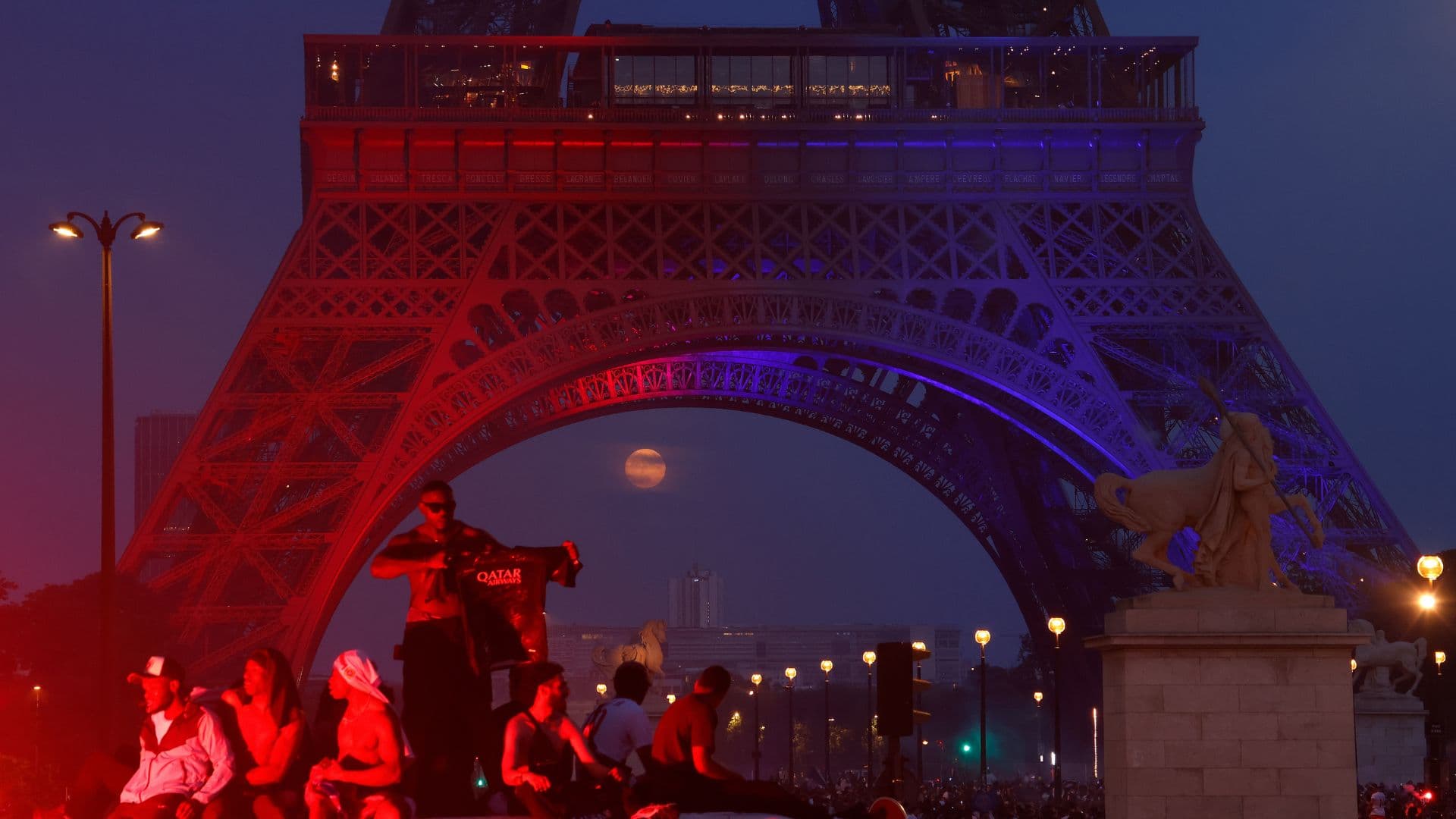
Photographer Gary Hershorn captured one of the weekend's most striking images: the near-full moon framed between the steel legs of the Eiffel Tower on May 30. Soccer fans were celebrating Paris Saint-Germain's victory over Arsenal in the Champions League Final below.
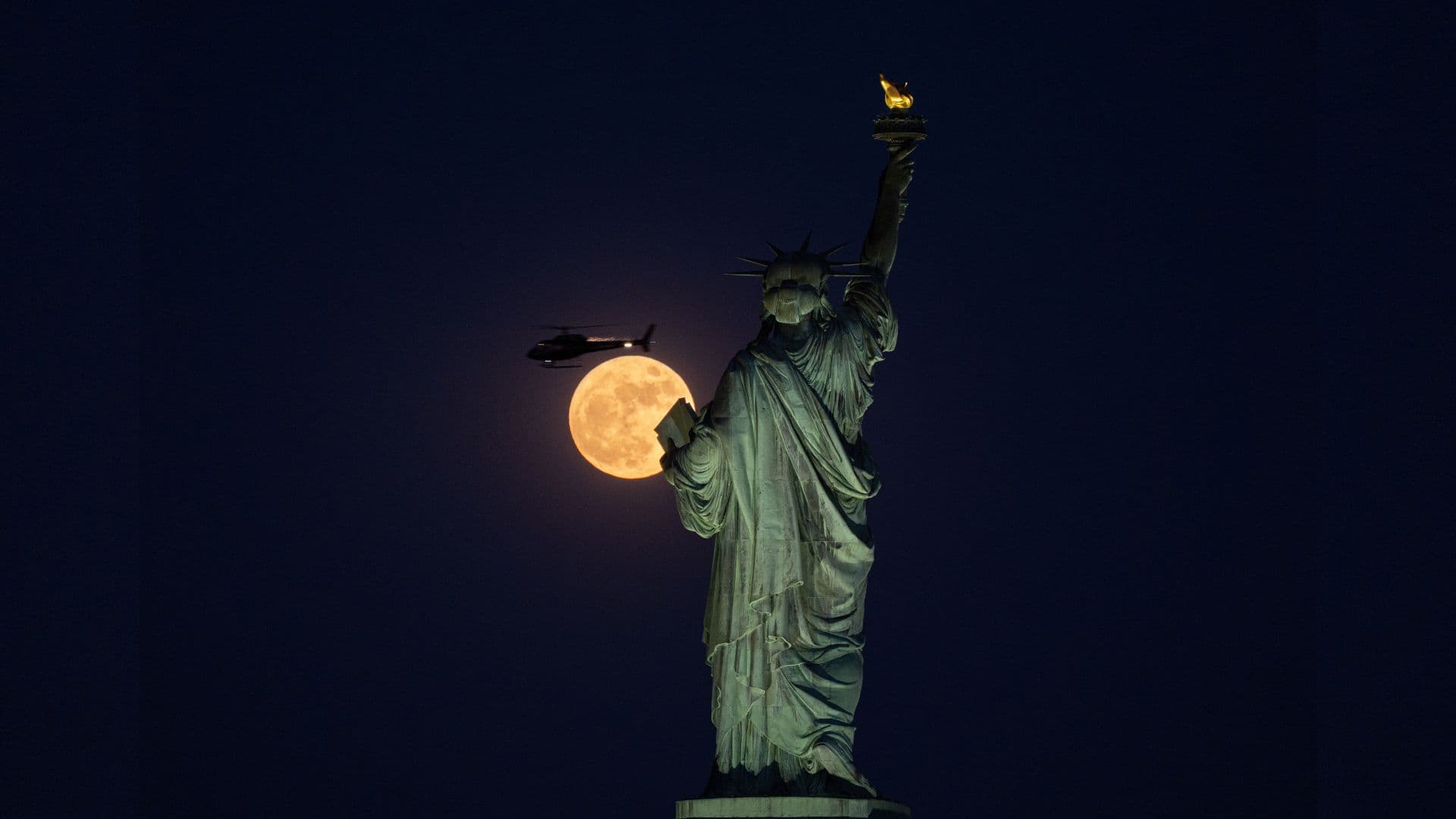
In New York, photographer Lokman Vural Elibol shot the moon rising behind the Statue of Liberty that same night. A helicopter appeared to pass in front of the lunar disk, adding an unexpected element to the composition.
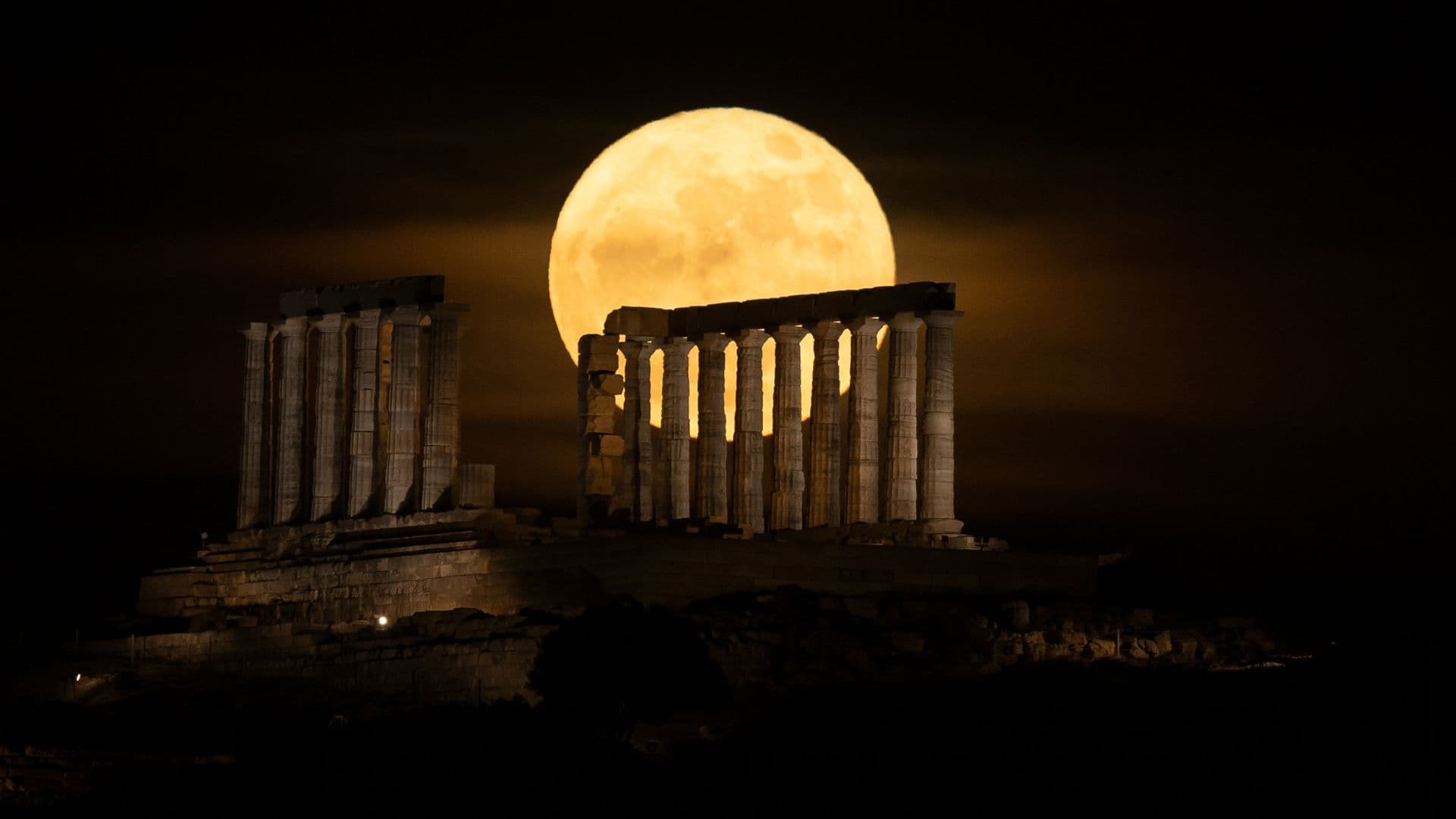
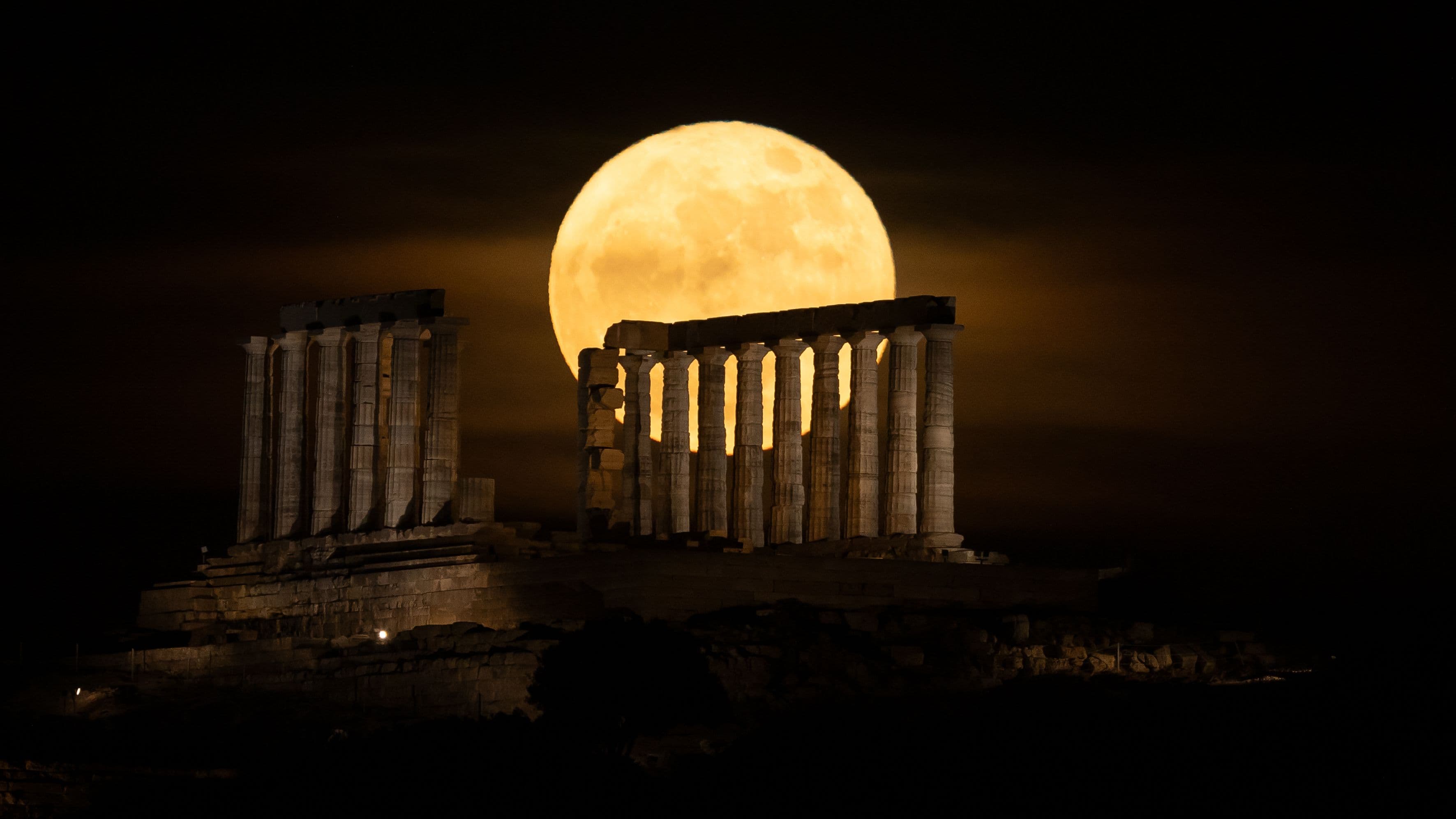
On May 31, Costas Baltas photographed the Blue Moon rising over the ancient Temple of Poseidon at Cape Sounion near Athens, Greece. The yellow moon behind the temple's pillars made for an atmospheric shot connecting the celestial event to ancient history.
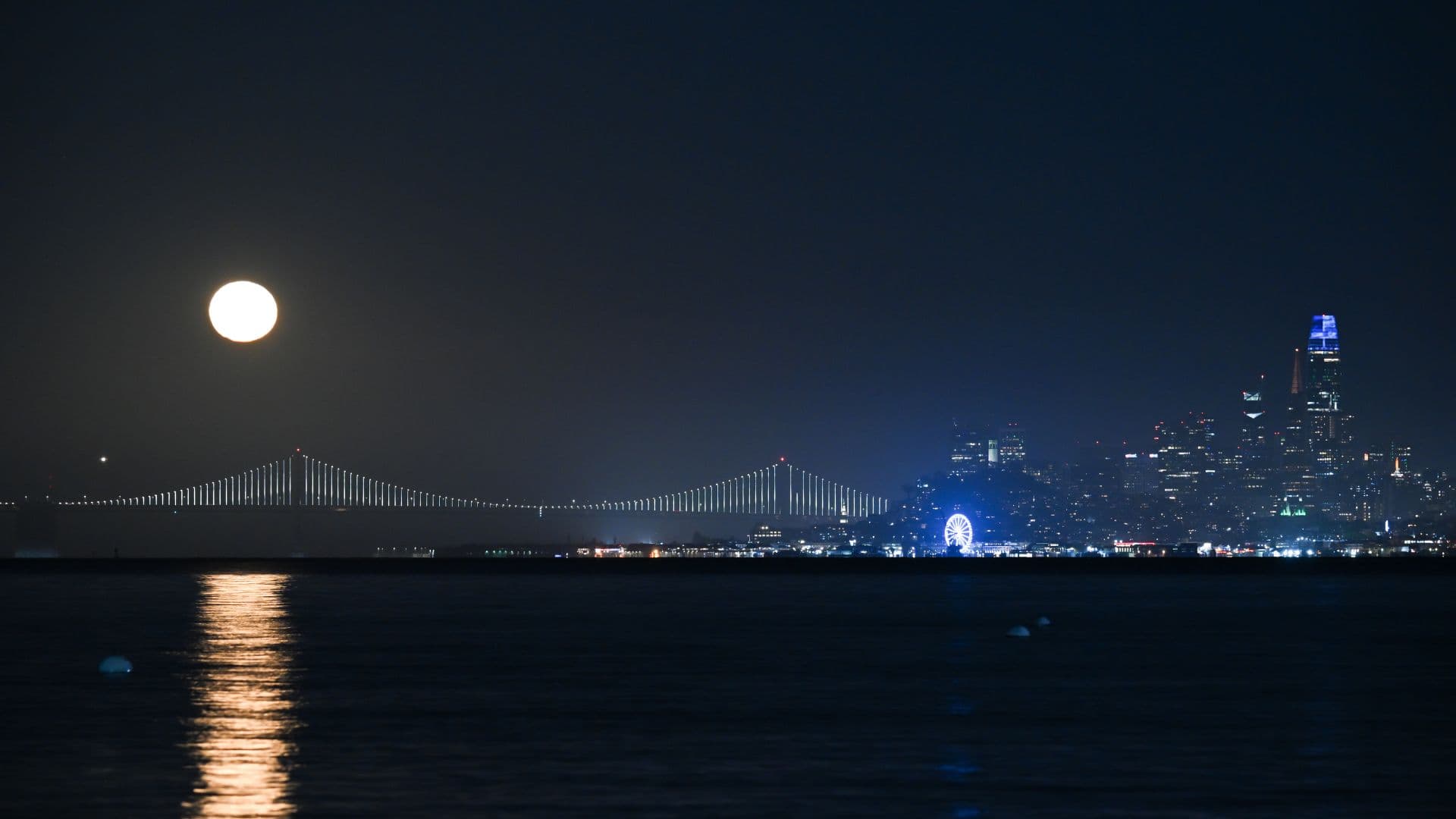
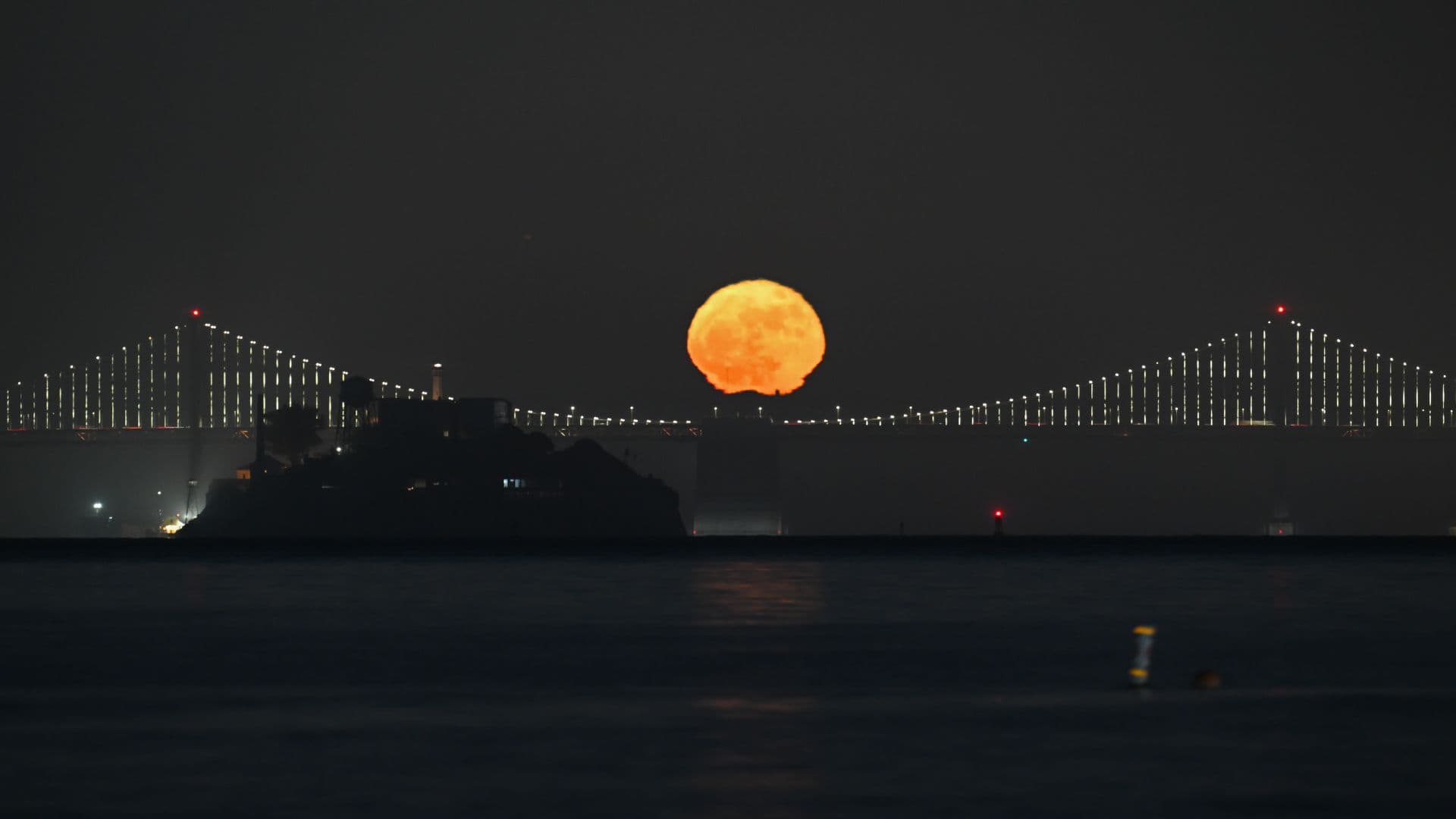
From Sausalito, California, photographer Tayfun Coskun captured the moon rising over San Francisco Bay. Moonlight reflected in the water as the Bay Bridge and the former Alcatraz prison appeared in silhouette.
Social Media Reactions and AI Slop
The event sparked a wave of "expectation vs. reality" memes on Reddit and X. Users contrasted professional long-exposure photography with the blurry dots their smartphone cameras produced. The gap between what photographers captured with telephoto lenses and what most people saw with the naked eye became its own running joke.
Tech communities on HackerNews noted a different problem: AI-generated images flooding social media feeds. These fake, hyper-exaggerated moon photos made it harder to find authentic shots of the event. The phenomenon, often called "slop," has become a recurring issue during major astronomical events.
Logicity's Take
Why It Looked Yellow, Not Blue
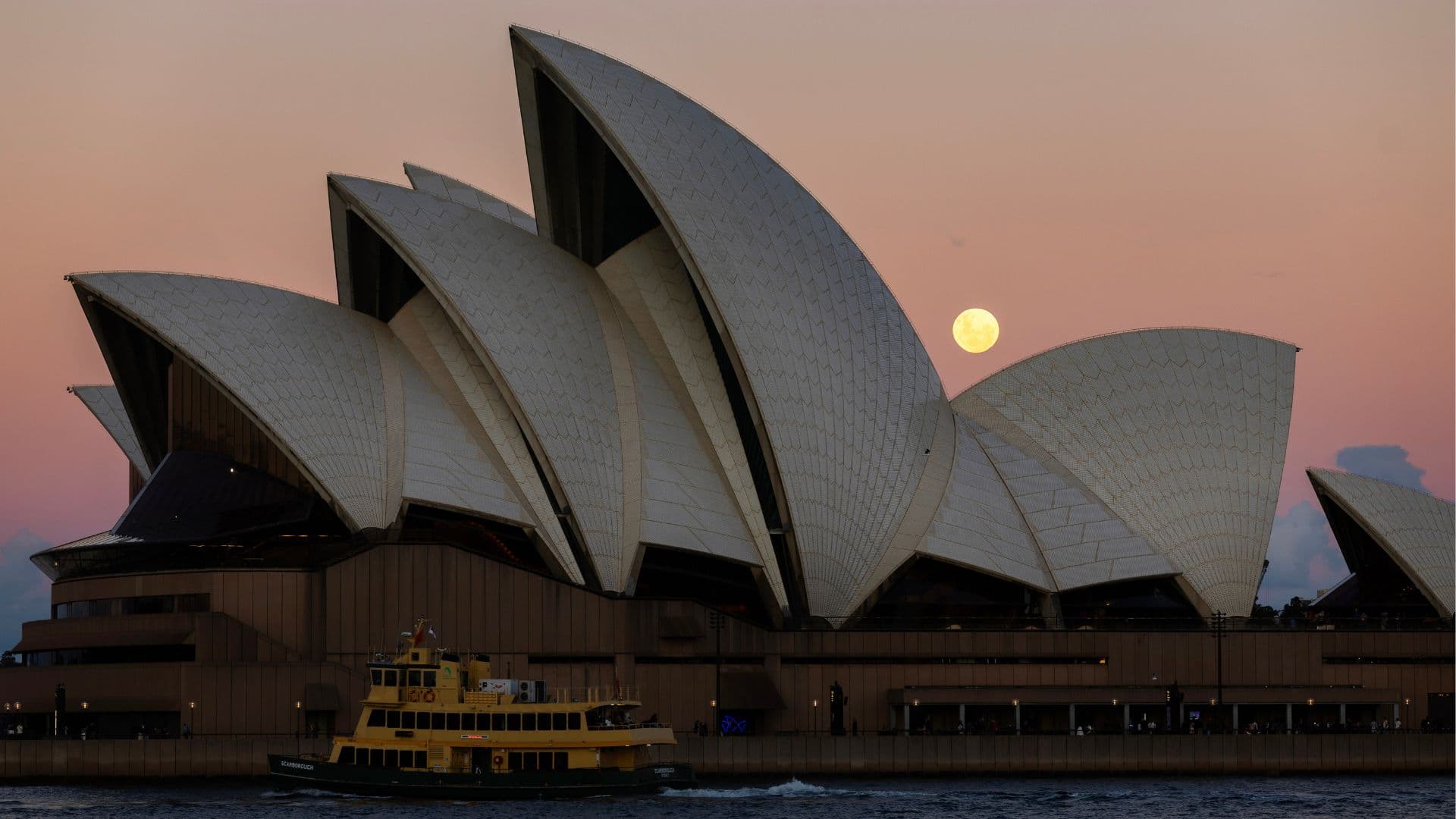
Despite the name, Blue Moons don't actually appear blue. The term is a calendar quirk, not a description of color. When the moon hangs low on the horizon, it often looks yellow or orange because its light passes through more of Earth's atmosphere. Only rare volcanic eruptions or forest fires can scatter particles in ways that make the moon appear genuinely blue.
Frequently Asked Questions
When is the next Blue Moon?
Blue Moons occur roughly every 2.5 years. The next one will depend on how the lunar cycle aligns with upcoming calendar months.
Why was the May 2026 Blue Moon so small?
The moon turned full while at apogee, its farthest point from Earth at 252,506 miles. This made it 7% smaller than an average full moon.
What is the difference between a micromoon and a supermoon?
A micromoon occurs when the full moon is at apogee (farthest from Earth). A supermoon happens when the full moon is at perigee (closest to Earth), appearing up to 14% larger.
Why doesn't a Blue Moon actually look blue?
The name refers to the calendar occurrence, not the color. The moon typically appears yellow or orange near the horizon due to atmospheric scattering.
Need Help Implementing This?
Source: Latest from Space.com
Huma Shazia
Senior AI & Tech Writer
Produced with AI assistance and reviewed by the Logicity editorial team. Learn more in our Editorial Policy.