Key Takeaways
- First Wildcat Lake laptop spotted with 2 Cougar Cove P-cores and 4 Darkmont E-cores
- Four power modes including 11W fanless and 35W PL2 for performance headroom
- 16GB RAM doubles MacBook Neo's 8GB, addressing a key competitor weakness
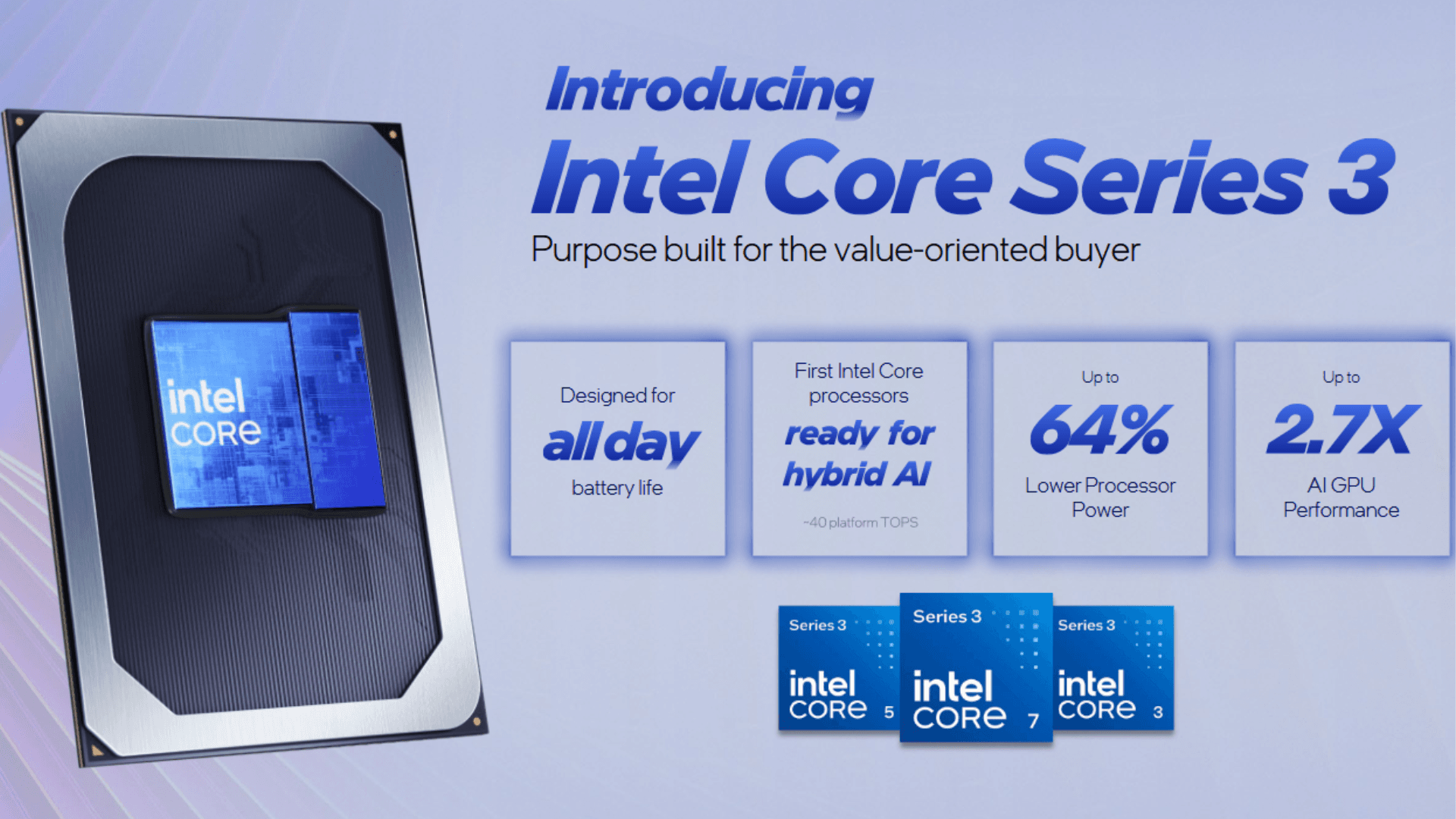
Intel launched its Wildcat Lake processors last week under the "Core Series 3" brand. Until now, no laptop with these chips had appeared in public. That changed when NotebookCheck's Vaidyanathan Subramaniam posted images of an Intel reference design on X.
The machine is the first real look at what could become a MacBook Neo competitor on the Windows side. It's a thin, aluminum-bodied laptop with an 11W fanless mode, positioning it squarely against Apple's ultra-portable.
What's Inside the Wildcat Lake Reference Design
Wildcat Lake is Intel's successor to Twin Lake and represents the company's lowest-end offering this generation. The spotted laptop runs two Cougar Cove P-cores paired with four Darkmont low-power E-cores. Graphics come from up to 2 Xe3 cores for integrated duties.
Intel's full Wildcat Lake lineup includes seven SKUs. One targets edge computing specifically. All chips include a basic NPU for AI tasks, capped at 17 TOPS. That's modest compared to higher-tier chips but sufficient for on-device AI features.
Power Modes and Thermal Design
The reference laptop offers four distinct power configurations: 17W PL1, 22W PL1 Max, 35W PL2, and an 11W fanless mode. That range gives manufacturers flexibility. Budget ultrabooks can run passively cooled at 11W. Performance-focused designs can push to 35W with active cooling.
The 35W ceiling is notable. It suggests some Wildcat Lake laptops could benefit from fans or vapor chambers to extract more performance. That's a different approach than Apple's MacBook Neo, which rarely touches 10W and typically runs between 3-5W during normal tasks.
MacBook Neo Comparison: Where Intel Has an Edge
Task Manager screenshots from the reference laptop show 16GB of RAM. That's double the 8GB Apple offers in the MacBook Neo. The Neo's limited memory becomes a bottleneck the moment you push beyond web browsing or media playback.
The RAM advantage matters more right now given ongoing memory shortages. Getting 16GB in an entry-level Windows machine makes the Wildcat Lake platform more versatile for actual work.
Of the 16GB total, 8.9GB is shared with the integrated GPU. That's a trade-off inherent to integrated graphics but still leaves plenty of headroom for multitasking.
| Specification | Intel Wildcat Lake Reference | MacBook Neo |
|---|---|---|
| Typical Power Draw | 11W-35W range | 3-5W (up to 10W peak) |
| RAM | 16GB | 8GB |
| NPU Performance | 17 TOPS | 38 TOPS (A18 Pro) |
| Chassis | Aluminum | Aluminum |
| Cooling | Fanless mode available, active cooling for higher TDP | Fanless |
Where Apple Still Leads
Apple's A18 Pro inside the MacBook Neo offers more raw NPU power at 38 TOPS versus Intel's 17 TOPS. That gap matters for local AI workloads. The Neo also sips power more efficiently, which translates to longer battery life despite a smaller battery.
Thermal management is another story. Reports indicate the Neo's cooling system struggles to keep the A18 Pro in check. Adding a thermal pad can reduce throttling and improve sustained performance. Intel's higher power budget and available active cooling could provide more consistent performance under load.
Logicity's Take
What Comes Next
This is a reference design, not a retail product. Intel builds these to show OEMs what's possible. Expect laptop makers like Dell, HP, Lenovo, and ASUS to announce their own Wildcat Lake machines in the coming months.
The aluminum chassis and thin profile suggest these chips will power premium-feeling ultrabooks at entry-level prices. That's the segment Apple currently dominates with the MacBook Air and Neo.
For those configuring new laptops with Linux
Frequently Asked Questions
When will Wildcat Lake laptops be available?
Intel launched the Wildcat Lake Core Series 3 chips last week. OEM laptops should arrive in the coming months as manufacturers finalize their designs based on this reference platform.
How does Wildcat Lake compare to MacBook Neo performance?
Wildcat Lake offers more RAM (16GB vs 8GB) and higher power modes for performance. The MacBook Neo has a stronger NPU (38 TOPS vs 17 TOPS) and better power efficiency at 3-5W typical versus Intel's 11-35W range.
What is the fanless mode on Wildcat Lake?
The 11W fanless mode allows the chip to run without active cooling, enabling completely silent operation in thin, passively-cooled laptop designs.
How many cores does Wildcat Lake have?
The spotted reference design has 2 Cougar Cove performance cores and 4 Darkmont efficiency cores, for a total of 6 cores. It also includes 2 Xe3 graphics cores.
Is Wildcat Lake good for AI tasks?
Wildcat Lake includes a basic NPU rated at 17 TOPS. That's sufficient for on-device AI features but trails Apple's A18 Pro at 38 TOPS and higher-tier Intel chips.
Need Help Implementing This?
Source: Latest from Tom's Hardware
Huma Shazia
Senior AI & Tech Writer
Produced with AI assistance and reviewed by the Logicity editorial team. Learn more in our Editorial Policy.