Key Takeaways
- Prototype IoT concepts for $5-20 instead of $500+ enterprise pilots
- Build functional sensors and monitoring systems in under an hour
- Validate smart office automation before committing to vendor lock-in
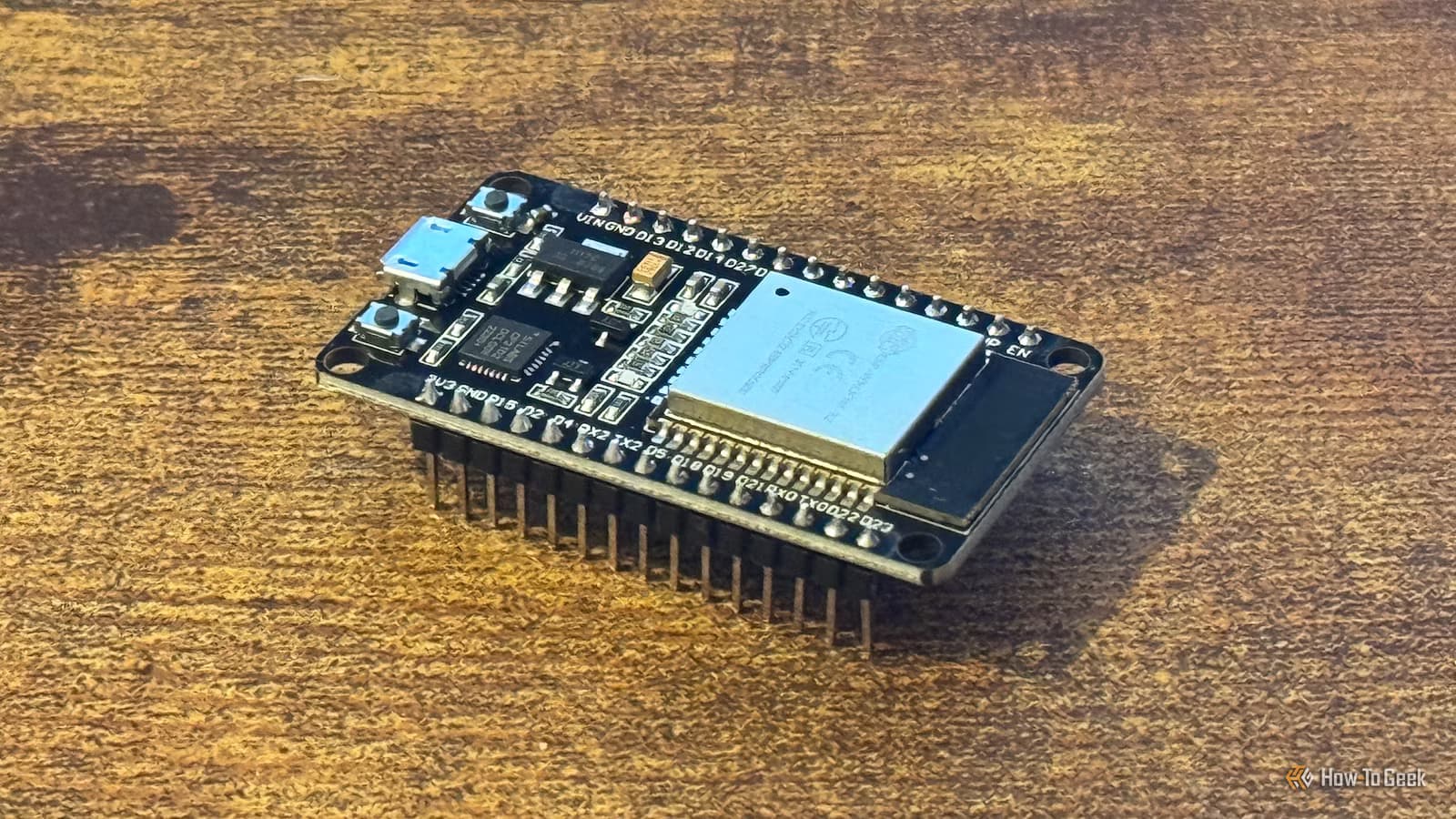
According to [How-To Geek](https://www.howtogeek.com/esp32-projects-you-can-do-in-1-hour/), ESP32 microcontrollers can be assembled into functional IoT devices in under an hour, making them ideal for rapid prototyping. For business leaders evaluating smart office investments or IoT deployments, this $5-10 chip offers something invaluable: the ability to test concepts before signing six-figure vendor contracts.
Here's the business case most technology vendors won't tell you: before you spend $50,000 on an enterprise environmental monitoring system, you can validate the entire concept for the cost of a business lunch. The ESP32 isn't just a hobbyist toy. It's a legitimate prototyping platform that can save your company months of evaluation time and thousands in failed pilot programs.
Why Should CTOs Care About $5 Microcontrollers?
The ESP32's value proposition for business isn't about replacing enterprise solutions. It's about de-risking technology decisions. When your facilities team says they need environmental monitoring across 50 conference rooms, you have two options: sign a $75,000 annual contract with a smart building vendor, or spend $200 and a weekend validating whether the data actually improves operations.
Most smart office projects fail not because the technology doesn't work, but because the business case wasn't validated first. Temperature monitoring sounds great until you realize nobody actually changes behavior based on the data. Occupancy sensors seem essential until you discover your booking system already captures the same information. The ESP32 lets you test these assumptions cheaply.
| Approach | Cost | Time to Deploy | Risk Level | Data Ownership |
|---|---|---|---|---|
| Enterprise Vendor Pilot | $5,000-50,000 | 3-6 months | High (contract lock-in) | Vendor controlled |
| ESP32 Prototype | $50-200 | 1-2 weeks | Low (no commitment) | 100% internal |
| Off-the-shelf Consumer Devices | $500-2,000 | 1-2 weeks | Medium (limited customization) | Mixed |
What Can You Build With ESP32 in One Hour?
The practical applications split into two categories: infrastructure extensions and data collection. Both solve real business problems that typically require expensive vendor solutions.
Bluetooth Infrastructure Extension
Bluetooth's limited range creates dead zones in large offices. Enterprise solutions involve expensive access points and ongoing licensing. An ESP32 Bluetooth proxy costs $5 and extends coverage to wherever you can run a USB cable. For businesses testing Bluetooth asset tracking or occupancy monitoring, this removes infrastructure as a variable before committing to a full deployment.
The setup requires no soldering or wiring. You flash ESPHome firmware, enable the proxy functionality, and connect to your network. If you're already running Home Assistant for facility automation testing, the ESP32 appears as a bridge automatically. This is infrastructure prototyping that used to require a networking vendor's professional services team.
Environmental Monitoring Sensors
Temperature and humidity monitoring drives HVAC optimization, which typically represents 30-40% of commercial building energy costs. Before signing with a building management system vendor, an ESP32 with a $3 sensor can collect the same data. You'll know within weeks whether the information actually enables better decisions.
The BME280 sensor measures temperature, humidity, and barometric pressure. Combined with an ESP32, total parts cost runs under $15. Wire four connections, flash the firmware, and you have data flowing into whatever analytics platform you prefer. The same data that vendors charge $50-100 per sensor per year to provide.
How hardware solutions often outperform software for operational efficiency
How Much Does ESP32 Prototyping Actually Cost?
The hardware costs are almost irrelevant. A Seeed Studio XIAO ESP32-C3 runs $5 from the manufacturer or $10 from Amazon with faster shipping. Sensors add $2-10 depending on capability. The real costs are time and expertise, and that's where the one-hour build promise matters.
- ESP32 development board: $5-15 depending on features and supplier
- Environmental sensors (temperature, humidity): $2-8 each
- Motion/presence sensors: $3-12 each
- Jumper wires and basic supplies: $5 one-time purchase
- Total prototype budget for 5 sensor types: Under $100
Compare this to enterprise pilot programs that require purchase orders, vendor negotiations, and IT security reviews before a single data point gets collected. The ESP32 path lets a facilities manager or operations analyst validate concepts independently, then bring proven results to the budget conversation.
Is ESP32 Worth the Investment for Enterprise Testing?
The investment calculation isn't about the hardware. It's about decision quality. A $50 prototype that prevents a $50,000 failed vendor deployment delivers 1000x ROI. A prototype that validates a concept and accelerates vendor selection by three months might be worth even more.
✅ Pros
- • Validate IoT concepts before vendor commitment
- • Test multiple approaches simultaneously for minimal cost
- • Build institutional knowledge about IoT requirements
- • Avoid vendor lock-in during evaluation phase
- • Collect real data to inform RFP requirements
❌ Cons
- • Requires someone with basic technical comfort
- • Not production-grade for long-term deployment
- • No vendor support or SLAs during prototype phase
- • Security considerations for any network-connected device
The security consideration deserves attention. Any device on your network creates potential exposure. For prototyping, isolate ESP32 devices on a separate VLAN or guest network. This mirrors the segmentation you'd implement for production IoT anyway, so it's good practice rather than extra burden.
Network security fundamentals that apply to any IoT deployment
How Long Does ESP32 Implementation Take?
The one-hour claim is legitimate for someone comfortable with technology but not necessarily a developer. The process involves downloading firmware, connecting the device to Wi-Fi, and adding basic sensor code. YouTube tutorials walk through each step. A facilities manager who's comfortable with spreadsheets can handle this.
The first build takes longest because you're learning the tools. Subsequent sensors might take 20 minutes each. If you're deploying 10 test sensors across a building, budget half a day for someone comfortable with the process. That's still faster than scheduling a vendor demo.
Real Business Applications Beyond Monitoring
Environmental sensors get the most attention, but ESP32 applications extend further. Presence detection can validate hot-desking assumptions. Light sensors can verify whether conference rooms are actually occupied during booked times. Water leak sensors in server rooms or supply closets provide peace of mind for under $15 each.
The pattern that works: identify a question your facilities or operations team can't answer with current data, prototype a sensor that collects relevant information, and make a decision based on evidence rather than vendor presentations. The ESP32 cost is so low that failed experiments carry no penalty.
Another example of simple technical checks that prevent expensive mistakes
Frequently Asked Questions
Frequently Asked Questions
Can ESP32 prototypes connect to enterprise systems?
Yes. ESP32 devices communicate via standard protocols like MQTT and HTTP. They integrate with building management systems, cloud platforms, and custom dashboards. Most enterprise IoT platforms accept data from any device that speaks these protocols.
Is ESP32 secure enough for office deployment?
For prototyping, isolate devices on a separate network segment. ESP32 supports WPA2 encryption and HTTPS connections. Production deployments require proper security review, but prototype testing poses minimal risk when properly segmented.
What technical skills does ESP32 require?
Basic comfort with technology. You'll download software, edit simple configuration files, and connect wires. No programming required for most applications. If you can follow a YouTube tutorial and aren't intimidated by command lines, you can build ESP32 projects.
How reliable are ESP32 sensors compared to commercial products?
The sensors themselves are often identical. Commercial products use the same BME280 and DHT22 sensors available for $3-8 retail. The difference is packaging, support, and integration. For data validation and concept testing, ESP32 builds provide equivalent accuracy.
What's the total cost to prototype smart office monitoring?
Under $200 covers a comprehensive test deployment: 5-10 ESP32 boards, assorted sensors, and basic supplies. This provides environmental monitoring, presence detection, and infrastructure testing capabilities that would cost $5,000+ through enterprise channels.
Logicity's Take
We build AI-powered automation systems for startups, and our honest assessment is this: ESP32 prototyping isn't our core expertise, but the underlying principle absolutely is. We've seen too many businesses commit to expensive SaaS platforms before validating whether the data actually drives decisions. From our work integrating n8n automation workflows and building custom dashboards, we know that the hardest part of any IoT or monitoring project isn't the sensors. It's figuring out what questions you're actually trying to answer. A $50 ESP32 deployment can surface those questions in weeks. A $50,000 vendor contract locks you into their assumptions about what matters. For Indian tech businesses specifically, this approach aligns with the jugaad philosophy that built our industry. Test cheap, validate fast, then invest in production-grade solutions once you know what works. We've applied this same thinking to AI agent deployments and workflow automation. The technology stack differs, but the principle of de-risking decisions through rapid prototyping stays constant.
Need Help Implementing This?
Logicity specializes in automation systems and AI integrations for growing businesses. While we don't build ESP32 sensors, we do build the dashboards, workflows, and AI agents that turn sensor data into business decisions. If you're ready to move from prototype to production, we can help architect systems that scale. Reach out for a conversation about your automation roadmap.
Source: How-To Geek
Huma Shazia
Senior AI & Tech Writer
Produced with AI assistance and reviewed by the Logicity editorial team. Learn more in our Editorial Policy.