Key Takeaways
- ISPs can log and sell every domain your employees visit without consent
- Cloudflare's free WARP app encrypts DNS queries in under 2 minutes per device
- DNS encryption alone won't hide all traffic metadata, so full privacy requires a VPN
According to [MakeUseOf](https://www.makeuseof.com/i-encrypted-my-dns-with-a-free-app-and-it-works-brilliantly/), Cloudflare's free WARP app can encrypt your DNS lookups with a single tap, preventing ISPs and network observers from logging every website you visit. For business leaders, this isn't just a privacy nicety. It's a security baseline your company is probably missing.
Every website visit starts with a DNS lookup. Think of it as your device asking, "Where's example.com?" The problem? That question travels in plaintext by default. Your ISP sees it. Anyone on your network with basic tools sees it. And yes, they can sell that data to advertisers without telling you.
For a CEO or CTO, the business risk is clear: your competitive research, vendor evaluations, and M&A due diligence all leave a trail. DNS encryption closes that gap. And the best part? It's free and takes two minutes.
Why Should Business Leaders Care About DNS Privacy?
Let's cut through the technical jargon. DNS is the internet's phone book. When you type a URL, your device asks a DNS resolver for the IP address. That request, by default, is completely visible to your ISP, your office network admin, and potentially anyone monitoring traffic.
- ISPs log everything: They can see every domain your team visits and share that data with third parties. No consent required in many jurisdictions.
- DNS hijacking is real: ISPs can redirect your traffic for advertising or data collection purposes.
- Browsing patterns reveal strategy: Over time, your DNS queries build a profile. Competitor research, hiring plans, acquisition targets. All visible.
- HTTPS doesn't hide DNS: Even encrypted connections expose the initial domain lookup.
This isn't theoretical. ISPs monetize this data. Your business intelligence leaks through a hole most IT teams don't even know exists.

Executive Summary
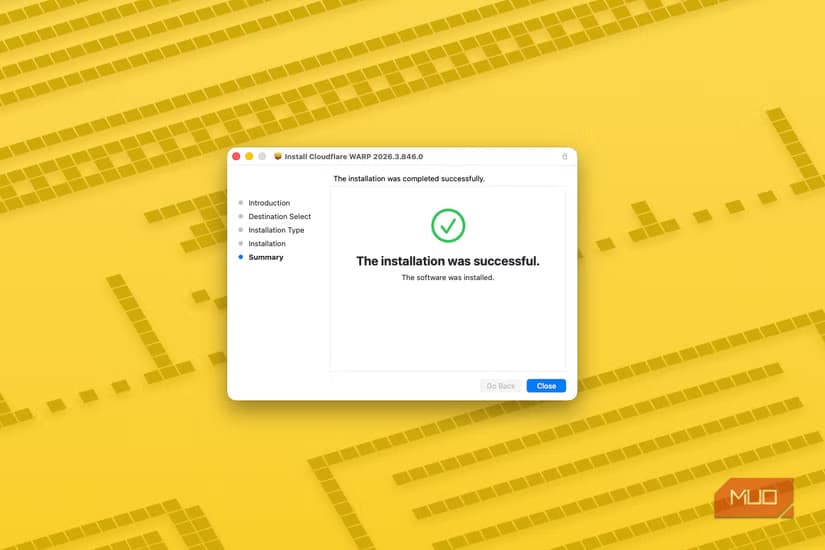
DNS queries expose every website your company visits to ISPs and network observers. Cloudflare's free WARP app encrypts these lookups in under 2 minutes. It works on Windows, Mac, iOS, Android, and Linux. The tradeoff: full traffic privacy still requires a VPN.
How DNS Encryption Works for Enterprise Teams
Cloudflare's 1.1.1.1 with WARP acts like a secure tunnel for your DNS traffic. It installs through your operating system's VPN framework, though Cloudflare avoids calling it a VPN. Fair enough. It's more accurate to call it a privacy layer for DNS queries.
There are two modes that matter for business deployment:
| Mode | What It Does | Best For | Performance Impact |
|---|---|---|---|
| DNS-only (1.1.1.1) | Encrypts only DNS queries | Low-overhead privacy baseline | Minimal battery/CPU hit |
| Full WARP | Encrypts DNS + routes traffic through Cloudflare | Higher privacy needs | Moderate performance impact |
For most business users, DNS-only mode delivers 80% of the privacy benefit with almost zero friction. Full WARP mode adds another layer by routing traffic through Cloudflare's global network, but it's not a replacement for a proper enterprise VPN.
What DNS Encryption Won't Protect You From
Here's where business leaders need realistic expectations. DNS encryption solves one specific problem: hiding your domain lookups from observers. It doesn't make you invisible online.
- ISPs still see IP addresses: They can't see which domain you looked up, but they can see which servers you're connecting to.
- Metadata leaks persist: Connection timing, data volume, and traffic patterns remain visible without a full VPN.
- It's not endpoint security: DNS encryption won't stop malware, phishing, or compromised devices.
- Corporate networks may block it: Some enterprise firewalls require unencrypted DNS for monitoring purposes.
The honest take: DNS encryption is a hygiene fix, not a security silver bullet. It closes one leak in a system with many potential vulnerabilities. For businesses handling sensitive data, this should be one layer in a defense-in-depth strategy.
Another free security tool worth adding to your stack
Cost Analysis: Free vs. Enterprise DNS Solutions
Cloudflare WARP is genuinely free for individual devices. But what about scaling it across a 50-person startup or a 500-person enterprise?
| Solution | Cost | Best For | Key Limitation |
|---|---|---|---|
| Cloudflare WARP (Free) | $0/device | Small teams, BYOD environments | No centralized management |
| Cloudflare Zero Trust (Free tier) | $0 for up to 50 users | Startups, small businesses | Limited features at free tier |
| Cloudflare Zero Trust (Paid) | $7/user/month | Mid-size companies | Requires IT setup |
| Enterprise DNS Security (Cisco, Palo Alto) | $3-10/user/month | Large enterprises | Complex deployment |
For a 50-person startup, Cloudflare's free Zero Trust tier covers basic DNS encryption with some centralized controls. That's a $0 investment for a privacy baseline that would cost $150-500/month with traditional enterprise vendors.
Implementation: 2-Minute Setup for Individual Devices
The simplest deployment path is having each team member install the app themselves. Here's the process:
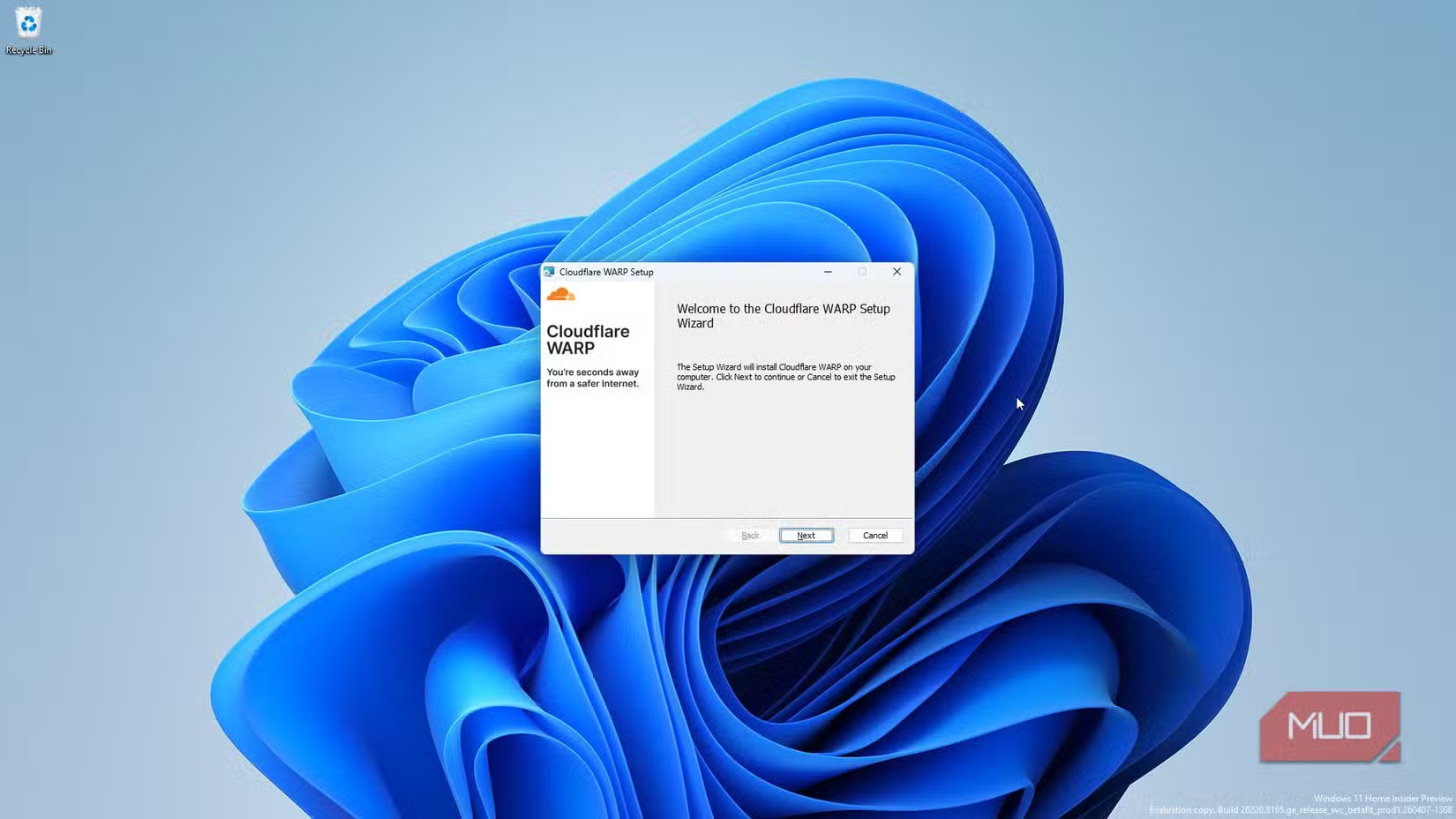
- Download 1.1.1.1 with WARP from your app store (iOS, Android) or Cloudflare's website (Windows, Mac, Linux)
- Open the app and tap the large connect button
- Choose DNS-only mode (1.1.1.1) or Full WARP based on your privacy needs
- That's it. Your DNS queries are now encrypted.
For IT teams wanting centralized control, Cloudflare Zero Trust offers device management, policy enforcement, and logging. But for a quick privacy win, the consumer app deployed across personal and work devices is a reasonable starting point.
Another quick tech fix that saves business time
Strategic Implications: Privacy as Competitive Advantage
Here's the business angle most coverage misses: DNS privacy isn't just about protection. It's about competitive intelligence hygiene.
When your team researches competitors, evaluates acquisition targets, or explores new markets, those DNS queries create a digital trail. An ISP with access to multiple companies' DNS logs could theoretically piece together industry trends, partnership negotiations, or strategic pivots. It's a low-probability risk, but for companies in competitive markets, it's worth closing.
“Every domain you look up is revealed in the DNS query, even if the connection is encrypted via HTTPS. Over time, your browsing patterns can be used to build a profile that's unique to you.”
— MakeUseOf analysis of DNS exposure
For regulated industries like finance, healthcare, or legal services, DNS encryption may also support compliance requirements around data protection. Check with your compliance team, but this is an easy box to tick.
When Full VPN Still Matters More Than DNS Encryption
DNS encryption is a smart baseline, but some scenarios demand more comprehensive protection:
- Remote workers on public WiFi: Coffee shops, airports, and hotel networks are hunting grounds for traffic interception. A full VPN encrypts everything.
- International travel to high-risk countries: Some governments actively monitor DNS traffic. Full tunnel encryption is essential.
- Accessing sensitive internal systems: If you're connecting to corporate resources, enterprise VPN with proper authentication is non-negotiable.
- Regulated data handling: Healthcare, finance, and government contractors often require full traffic encryption for compliance.
The right approach: DNS encryption as the always-on baseline, with full VPN activated for higher-risk situations. Think of it as wearing a seatbelt versus adding airbags. Both help, but they serve different purposes.
More low-friction tech improvements for business teams
Logicity's Take
As an agency that builds secure web applications and handles client data daily, we've seen the DNS blind spot firsthand. Most startups focus on HTTPS, firewalls, and endpoint protection while leaving DNS queries completely exposed. It's like locking your front door but leaving a window open. We've deployed Cloudflare WARP across our internal team as a baseline hygiene measure. The zero-friction setup means no pushback from developers or designers who typically resist security tools that slow them down. For our clients in the Middle East handling Arabic-language content and RTL interfaces, we often recommend DNS encryption as part of a broader privacy posture, especially given regional ISP practices. The honest truth: DNS encryption won't make headlines in your security audit. But it closes a gap that's been open since 1983. For Indian startups handling competitive research or preparing for fundraising due diligence, that two-minute fix is worth the effort. Just don't mistake it for comprehensive security. It's one layer, not the whole stack.
Frequently Asked Questions
Frequently Asked Questions
How much does DNS encryption cost for a business?
Cloudflare WARP is free for individual devices. Cloudflare Zero Trust offers a free tier for up to 50 users with basic features. Paid plans start at $7/user/month for additional controls. Enterprise DNS security from vendors like Cisco or Palo Alto typically runs $3-10/user/month.
Will DNS encryption slow down my network?
DNS-only mode (1.1.1.1) has minimal performance impact. Most users report faster DNS resolution because Cloudflare's network is highly optimized. Full WARP mode adds slight latency since traffic routes through Cloudflare, but it's typically negligible for business applications.
Can my IT team still monitor employee browsing with DNS encryption?
It depends on deployment. If employees use the consumer app, IT loses visibility into DNS queries. For centralized monitoring, deploy Cloudflare Zero Trust or similar enterprise solutions that provide admin dashboards and logging while still encrypting external DNS traffic.
Is DNS encryption enough for compliance (HIPAA, GDPR, SOC 2)?
DNS encryption alone won't satisfy most compliance frameworks, but it contributes to a defense-in-depth posture. Check specific requirements with your compliance advisor. It's generally viewed as a reasonable security measure, not a comprehensive solution.
Should we use DNS encryption or a full VPN?
Both serve different purposes. DNS encryption hides domain lookups with minimal overhead. VPNs encrypt all traffic including metadata. For most business users, DNS encryption is the always-on baseline, with VPN activated for sensitive operations, public WiFi, or international travel.
Need Help Implementing This?
Logicity helps startups and mid-size companies build secure web infrastructure from the ground up. Whether you need DNS encryption deployed across your team, a full Zero Trust architecture, or custom security integrations for your web applications, we can help. Get in touch for a free 30-minute consultation on your security posture.
Source: MakeUseOf
Manaal Khan
Tech & Innovation Writer
Produced with AI assistance and reviewed by the Logicity editorial team. Learn more in our Editorial Policy.