Key Takeaways
- The ESP32-C3 is best for battery-powered projects due to its ultra-low power design
- The ESP32-S3 is the go-to choice for AI/ML projects and camera applications with its dual-core processor and 45 GPIO pins
- The ESP32-C6 adds Zigbee, Thread, and Wi-Fi 6 support, making it ideal for future-proof smart home devices
The ESP32 has shipped over 1.5 billion units globally. That number keeps climbing because these tiny microcontrollers power everything from DIY smart home sensors to retro gaming handhelds. But the original 2016 chip has spawned so many variants that picking one feels like ordering coffee at a specialty shop.
The good news: you only need to consider three main variants for most projects. The C3, S3, and C6 each serve distinct purposes. Understanding those purposes takes about five minutes and will save you from buying the wrong board.
The Original ESP32: Still Relevant?
The "stock" ESP32 arrived in 2016 as a follow-up to the ESP8266. It brought Wi-Fi, Bluetooth 4.2, 520KiB of SRAM, 34 GPIO pins, a temperature sensor, and 448KiB of onboard storage. At the time, it was a minor revolution for hobbyists and product designers who needed wireless connectivity in a cheap, small package.
You can still buy original ESP32 boards, and they work fine for basic projects. But the newer variants offer better features at similar prices. Unless you're maintaining an existing project that requires the original, start with one of the three modern options.
ESP32-C3: The Battery Champion
The ESP32-C3 trades raw power for efficiency. It runs a single-core processor at 160MHz, down from the original's 240MHz dual-core. It has fewer GPIO pins than the base model. These cuts serve a purpose: the C3 sips power.
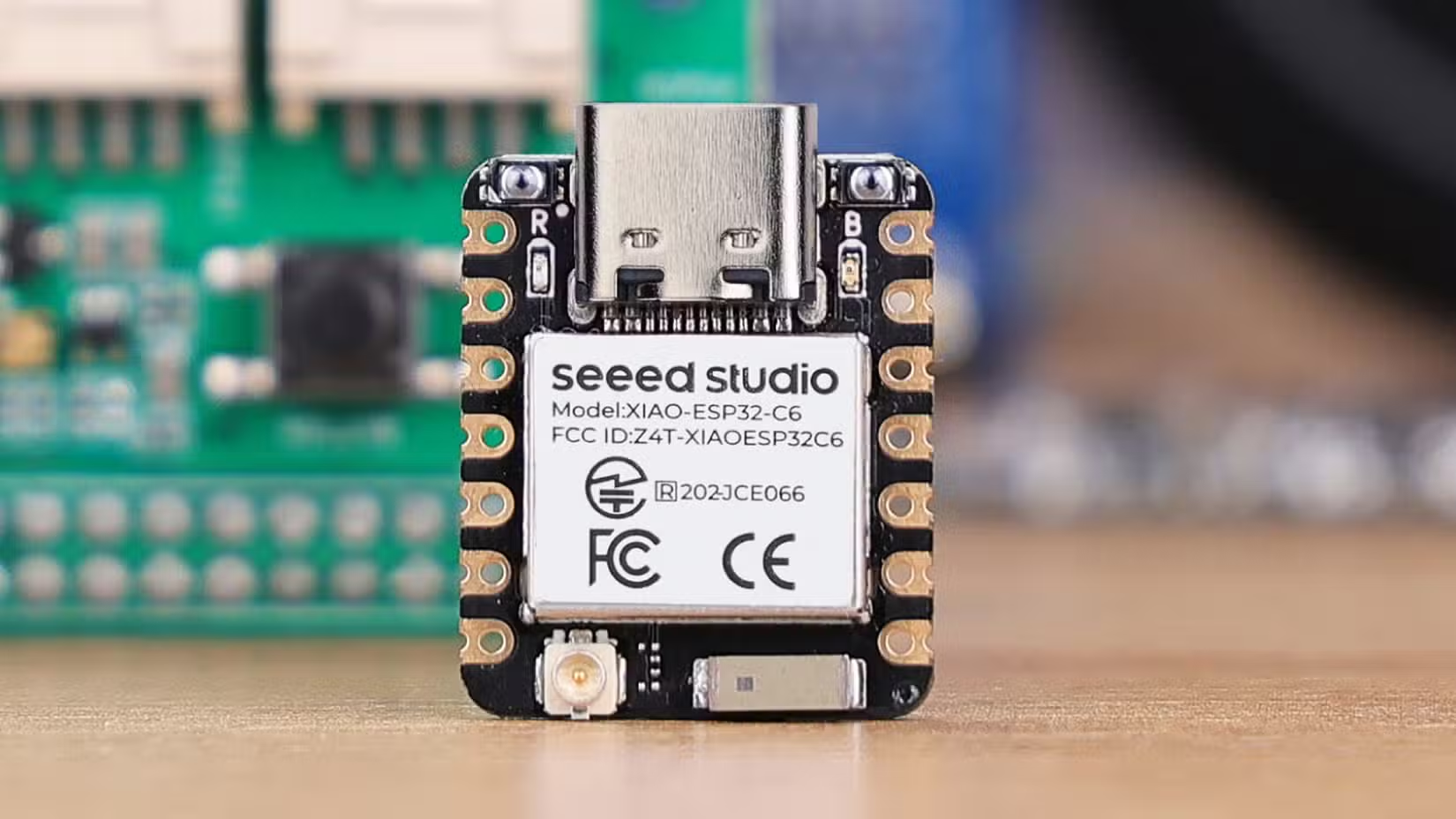
If your project runs on batteries, the C3 is your board. Wireless sensors that need to last months on a coin cell. Portable devices that can't be plugged into a wall. Environmental monitors deployed in remote locations. The C3 handles all of these while keeping power consumption minimal.
The C3 also marks Espressif's shift toward RISC-V architecture. This matters because RISC-V is open source, which keeps costs down and simplifies licensing. Future ESP32 variants will likely follow this path.
ESP32-S3: The Workhorse
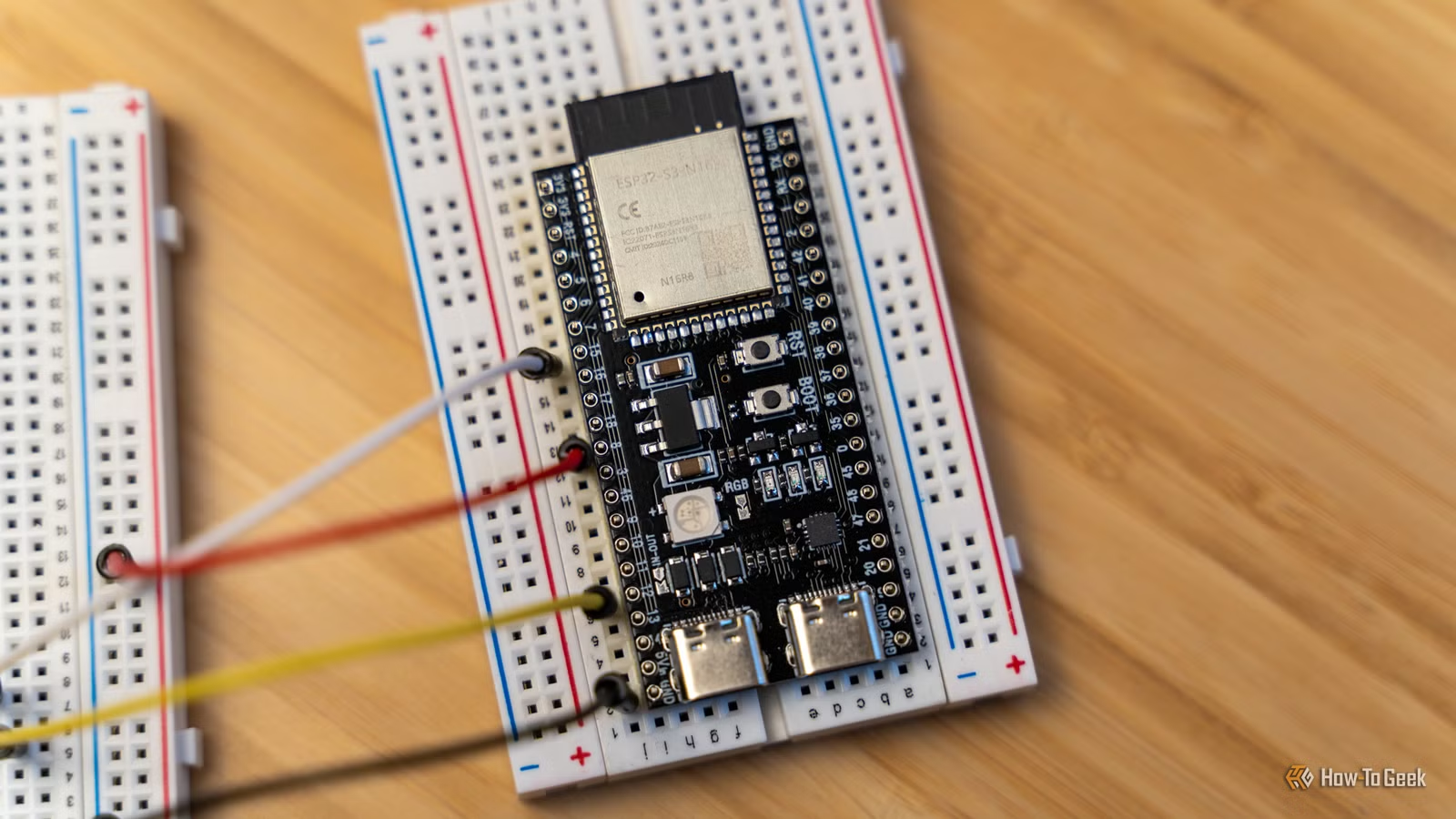
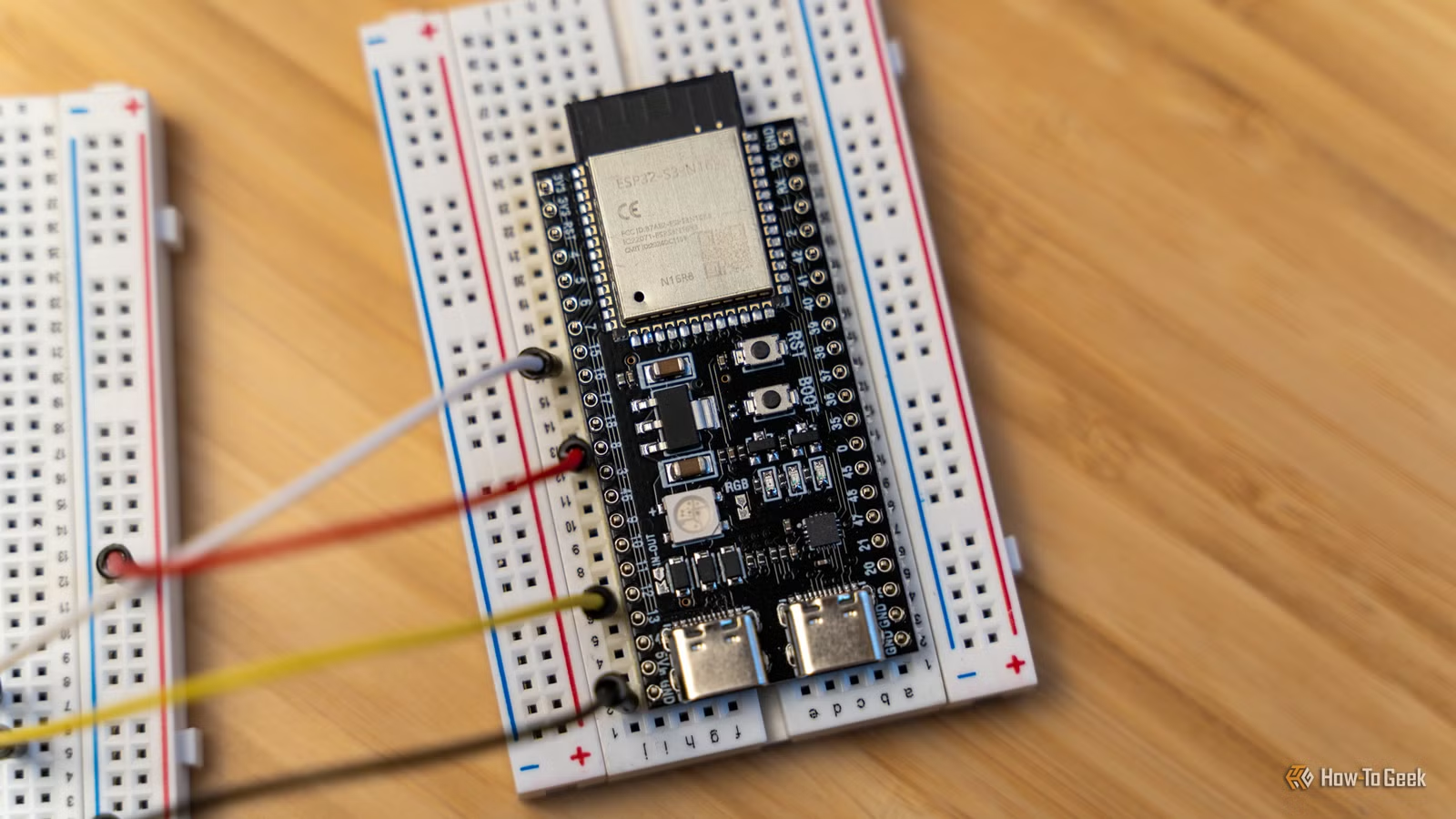
The ESP32-S3 sits at the opposite end of the spectrum. It packs a dual-core processor, 45 GPIO pins, native USB support, and hardware acceleration for machine learning tasks. If the C3 is a fuel-efficient sedan, the S3 is a pickup truck.
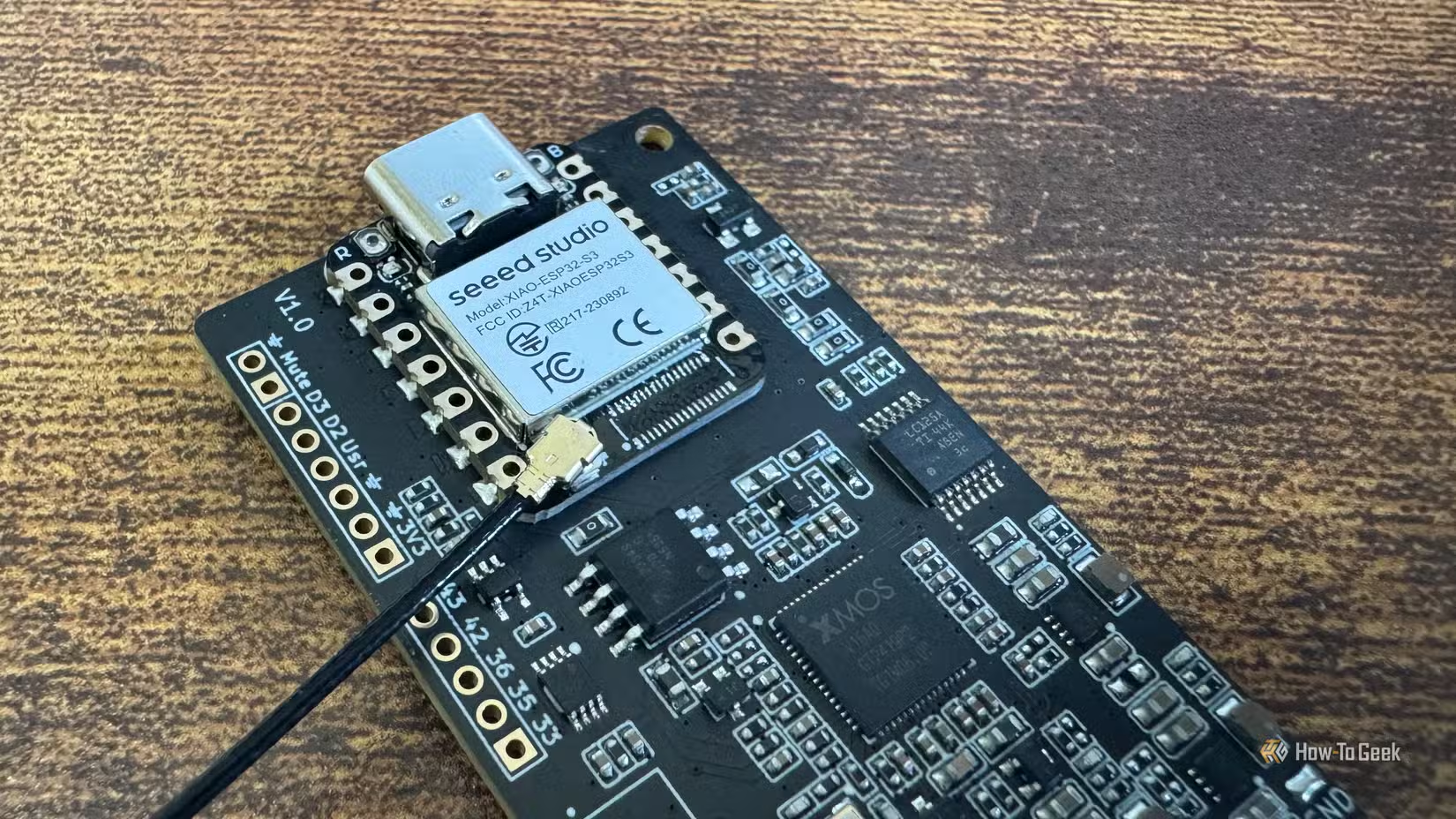
Camera support sets the S3 apart from its siblings. Projects involving image capture, video streaming, or computer vision need the S3's processing muscle and dedicated camera interface. Voice assistants, AI-powered sensors, and edge computing applications also benefit from the S3's capabilities.
“The ESP32-S3 is the workhorse of the modern maker movement; buy this if you aren't sure which one you need.”
— Community consensus, r/esp32
The S3 costs more than the C3 and draws more power. Those tradeoffs make sense when you need the extra performance. They don't make sense for a battery-powered temperature sensor that wakes up once per hour.
ESP32-C6: Built for Smart Homes
The ESP32-C6 arrived in 2025 with a specific mission: make smart home development easier. It adds Zigbee and Thread support alongside traditional Wi-Fi and Bluetooth. More importantly, it supports Matter, the new interoperability standard that lets smart home devices work across ecosystems.
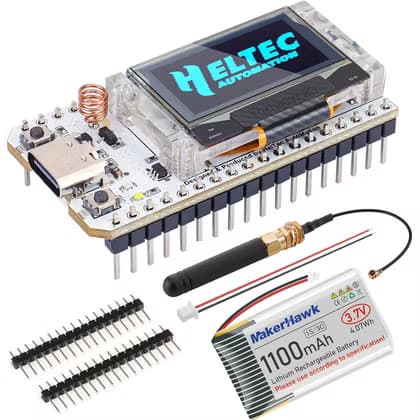
Thread is particularly significant. It creates mesh networks where devices relay signals to each other, extending range and improving reliability. A Thread-based smart home doesn't depend on a single hub staying online. The C6 can act as both a Thread endpoint and a Thread border router.
The C6 also brings Wi-Fi 6 to the ESP32 lineup. Wi-Fi 6 handles congested networks better than previous versions, a real benefit in homes packed with connected devices. If you're building sensors, switches, or controllers destined for smart home use, the C6 is the obvious choice.
Quick Comparison
| Feature | ESP32-C3 | ESP32-S3 | ESP32-C6 |
|---|---|---|---|
| Processor | Single-core 160MHz | Dual-core 240MHz | Single-core 160MHz |
| Architecture | RISC-V | Xtensa | RISC-V |
| GPIO Pins | 22 | 45 | 30 |
| Camera Support | No | Yes | No |
| AI/ML Acceleration | No | Yes | No |
| Wi-Fi 6 | No | No | Yes |
| Zigbee/Thread | No | No | Yes |
| Power Efficiency | Excellent | Moderate | Good |
| Best For | Battery devices | AI/camera projects | Smart home |
The RISC-V Transition
Espressif is moving away from the proprietary Xtensa architecture toward open-source RISC-V. The C3, C6, and upcoming variants all use RISC-V cores. This shift has strategic implications.
“RISC-V is the way forward for the company. Unless we have some special needs for something else, that I don't see now.”
— Teo Swee Ann, CEO of Espressif Systems
For most hobbyists and product developers, the architecture change is invisible. Your code still runs. Your projects still work. But the open nature of RISC-V means lower costs over time and broader ecosystem support.
What About the ESP32-P4?
Espressif announced the ESP32-P4 as their highest-performance chip yet. It runs dual cores at 400MHz, nearly double the original ESP32's clock speed. The P4 targets applications requiring serious local processing: advanced AI inference, complex user interfaces, and industrial automation.
The P4 is overkill for typical maker projects. Its price point and complexity put it in a different category. Think of it as Espressif's answer to more powerful single-board computers, not a replacement for the C3, S3, or C6 in everyday use.
Decision Framework
Picking the right ESP32 comes down to three questions:
- Does your project run on batteries? If yes, start with the C3.
- Does your project need a camera, AI features, or heavy processing? If yes, go with the S3.
- Does your project connect to smart home systems or need Zigbee/Thread? If yes, choose the C6.
If your project doesn't fit any of these categories clearly, the S3 offers the most flexibility. Its higher GPIO count, native USB, and processing power handle a wide range of applications. You pay a bit more and use a bit more power, but you're unlikely to hit limitations.
Where to Buy
Development boards based on these chips come from dozens of manufacturers. Seeed Studio's XIAO series offers compact, well-documented options. Adafruit and SparkFun sell quality boards with extensive tutorials. AliExpress and Amazon carry cheaper alternatives that work fine for experimentation.
Expect to pay $5 to $15 for most development boards. The S3 variants with cameras or additional features run higher. Buying in bulk drops the per-unit price significantly, relevant if you're prototyping a product for manufacturing.
Logicity's Take
Frequently Asked Questions
Can I use an ESP32-C3 for smart home projects?
Yes, but the C6 is better suited. The C3 lacks native Zigbee and Thread support, which are increasingly important for Matter-compatible smart home devices. The C3 works fine for Wi-Fi-only smart home projects.
Is the original ESP32 still worth buying?
Only for maintaining existing projects. The newer C3, S3, and C6 variants offer better features at similar prices. New projects should start with one of these three.
Which ESP32 is best for beginners?
The ESP32-S3 offers the most flexibility and has native USB support, which simplifies programming. Reddit's r/esp32 community consistently recommends it as the default choice for people who aren't sure what they need.
How many ESP32 chips has Espressif shipped?
Over 1.5 billion units cumulatively as of late 2025, with approximately 500 million units shipping annually.
What is the difference between RISC-V and Xtensa ESP32 chips?
RISC-V is an open-source architecture used in newer chips like the C3 and C6. Xtensa is proprietary and used in the original ESP32 and S3. For most users, the difference is invisible. Code runs on both.
Another tool-focused guide for technically minded readers
Need Help Implementing This?
Source: How-To Geek
Manaal Khan
Tech & Innovation Writer
Produced with AI assistance and reviewed by the Logicity editorial team. Learn more in our Editorial Policy.