Key Takeaways
- 3D-printed cases let you turn a Raspberry Pi running RetroPie into convincing retro console replicas
- Projects range from simple snap-on NES cases to full Game Boy-style handheld builds with custom electronics
- Multicolor 3D printers make these builds easier, though single-color filament works with some post-processing
Retro Cases for Your RetroPie Setup
If you own a Raspberry Pi and a 3D printer, you've probably already thought about combining them. The most popular use case? Printing a custom enclosure for your Pi. But if you're running RetroPie or one of its alternatives, you can go beyond a plain box and build something that looks like the consoles you grew up with.
These projects range from quick weekend prints to more involved builds that add custom electronics for analog video output or working cartridge mechanisms. Here are five approaches worth considering.
1. Mini NES or SNES-Style Console Case
The simplest starting point is a snap-on case that makes your Pi look like a miniature NES or SNES. Designs like the NES-inspired model by That_Guy on Maker World give your RetroPie setup an instant nostalgia boost without requiring extra wiring or components.
These cases work best with a multicolor 3D printer since the classic NES gray-and-black color scheme requires multiple filaments. If you're using a single-color printer, you'll need to print in sections and assemble, or plan for some painting.
2. Game Boy-Style Handheld Build
Handheld emulator consoles have become popular, but you can build your own using a Raspberry Pi and a 3D-printed shell. These "Game Man" style projects (legally distinct, of course) house a Pi, a small display, controls, and a battery pack in a form factor that fits adult hands better than the original Game Boy.
This is a more involved build. You'll need to source a compatible screen, buttons, and a power management board. The 3D-printed shell ties it all together, but expect to spend time on wiring and software configuration.
3. Working Cartridge Slot Mechanism
For maximum authenticity, some builders add decorative or functional cartridge slots to their console cases. These can be purely aesthetic, or you can wire them to work as game selectors using RFID chips embedded in 3D-printed cartridges.
The RFID approach requires an additional reader module connected to the Pi, but it adds a tactile element to game selection that menus can't match.
4. Arcade Fight Stick Enclosure
If fighting games are your focus, you can 3D print a full arcade-style fight stick housing for your Pi. These designs accommodate authentic arcade buttons and joysticks, with the Pi handling emulation inside the case.
The advantage over commercial fight sticks: you can customize the button layout, add extra controls, and swap components as needed.
5. Analog Video Output Console
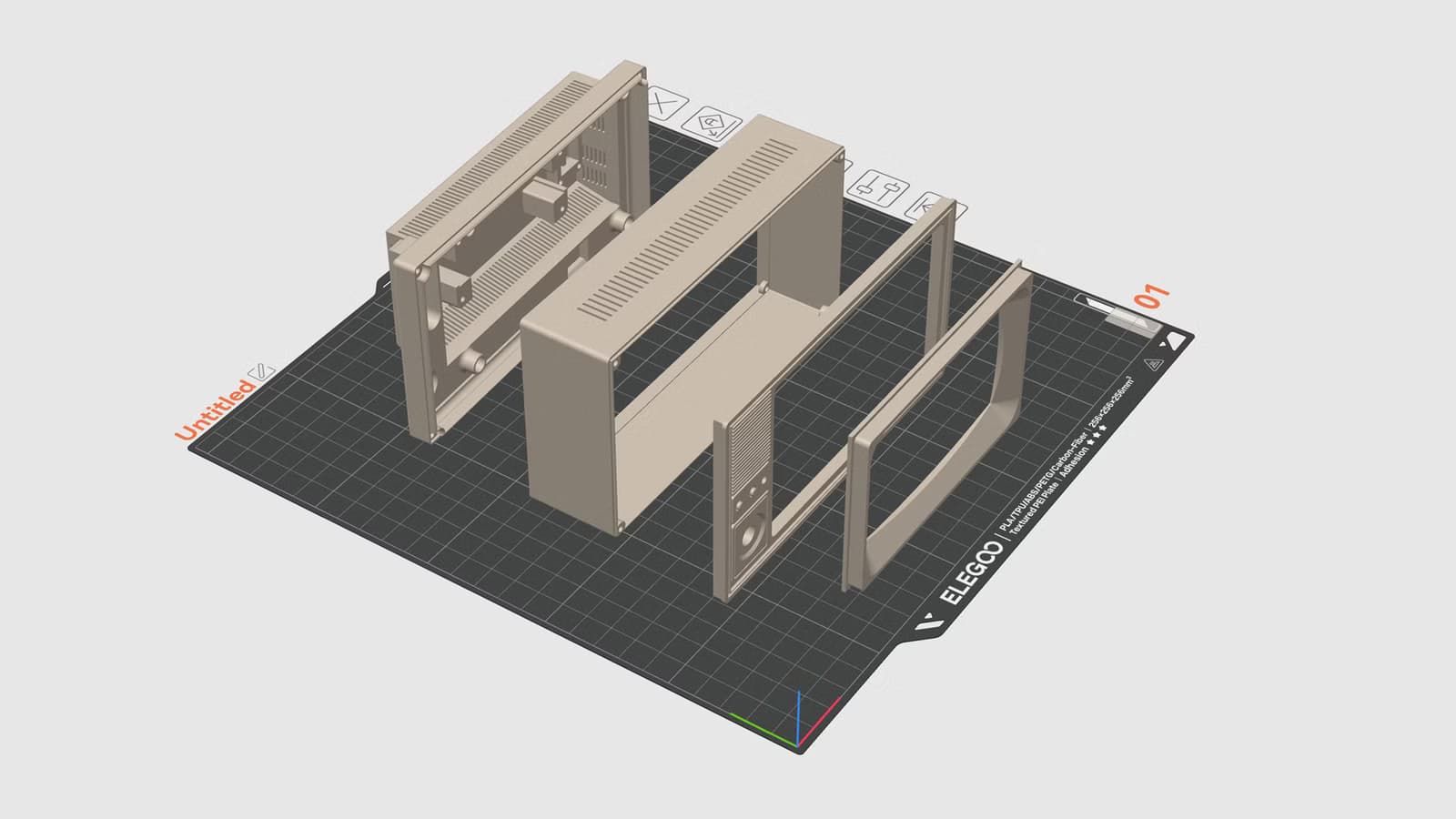
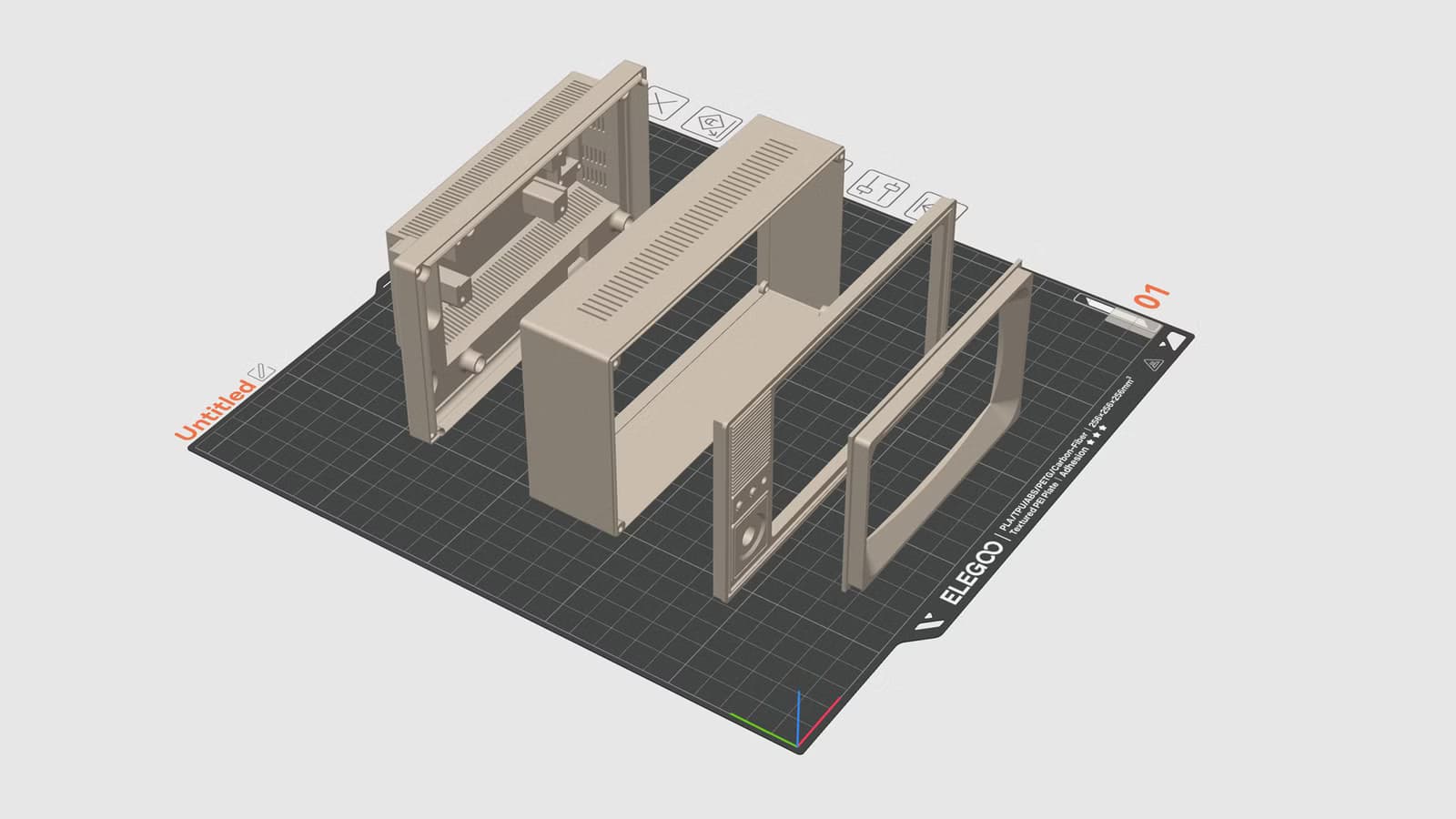
Some retro purists want their games displayed on CRT televisions for authentic scanlines and input lag characteristics. Certain 3D-printed console cases include space for analog video converter boards that output composite or S-Video signals.
This requires additional electronics beyond the Pi itself, but the result is a self-contained unit that connects to vintage displays without adapters hanging off the back.
Printer Considerations
Most of these projects work on any FDM printer with a 200mm or larger build volume. Multicolor capability makes life easier for console-accurate color schemes. The ELEGOO Centauri Carbon 2, priced at $449, offers multicolor printing with a 256 × 256 × 256 mm build volume and speeds up to 500 mm/s.
If you don't own a printer, local makerspaces and print farms can handle these projects. Most designs are available as free downloads on Maker World, Thingiverse, or Printables.
For embedded projects that need Wi-Fi but not a full Linux stack
Logicity's Take
Frequently Asked Questions
What Raspberry Pi model works best for RetroPie?
The Raspberry Pi 4 or Pi 5 handle most retro systems through PS1 and N64. Older Pis work fine for 8-bit and 16-bit emulation.
Can I print these cases without a multicolor printer?
Yes. Print in sections with different filament colors, or print in one color and paint afterward. Some designs include separate parts specifically for single-color printers.
Where can I download 3D models for retro Pi cases?
Maker World, Thingiverse, and Printables all have free designs. Search for 'RetroPie case' or specific console names like 'NES Raspberry Pi case.'
Do I need electronics skills for these projects?
Basic snap-on cases need no electronics work. Handheld builds and analog video projects require soldering and wiring knowledge.
Need Help Implementing This?
Source: How-To Geek
Huma Shazia
Senior AI & Tech Writer
Produced with AI assistance and reviewed by the Logicity editorial team. Learn more in our Editorial Policy.