Key Takeaways
- ESA baked the 115-foot parachute at 257°F for 36 hours to eliminate microorganisms
- The ExoMars Rosalind Franklin rover launches to Mars in 2028 to search for signs of life
- Planetary protection prevents Earth microbes from contaminating Mars and skewing biosignature research
Why ESA Baked a Parachute Like a Cake
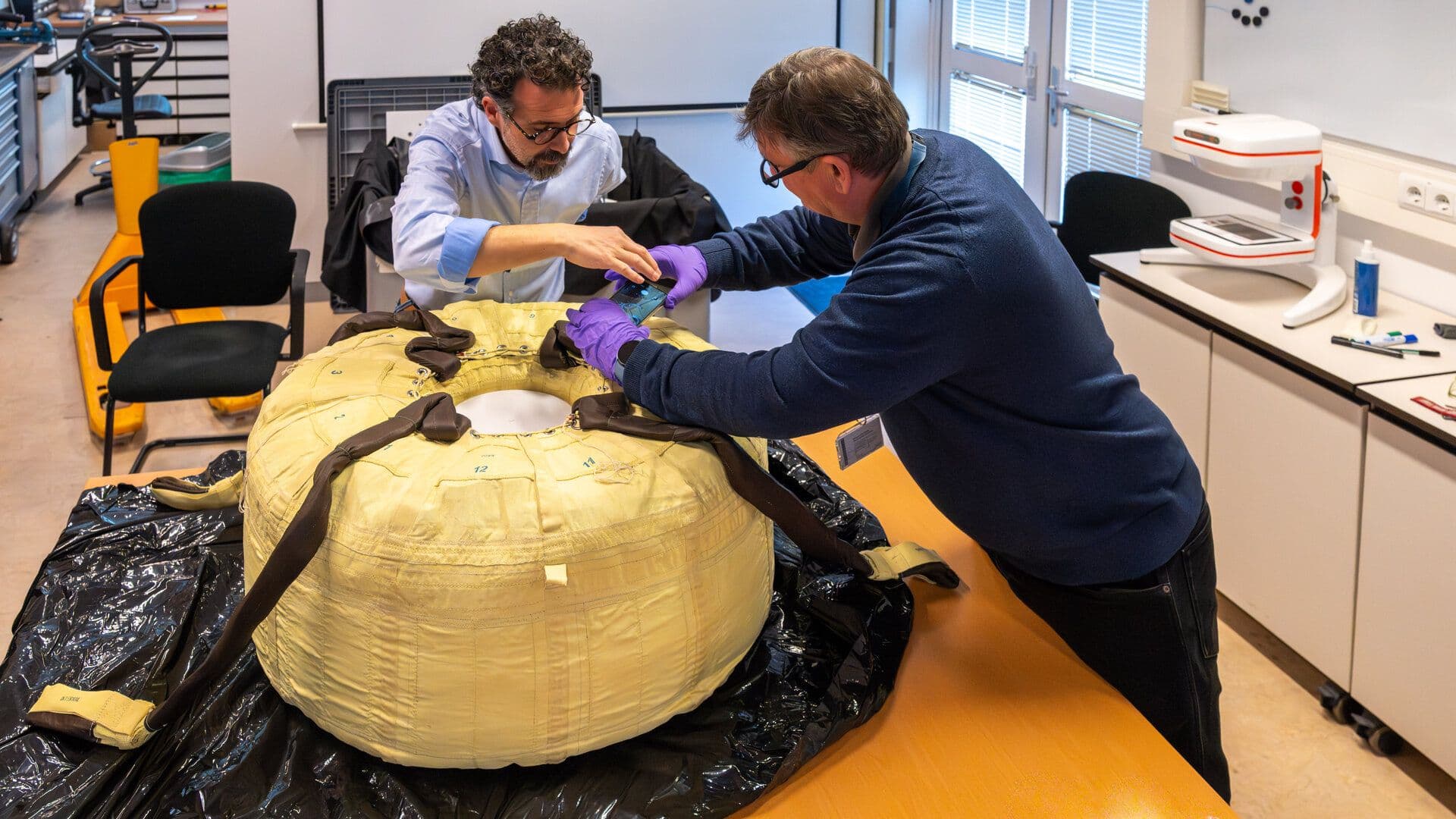
It looks like a giant donut. It's actually a 115-foot parachute destined for Mars. And yes, the European Space Agency literally baked it in an oven.
The parachute, measuring nearly 35 meters across and weighing 163 pounds (74 kilograms), will help slow down the ExoMars Rosalind Franklin rover when it descends through the Martian atmosphere. The rover is scheduled to launch in 2028 and spend at least two years searching for signs of life on the Red Planet.
But before this massive piece of nylon and Kevlar fabric can leave Earth, it had to undergo a critical process: planetary protection sterilization. The goal? Make sure no microscopic stowaways from Earth contaminate Mars.
The Sterilization Process
ESA's team wrapped the parachute in a donut-shaped bag and placed it in a specialized oven at the agency's Life Support and Physical Sciences Laboratory in the Netherlands. The facility operates as a secure clean room to prevent recontamination.
The process took longer than you might expect. First came a 50-hour preheating phase. Then the actual baking: 36 hours at 257 degrees Fahrenheit (125 degrees Celsius). This extended time ensures heat penetrates every layer and corner of the massive gear.
After baking, the team let the parachute cool down before wrapping it for storage. It will remain sealed and sterile until integration with the spacecraft.
Why Planetary Protection Matters
The question of whether life exists or ever existed on Mars is one of the biggest in planetary science. NASA's Curiosity rover has spotted organic material on Mars. The Perseverance rover has found possible biosignatures. Scientists are closer than ever to answering this fundamental question.
But here's the problem: if we accidentally carry Earth microbes to Mars on our spacecraft, we could contaminate the very environment we're trying to study. Worse, we might mistake Earth life for Martian life.
This isn't paranoia. Microorganisms are remarkably resilient. Some bacteria can survive extreme temperatures, radiation, and vacuum conditions. A single unsterilized component could compromise years of research and billions in mission costs.
The ExoMars Rosalind Franklin Mission
The Rosalind Franklin rover, named after the British chemist whose work was crucial to understanding DNA structure, represents ESA's flagship Mars exploration effort. The mission has faced delays but is now targeting a 2028 launch.
Once on Mars, the rover will drill up to 2 meters below the surface. This depth matters because subsurface material is protected from the harsh radiation that bombards the Martian surface. Any organic compounds or biosignatures would be better preserved there.
The parachute will play a critical role in the landing sequence. At 115 feet across, it's one of the largest parachutes ever built for a Mars mission. It needs to slow the descent vehicle enough for the landing system to take over for the final approach.
Logicity's Take
Frequently Asked Questions
Frequently Asked Questions
Why can't ESA just use chemical sterilization on the parachute?
Chemical sterilization could damage the nylon and Kevlar fabrics or leave residues that affect performance. Dry heat penetrates all layers without degrading the materials when done at the right temperature.
When does the ExoMars Rosalind Franklin rover launch?
The mission is scheduled to launch in 2028. The rover will spend at least two years exploring the Martian surface and drilling for subsurface samples.
How big is the ExoMars parachute compared to other Mars missions?
At 115 feet (35 meters) across, it's among the largest Mars parachutes ever built. For comparison, the Perseverance rover's parachute measured about 70 feet in diameter.
What is planetary protection in space missions?
Planetary protection refers to protocols that prevent biological contamination between Earth and other celestial bodies. This protects both potential extraterrestrial life and Earth's biosphere from cross-contamination.
Has Earth life ever contaminated another planet?
No confirmed cases exist, but concerns remain. Israel's Beresheet lander crashed on the Moon in 2019 carrying tardigrades, though the Moon is considered lifeless. Mars missions follow stricter protocols because of the planet's potential habitability.
Need Help Implementing This?
Source: Latest from Space.com
Huma Shazia
Senior AI & Tech Writer
Produced with AI assistance and reviewed by the Logicity editorial team. Learn more in our Editorial Policy.