Key Takeaways
- Replace $50+/month in streaming subscriptions with a one-time $30 investment
- Free streaming apps now offer 4K, HDR, and Dolby Vision quality
- Business applications include office lounges, waiting rooms, and employee benefits
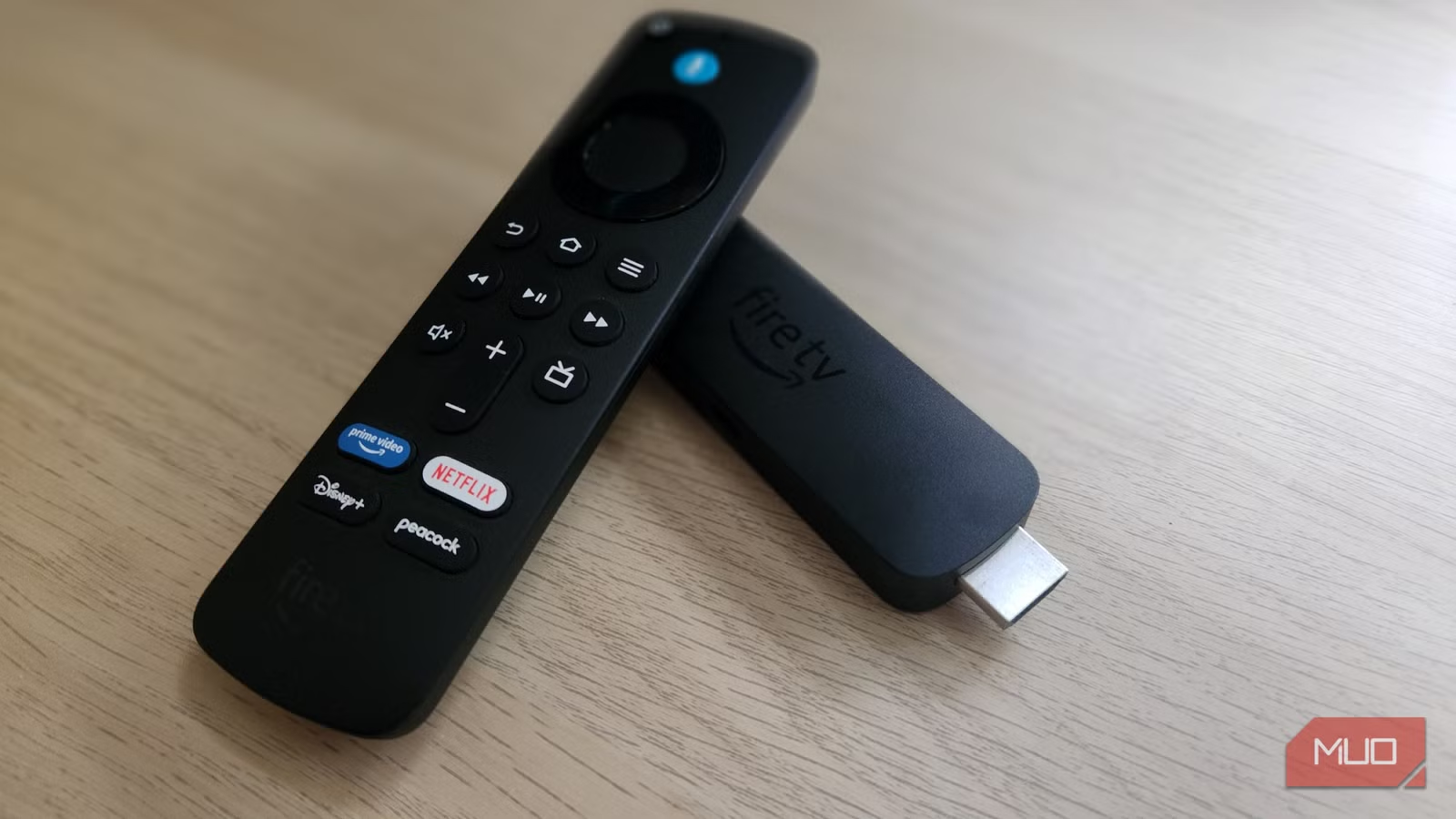
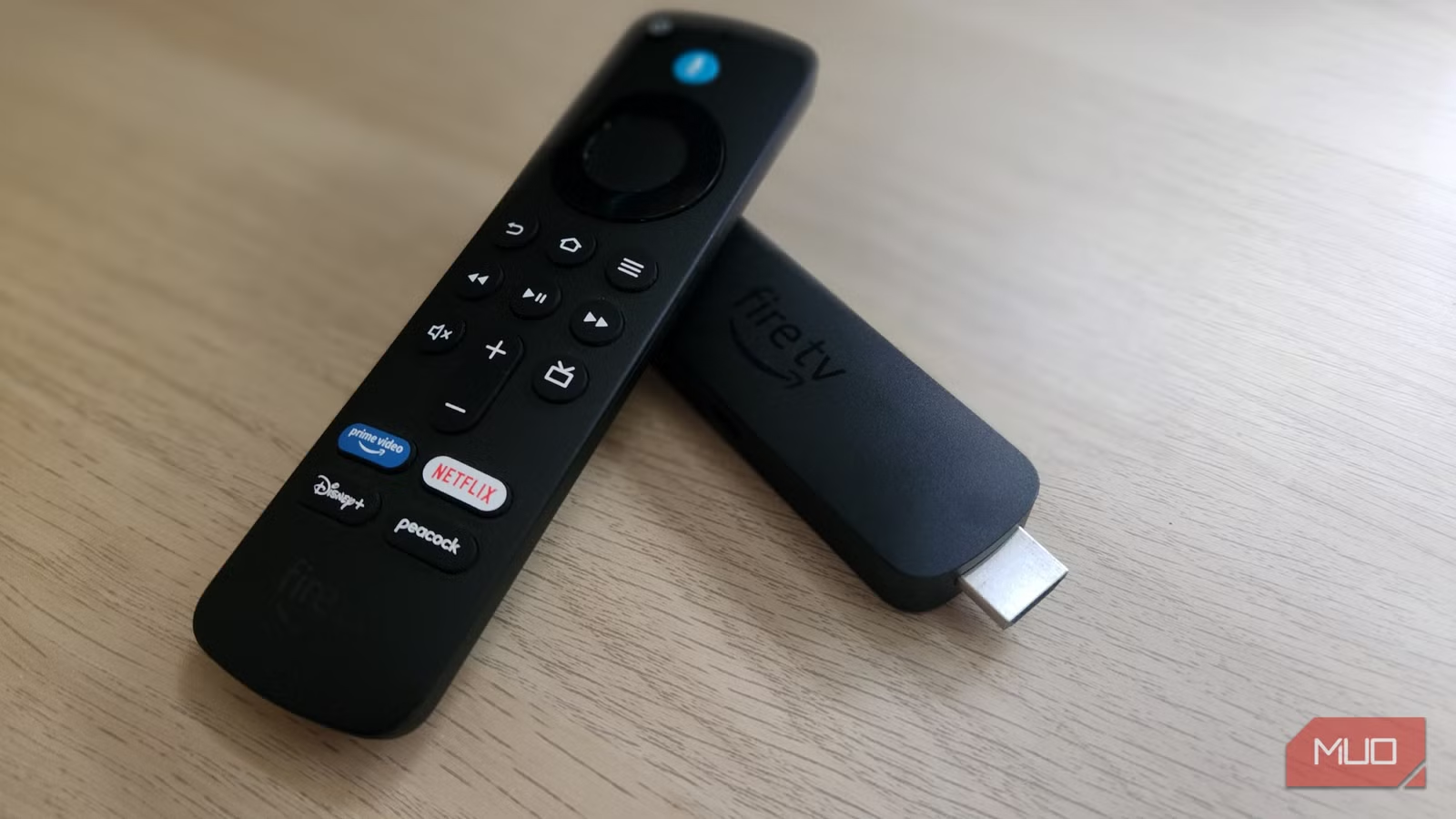
According to [MakeUseOf](https://www.makeuseof.com/i-replaced-my-entire-streaming-setup-with-a-30-device-and-free-apps/), a tech journalist replaced his entire paid streaming setup with a $30 Amazon Fire TV Stick and free apps, proving that subscription fatigue has a practical solution. For business leaders watching entertainment expenses creep into office budgets, employee perks, and client-facing spaces, this finding deserves attention.
Read in Short
The average household spends $61/month on streaming subscriptions. A $30 Fire TV Stick with free apps like Tubi, Pluto TV, and Freevee delivers comparable content at 95% lower annual cost. For businesses running displays in offices, lobbies, or break rooms, this translates to thousands saved annually across multiple locations.
Why Are Streaming Costs Rising So Fast?
Every major streaming platform raised prices in the past 18 months. Netflix's ad-free tier now costs $22.99. Disney+ hit $15.99. Max (formerly HBO Max) charges $16.99. Stack three or four services for a complete content library, and you're looking at $60-80 monthly before anyone watches a single show.
For businesses, these costs multiply quickly. A company with five office locations running streaming content in break rooms or lobbies pays $3,600-4,800 annually just for basic entertainment access. That's money that could fund better coffee, team events, or actual productivity tools.
How Does a $30 Device Replace Paid Subscriptions?
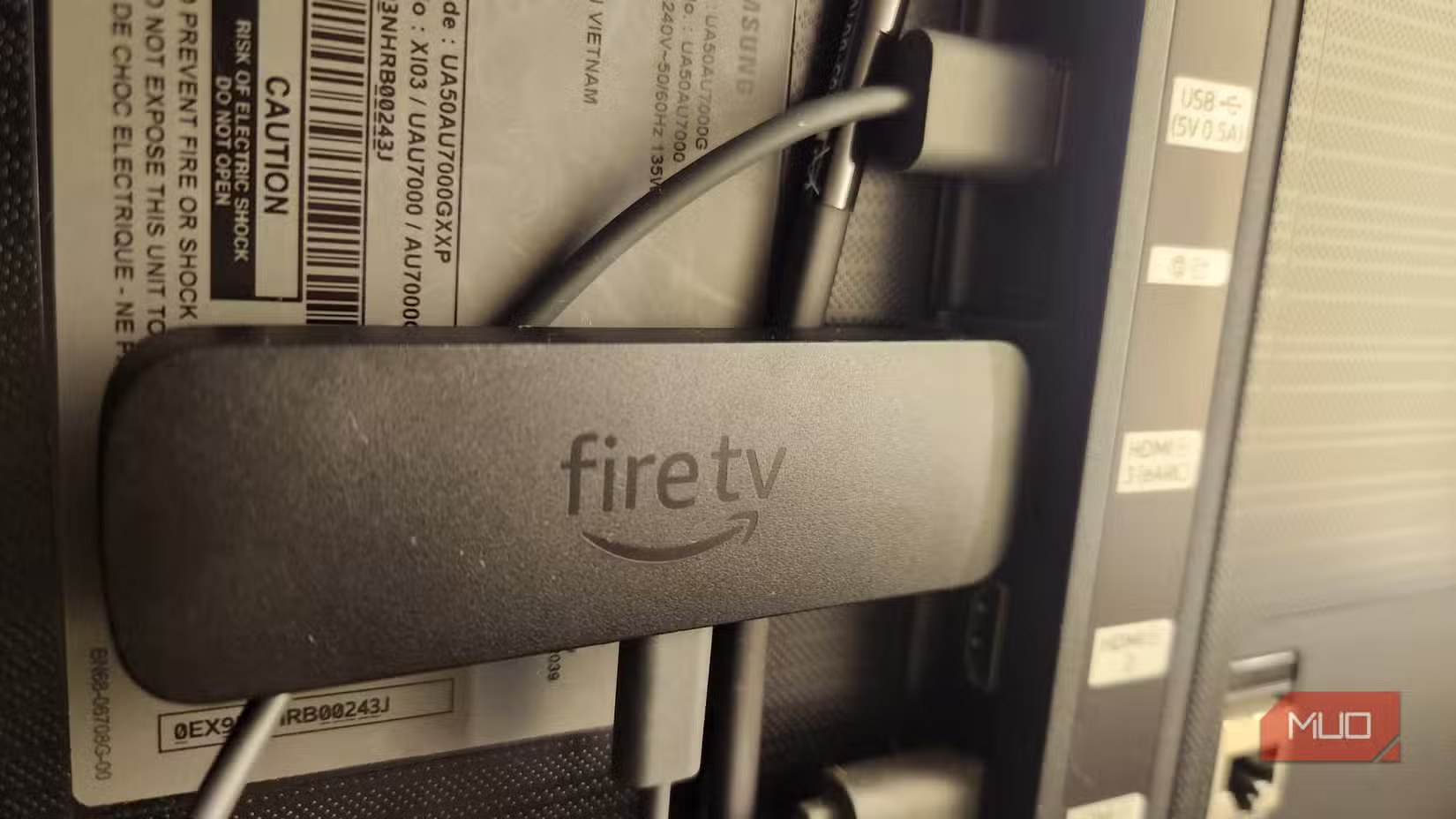
The Amazon Fire TV Stick 4K costs $29.99 at retail, often less during sales. It plugs into any HDMI port and connects to your WiFi. That's the entire hardware investment. The real value comes from the ecosystem of free, ad-supported streaming apps that now rival paid services in content quality.
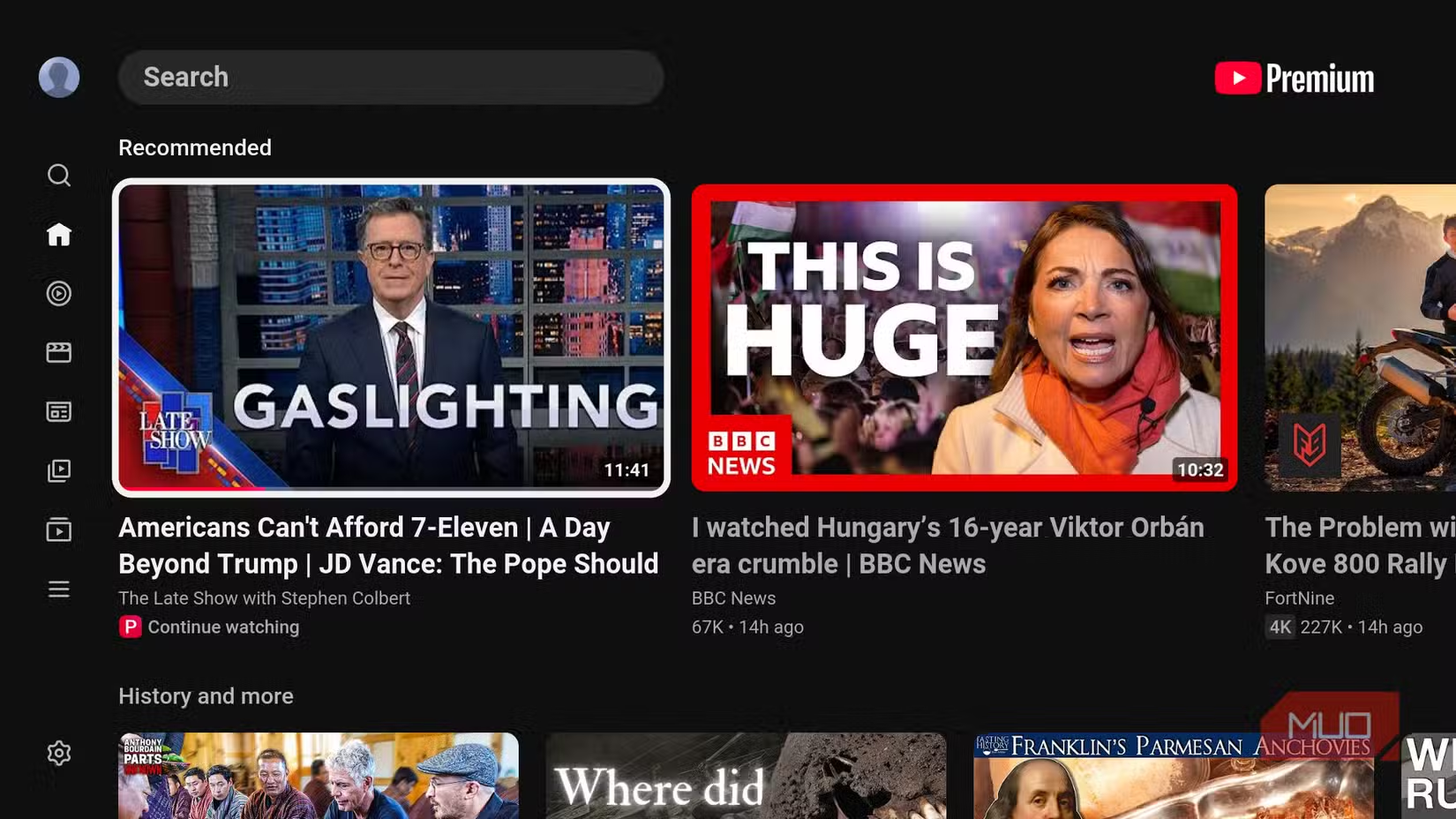
These aren't the sketchy, low-resolution alternatives from five years ago. Services like Tubi, Pluto TV, Freevee, and The Roku Channel offer 4K streaming, HDR support, and libraries with thousands of movies and TV shows. The trade-off? You watch ads, similar to traditional cable TV.
| Service | Monthly Cost | Content Library | Ad Experience |
|---|---|---|---|
| Netflix (Standard) | $15.99 | Extensive original content | No ads |
| Tubi | Free | 20,000+ titles, fewer originals | 4-5 min ads/hour |
| Pluto TV | Free | 250+ live channels | Traditional TV-style ads |
| Freevee (Amazon) | Free | Strong movie library | Light ad load |
| The Roku Channel | Free | Solid variety | Moderate ads |
What Free Streaming Apps Actually Deliver Quality Content?
The free streaming market matured significantly since 2023. Tubi, owned by Fox Corporation, now hosts over 20,000 movies and TV shows. Pluto TV (a ViacomCBS property) offers 250+ live channels covering news, sports, and entertainment. Amazon's Freevee provides surprisingly strong movie selections, including recent theatrical releases.
- Tubi: Best for movies, including recent releases 6-12 months after theatrical runs
- Pluto TV: Best for live TV experience with curated channels
- Freevee: Best for Amazon originals and mainstream movies
- The Roku Channel: Best variety across genres
- Plex: Best for users with personal media libraries
The content isn't identical to Netflix or Disney+. You won't find the latest Stranger Things season or Marvel releases. But for background entertainment in offices, waiting rooms, or employee lounges, the difference rarely matters. Most business use cases don't require specific, brand-new content.
Is the Fire TV Stick the Best Hardware Choice?
Three main options dominate the budget streaming device market: Amazon Fire TV Stick, Roku Streaming Stick, and Google Chromecast. For businesses prioritizing simplicity and free content access, the Fire TV Stick offers the strongest combination of features and price.
✅ Pros
- • 4K Ultra HD, HDR, and Dolby Vision support at the $30 price point
- • Alexa voice control for hands-free navigation
- • Clean interface without requiring phone-based casting
- • Direct access to all major free streaming apps
- • USB power option reduces outlet dependency
❌ Cons
- • Amazon promotes its own services prominently
- • Interface shows ads for content you may not want
- • Requires Amazon account for full functionality
- • No Google Cast support for Android users
Chromecast requires casting from a phone or computer, adding complexity for shared spaces. Roku offers similar functionality but at slightly higher price points for 4K support. The Fire TV Stick hits the sweet spot for plug-and-play deployment.
Similar cost-optimization approach for hardware purchasing
How Can Businesses Apply This Cost-Cutting Strategy?
The consumer use case translates directly to several business scenarios. Companies currently paying for streaming subscriptions in shared spaces can implement this approach immediately with minimal disruption.
- Office break rooms and lounges: Replace Netflix/Hulu subscriptions with free alternatives
- Client waiting areas: Pluto TV's live channels provide professional background content
- Hotel and hospitality: Scale across hundreds of rooms at $30/unit vs. recurring fees
- Retail displays: Use free content for in-store entertainment without licensing headaches
- Employee perks: Provide Fire TV Sticks as low-cost benefits instead of subscription stipends
The math becomes compelling at scale. A hotel chain with 200 rooms paying $15/month per room for basic streaming spends $36,000 annually. Switching to Fire TV Sticks with free apps costs $6,000 once, with zero recurring fees. That's a 6-month payback period and permanent savings thereafter.
What Are the Trade-offs of Free Streaming?
Free streaming works because of advertising. Expect 4-6 minutes of ads per hour of content, roughly equivalent to traditional cable TV. For personal viewing, this interrupts the experience. For business contexts like waiting rooms or background entertainment, ads rarely impact the use case.
Content selection differs from paid services. You won't find day-one access to theatrical releases or exclusive originals from major studios. Free services typically offer content 6-18 months after initial release, along with extensive back-catalog libraries. For businesses not requiring specific, current content, this rarely matters.
Executive Summary: When Free Streaming Makes Sense
Free streaming replaces paid subscriptions effectively when: (1) specific content isn't required, (2) ads are acceptable, (3) cost reduction outweighs convenience. Business applications like waiting rooms, break rooms, and hospitality fit perfectly. Personal use depends on viewing habits and patience for older content.
Another example of repurposing consumer tech for business value
How Much Can Your Business Actually Save?
Let's run the numbers for common business scenarios. These calculations assume current market rates for popular streaming services and the $29.99 Fire TV Stick price point.
| Scenario | Current Annual Cost | Fire TV + Free Apps Cost | First-Year Savings |
|---|---|---|---|
| Single office break room | $720 (Netflix + Hulu) | $30 one-time | $690 |
| 5 office locations | $3,600 | $150 one-time | $3,450 |
| 50-room hotel | $9,000 | $1,500 one-time | $7,500 |
| 200-room hotel | $36,000 | $6,000 one-time | $30,000 |
Year-two savings increase further since the hardware investment is complete. A 200-room hotel saves $36,000 annually after the first year, essentially eliminating streaming from the expense line entirely.
What's the Implementation Timeline?
Unlike enterprise software deployments that take months, this switch happens in hours. The Fire TV Stick requires no IT infrastructure, no licensing agreements, and no technical expertise beyond plugging in an HDMI cable.
Amazon Business accounts offer additional discounts for bulk purchases, potentially dropping per-unit costs below $25 for larger orders. The platform also simplifies expense tracking and procurement for multi-location deployments.
Historical perspective on technology cost optimization
Frequently Asked Questions
Frequently Asked Questions
Is free streaming content quality good enough for business use?
Yes. Services like Tubi and Freevee now support 4K, HDR, and Dolby Vision. For background entertainment in offices, waiting rooms, or lounges, quality matches paid services. The difference lies in content selection, not technical quality.
How much does switching to free streaming actually save?
A single location typically saves $600-800 annually after a $30 hardware investment. Multi-location businesses save proportionally more. A 50-room hotel can save $7,500+ in the first year alone.
Are there licensing concerns with using consumer streaming in business settings?
Free ad-supported services like Tubi and Pluto TV are licensed for public viewing. However, some paid services have restrictions on commercial use. Switching to free alternatives actually simplifies licensing compliance.
How long does implementation take?
Most businesses complete the switch in under a week. The Fire TV Stick requires no IT infrastructure or technical expertise. Plug it in, connect to WiFi, download apps, and cancel existing subscriptions.
What happens when free streaming services shut down or change?
The market has consolidated around well-funded players (Fox owns Tubi, ViacomCBS owns Pluto TV, Amazon owns Freevee). These services are profitable through advertising and unlikely to disappear. Even if one shuts down, alternatives exist.
Logicity's Take
We see this streaming cost discussion as part of a larger pattern: businesses are finally scrutinizing recurring software and media expenses that crept up during the pandemic years. At Logicity, we've helped clients audit their SaaS stacks and found similar savings opportunities across the board. The $30 streaming device story resonates because it represents a mindset shift. Instead of asking 'which subscription should we add?', smart operators now ask 'what can we accomplish without recurring costs?' For Indian businesses specifically, this matters even more. A $60/month subscription burden converts to roughly ₹5,000 monthly, a meaningful expense for SMBs. The free streaming ecosystem works globally, making this approach viable for offices in Hyderabad, Mumbai, or Bangalore. Our advice: apply this thinking beyond entertainment. Audit every recurring expense and ask whether a one-time investment or free alternative exists. The savings compound across categories.
Need Help Optimizing Your Tech Stack Costs?
Logicity helps businesses identify and eliminate unnecessary recurring expenses across software, infrastructure, and digital services. Whether you're auditing SaaS subscriptions, evaluating build-vs-buy decisions, or implementing cost-effective alternatives, our team brings practical experience from serving startups and enterprises across India and the Middle East. Reach out to discuss your cost optimization goals.
Source: MakeUseOf
Manaal Khan
Tech & Innovation Writer
Produced with AI assistance and reviewed by the Logicity editorial team. Learn more in our Editorial Policy.