Key Takeaways

- All three major AI assistants now perform comparably across most common tasks
- The constant chase for the 'best' AI tool costs more productivity than it gains
- Each platform retains minor specialties, but the gaps have narrowed dramatically
Which AI assistant is the best? If you've asked this question in the past year, you've probably gotten a different answer each month. ChatGPT leads in reasoning. No wait, Claude handles code better. Actually, Gemini just updated and now it's the winner. The cycle repeats endlessly.
Tech writer Patrick Campanale spent months testing all three major AI platforms. His conclusion? Stop chasing the leaderboard. The differences no longer justify the switching costs.
The Great Convergence
Campanale tested ChatGPT, Claude, and Gemini across a wide range of tasks: general conversation, marketing strategy planning, building apps and websites, and personal organization. A few months ago, one tool would lead another "by leaps and bounds" in specific areas. That gap has closed.
"Really, you can't go wrong with any of the three tools, as they're all really, really good," Campanale writes. "These days, all three of them can do just about the same thing as each other, with varying degrees of success."
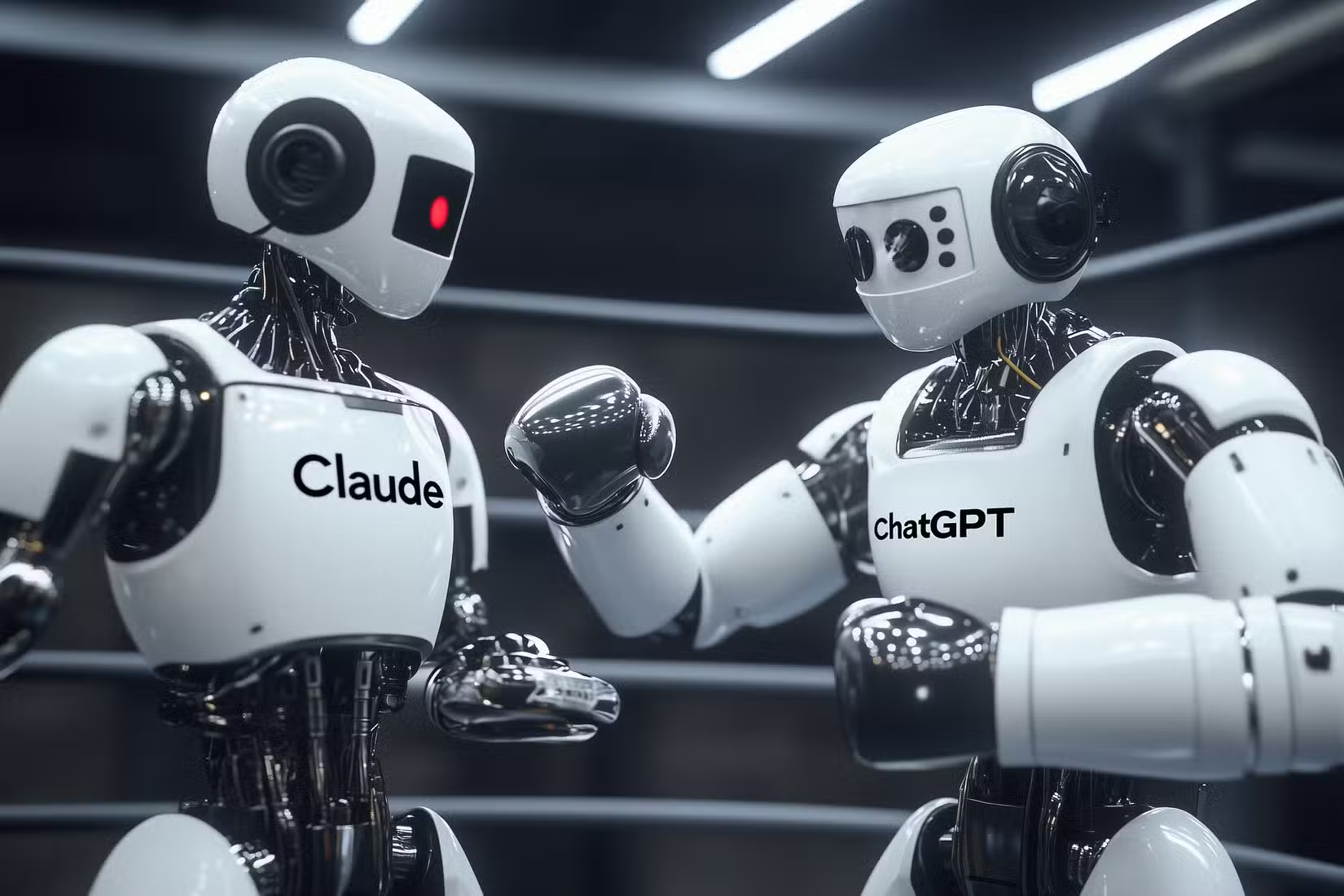
This convergence makes sense when you think about how these companies operate. OpenAI, Anthropic, and Google all hire from the same talent pool. They read the same research papers. They respond to the same user feedback. Any breakthrough one achieves, the others replicate within weeks.
The Three Contenders at a Glance
OpenAI's ChatGPT remains the most recognized name in AI assistants. Anthropic's Claude, priced at $20 per month for the pro tier, positions itself as a "thinking partner rather than just an information retrieval tool." Google's Gemini benefits from deep integration with Google's ecosystem.
| Feature | ChatGPT | Claude | Gemini |
|---|---|---|---|
| Pro Pricing | $20/month | $20/month | $20/month |
| Parent Company | OpenAI | Anthropic | |
| Ecosystem Integration | Microsoft/Bing | Standalone | Google Workspace |
| Core Positioning | General-purpose AI | Reasoning/conversation | Search + AI hybrid |
Each platform retains minor specialties. But Campanale's testing suggests these advantages are situational and inconsistent. The model that handles your coding task better today might fumble it tomorrow after an update.
The Hidden Cost of Constant Switching
Here's what the AI benchmarking obsession misses: context switching has real costs. Every time you move from one platform to another, you lose conversation history. You relearn interface quirks. You rebuild prompt patterns that worked well in your previous tool.
Campanale describes his decision to stop chasing the "best" AI as "the best thing that I've ever done in the world of AI." That's a strong statement from someone who tests technology for a living.
Practical tips for getting more from whichever AI assistant you choose
The productivity math works like this: if switching tools saves you 5% on task quality but costs you 10% in context switching and relearning, you've lost ground. The marginal improvements between ChatGPT, Claude, and Gemini rarely exceed that 5% threshold for most business tasks.
How to Pick Your AI Assistant
If all three tools perform comparably, how should you choose? Campanale's advice is simple: "Simply pick which horse you want to back."
- If you live in Google Workspace (Gmail, Docs, Sheets), Gemini's integration makes it the practical choice
- If you're already paying for Microsoft 365 Copilot, ChatGPT's underlying tech powers that experience
- If you value longer context windows and conversational reasoning, Claude emphasizes these strengths
The honest answer? Your existing ecosystem matters more than benchmark scores. An AI assistant you use consistently beats a "better" one you have to consciously remember to open.

Logicity's Take
When Specialization Still Matters
This advice applies to general knowledge work: writing, planning, research, basic coding, brainstorming. Specialized domains still reward tool selection.
If you're doing heavy software development, Claude's reasoning capabilities and larger context windows may genuinely outperform for complex codebases. For tasks requiring real-time information or web search, Gemini's Google integration provides fresher data. ChatGPT's plugin ecosystem offers capabilities the others lack.
But these edge cases don't describe most AI usage. Most people ask their AI assistant to draft emails, summarize documents, explain concepts, and help structure their thinking. For these tasks, all three work well enough.
How OpenAI plans to compete on hardware integration
The Bottom Line
The AI assistant wars have reached a plateau. ChatGPT, Claude, and Gemini all work. They all cost about the same. They all improve at roughly the same pace. The question "which is best" has become less useful than "which fits my workflow."
Campanale admits he has a preferred model, though the source article doesn't reveal which one. It almost doesn't matter. His main point stands: pick one, learn it well, and stop wasting cycles on the comparison treadmill.
Frequently Asked Questions
Is ChatGPT better than Claude in 2026?
After extensive testing, tech writer Patrick Campanale found that ChatGPT, Claude, and Gemini now perform comparably across most tasks. Minor advantages exist in specific areas, but the differences rarely justify switching between platforms.
How much does Claude cost compared to ChatGPT?
Both Claude Pro and ChatGPT Plus cost $20 per month. Gemini Advanced matches this pricing, making all three major AI assistants identically priced at the premium tier.
Should I use multiple AI assistants?
For most general tasks like writing, planning, and research, using multiple AI assistants costs more in context switching than you gain in capability. Pick one that integrates with your existing workflow and master it.
Which AI assistant is best for coding?
All three handle basic coding well. Claude's larger context windows may help with complex codebases. ChatGPT has a mature plugin ecosystem. For most coding tasks, the differences are marginal enough that consistency matters more than platform choice.
Need Help Implementing This?
Source: How-To Geek
Manaal Khan
Tech & Innovation Writer
Produced with AI assistance and reviewed by the Logicity editorial team. Learn more in our Editorial Policy.