Key Takeaways

- Streaming quality fluctuates based on network conditions, while Blu-ray delivers identical quality every playback
- Content on streaming services can be edited or removed without notice, but physical discs remain unchanged
- Even gigabit internet cannot eliminate compression artifacts that appear on 4K streams
Physical media is on life support. That's the common wisdom, and it's mostly true. Streaming is convenient. You don't need shelf space. You can watch anywhere. But convenience has costs that most viewers have forgotten or never learned.
A standard HD Blu-ray, despite its lower resolution ceiling, often delivers a better viewing experience than 4K streaming. The reasons are technical, practical, and increasingly relevant as streaming services tighten their grip on what you can watch and how.
Consistent Video Quality Every Time
Every time you stream a movie, you're getting a "best effort" service. From one second to the next, the quality of your stream can vary in response to network conditions. This isn't subtle. Smeary, crushed blacks and macroblocking, where detail is lost in big ugly blocks, aren't uncommon.
Sydney Butler, writing for How-To Geek, notes that he has symmetrical gigabit fiber and still experiences quality crashes. "Streams can still crash in quality because it doesn't just depend on factors that I control," he writes. "Sometimes I can watch a movie and notice no quality issues at all, then the next film will be an ugly mess because of some issue on the other side of the country."
An HD Blu-ray is mastered to a specific quality standard. Every time you play that disc, you get the same quality. No negotiations with your ISP. No mysterious server issues. The bitrate is fixed, the encoding is final, and the result is predictable.

Zero Bandwidth Constraints
Streaming services compress video aggressively. They have to. Sending uncompressed 4K video would require bandwidth that most connections cannot sustain. Netflix's highest quality 4K stream uses about 15-25 Mbps. A 4K UHD Blu-ray delivers up to 128 Mbps. An HD Blu-ray delivers up to 40 Mbps.
That difference matters. More data means more detail, smoother gradients, and fewer compression artifacts. Dark scenes particularly suffer on streaming because compression algorithms struggle with subtle variations in shadows. The result is banding and noise that doesn't exist on the disc version.
No One Can Edit Your Disc
Butler makes an underappreciated point about ownership. He owns several Blu-rays and DVDs of shows and movies that have elements that are "less socially acceptable these days." Nothing egregious, just humor or attitudes that society has moved on from.
Streaming services can and do modify content without notice. Scenes get cut. Audio gets altered. Episodes disappear. Sometimes entire shows vanish from catalogs. Your physical disc remains exactly as it was pressed.
This isn't hypothetical. Disney has edited films on Disney+. Amazon has altered content after purchase. When you buy a disc, you're buying the artifact, not a license to view content that can change.
The Audio Advantage
Streaming audio is compressed too. Most services use Dolby Digital Plus at relatively low bitrates. Blu-rays can carry lossless audio formats like DTS-HD Master Audio and Dolby TrueHD. If you have a decent sound system, you can hear the difference.
This matters for films where sound design is part of the experience. Action movies, horror, musicals, anything where audio carries emotional weight benefits from uncompressed tracks that streaming simply cannot deliver.
Offline Access Without Restrictions
Yes, streaming services offer downloads. But those downloads expire. They're tied to active subscriptions. They're often available on limited devices. A Blu-ray plays on any compatible player, anywhere, with no internet required, forever.
For travel, for areas with unreliable internet, or for simply not wanting to depend on someone else's servers, physical media solves the problem completely.
Special Features and Preservation
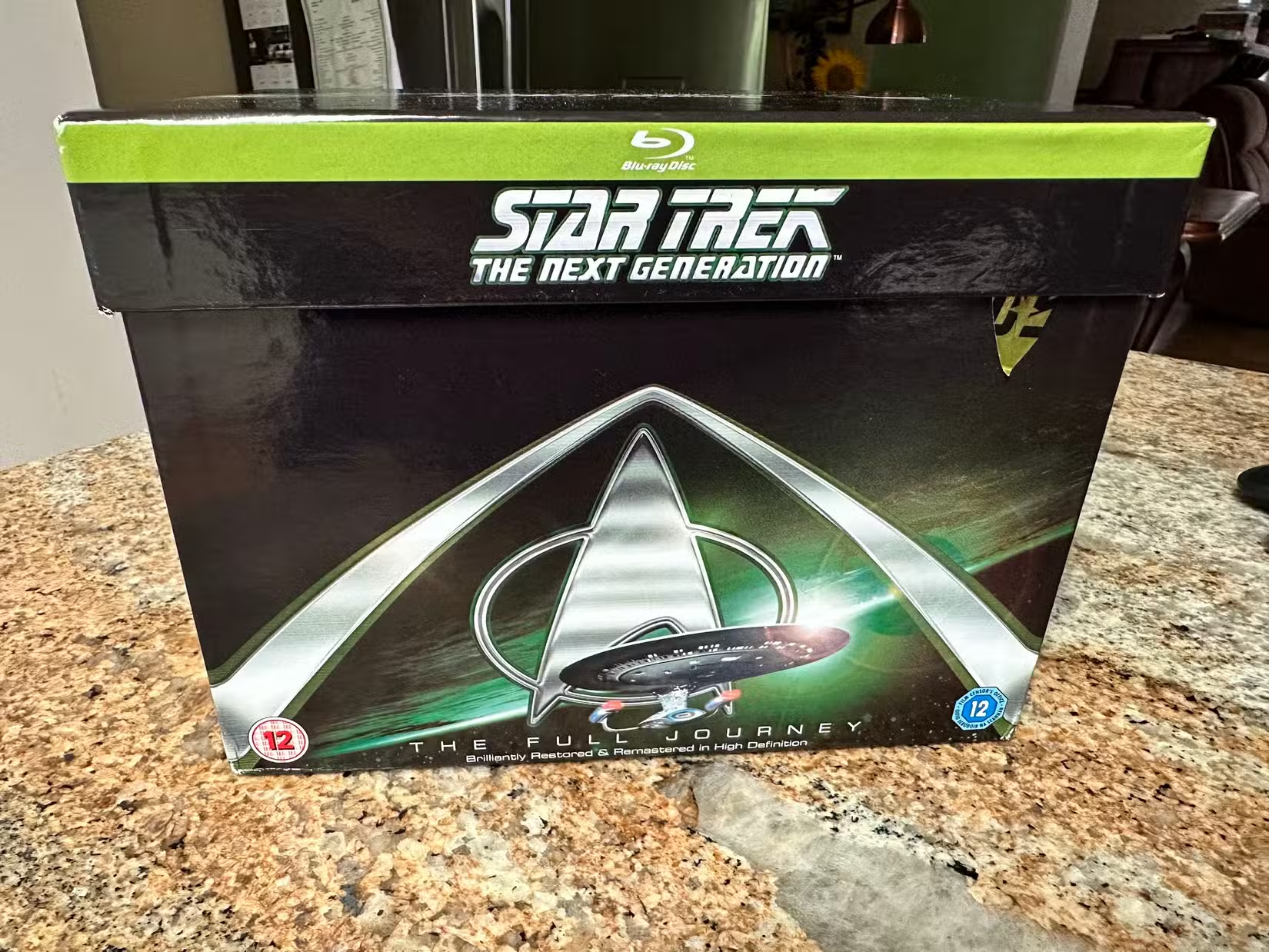
Streaming services rarely include special features. Behind-the-scenes documentaries, director commentaries, deleted scenes, these extras often exist only on physical releases. For film enthusiasts, these materials are part of the value.
Physical media also serves as preservation. When licensing deals expire, streaming content disappears. When services shut down, catalogs vanish. Physical copies persist.
The Price Equation
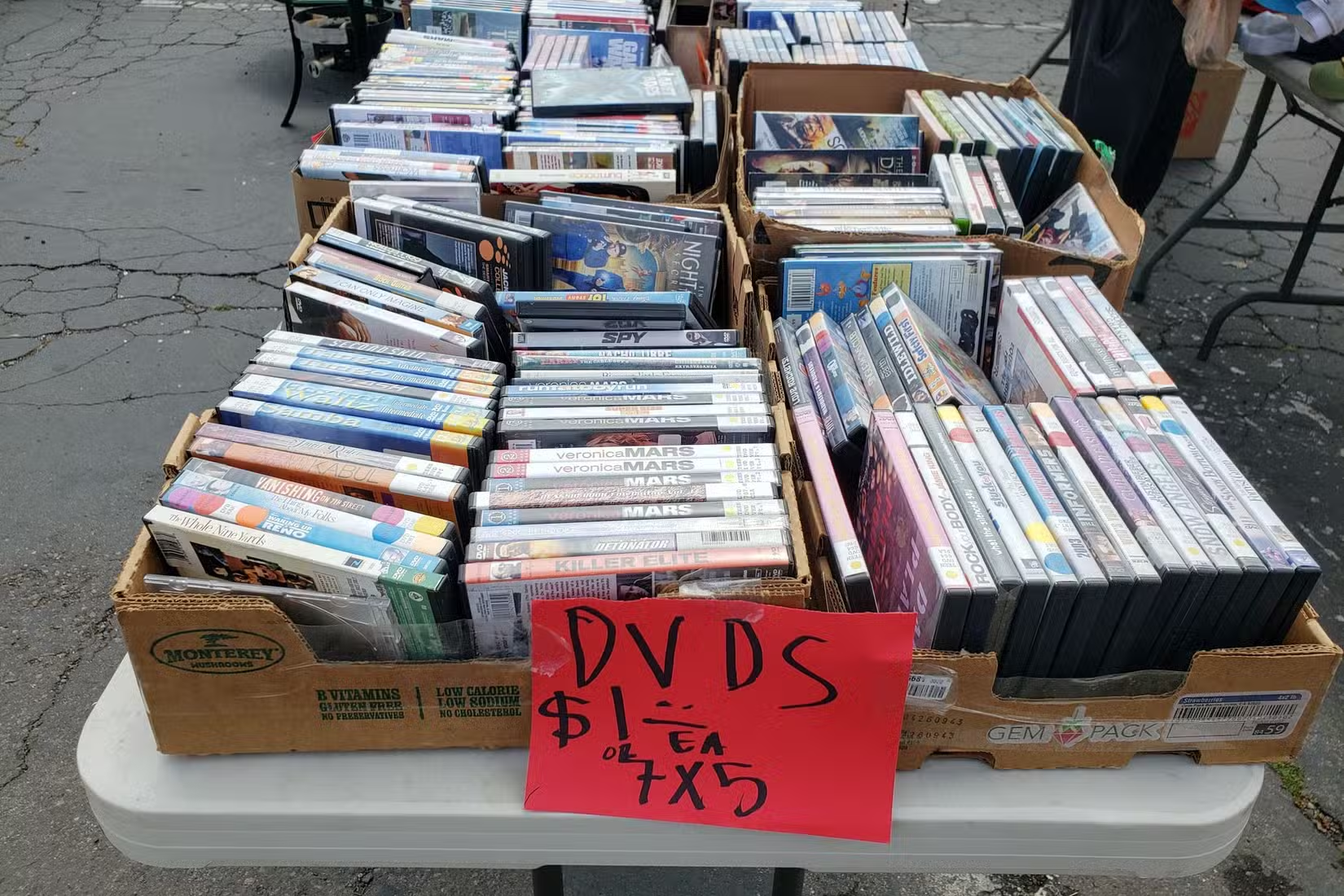
Blu-rays cost money upfront. That's the obvious disadvantage. But consider what happens over time. A film you love, one you'll watch repeatedly, costs less on disc than renting it three times from streaming. Used discs cost even less.
Streaming subscriptions add up. Netflix, Disney+, Max, Paramount+, the bundle approaches or exceeds cable TV costs. A targeted physical media collection for your actual favorites can cost less over time while delivering better quality.
When you do stream, these shows deliver theatrical-quality entertainment
When Streaming Makes Sense
None of this means streaming is bad. For discovery, for casual viewing, for convenience, streaming wins. If you're watching something once and don't care about maximum quality, streaming is the obvious choice.
But for films you love, for reference-quality viewing, for preservation and ownership, physical media remains superior. The technology hasn't changed. People just forgot what they gave up.

Logicity's Take
Frequently Asked Questions
Is 4K streaming actually lower quality than HD Blu-ray?
In some cases, yes. 4K streaming uses heavy compression that can result in artifacts, banding, and quality drops. An HD Blu-ray delivers consistent, high-bitrate video without network variability. Resolution isn't the only quality factor.
Why do streaming services compress video so much?
Bandwidth costs money, and most internet connections cannot sustain uncompressed 4K video. Streaming services balance quality against delivery costs and connection limitations. Blu-rays have no such constraints.
Can streaming services edit movies I've already purchased?
Yes. Digital purchases are licenses, not ownership. Services have modified content after purchase and removed titles from libraries. Physical discs cannot be altered remotely.
Is there still a market for Blu-ray players?
Yes, though it's smaller. Major manufacturers still produce players, and 4K UHD Blu-ray players remain available for enthusiasts who prioritize quality.
What about storage space for physical media?
This is streaming's clear advantage. A collection of hundreds of discs requires real space. For viewers who prioritize convenience and space over quality and ownership, streaming makes sense.
Need Help Implementing This?
Source: How-To Geek
Huma Shazia
Senior AI & Tech Writer
Produced with AI assistance and reviewed by the Logicity editorial team. Learn more in our Editorial Policy.