Key Takeaways
- HeliBoard replaces Gboard with a privacy-first keyboard that doesn't log your typing
- 82.8% of proprietary Android apps contain at least one third-party tracker
- Open-source alternatives from F-Droid offer offline-first operation and transparent codebases
Oluwademilade Afolabi, a tech writer at MakeUseOf, didn't set out to degoogle his phone. He uses a stock Android device, keeps his Google account, and has no interest in purging Mountain View from his digital life. But after years of using preinstalled apps simply because they were there, the constant friction wore him down.
Account sign-ins. Cloud sync nudges. Features designed to push you toward whatever Google wants you to use next. So he started swapping them out, one by one, for open-source alternatives with active communities and enough daily-driver credibility to survive real use.
Some replacements lasted a week before awkwardness or limitations killed them. Six stuck around.
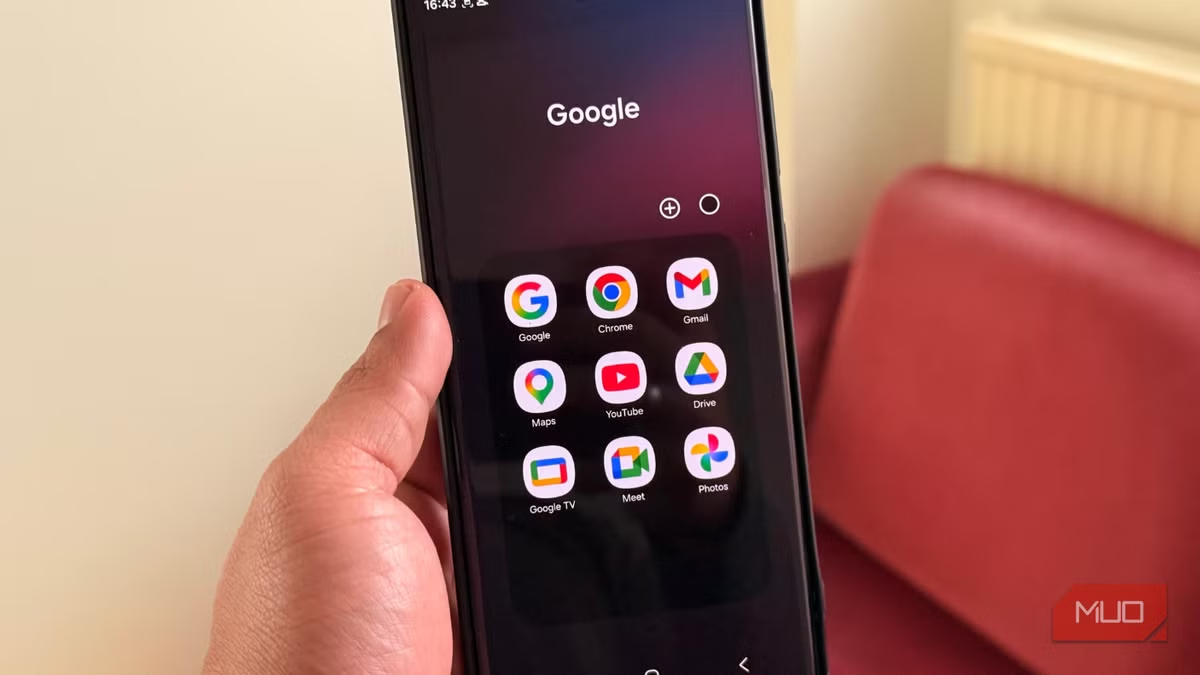
HeliBoard replaces Gboard
Gboard is genuinely excellent. Fast typing, accurate predictions, glide input, multilingual support, solid voice dictation. Google built one of the best mobile keyboards in existence. The problem is what a keyboard sees.
Every password, private message, search query, half-finished thought you delete before sending. The keyboard sits beneath everything. Google has added privacy features, but Afolabi wanted something boring by design.
HeliBoard, based on AOSP and OpenBoard, delivers exactly that. Clean layout, theme support, gestures, clipboard tools, multilingual typing. No attempt to turn the keyboard into a content hub or AI assistant. Just typing.
The privacy math behind the switch
The difference between open-source and proprietary apps isn't philosophical. It's structural. Research shows that 82.8% of popular proprietary Android apps contain at least one third-party tracker. Verified open-source apps from repositories like F-Droid approach zero.
Free proprietary apps are four times more likely to track users than paid versions. The business model requires it. When you're not paying, your data becomes the product. Open source changes that dynamic because the codebase is auditable and the incentives align differently.
“In real open source, you have the right to control your own destiny.”
— Linus Torvalds, Creator of Linux
Joplin for notes, Fossify for calendar
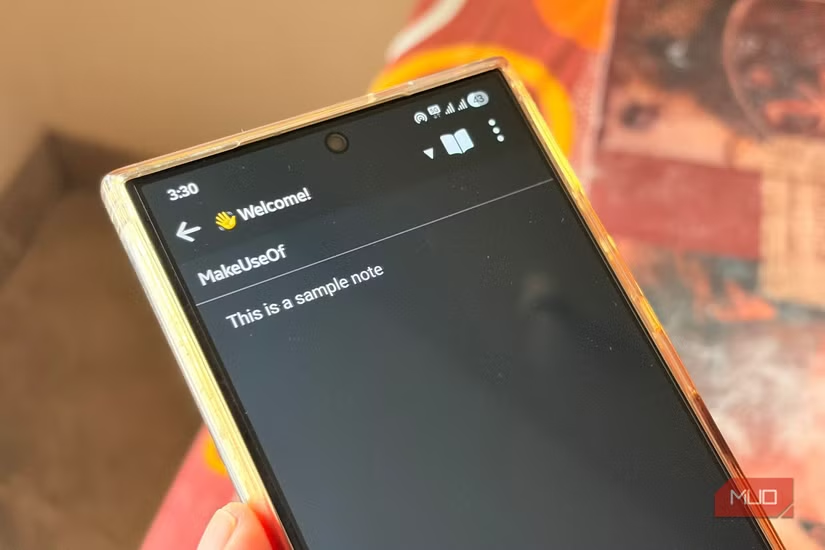
The experiment extended beyond the keyboard. Joplin replaced Google Keep for notes. It supports Markdown, syncs with your own cloud storage (Nextcloud, Dropbox, OneDrive), and keeps everything locally encrypted if you want.
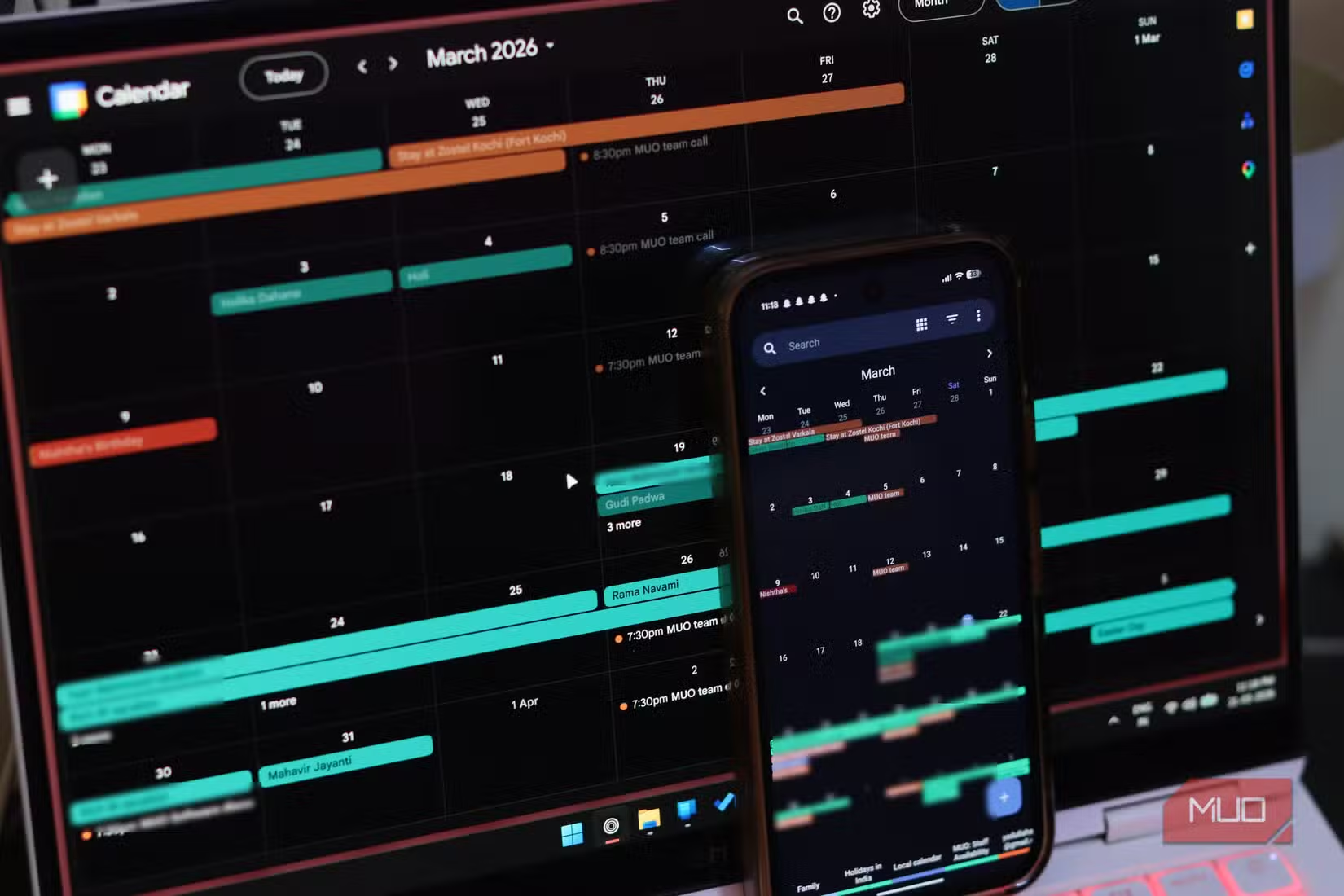
Fossify Calendar stepped in for Google Calendar. It syncs with CalDAV servers, works offline, and doesn't require a Google account to function. The interface is simpler than Google's, which turns out to be a feature rather than a limitation.
The convenience gap remains real
Reddit communities like r/degoogle and r/privacy host migration guides where users share success stories of replacing their entire Google stack. Many report battery life and performance improvements from ditching what they call bloatware.
But Hacker News discussions tend toward realism. The privacy gains are significant. The convenience gap is equally significant. Setting up HeliBoard takes five minutes. Configuring Joplin with your own sync backend takes an afternoon if you're not technical.
Afolabi's approach acknowledges this. He didn't try to replace everything. He replaced what annoyed him most, kept what worked, and ended up with a phone that still feels like Android. Just less needy.
“Silicon Valley's main business is now advertising, based upon the collection of vast amounts of consumer data.”
— Rafael Laguna, CEO of Open-Xchange
Where to find these apps
F-Droid is the primary repository for verified open-source Android apps. Unlike the Play Store, F-Droid builds apps from source code, verifies them, and flags any anti-features like tracking or ads. The apps mentioned here are all available there.
- HeliBoard: AOSP-based keyboard with gesture typing and no telemetry
- Joplin: Markdown notes with self-hosted sync and end-to-end encryption
- Fossify Calendar: CalDAV-compatible calendar without account requirements
- Firefox: Full desktop-class browser with extension support
The 77% of Android users who've abandoned an app installation due to intrusive permission requests already understand the problem. These alternatives solve it.
Another look at how design choices prioritize company goals over user experience
Logicity's Take
Frequently Asked Questions
Are open-source Android apps as good as Google's?
For core functions like typing, notes, and calendars, yes. They often lack AI features and cloud integration, which is the point. If you need those features, stick with Google.
Is F-Droid safe to use?
F-Droid builds apps from verified source code and flags any anti-features. It's considered more transparent than the Play Store, though it updates apps less frequently.
Can I use open-source apps alongside Google apps?
Yes. Afolabi's approach was selective replacement, not complete removal. You can mix and match based on what matters most to you.
Do open-source keyboards support gesture typing?
HeliBoard supports glide/gesture typing. Accuracy is slightly lower than Gboard but usable for daily typing.
Will switching to open-source apps improve battery life?
Often yes, because these apps lack background telemetry and sync processes. Results vary by device and usage patterns.
Need Help Implementing This?
Source: MakeUseOf
Manaal Khan
Tech & Innovation Writer
Produced with AI assistance and reviewed by the Logicity editorial team. Learn more in our Editorial Policy.