Key Takeaways
- Ryanair's check-in flow contains nine distinct stages designed to extract additional payment
- The airline now requires 100% digital boarding passes, eliminating paper options entirely
- Checking in at the last moment may result in better seat assignments as bad seats get allocated first
The Nine Stages of Upsell Hell
Ryanair is Europe's most profitable airline. That profitability comes, in part, from a booking interface designed to make saying 'no' as difficult as possible. Tech blogger Dan O'Sullivan recently documented his summer 2026 check-in experience and counted nine separate stages where passengers must actively resist paying extra.
The tactics aren't subtle. They're a masterclass in what UX researchers call 'dark patterns,' interface designs that manipulate users into actions they didn't intend to take.
“The design of these flows isn't accidental; it's a meticulously crafted engine for revenue extraction disguised as 'user convenience'.”
— Dr. Elena Vance, Senior Behavioral Economist at UX Insight Lab
Breaking Down the Gauntlet
Here's what a passenger must successfully navigate to check in without paying extra fees:
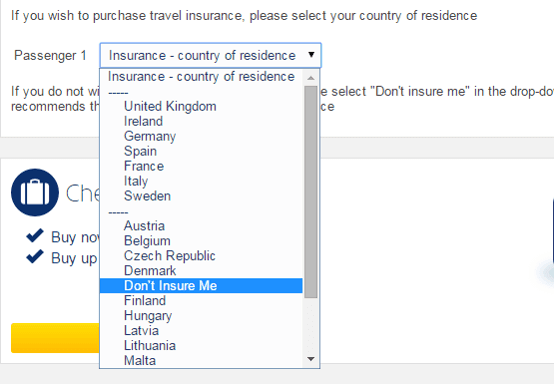
- Decline travel insurance. The classic move: the 'Don't Insure Me' option sits midway through a dropdown list of countries. It's been this way for eight years.
- Avoid accidentally unlocking return flight check-in. This costs money, but the interface doesn't make that obvious.
- Find and select the random seat option. It's deliberately obscured.
- Confirm you understand random seat allocation is 'precarious and unsettling.' Fear-based language, straight from the playbook.
- Resist the 'Last chance to choose where you sit' prompt.
- Select '1 Small Bag only' despite a pop-up warning about gate charges.
- Dismiss the Priority & 2 Cabin Bags upgrade. There's no 'No' button. You must close the window.
- Scroll past security fast track and pre-paid credit offers.
- Decline car rental, parking, and train services.
Only after clearing all nine hurdles does the passenger reach the boarding pass screen.
The Psychology at Work
These patterns work because they exploit decision fatigue. By the time a passenger reaches stage seven, their mental energy for careful reading has depleted. The absence of a clear 'No' button forces cognitive effort. A tired traveler might just click 'Upgrade' to make the screen go away.
The fear-based warnings are particularly effective. When the app tells you that selecting only a small bag means you 'may be charged at the gate,' it plants anxiety. O'Sullivan noted he recently watched airport staff enforce this on a couple whose bag didn't fit the sizer. The threat is real, and Ryanair knows passengers will pay to avoid uncertainty.
What's Changed in 2026
Ryanair has doubled down on digital-only requirements this year. Paper boarding passes are gone entirely. 100% of passengers must now use digital versions. This isn't just about environmental concerns. It keeps travelers locked into the app, where every screen can serve another upsell.
The airline has also tightened operational windows. Bag drop services now close 60 minutes before departure, up from previous cutoffs. This creates additional stress for passengers running late, which can lead to hasty decisions at airport kiosks, where paid upgrades are prominently displayed.
There's one consumer-friendly change: the free 'small personal bag' allowance increased by 20%. This followed regulatory pressure in several European markets. It's a reminder that dark patterns can be pushed back through policy.
The Hacker News Debate
The tech community is divided on how to classify these patterns. Some argue Ryanair is simply 'customer-hostile.' Others call it 'efficient market survival.' The airline offers genuinely cheap base fares. The upsells subsidize that pricing. If you know the game, you can play it.
Many commenters shared personal stories of being caught by confusing app interfaces and paying airport penalties. The common thread: these designs particularly punish infrequent flyers who don't know the tricks.
Gaming the System: Seat Selection Strategy
O'Sullivan offers a counterintuitive tip based on recent experience: check in at the last possible moment. His reasoning? Ryanair fills bad seats first through random allocation. If you wait until most passengers have checked in, the undesirable middle seats may already be taken. The system might be forced to give you something decent.
He tested this and landed an exit row aisle seat with overhead bin access. That's premium real estate on a budget carrier.
The strategy inverts for Lufthansa. Check in early. The German carrier fills planes front to back in a 'refreshingly old-fashioned manner.' Earlier check-in means a better position in that queue.
The Broader Pattern
Ryanair isn't unique. It's just the most brazen. Budget airlines across Europe and North America use similar tactics. The question for regulators is where user manipulation crosses into deception. The EU's Digital Services Act has language about 'deceptive design patterns,' but enforcement remains inconsistent.
For now, the burden falls on passengers to stay alert. Know the stages. Slow down when the interface speeds up. And measure your bag before you leave for the airport.
Logicity's Take
Frequently Asked Questions
How do I avoid Ryanair upsell charges during check-in?
Navigate all nine stages carefully. Decline insurance, select random seating, choose '1 Small Bag only,' and dismiss upgrade pop-ups by closing windows rather than clicking buttons. Read every screen before proceeding.
What is a dark pattern in UX design?
A dark pattern is an interface design that manipulates users into unintended actions, such as hiding opt-out buttons, using fear-based warnings, or requiring extra steps to decline paid upgrades.
Does Ryanair still offer paper boarding passes?
No. As of 2026, Ryanair requires 100% digital boarding passes. Paper options have been eliminated entirely.
What happens if my bag is too big at the Ryanair gate?
You'll be charged a fee on the spot. Ryanair staff enforce bag size limits strictly. Measure your bag against the published dimensions before arriving at the airport.
When is the best time to check in for a Ryanair flight?
Some travelers report better seat assignments by checking in at the last moment, as random allocation may have already filled undesirable seats. This strategy is unverified at scale.
Another case of technology being weaponized against users through deceptive design.
Need Help Implementing This?
Source: Hacker News: Best
Manaal Khan
Tech & Innovation Writer
Produced with AI assistance and reviewed by the Logicity editorial team. Learn more in our Editorial Policy.