Key Takeaways
- Gemini lets you describe what you want in plain English instead of applying filters
- The AI understands proximity and groups related suggestions together
- Natural language trip planning works in unfamiliar locations like foreign cities
Google Maps has always been a solid tool for getting from point A to point B. But it required users to think like a search engine. Filter by cuisine. Sort by rating. Scroll through reviews. Save places manually. Then mentally calculate which spots were close enough to visit in sequence.
Gemini's integration changes that dynamic. Instead of navigating menus and filters, you can now describe what you want and let the AI figure out the logistics. It's the difference between searching and asking.
Plan Full Outings With One Request
The most useful Gemini feature is natural language trip planning. Rather than searching for a restaurant, then a coffee shop, then a gift store separately, you can describe your entire outing in a single prompt.
A request like "Plan a lunch at a non-crowded, affordable local eatery, and a relaxing afternoon that includes coffee, a gift store, and dinner and drinks close to Thamel center" returns a structured set of suggestions that make geographic sense together. Gemini factors in proximity between stops, saving you the mental math of figuring out which places are actually near each other.
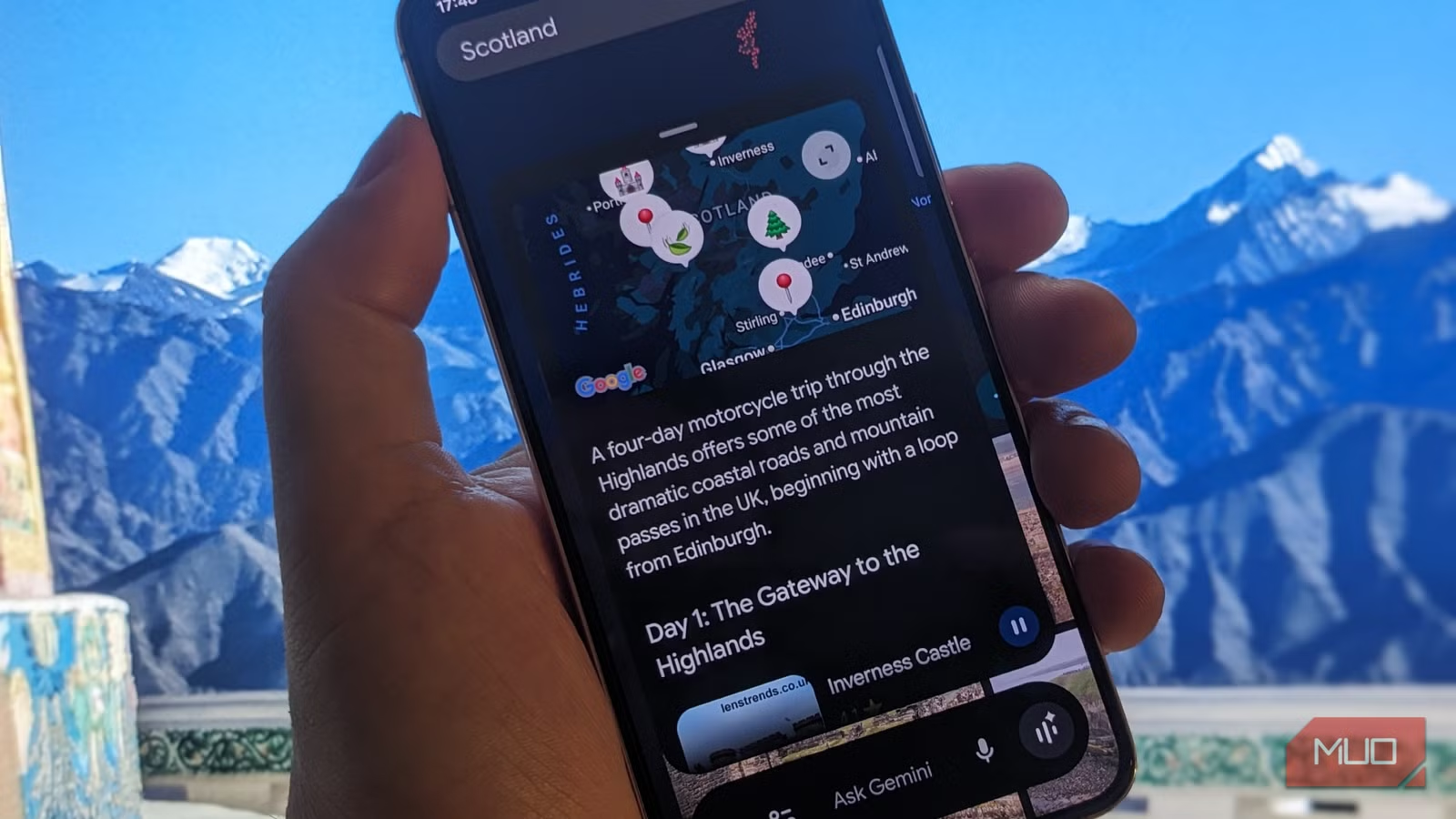
This works especially well in unfamiliar locations. When you don't know a city's neighborhoods or typical distances, having an AI that understands both proximity and experience types gives you a real advantage. Even if you don't follow its suggestions exactly, you start with a coherent plan instead of scattered bookmarks.
Skip the Filter Menus
Traditional Google Maps search forces you to express preferences through a limited set of filters. Price range. Star rating. Open now. These work fine for simple queries but fall apart when you want something more nuanced.
Gemini lets you describe subjective preferences that filters can't capture. "Non-crowded" isn't a filter option. Neither is "relaxing afternoon" or "good for conversation." The AI interprets these qualitative requests and matches them against place descriptions, reviews, and other data points.
Ask Follow-Up Questions
Standard Maps search treats each query as independent. Ask about restaurants, get results. Ask about parking, start over. Gemini maintains conversation context, letting you refine and build on previous requests.
If the first set of restaurant suggestions doesn't quite fit, you can ask for alternatives without re-explaining your constraints. "Something quieter" or "with outdoor seating" refines the results rather than resetting them.
More practical AI automation examples
Get Recommendations That Match Intent
The old Maps recommendation system relied heavily on ratings and review count. Popular places floated to the top. Gemini adds a layer of intent matching that considers what you're actually trying to accomplish.
Looking for a place to work? The AI can factor in wifi availability, seating comfort, and noise levels even when you don't specify each criterion. It infers from context rather than requiring explicit filters for every preference.
Reduce Decision Fatigue
Perhaps the biggest shift is psychological. The traditional Maps workflow. search, scroll, read reviews, compare, decide. puts the cognitive load on the user. Gemini inverts this by presenting curated options that already incorporate your stated preferences.
You still make the final call, but from a shortlist rather than an overwhelming grid of options. For travel planning especially, this reduces the exhaustion that comes from making dozens of small decisions about where to eat, what to see, and how to sequence your day.
Logicity's Take
What This Means for How We Use Maps
The broader pattern here extends beyond navigation. As AI assistants get embedded into productivity tools, the interface shifts from menu-driven to conversation-driven. Users describe outcomes, and software figures out the steps.
For Maps specifically, this makes the app more useful as a travel companion rather than just a navigation tool. The gap between "I need directions" and "I need a plan" gets smaller when you can express complex requests in natural language.
Comparing AI tool alternatives
Frequently Asked Questions
How do I enable Gemini in Google Maps?
Gemini integration is rolling out through the standard Google Maps app. Ensure your app is updated to the latest version and that you're signed into a Google account with Gemini access.
Does Gemini in Maps work offline?
No. Gemini requires an internet connection to process natural language requests. Offline Maps still work for basic navigation but without AI features.
Is Gemini in Maps available in all countries?
Availability varies by region. Google is rolling out Gemini features progressively, with some markets getting access before others.
Can Gemini book restaurants or hotels directly?
Gemini can suggest options and link to booking platforms, but transactions still happen through existing Google Maps integrations or external booking sites.
Need Help Implementing This?
Source: MakeUseOf
Beyond Maps: Gemini Spark and the Future of AI Integration
The new article introduces 'Gemini Spark,' a suite of agentic capabilities designed to automate tasks like email management and meeting preparation. It also reveals leaks about a video generation model called 'Gemini Omni' and outlines upcoming AI integrations for Android 17, including tools like Rambler AI and Geminibooks.
New 'Thinking Levels' for More Complex Processing
Google is rolling out 'Thinking levels' in the Gemini app for iOS and Android, allowing users to select between 'Standard' and 'Extended' processing for models like Gemini 3 Flash and 3.1 Pro. This feature enables the AI to spend more time on complex topics for better results and appears to be available to free users as well as subscribers.
Huma Shazia
Senior AI & Tech Writer
Produced with AI assistance and reviewed by the Logicity editorial team. Learn more in our Editorial Policy.