Key Takeaways
- Samsung union's 18-day strike began Thursday after wage negotiations failed
- South Korea's Prime Minister estimates up to $66 billion in economic damage
- Samsung and SK Hynix together produce two-thirds of global memory chips
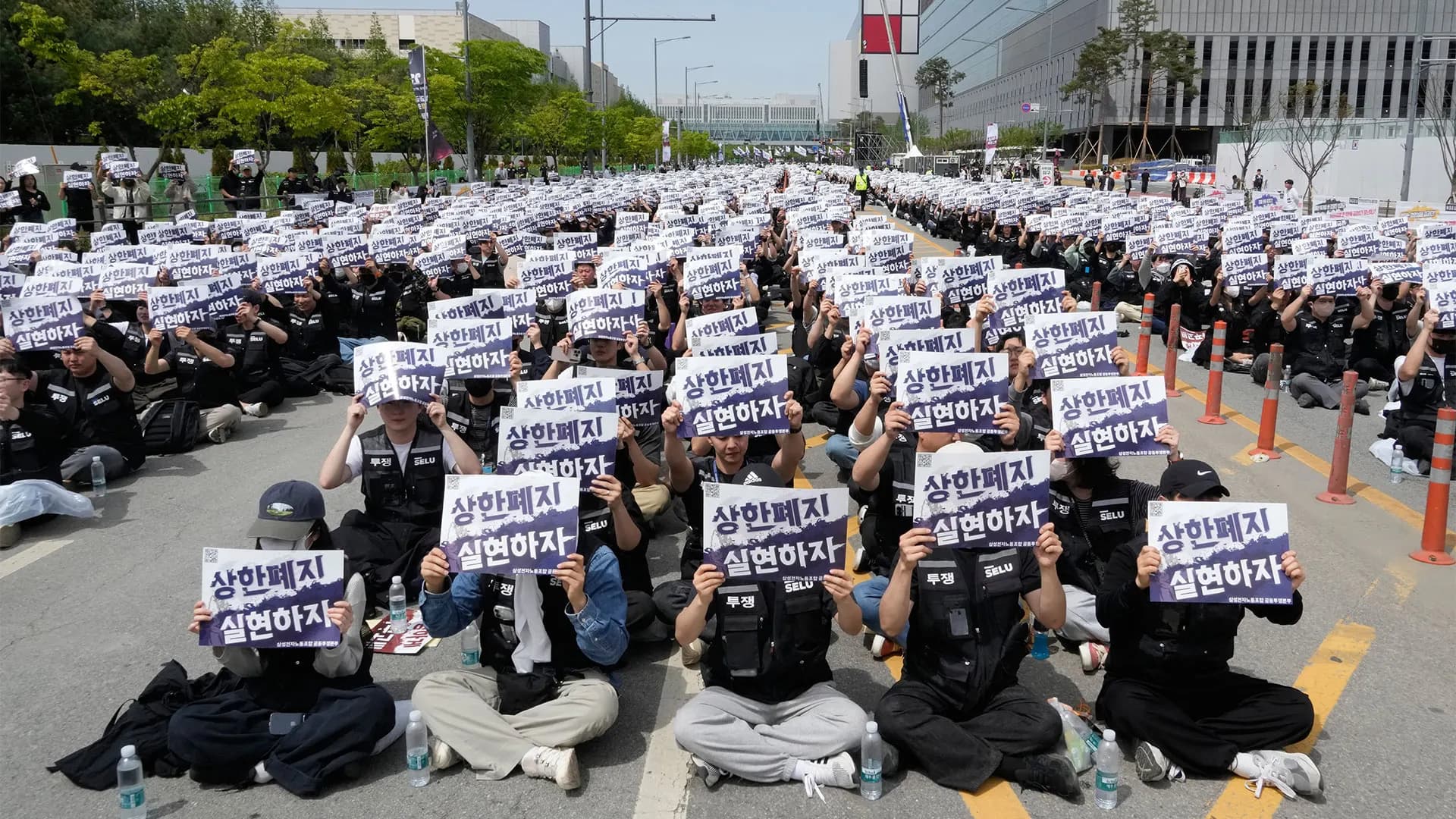
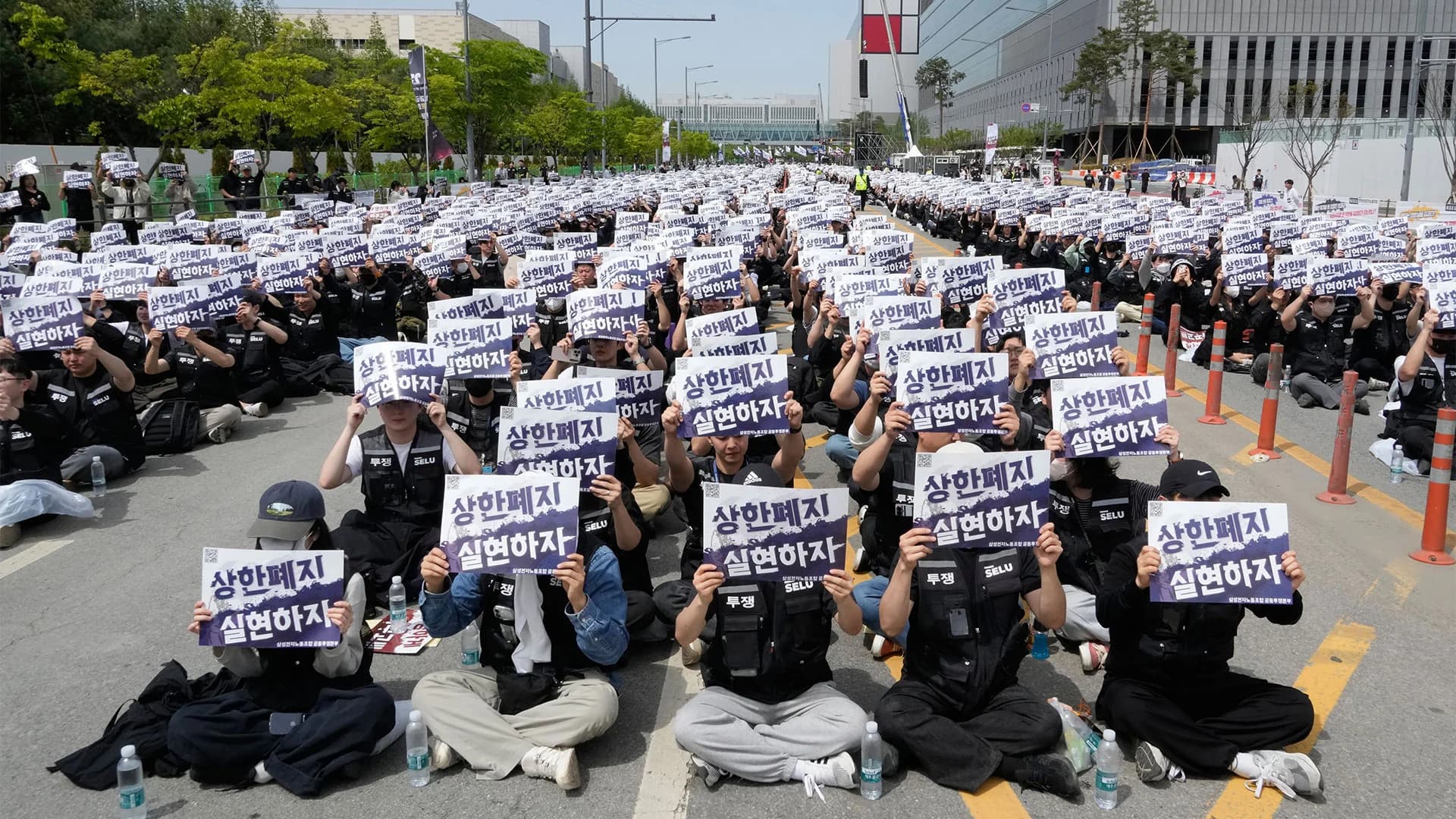
Samsung Electronics workers walked off the job Thursday after wage negotiations collapsed, launching an 18-day strike that could ripple through global semiconductor and smartphone markets.
The strike involves more than 70,000 unionized workers at the South Korean electronics giant. Union leader Choi Seung-ho announced the action Wednesday after a final round of talks ended without agreement.
What the Union Wants
Union leaders want Samsung to spend 15% of its annual operating profit on employee bonuses. They also want the company to eliminate bonus caps, which currently limit payouts to 50% of annual salaries.
The union argues these demands are justified by Samsung's soaring profits. The company reported its January-March quarter operating profit jumped eightfold to a record 57.2 trillion won ($38 billion), driven by AI-related demand for memory chips.
Samsung's management says the demands are excessive. The company points to the cyclical nature of the semiconductor business, where boom years can quickly turn to downturns. Management also criticized the union for demanding high compensation for workers at loss-making units.
Global Supply Chain at Risk
The strike's impact extends far beyond South Korea. Samsung and its domestic rival SK Hynix together produce about two-thirds of the world's memory chips. These chips power everything from smartphones to the data centers running AI models.
Memory chip supply already struggles to keep pace with AI-driven demand. The strike could push prices higher and delay AI infrastructure investments in other countries, according to Lee Jun, an expert at the Korea Institute for Industrial Economics and Trade.
Samsung's smartphone and consumer electronics production may also suffer. The company makes Galaxy phones, televisions, and home appliances that depend on steady manufacturing operations.
How another chip giant is planning its long-term production roadmap
Government Steps In
South Korean officials have threatened to invoke emergency powers to force a settlement. Prime Minister Kim Min-seok warned in a televised statement Sunday that the strike could cause up to 100 trillion won ($66 billion) in economic damage by disrupting Samsung's complex semiconductor manufacturing.
Labor Minister Kim Younghoon arranged a meeting between both sides Wednesday afternoon. The two parties held each other responsible for the breakdown. Union leader Choi accused management of rejecting a government-mediated proposal. Management blamed the union for unrealistic demands.
A local court has already limited the strike's scope. The Suwon District Court partially granted Samsung's request for an injunction, ruling that the union must maintain staffing levels to prevent facility damage and ensure safe operations. The court also barred workers from occupying key facilities.
What Happens Next
Both sides say they will continue talking. But with workers now on strike and legal battles underway, a quick resolution seems unlikely.
For companies that depend on Samsung memory chips, the strike adds another layer of uncertainty to an already tight supply situation. AI infrastructure projects, smartphone launches, and consumer electronics production worldwide may face delays or higher costs if the walkout drags on.
Logicity's Take
Frequently Asked Questions
How long will the Samsung strike last?
The union announced an 18-day strike starting Thursday. Both sides continue negotiations, so it could end earlier if they reach a deal.
Will the Samsung strike affect chip prices?
Likely yes. Samsung produces about one-third of global memory chips, and supply already lags behind AI-driven demand. Industry experts expect the strike to push prices higher.
Which Samsung products could be affected?
Memory chips for AI and data centers, smartphones including Galaxy devices, and consumer electronics like TVs and appliances could all see production disruptions.
Can the South Korean government force an end to the strike?
Officials have threatened to use emergency powers, which are rarely invoked. A court has already ordered minimum staffing levels to protect facilities.
Need Help Implementing This?
Source: Fast Company / Associated Press
Manaal Khan
Tech & Innovation Writer
Produced with AI assistance and reviewed by the Logicity editorial team. Learn more in our Editorial Policy.