Key Takeaways

- DNS software like BIND 9, Unbound, and PowerDNS translates domain names into IP addresses for virtually every web request
- Apache and NGINX serve the majority of websites worldwide as open-source web server software
- OpenSSL handles the encryption that secures most HTTPS connections across the internet
Open-source software runs the internet. Not in a vague, philosophical sense. The actual infrastructure that translates domain names, serves web pages, and encrypts your data relies on free, community-maintained code. If these projects disappeared tomorrow, the web would stop working.
Most people never see this software. They type a URL, hit enter, and a webpage appears. But between that keystroke and the loaded page, several open-source projects do the heavy lifting. Here are five that matter most.
DNS Software: The Internet's Phone Book
Every time you type a web address, something has to translate "howtogeek.com" into an IP address your browser can actually connect to. That's the Domain Name System. It works like the phone directories people used before smartphones. You know the name, DNS finds the number.
Three open-source projects handle most of this work: BIND 9, Unbound, and PowerDNS. BIND 9 has been around since the 1980s and remains the most widely deployed DNS software. Unbound focuses on security and validation. PowerDNS offers flexibility for complex setups.
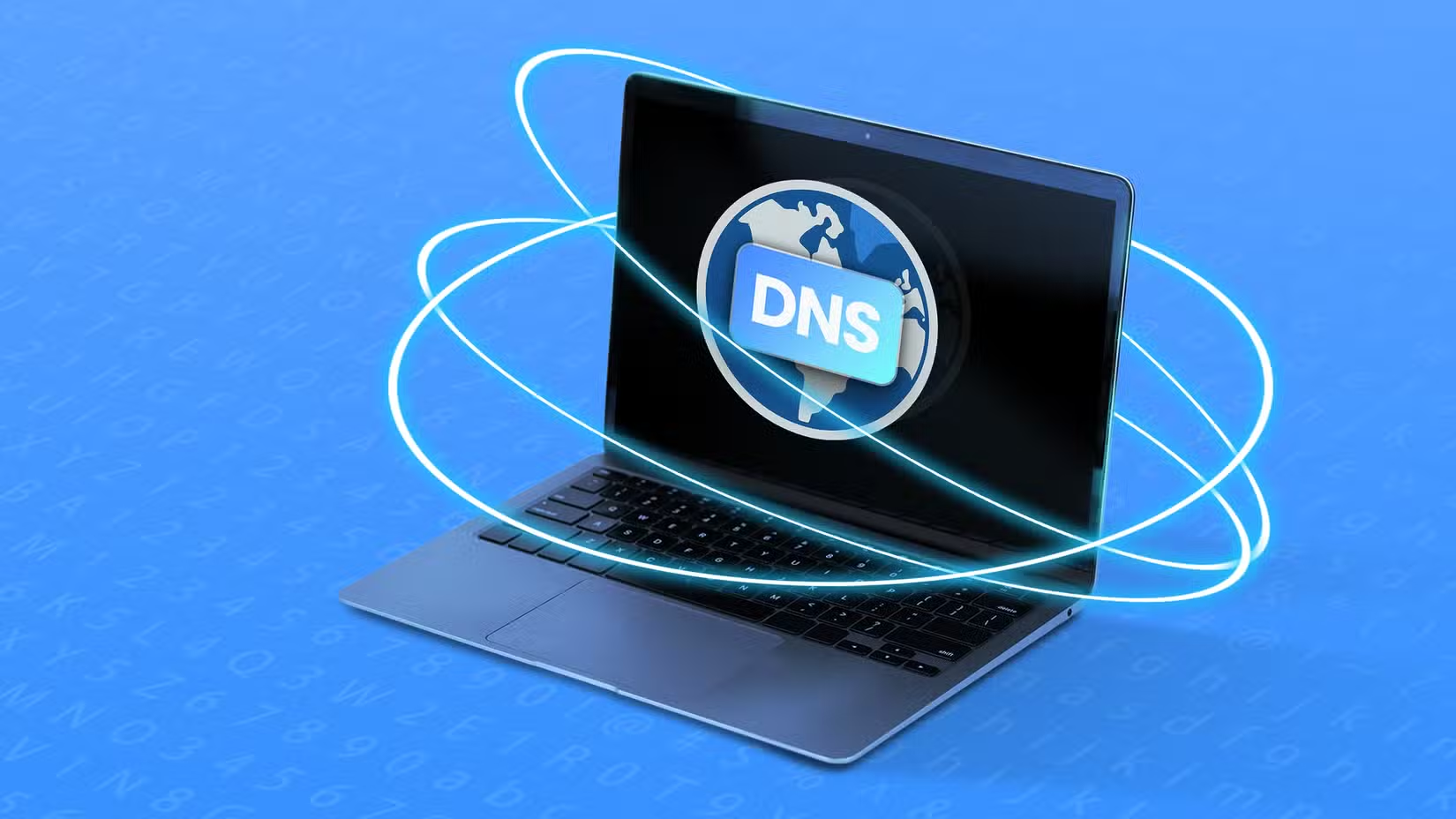
If DNS goes down, the web stops working. You could still connect to servers by typing IP addresses directly, but good luck remembering 172.217.14.206 instead of google.com. DNS failures have caused major outages at companies like Cloudflare and AWS, taking thousands of websites offline simultaneously.
Web Servers: Where Websites Actually Live
"The cloud" sounds ethereal, but it's just other people's computers. When you access any website, you're connecting to a physical server somewhere in the world. That server needs software to handle your request and send back the right content.
Apache HTTP Server and NGINX dominate this space. Apache launched in 1995 and powered the early web's growth. NGINX arrived in 2004 and now handles more traffic than any other web server. Both are open source. Both are free.
These projects serve everything from personal blogs to Netflix. When you stream a show, NGINX likely handled part of that request. When you check your bank balance, Apache might be running behind the scenes. The scale is staggering: NGINX alone serves over 400 million websites.
OpenSSL: Encryption for Everything
That padlock icon in your browser? OpenSSL probably put it there. This open-source library handles the encryption that protects HTTPS connections, email servers, VPNs, and countless other secure communications.
OpenSSL's importance became clear in 2014 when researchers discovered the Heartbleed vulnerability. The bug affected an estimated 17% of all secure web servers. Banks, hospitals, and government agencies scrambled to patch their systems. A flaw in one open-source project threatened the security of hundreds of millions of users.
The incident also revealed how underfunded critical infrastructure can be. At the time, OpenSSL had only one full-time developer. The project that secured most of the internet's encrypted traffic ran on volunteer labor and minimal donations.
Linux: The Operating System Underneath
Most servers don't run Windows. They run Linux, the open-source operating system Linus Torvalds started building in 1991. Linux powers the majority of web servers, cloud infrastructure, and internet-connected devices.
Amazon Web Services, Google Cloud, and Microsoft Azure all default to Linux for their server instances. Android runs on a Linux kernel. Your router probably runs Linux. The supercomputers that model climate change and protein folding? Linux.
Linux's success comes from flexibility and cost. Companies can modify the source code for their specific needs. They pay nothing in licensing fees. Google, Facebook, and Amazon have each built custom Linux distributions optimized for their data centers.
cURL and libcurl: The Silent Data Mover
Every time an application needs to transfer data over the internet, it often uses libcurl. This open-source library handles HTTP requests, file transfers, and API calls for software running on billions of devices.
cURL ships with macOS, Windows, and Linux. It's embedded in cars, smart TVs, gaming consoles, and medical devices. Daniel Stenberg, cURL's creator, has documented over 10 billion installations. The library processes trillions of requests daily.
Like OpenSSL, cURL runs on minimal resources. Stenberg works on the project full-time, funded by corporate sponsors who depend on the software. A single developer maintains code that runs on more devices than any commercial application.
Why This Matters
These projects share a common vulnerability: they're often underfunded and understaffed relative to their importance. The companies that depend on them don't always contribute back. When a critical bug appears, a handful of maintainers scramble to fix software that billions of people rely on.
Some organizations have started addressing this. The Linux Foundation runs programs to fund critical open-source projects. Major tech companies sponsor developers to work on infrastructure software. But the gap between how much we depend on these projects and how much we support them remains wide.

Logicity's Take
Frequently Asked Questions
What would happen if BIND 9 stopped working?
DNS resolution would fail for a significant portion of the internet. Users would be unable to access websites by domain name and would need to know IP addresses directly. Major outages would cascade across web services, email, and cloud platforms.
Is open-source software less secure than proprietary alternatives?
Not necessarily. Open-source code can be audited by anyone, which helps find vulnerabilities. However, projects with few maintainers may lack resources for thorough security reviews. Funding and community size matter more than the open-source model itself.
How can companies support open-source infrastructure projects?
Direct financial contributions, sponsoring developer time, contributing code fixes, and participating in foundations like the Linux Foundation or Open Source Security Foundation all help sustain critical projects.
Why don't companies build proprietary alternatives to these tools?
Some do for internal use, but the network effects of standardized, interoperable software make open-source tools more practical. Building a proprietary DNS server that only your company uses defeats the purpose of a universal naming system.
More open-source alternatives for everyday tech
Network infrastructure you can configure yourself
Need Help Implementing This?
Source: How-To Geek
Huma Shazia
Senior AI & Tech Writer
Produced with AI assistance and reviewed by the Logicity editorial team. Learn more in our Editorial Policy.