Key Takeaways
- A full set of 8 wall hooks prints in under 6 hours for less than $1 in filament
- Printed soap dishes with drain inserts solve the soap scum problem better than store-bought options
- Consumer 3D printers have crossed from hobby toy to practical household appliance
Your printer is a household appliance now
When you first get a 3D printer, you print toys. Benchy boats, articulating dragons, cute figurines. That's the honeymoon phase. The real value shows up later, when you start seeing your printer as a household appliance rather than a hobby project.
Rob LeFebvre at MakeUseOf has been cataloging what he no longer buys since getting a Bambu Labs P1S. His latest batch: wall hooks, soap dishes, and household organizers. All printable in a single day. All cheaper than Amazon, Etsy, or the hardware store.
Wall hooks: stronger and cheaper than Command strips
Command hooks run $8 to $12 at retail. That adds up fast when you need hooks by the front door, in the bathroom, and in multiple closets. The printed alternative costs almost nothing.
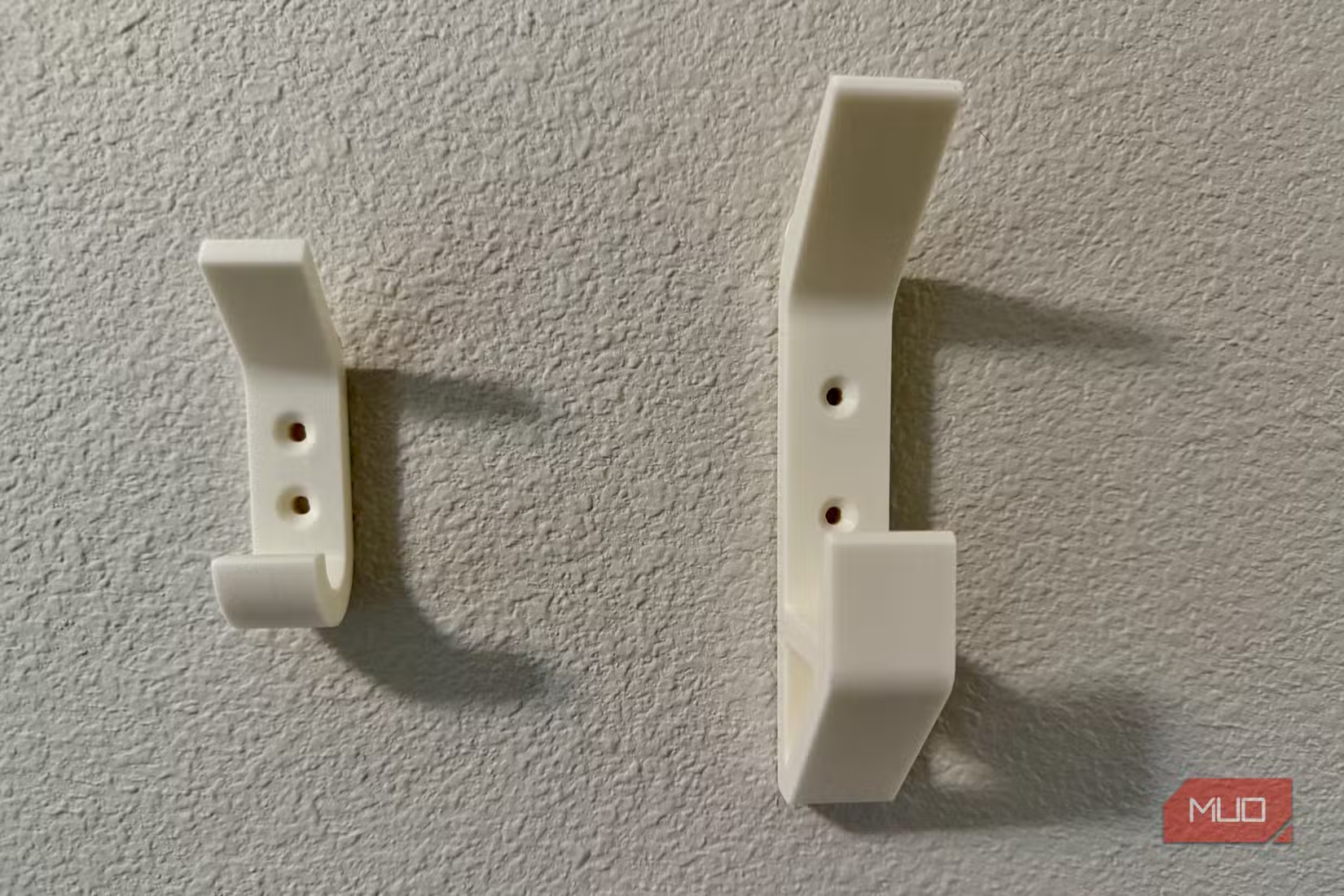
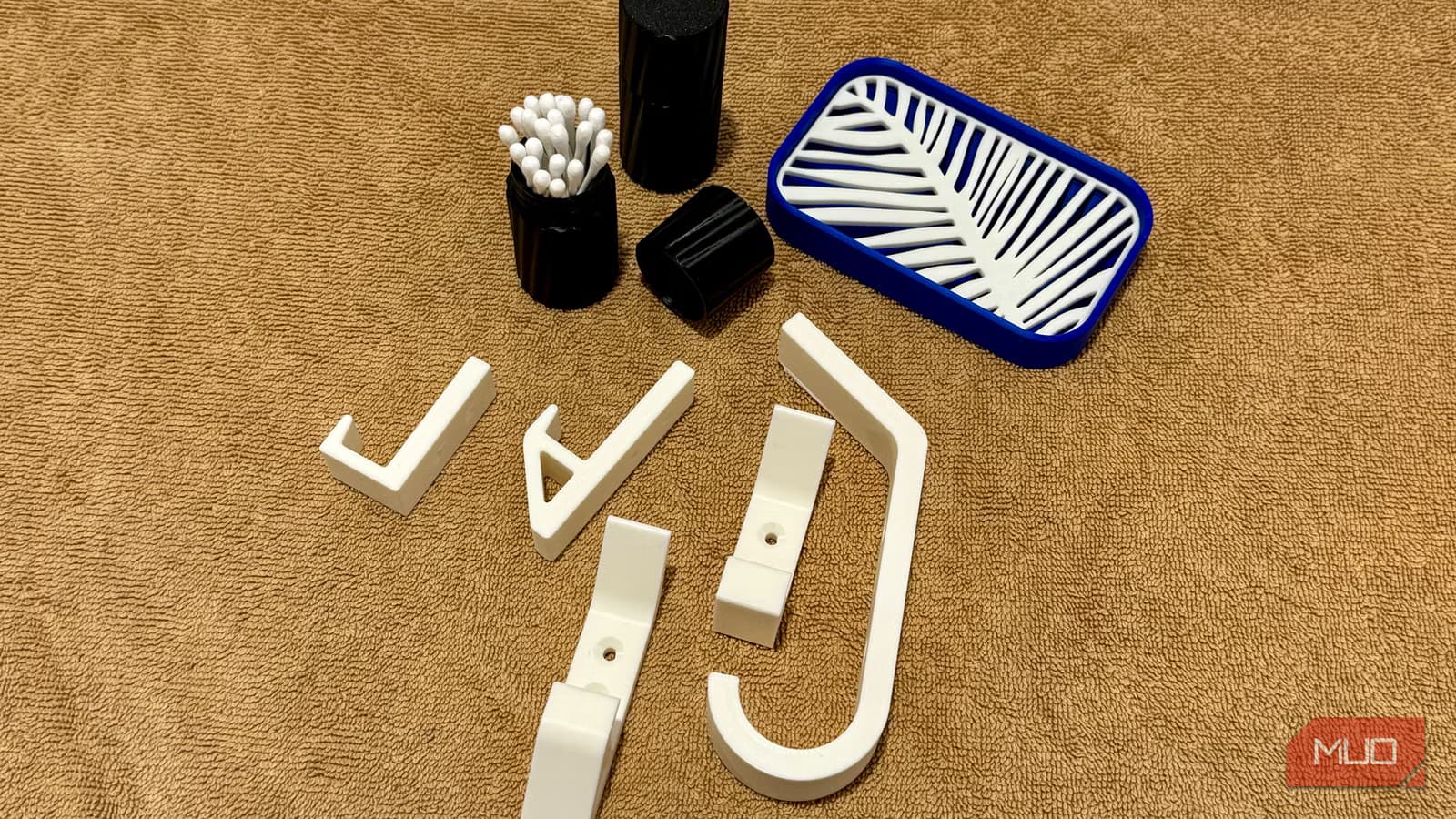
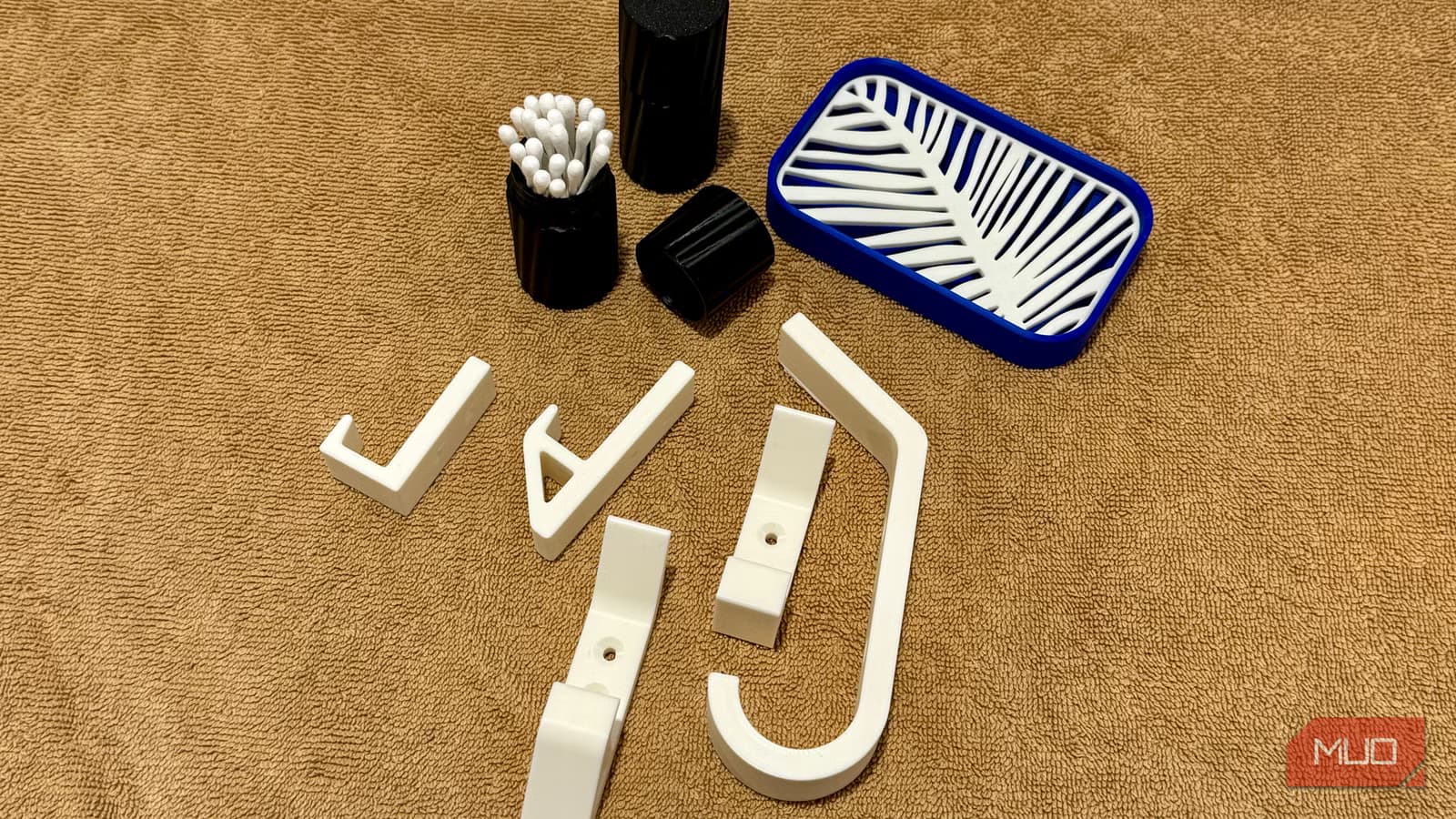
LeFebvre printed a set from MakerWorld that includes eight different hook sizes and shapes. A single hook takes about 45 minutes. The full set of eight printed in five and a half hours. Filament cost for the entire batch: under a dollar.
The hooks mount with two screws. You can also use Command strips if you prefer not to drill. There's a hidden-screw version available too. Print them in whatever color matches your walls. LeFebvre went with white to blend in.
Soap dishes: solving the soap scum problem
Ceramic soap dishes from home goods stores cost $10 to $20. They all have the same problem: water pools at the bottom, turns into soap scum, keeps your soap gross. The cheap plastic ones are worse.
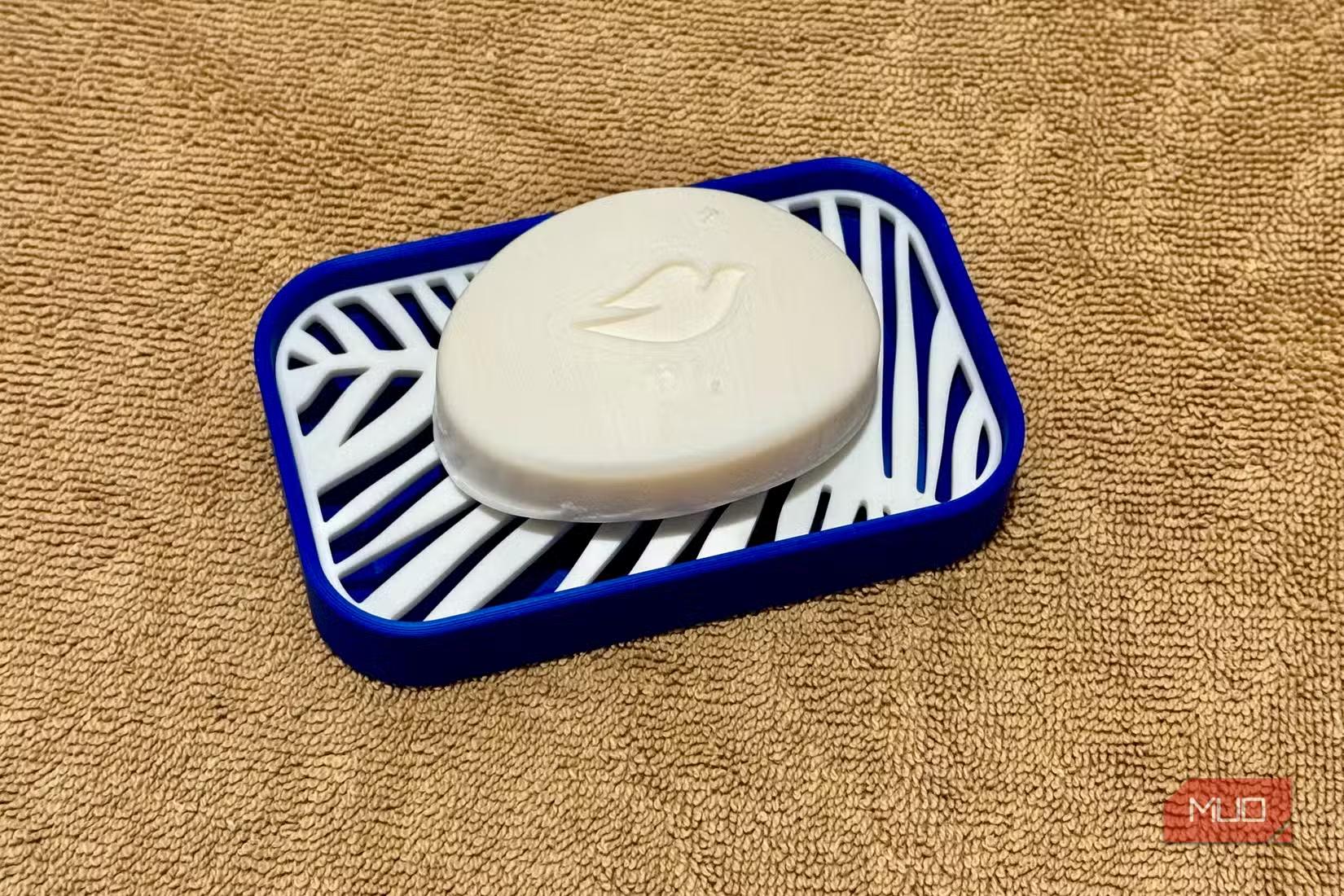
The printed solution uses a two-part design. A base holds everything in place. A removable drain insert lifts out for easy cleaning. The insert also keeps your soap elevated above any water that collects below.
LeFebvre printed his in PLA. PETG works too if you want better moisture resistance. Either way, you get a functional soap dish that costs pennies and actually solves the drainage problem that retail versions ignore.
The math that matters
A kilogram spool of PLA filament costs roughly $20. That spool can print dozens of household items. The economics flip completely once you stop thinking of prints as projects and start thinking of them as products you no longer need to buy.
- 8 wall hooks: under $1 in filament vs $64-96 retail
- Soap dish with drain: pennies vs $10-20 retail
- Custom color matching: free vs often unavailable
The time investment is real but manageable. Most of these items print unattended. Start a print before work, come home to finished products. The Bambu Labs P1S that LeFebvre uses runs around $600, but mid-range printers from Creality and Anycubic cost half that and produce similar results for basic household items.
What makes a good print-not-buy candidate
Not everything makes sense to print. The sweet spot is simple objects where retail options are overpriced for what they are. Wall hooks are plastic sold at a markup. So are drawer organizers, cable clips, and phone stands. Complex mechanisms, anything requiring tight tolerances, or items with safety implications still belong in the buy column.
The other factor is customization. Retail hooks come in whatever colors the manufacturer chose. Printed hooks come in whatever color filament you own. Organizers fit the exact drawer dimensions you have. That flexibility has real value beyond the cost savings.
Logicity's Take
Frequently Asked Questions
How much does 3D printing household items actually cost?
Most small items use 10-50 grams of filament. At roughly $20 per kilogram spool, that's $0.20 to $1.00 per item. A set of 8 wall hooks costs under $1 total in materials.
What 3D printer should I buy for household items?
The Bambu Labs P1S ($600) offers fast, reliable printing. Budget options from Creality and Anycubic in the $200-400 range work well for simple household objects with some additional setup time.
Is PLA plastic durable enough for wall hooks?
Yes for most indoor uses. PLA handles typical loads like coats, bags, and leashes without issue. For outdoor or high-moisture applications, PETG offers better durability.
Where do I find 3D models to print?
MakerWorld, Thingiverse, and Printables host thousands of free household item designs. Many come pre-sliced for popular printers, making them ready to print immediately.
More weekend projects for your home tech setup
Need Help Implementing This?
Source: MakeUseOf
Huma Shazia
Senior AI & Tech Writer
Produced with AI assistance and reviewed by the Logicity editorial team. Learn more in our Editorial Policy.