Key Takeaways
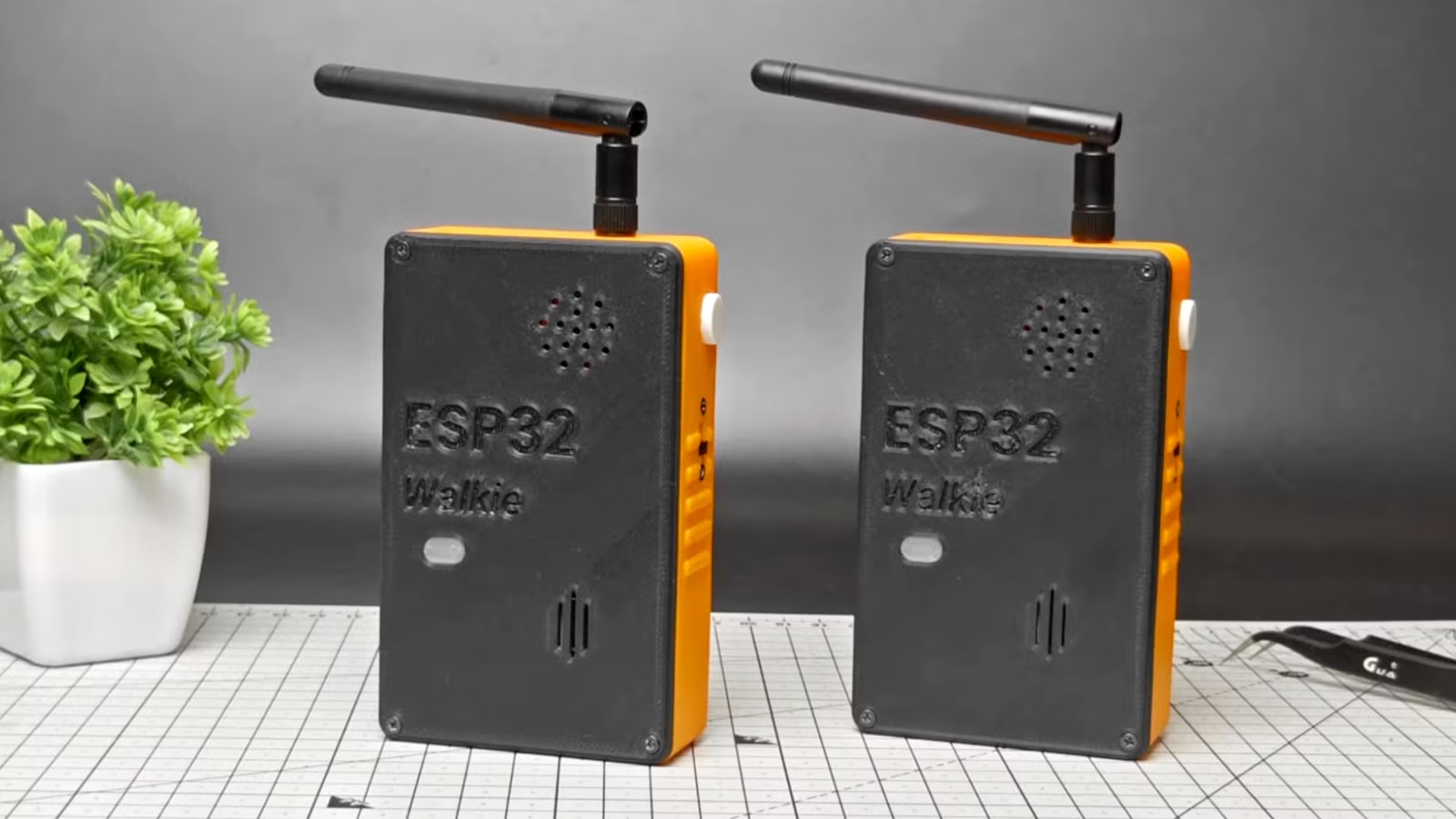
- ESP-NOW walkie-talkies work peer-to-peer without internet using $14 ESP32-S3 boards
- HEARD is an open-source hiking safety mesh that tracks group members off-grid via LoRa and GPS
- The Cheap Yellow Display pixel aquarium showcases what's possible with a sub-$10 ESP32 screen combo
Three ESP32 projects stand out this weekend for anyone looking to move beyond blinking LEDs. The builds range from functional mesh walkie-talkies that bypass cellular networks to a hiking safety device born from a computer science thesis. All three are achievable in a weekend with parts costing under $50.
ESP-NOW walkie-talkies that skip the internet entirely
ESP-NOW is Espressif's mesh protocol for ESP32 chips. It runs on the 2.4GHz band, enabling direct peer-to-peer communication between two microcontrollers. No router. No Wi-Fi password. No cellular signal required.
This project uses the Seeed Studio XIAO ESP32-S3 Sense, a $14 board that includes a digital microphone. That built-in mic is the key component. You'll also need a MAX98357A I2S amplifier, a 23mm round speaker, a push button, a slide switch, and a 2GHz antenna for 3dB gain. Double everything for a pair.
The firmware flashes via Arduino IDE. Both boards get identical code, and they detect their respective MAC addresses on boot, labeling themselves automatically. Power comes from an 18650 battery. A 3D-printed chassis holds everything together.
The practical range depends on line-of-sight and antenna quality, but ESP-NOW typically handles 200-400 meters in open areas. That's more than enough for a campsite, large property, or warehouse floor where phones might not reach.
HEARD: a hiking safety mesh for groups off-grid
HEARD stands for Hiking Emergency Assistance and Rescue Device. It solves a specific problem: keeping track of a hiking group when cell towers don't exist. The project originated as a computer science thesis by Lucio Baiocchi and has since been open-sourced.
The system uses three device types. HEARD Core is the group leader's unit, handling route creation and monitoring all other devices. HEARD Node goes to adult group members who need tracking. HEARD Pico is a minimal emergency-only version designed for children.
Each device combines an ESP32, LoRa mesh radio, GPS module, and a 2.9-inch E-Ink display. The leader's device broadcasts position requests. Nodes respond. When a node goes out of range, the system raises an alert. A breadboard schematic is available on the project page for anyone who wants to prototype before committing to PCBs.
LoRa's range advantage over ESP-NOW is significant. Depending on terrain and antenna configuration, LoRa can reach several kilometers. That makes HEARD viable for backcountry scenarios where ESP-NOW would fall short.
A pixel aquarium on a Cheap Yellow Display
Not every project needs to solve a serious problem. The Cheap Yellow Display, known as CYD in maker circles, is an ESP32 board with an integrated LCD screen that sells for under $10. Someone built a self-running pixel aquarium on it.
The aquarium simulates fish, bubbles, and plant movement. It runs continuously, drawing minimal power, and serves as a desk decoration or conversation piece. The code is straightforward enough for beginners while demonstrating animation techniques, sprite handling, and display optimization.
The CYD has become popular precisely because it removes the friction of connecting an ESP32 to a separate display. For projects where visual output matters, that integrated screen cuts both cost and complexity.
Why the ESP32 dominates weekend projects
The ESP32's appeal is simple. A capable development board costs $4-10. It includes Wi-Fi and Bluetooth. The dual-core processor runs at 240 MHz with 520 KB of SRAM, vastly outpacing the Arduino Uno's 2 KB. Espressif has shipped an estimated 500 million ESP32 chips since 2016, and that scale keeps prices low.
The maker community has responded with thousands of tutorials. ESPHome integration means these chips slot into Home Assistant without custom firmware. Arduino IDE support means existing code libraries transfer over. That ecosystem lowers the barrier to weekend builds.
Logicity's Take
These three projects sit at different points on the complexity curve, which makes them useful as a progression. Start with the aquarium if you're new to ESP32, move to walkie-talkies once you're comfortable with audio I/O, then tackle HEARD when you're ready for LoRa and GPS. The walkie-talkie project in particular has commercial applications for warehouses, construction sites, or events where cellular is unreliable and dedicated radios are overkill.
ESP32 integrates natively with Home Assistant for smart home builds
Weekend hardware projects often need power tools for enclosures
Frequently Asked Questions
How much does it cost to build ESP32 walkie-talkies?
Approximately $50-60 for a pair. The XIAO ESP32-S3 Sense boards cost $14 each, plus amplifiers, speakers, buttons, switches, antennas, and 18650 batteries. 3D printing the enclosure adds minimal cost if you have access to a printer.
What range does ESP-NOW support on ESP32?
ESP-NOW typically achieves 200-400 meters in open areas with line-of-sight. Walls, trees, and interference reduce this significantly. Adding a 2GHz antenna with 3dB gain, as the walkie-talkie project does, extends usable range.
Can HEARD work without cellular service?
Yes. HEARD uses LoRa mesh radio for device-to-device communication and GPS for positioning. Neither requires cellular infrastructure. That's the core design goal for backcountry hiking scenarios.
What is a Cheap Yellow Display (CYD)?
CYD refers to inexpensive ESP32 boards sold on AliExpress and similar marketplaces that include an integrated LCD screen, typically for under $10. The name comes from the yellow PCB color common to these generic boards.
Do I need programming experience for these ESP32 projects?
Basic Arduino knowledge helps. All three projects provide code to flash, so you don't need to write firmware from scratch. Understanding pin assignments and how to modify variables makes troubleshooting easier.
Need Help Implementing This?
Building IoT prototypes for your business or looking to scale an ESP32-based product? Logicity connects you with embedded systems consultants and electronics manufacturers. Contact us for introductions.
Source: How-To Geek
Manaal Khan
Tech & Innovation Writer
Produced with AI assistance and reviewed by the Logicity editorial team. Learn more in our Editorial Policy.