Key Takeaways
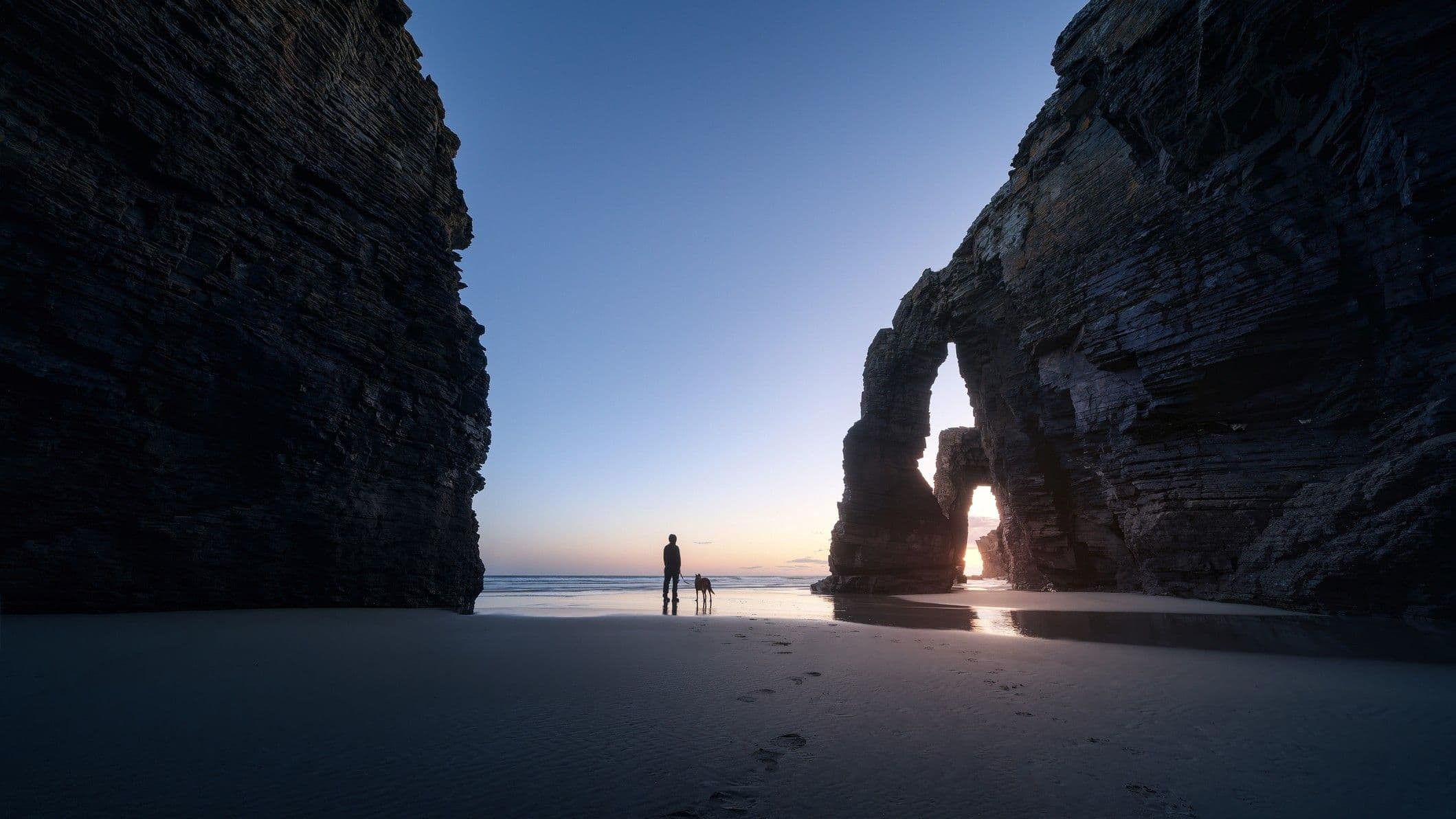
- The eclipse occurs just before sunset on August 12, 2026, with the sun only 2-12 degrees above the horizon depending on location
- Atlantic-facing beaches in Galicia and Cantabria offer higher sun angles (9-12 degrees), while Mediterranean and Balearic beaches see just 2-4 degrees
- Many Spanish resort beaches face east for sunrise views, making them useless for this west-northwest eclipse
On August 12, 2026, the moon's shadow will race across Spain just minutes before sunset. The total solar eclipse will turn the sky into what UC Berkeley astronomer Alex Filippenko calls 'a tapestry of deep twilight colors' as the sun hovers just degrees above the western horizon. It's a photographer's dream and a planner's nightmare.
“The 2026 eclipse is a rarity because totality occurs so close to sunset, turning the sky into a tapestry of deep twilight colors while the sun is just degrees above the horizon.”
— Alex Filippenko, Professor of Astronomy at UC Berkeley
The problem: most Spanish beach resorts face east to catch sunrise. That means when totality arrives around 8:26 PM, hotels and terrain behind you could block the view entirely. You need a beach with an unobstructed sightline to the west-northwest, ideally over open water.
Why Sun Angle Matters More Than Location
The path of totality crosses northern and eastern Spain, but the experience varies dramatically. On the Atlantic-facing coasts of Galicia, Asturias, and Cantabria, the eclipsed sun will be 9-12 degrees above the horizon. That's low but manageable.
On the Mediterranean coast and Balearic Islands, it drops to just 2-4 degrees. At that angle, totality becomes a fleeting event. Haze, thin cloud, or even a slight rise in terrain can obscure everything. Maximum totality duration in coastal Spain runs about 1 minute 50 seconds in prime locations.
The Atlantic Coast: Galicia and Cantabria
The north coast offers the best combination of sun angle and open ocean horizon. These beaches face the Atlantic, meaning the eclipse will appear directly over water with no obstructions.
1. Praia de Alba e Sabón, Galicia
Located in Arteixo, this beach offers one of the highest sun angles on the list. Totality arrives at 8:27 PM CEST and lasts 1 minute 9 seconds. The eclipsed sun will sit 12.1 degrees above the west-northwest horizon, a comfortable margin that reduces weather risk.
2. Playa de las Catedrales, Galicia
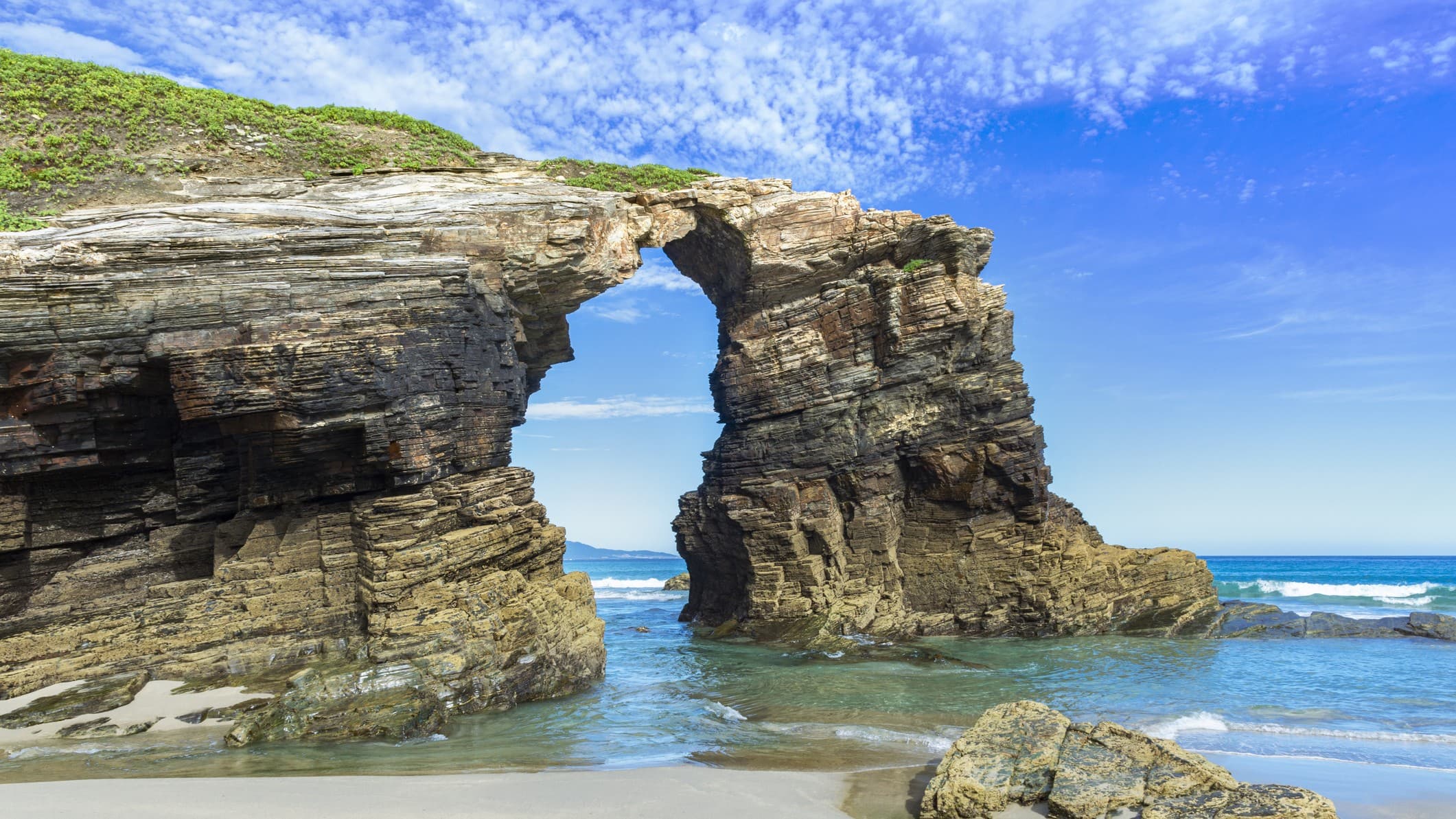
Known for its cathedral-like rock arches carved by erosion, this landmark beach provides dramatic foreground for eclipse photography. The natural formations won't block your view since the sun will be in the northwest, but they will frame the darkened sky. Check tide times in advance on Surf Forecast or Tide Forecast. At low tide, you can walk among the arches.
3. Playa de Langre, Cantabria
A quieter option on the Cantabrian coast with cliffs behind and open water ahead. The sun angle here drops slightly to around 9-10 degrees, still workable for clear viewing. The beach is less developed than resort areas, meaning fewer buildings to worry about.
4. Playa El Puntal de Somo, Cantabria
A sandbar beach accessible by ferry from Santander. The geography gives you 360-degree horizon views with no terrain obstructions. Arrive early. This will be a popular spot, and ferry capacity is limited.
The Mediterranean and Ebro Delta
Moving southeast, sun angles drop but weather statistics improve. August typically brings clearer skies to the Mediterranean than the Atlantic coast. It's a tradeoff eclipse chasers are actively debating in forums.
5. Platja de Riumar, Ebro Delta
The Ebro Delta is one of Spain's flattest landscapes. No hills, minimal development, and wetlands stretching to the horizon. The low sun angle (around 4 degrees) is a concern, but the complete absence of obstructions compensates. This is a strong choice for those prioritizing sightline certainty over sun angle.
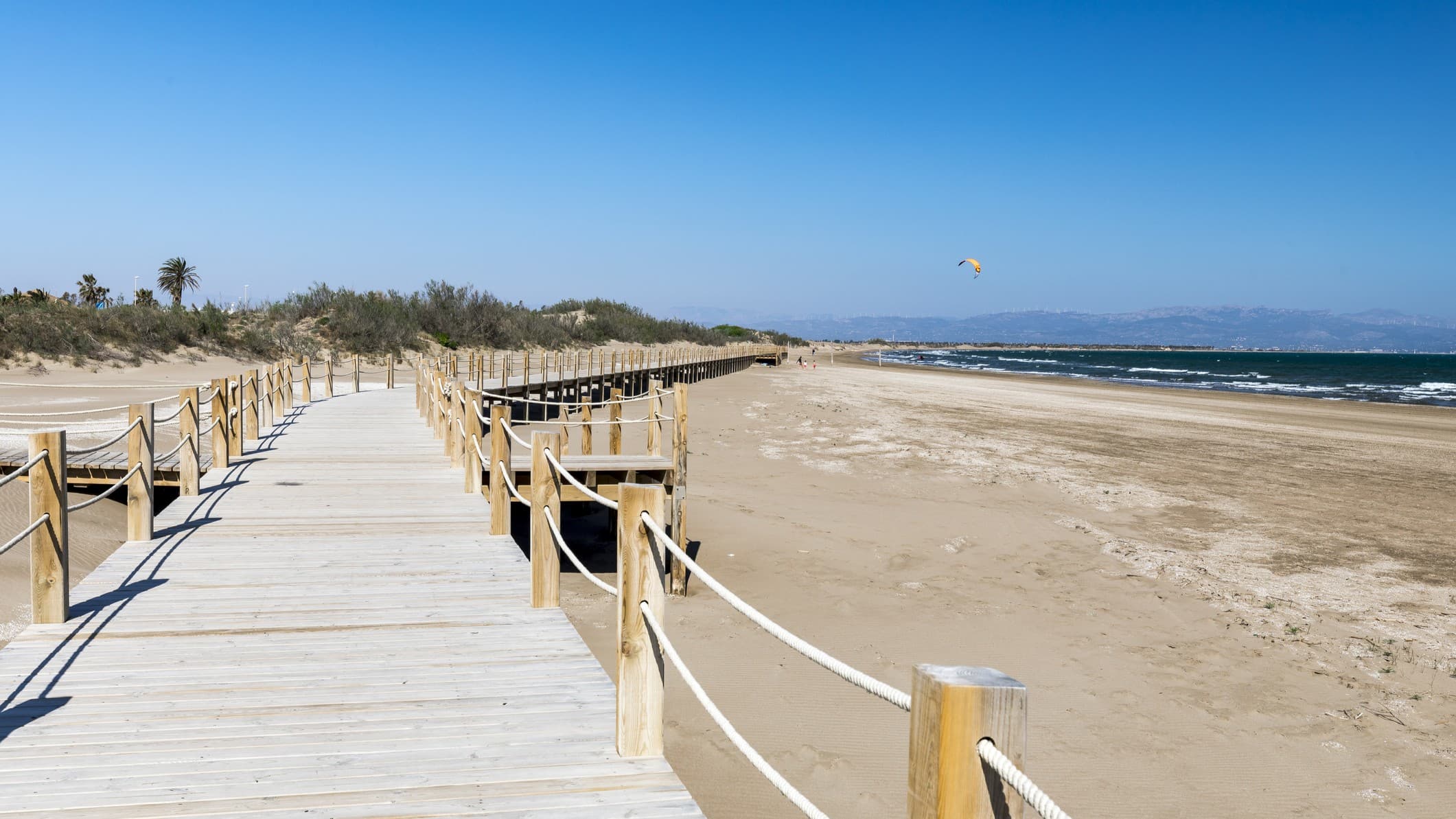
6. Platja del Gurugú, Castellón
South of the Ebro, this beach offers lower development density than resorts further up the coast. The sun angle approaches 3-4 degrees here. Scout your position the day before the eclipse to confirm no horizon obstacles.
The Balearic Islands: Mallorca and Menorca
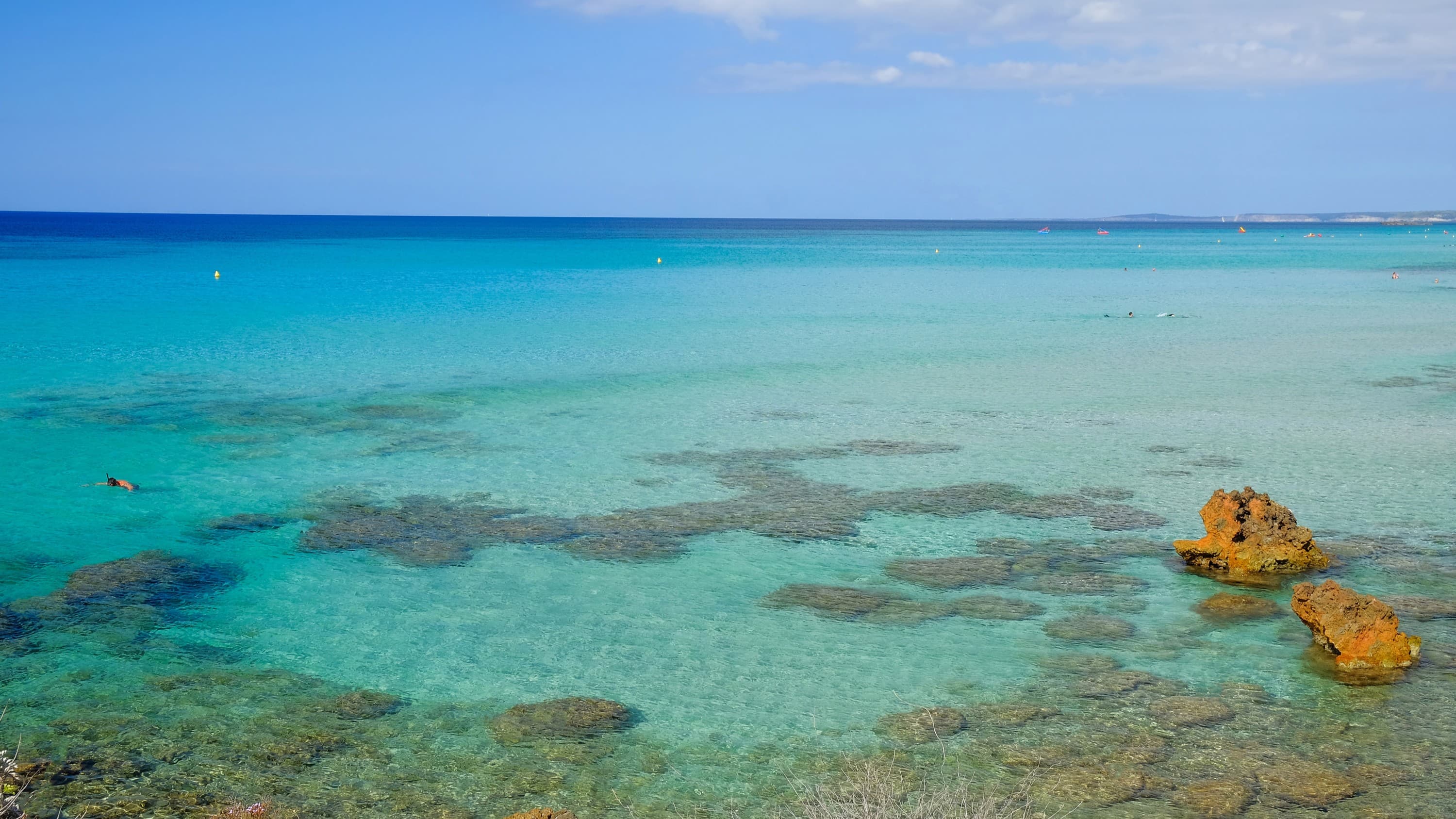
The islands present the lowest sun angles on the path, just 2-4 degrees. But they also offer some of Spain's clearest August skies and most pristine beach settings. The eclipse here will feel like watching the sun vanish into the sea.
7. Es Trenc, Mallorca
One of Mallorca's few undeveloped beaches, Es Trenc stretches for several kilometers with no buildings. The white sand and shallow turquoise water make it a postcard location, but the 2-3 degree sun angle demands perfect atmospheric conditions. Any haze and you lose it.
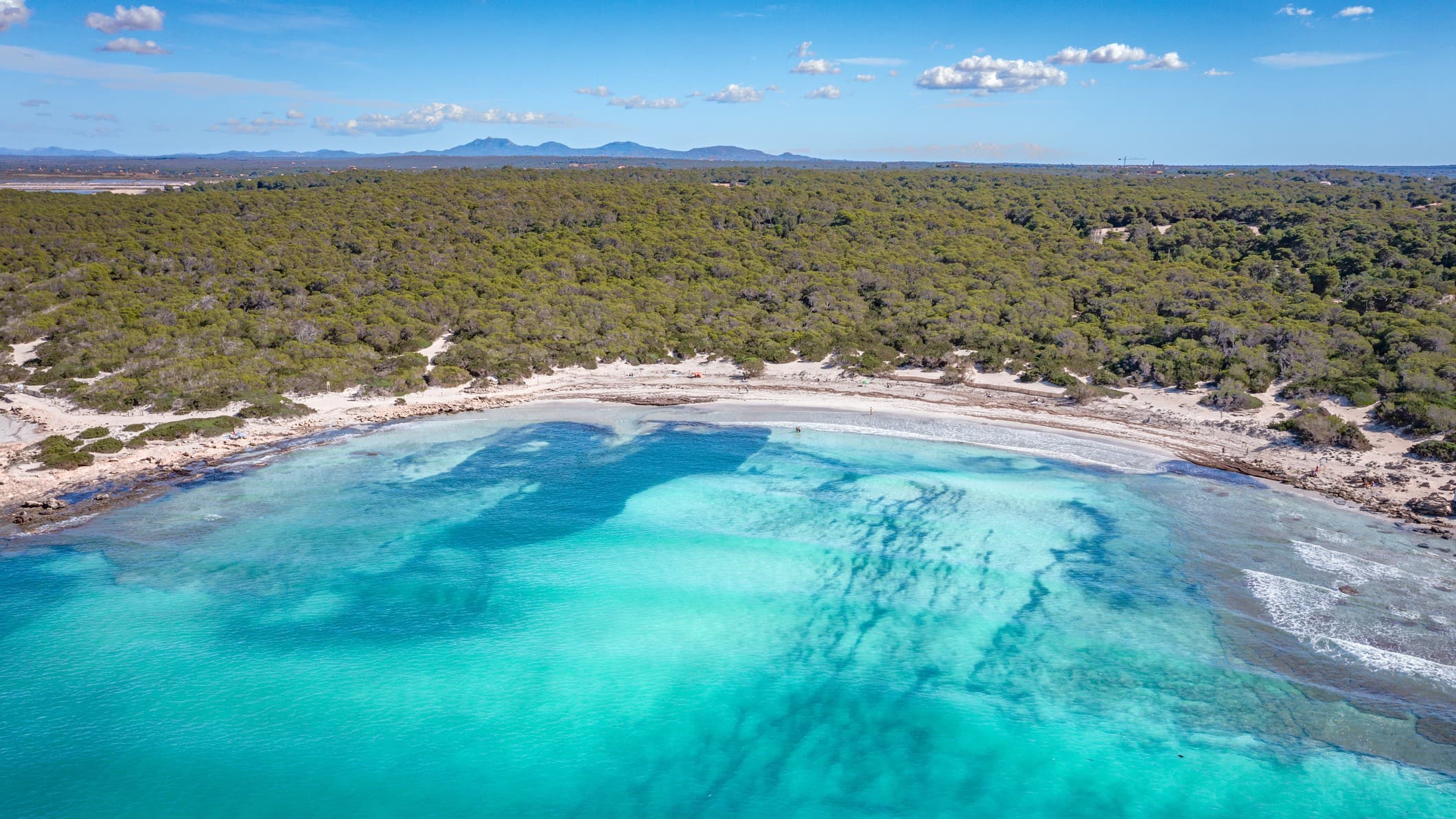
8. Platja Estanys, Mallorca
A smaller, protected beach on Mallorca's southern coast. Less crowded than Es Trenc but similar viewing conditions. The key advantage is the natural bay orientation, which provides some wind shelter if conditions turn breezy.
9. Platja des Carbó, Mallorca
Accessible only by foot or boat, this beach filters out casual visitors. If you want a less crowded eclipse experience on Mallorca, this is your option. Plan your exit in advance since you'll be hiking out in twilight.
10. Platja de Son Bou, Menorca
Menorca's longest beach at over 2 kilometers. The east end is developed with resorts, but the west end is backed by protected dunes. Position yourself at the western section for clean sightlines. The sun will be at roughly 2-3 degrees, the lowest on this list.
Planning Resources
Several tools can help you verify sightlines before committing to a location. Xavier Jubier's Interactive Google Map includes precise timings and built-in sightline analysis from Peak Finder. The Eclipse App and Eclipse Horizon Checker let you check specific coordinates. Spain's Instituto Geográfico Nacional provides official path data.
The best advice: test your location the day before the eclipse. At 8:26 PM on August 11, stand where you plan to watch. If you can see the sun clearly at that angle and direction, you're set. If not, you still have time to move.

Logicity's Take
Atlantic vs. Mediterranean: The Debate
Eclipse-chasing communities on Reddit and dedicated forums are split. The Atlantic coast offers sun angles of 9-12 degrees, giving more margin for clouds or haze. But August weather statistics favor the Mediterranean, where clear skies are more reliable.
There's no right answer. If weather is your primary concern and you're comfortable with 2-4 degree viewing, the Balearics make sense. If you want insurance against atmospheric interference, Galicia and Cantabria provide it at the cost of less predictable skies.
Frequently Asked Questions
What time does the 2026 solar eclipse happen in Spain?
Totality begins around 8:26-8:28 PM CEST depending on your location, just minutes before sunset.
How long will totality last during the 2026 eclipse in Spain?
Maximum duration in coastal Spain is approximately 1 minute 50 seconds, though most locations will see 60-90 seconds.
Which direction should I face to see the 2026 eclipse in Spain?
West-northwest. The sun will be very low on the horizon in that direction, so you need completely unobstructed views that way.
Is the Atlantic or Mediterranean coast better for viewing the 2026 eclipse?
The Atlantic coast offers higher sun angles (9-12 degrees vs. 2-4 degrees), reducing risk from haze. The Mediterranean offers more reliably clear August weather. Both have tradeoffs.
Do I need to check tide times for eclipse viewing on Spanish beaches?
Yes. At some beaches like Playa de las Catedrales, low tide reveals rock formations that can enhance or obstruct viewing. Check tide forecasts a few weeks ahead.
Need Help Implementing This?
Source: Latest from Space.com
Huma Shazia
Senior AI & Tech Writer
Produced with AI assistance and reviewed by the Logicity editorial team. Learn more in our Editorial Policy.