Key Takeaways
- ZKTeco Middle East won Government Security Solutions Provider of the Year at GovTech Innovation Forum 2026
- The award recognizes biometric and access control solutions deployed across Middle East government agencies
- GCC digital transformation initiatives are driving demand for physical security infrastructure
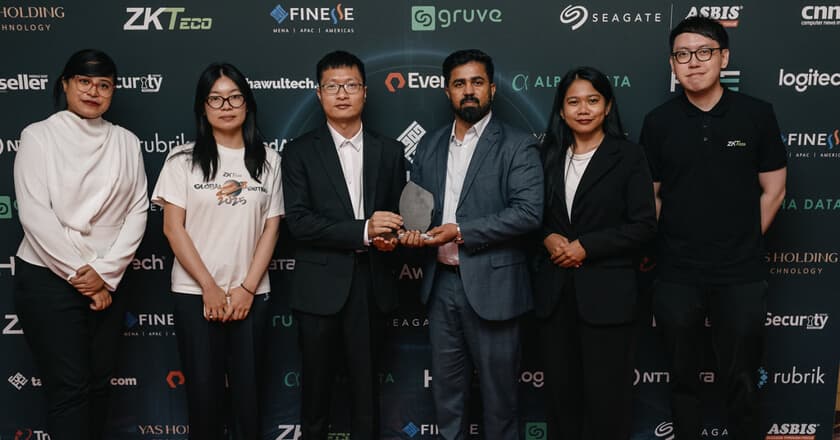
ZKTeco Middle East took home the Government Security Solutions Provider of the Year title at TahawulTech's GovTech Innovation Forum & Awards 2026. The award recognizes the company's biometric and access control deployments supporting digital transformation across government agencies in the region.
The GovTech awards target vendors that have strengthened public sector infrastructure and enabled government entities to operate securely during their shift to digital services. ZKTeco, a Chinese multinational founded in 1998, specializes in biometric verification, time and attendance systems, and smart lock technology. The company operates in more than 40 countries.
What does ZKTeco actually build?
ZKTeco manufactures biometric hardware: fingerprint scanners, facial recognition terminals, palm vein readers, and iris scanners. These devices connect to access control software that manages who enters buildings, restricted zones, and data centers. The company also sells time and attendance systems that government offices use to track employee hours.
For product teams evaluating physical security vendors, ZKTeco competes with HID Global, Suprema, and IDEMIA in the biometric access market. ZKTeco's positioning leans toward cost competitiveness, particularly in emerging markets. The company claims to be one of the world's largest biometric device manufacturers by volume.
Why GCC governments are buying security infrastructure now
Gulf states are spending heavily on smart city and e-government projects. Saudi Vision 2030 and UAE Centennial 2071 both include modernization of public services, which requires physical and digital security layers. Government buildings, airports, and critical infrastructure need biometric access controls that integrate with identity management systems.
The global physical security market is projected to reach $18.3 billion by 2026, according to MarketsandMarkets, with biometric and access control solutions driving much of that growth. Middle East governments are a key buyer segment because they're building new facilities rather than retrofitting old ones.
“This award is a reflection of our team's passion for innovation and our commitment to helping government organisations build safer, smarter, and more resilient environments. We are grateful to our customers and partners for their continued collaboration and confidence in our solutions.”
— Steven Gao, CEO, ZKTeco Middle East
What the award signals for vendors in this space
TahawulTech, part of CPI Media Group, hosts the GovTech Innovation Forum as a regional event connecting government procurement officers with technology vendors. Winning an award here is primarily a business development play. It signals to other government buyers that ZKTeco has delivered on contracts and passed whatever evaluation criteria TahawulTech applies.
For competing vendors, ZKTeco's win highlights how Chinese security companies have gained ground in Middle East government contracts. This trend has sparked debate elsewhere. In 2022, the UK banned Chinese surveillance cameras from sensitive government sites over security concerns. GCC governments have not followed that pattern.
What AI builders should watch
Biometric systems increasingly run inference at the edge. ZKTeco's facial recognition terminals process images on-device rather than sending video to cloud servers. This architecture matters for government customers who want data sovereignty. For AI teams building identity verification features, the hardware layer is becoming as important as model accuracy.
Government procurement cycles are long, often 12 to 24 months from RFP to deployment. Vendors that win early contracts in a region tend to expand as agencies share positive references. ZKTeco's award is one data point suggesting the company has built that reference base in the GCC.
Logicity's Take
The GovTech award is a marketing win, but the underlying trend is worth tracking. Middle East governments are building digital infrastructure from scratch, which means they're picking security vendors now that will be embedded for a decade. For AI product teams, this creates integration opportunities. Biometric hardware vendors need AI models for face matching, liveness detection, and anomaly detection. ZKTeco develops some of this in-house, but smaller vendors in this space often partner with or acquire AI startups. If you're building identity verification tech, government-adjacent hardware companies are potential customers or acquirers.
Frequently Asked Questions
What is ZKTeco known for?
ZKTeco manufactures biometric devices including fingerprint scanners, facial recognition terminals, and access control systems. The company operates in more than 40 countries and is considered one of the largest biometric hardware manufacturers by volume.
What is the GovTech Innovation Forum?
The GovTech Innovation Forum & Awards is an event hosted by TahawulTech that recognizes technology companies driving digital transformation in Middle East public sector organizations.
Why are GCC governments investing in security technology?
National strategies like Saudi Vision 2030 and UAE Centennial 2071 include modernization of government services. New smart city projects and critical infrastructure require biometric access controls and integrated security systems.
How big is the physical security market?
The global physical security market is projected to reach $18.3 billion by 2026, according to MarketsandMarkets, with biometric and access control solutions driving significant growth.
Related coverage on AI adoption challenges in the UAE market
Need Help Implementing This?
Building identity verification or biometric AI features? Contact Logicity's consulting team to discuss architecture patterns, vendor selection, and integration strategies for government and enterprise security deployments.
Source: TahawulTech.com / Daniel Shepherd
Huma Shazia
Senior AI & Tech Writer
Produced with AI assistance and reviewed by the Logicity editorial team. Learn more in our Editorial Policy.